
Masoala National Park
Masoala National Park, Madagascar – Rainforest, Marine Park, Lemurs, Snorkeling and Untouched Masoala Peninsula Wilderness
Masoala National Park is one of the most spectacular rainforest and marine wilderness destinations in the Indian Ocean. Located on the remote Masoala Peninsula in northeastern Madagascar, this vast protected area combines pristine lowland rainforest, secluded beaches, vibrant coral reefs, wide mangrove ecosystems and clear blue bays. For travelers searching for Masoala National Park tours, Madagascar rainforest holidays, Masoala trekking itineraries, lemur encounters, birdwatching, snorkeling and Indian Ocean adventure in one destination, Masoala is the ultimate Madagascar nature experience.
As part of the UNESCO World Heritage–listed Rainforests of the Atsinanana, the park protects rare lemurs, colorful chameleons, endemic birds, frogs, orchids and thriving marine ecosystems that shelter sea turtles, dolphins and seasonal humpback whales. With very few roads, limited visitor numbers and eco-lodges accessible only by boat or small aircraft, Masoala National Park offers true wilderness immersion—ideal for travelers who want untouched rainforest-and-beach exploration far from crowded tourist circuits.
Overview – Why Visit Masoala National Park Madagascar?
Masoala National Park is the largest remaining block of lowland rainforest in Madagascar, making it one of the country’s most important conservation areas. It blends rainforest, mangroves, rivers, swamps, coastal forest, coral reefs and seagrass meadows into one enormous protected wilderness. Its remote location ensures that biodiversity thrives, with minimal human disturbance.
Visitors are drawn to Masoala for multi-day trekking, rainforest hikes, lemur and chameleon watching, night walks, birding, beach relaxation, sea kayaking and snorkeling in calm marine reserves. Because reaching the park requires flights and boat transfers, Masoala attracts adventurous travelers, nature photographers and conservation-minded visitors seeking undisturbed Madagascar national parks and high-quality eco-lodges.
Location and Size – Where Masoala National Park Madagascar Is Found
Masoala National Park lies on the rugged, remote Masoala Peninsula in northeastern Madagascar. This dramatic peninsula extends into the warm waters of Antongil Bay—the largest bay in Madagascar—and faces the Indian Ocean on its eastern edge. The region is known for its mist-shrouded hills, dense forest cover and long stretches of untouched coastline.
The gateway to Masoala is Maroantsetra, a small coastal town accessible by domestic flights from Antananarivo, Toamasina and Sainte Marie Island. From Maroantsetra, visitors travel by boat—usually between 1.5 and 3 hours depending on sea conditions—to reach Masoala’s rainforest-backed beaches, marine reserves and eco-lodges.
The park covers a vast area of approximately 2,300 square kilometers of pristine lowland rainforest, making it the largest continuous rainforest ecosystem in Madagascar. Its terrestrial boundaries include mountain ridges, steep hillsides, river valleys and a long stretch of coastal forest.
In addition to its rainforest territory, Masoala includes around 100 square kilometers of marine reserves spread across three key marine parks: Tampolo Marine Reserve, Ambodilaitry Marine Reserve and Ifaho Marine Reserve. These marine zones protect coral reefs, seagrass meadows, mangroves and fish nurseries that support sea turtles, rays, reef fish and dolphins.
This enormous land-and-sea protected system makes Masoala National Park one of the most ecologically complete conservation landscapes in Africa and a premier destination for rainforest-and-ocean adventure itineraries.
Geography and Landscapes of Masoala National Park Madagascar
The landscapes of Masoala are incredibly diverse and visually striking. Inland, steep hills and forested ridges rise directly from narrow coastal plains. These slopes are covered in dense lowland rainforest, home to countless endemic species. Fast-flowing rivers carve through deep valleys, forming waterfalls, cascades and clear pools ideal for freshwater swimming.
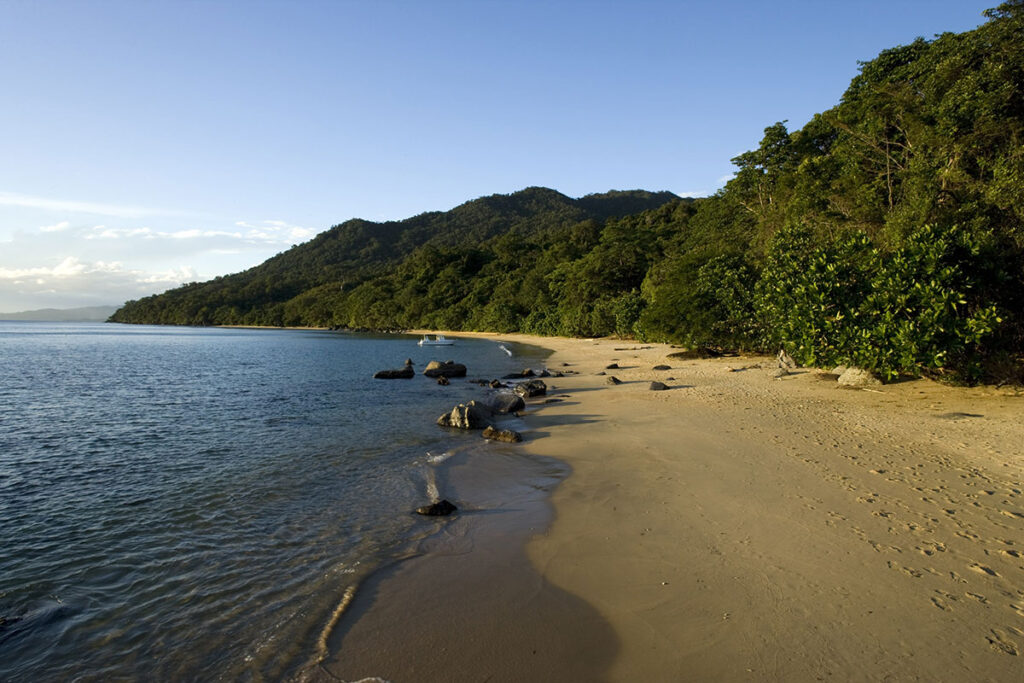
Along the coast, Masoala features one of the world’s most dramatic rainforest-to-ocean transitions. Golden and reddish-sand beaches are backed by towering primary forest, while granite headlands separate secluded coves. Sheltered bays lined with mangroves open into coral-rich lagoons and offshore reefs. This seamless link between mountains, rainforest and ocean makes the Masoala Peninsula one of the most beautiful natural coastlines in Madagascar and a top destination for Madagascar beach and snorkeling tours.
Climate – Best Time to Visit Masoala National Park Madagascar
Masoala National Park enjoys a hot, humid tropical climate with high rainfall year-round. Its rainforest receives some of the highest levels of rainfall in the country, which keeps the ecosystem lush and vibrant.
The rainy season lasts from December to March, bringing heavy showers, high humidity and rougher seas. Trekking becomes challenging, and boat transfers may be delayed. However, the forest is incredibly lush, waterfalls are full and photography conditions are dramatic.
The dry season—from May to November—is widely considered the best time to visit Masoala National Park. Trails are more manageable, skies clearer and snorkeling conditions excellent. This period is also ideal for wildlife viewing, as lemurs, birds and reptiles are more active and easier to spot.
Hydrology – Rivers, Mangroves, Bays and Marine Waters
Water shapes the entire Masoala landscape. Dozens of rivers and streams flow from the forested hills down to the ocean, forming waterfalls, estuaries and freshwater pools. These rivers create rich riparian habitats that attract birds, lemurs and amphibians.
The coastline around Masoala is equally important. Antongil Bay is Madagascar’s most productive marine region, with nutrient-rich waters that support coral reefs, seagrass meadows, dolphins, sea turtles and seasonal humpback whales (July–September). This combination of freshwater and marine systems makes Masoala National Park Madagascar a prime location for combined rainforest and marine eco-adventures.
Ecosystems and Habitats in Masoala National Park Madagascar
Masoala is renowned for its remarkable range of habitats, including:
- Lowland evergreen rainforest – the largest remaining on the island
- Coastal and littoral forest
- Mangrove ecosystems
- Wetlands and river marshes
- Coral reefs, seagrass beds and sandy lagoons
This rare mix of terrestrial and marine ecosystems makes Masoala one of the most ecologically valuable national parks in Madagascar, offering unmatched diversity for nature-focused travel.
Vegetation – Primary Rainforest, Mangroves and Coastal Flora
The vegetation of Masoala National Park is dominated by primary lowland rainforest with towering canopy trees draped in mosses, orchids, lichens and ferns. Beneath the canopy, palms, lianas and dense understory plants thrive in the humid environment.
Along rivers and coastal areas, different plant communities appear. Littoral vegetation is adapted to sandy soils, while mangrove forests thrive in brackish water and form vital nurseries for marine life. Together, these ecosystems support exceptional plant diversity, making Masoala a hotspot for botanical research and eco-tourism.
Wildlife of Masoala National Park Madagascar
Masoala National Park is one of Madagascar’s richest wildlife destinations, home to rare mammals, birds, reptiles, amphibians and insects.
Mammals – Lemurs, Tenrecs and Other Species
Masoala is famous for its lemur diversity. Species here include:
- Red-ruffed lemur (endemic to Masoala)
- White-fronted brown lemur
- Sportive lemurs
- Mouse lemurs (nocturnal)
- Tenrecs
- Bats and endemic rodents
Night walks offer excellent opportunities to see nocturnal lemurs and other small mammals.
Birds – A Top Birding Destination
Masoala is one of Madagascar’s premier birdwatching locations. Its intact rainforest shelters:
- Helmet vanga
- Red owl
- Scaly ground-roller
- Madagascar serpent eagle
- Sunbirds, hawks and coastal seabirds
Birders consider Masoala one of the best sites in the Indian Ocean for rare and endemic species.
Reptiles, Amphibians and Invertebrates
The rainforest supports chameleons, geckos, skinks, leaf-tailed geckos, frogs, colorful insects and hundreds of butterfly species—making it a paradise for macro photographers and herpetologists.
What Makes Masoala National Park Madagascar Unique?
- Madagascar’s largest remaining lowland rainforest
- One of the only places where rainforest meets the sea
- Integrated terrestrial and marine protected area
- High levels of endemism across all wildlife groups
- Remote, uncrowded and ideal for exclusive eco-tourism
Cultural and Indigenous Communities
Coastal communities around the Masoala Peninsula rely on fishing, small-scale agriculture and traditional forest use. Cultural visits offer insights into local craftsmanship, canoe building, agriculture and community-based conservation.
Conservation Importance of Masoala National Park Madagascar
Masoala plays a vital role in biodiversity protection, climate regulation, carbon storage, freshwater conservation and marine ecosystem health. Its forests reduce erosion, stabilize water systems and preserve habitat for countless species.
Threats and Conservation Challenges
Key conservation challenges include slash-and-burn agriculture (tavy), illegal logging, overfishing and climate change. Ongoing efforts involve community engagement, sustainable resource management, eco-tourism partnerships and habitat restoration.
Research and Monitoring
Masoala is a hub for scientific research, including lemur studies, rainforest ecology, amphibian monitoring and coral reef conservation. Long-term ecological monitoring helps guide forest and marine management.
Things to Do in Masoala National Park
- Rainforest trekking
- Guided night walks
- Snorkeling and swimming
- Sea kayaking
- Birdwatching
- Beach relaxation
- Cultural village visits
How to Get to Masoala National Park
Travelers fly into Maroantsetra, then continue by boat across Antongil Bay. Organized Masoala National Park tours ensure reliable flights, transfers, lodging and guiding.
Where to Stay – Accommodation Options
Eco-lodges, community-based camps and coastal guesthouses provide comfortable, nature-focused stays with direct access to beaches, rainforest trails and marine reserves. Most stays are full-board and require early booking due to limited capacity.
Best Time to Visit Masoala National Park Madagascar
- May to October: Best weather, best trekking, best snorkeling.
- November: Increasing rains but incredibly lush forest.
- December to March: Wet season; challenging access but dramatic scenery.
Why You Should Visit Masoala National Park Madagascar
Masoala National Park offers one of the world’s most extraordinary rainforest-and-marine wilderness experiences. Unbroken rainforest stretches from mountains to the ocean, lemurs call above secluded beaches, and coral reefs thrive in clear tropical waters. For travelers seeking the ultimate Madagascar rainforest and beach holiday or a remote and magical wilderness adventure, Masoala is an unforgettable destination.