
Loango National Park
Loango National Park – Gabon’s Spectacular Wilderness of Coastal Forests, Surfing Hippos, Forest Elephants, Lowland Gorillas, and Pristine Atlantic Beaches
Loango National Park is one of Africa’s most breathtaking and ecologically unique destinations. Stretching across roughly 1,550 km² along Gabon’s Atlantic coastline, Loango offers a stunning mosaic of lush coastal forests, sweeping savannas, expansive lagoons, pristine white-sand beaches, and dense mangrove systems. This remarkable blending of marine and terrestrial ecosystems has earned Loango global recognition as a sanctuary where forest elephants stroll across the beach, hippos plunge into ocean waves, lowland gorillas thrive in coastal rainforests, and humpback whales breach offshore during migration season.
Often referred to as “Africa’s Last Eden,” Loango National Park remains one of the most untouched wilderness areas in Central Africa. Its remote landscapes, exceptional wildlife concentrations, and rare behavioral spectacles make it a world-class destination for eco-tourism, scientific research, conservation photography, and nature enthusiasts seeking a truly untouched African safari experience. Whether exploring its shimmering lagoons, trekking through rainforest trails, or watching elephants wander along the shoreline at sunset, Loango offers a safari experience that exists nowhere else on Earth.
Overview of Loango National Park
Established in 2002 as part of Gabon’s ambitious effort to protect over 11% of the country’s landmass, Loango National Park represents the heart of Gabon’s globally acclaimed conservation strategy. Gabon is considered a leader in African ecological preservation, and Loango stands as one of its flagship parks. The area is internationally famous for a series of rare wildlife behaviors, including the legendary “surfing hippos” documented by National Geographic and the iconic “beach elephants” that have turned Loango into a worldwide photographic hotspot.
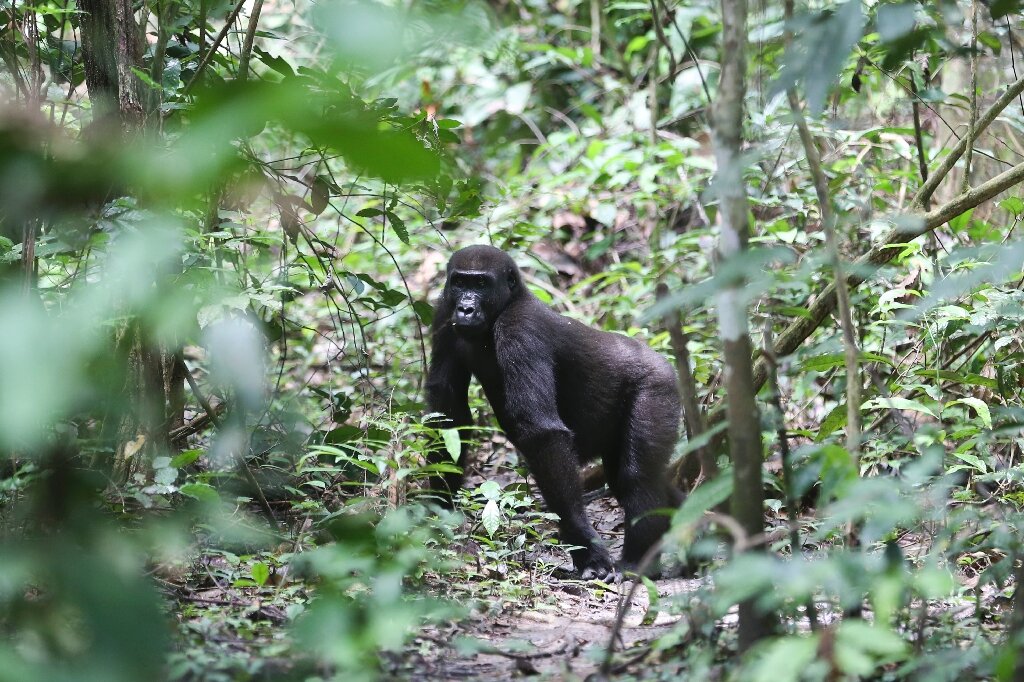
The park provides a rare opportunity to see both marine and terrestrial megafauna in a single ecosystem. Its interior forests support strong populations of western lowland gorillas, chimpanzees, red river hogs, giant forest hogs, sitatunga, and forest buffalo, while its coastal waters attract dolphins, sea turtles, and humpback whales. Loango’s ecological richness makes it a living laboratory for studying climate resilience, rainforest ecology, migrating marine life, and West-Central African biodiversity.
Location and Size
Located in Gabon’s Ogooué-Maritime Province along the Atlantic Ocean, Loango National Park occupies a strategic ecological zone where rainforest meets the sea. This unique positioning creates a rich interface between marine and terrestrial ecosystems, giving Loango the distinction of being one of the few places in Africa with intact coastal rainforests.
The park covers approximately 1,550 km² and includes major wildlife corridors that extend into the larger Iguéla Conservation Zone. Its varied landscapes support migratory marine species, forest mammals, wetland birds, savanna species, and primates that depend on both coastal and inland habitats. This vast ecological gradient enhances genetic flow, supports seasonal animal movements, and fosters diverse food webs.
Geography and Geology
Loango’s geography is exceptionally diverse. Its coastline features long stretches of untouched beaches, dynamic dune systems shaped by Atlantic winds, and secluded inlets where turtles come ashore to nest. Moving inland, the landscape transitions into grassy savannas, papyrus swamps, freshwater marshes, ancient lowland forests, and dense mangrove corridors that line lagoons.
The geological foundation of the park consists of marine sediments, coastal sands, and alluvial deposits that have built up over thousands of years. The Iguéla Lagoon system, one of the largest in Africa, plays a crucial hydrological role by regulating water flow, salinity, and nutrient distribution. These geological formations have created a highly productive environment for both plant and animal life.
Climate
Loango National Park experiences a humid equatorial climate characterized by warm temperatures, high rainfall, and consistently high humidity. This climatic stability supports lush plant growth, abundant insect life, and continuous food availability for herbivores and primates.
The climate includes two major rainy seasons (February–May and October–December) and two dry seasons, including the long dry season (June–September) when wildlife frequently emerges onto beaches, and whale migrations peak. These weather patterns influence animal behavior, plant phenology, and the overall safari experience, making each season unique for visitors.
Hydrology and Water Systems
Loango’s hydrological network is one of its defining features. The vast Iguéla Lagoon, fed by several freshwater rivers including the Rembo Ngowé, Rembo Olongué, and Rembo Lopé, forms a complex mosaic of estuarine waters. These waterways nourish swamp forests, grassy floodplains, and mangrove channels teeming with fish, amphibians, and aquatic mammals.
The meeting of freshwater and saltwater systems creates nutrient-rich habitats that support species like hippos, crocodiles, manatees, and numerous waterbird species. During the rainy season, water levels rise dramatically, flooding wetlands and creating prime feeding grounds for sitatunga and river hogs.
Ecosystems and Habitats
Few African parks showcase the level of habitat diversity found in Loango National Park. This diversity is responsible for the park’s outstanding wildlife sightings and ecological resilience. Major ecosystems include:
- Coastal rainforests filled with primates, forest elephants, and hornbills.
- Open savannas where buffalo, hogs, and predators roam.
- Mangrove forests supporting fish nurseries and wading birds.
- Swamps and wetlands that act as critical feeding sites for aquatic species.
- Atlantic beaches where elephants and hippos famously appear.
- Lagoon systems offering boat safaris and excellent birdwatching.
These ecosystems create one of the richest wildlife mosaics in Central Africa, with interactions between land and marine species that are rarely seen elsewhere.
Vegetation
The vegetation of Loango National Park is remarkably varied due to the interplay between coastal winds, tidal influences, and rainforest humidity. The park’s vegetation includes:
- High-canopy evergreen forest dominated by mahogany, okoumé, ironwood, and Aucoumea.
- Mangroves composed of red, white, and black mangrove species critical to marine life.
- Savanna grasslands supporting grazing mammals.
- Palm-dominated swamps such as raffia and oil palms used by wildlife and local communities.
- Coastal scrub and dune vegetation adapted to salt spray and sandy soils.
This rich plant diversity provides ample food, shelter, and breeding grounds for hundreds of animal species.
Wildlife of Loango National Park
Mammals
Loango National Park is renowned for its incredible mammal diversity. The coastal rainforests and savannas support iconic African species, many of which exhibit rare behaviors not documented elsewhere. Key mammals include:
- Western lowland gorillas, a major highlight for primate enthusiasts.
- Forest elephants known for their beach-walking behavior.
- Hippopotamuses that occasionally venture into ocean waves.
- Forest buffalo grazing along beaches and savannas.
- Red river hogs and giant forest hogs, abundant in wetland areas.
- Chimpanzees living in mature rainforest habitats.
- Sitatunga, duikers, and other antelopes.
Predators include leopards, African golden cats, servals, and occasionally spotted hyenas, adding an exciting dynamic to Loango’s food webs.
Marine Wildlife
Loango’s coastal waters offer one of the most rewarding marine wildlife experiences in West-Central Africa. Key species include:
- Humpback whales migrating offshore from July to October.
- Dolphins such as bottlenose and Atlantic humpback dolphins.
- Marine turtles including olive ridley, green, and leatherback turtles.
Whale-watching boat tours provide unforgettable sightings of breaching whales, playful dolphins, and vast schools of fish.
Birds
Loango National Park hosts over 300 bird species, making it one of Gabon’s leading birdwatching destinations. Key species include:
- Palm-nut vulture
- White-crested tiger heron
- African fish eagle
- Great blue turaco
- Hornbills and kingfishers
- Storks, herons, and waders
Mangroves, lagoons, and coastal forests offer exceptional opportunities to observe rare and colorful bird species.
Reptiles, Amphibians, and Insects
Reptiles in Loango include Nile crocodiles, forest cobras, African rock pythons, monitor lizards, and marine turtles. Amphibians are highly diverse and thrive in swamp forests and riverbanks.
The park’s insect populations—particularly butterflies, beetles, moths, dragonflies, and ants—play vital roles in pollination, nutrient cycling, and forest regeneration.
Unique Features of Loango National Park
- Beach-roaming elephants and buffalo—a globally iconic wildlife phenomenon.
- Surfing hippos—behavior observed in no other African park.
- Coastal gorilla habitats—exceedingly rare in Africa.
- Over 100 km of untouched Atlantic beaches.
- World-class lagoon ecosystems supporting diverse wildlife.
Cultural and Indigenous Communities
Loango is home to various indigenous groups, including the Myènè people, coastal fishing communities, and Babongo (Pygmy) groups who traditionally depend on forest and lagoon resources. Their deep ecological knowledge—ranging from canoe-making to medicinal plant use—has been passed down through generations and remains integral to conservation.
Community-based tourism programs allow visitors to experience traditional music, food, fishing practices, forest lore, and cultural ceremonies, ensuring local people benefit from the park’s protected status.
Conservation Importance
Loango National Park plays a crucial role in protecting Gabon’s coastal rainforest biodiversity, safeguarding endangered species such as western lowland gorillas, forest elephants, and marine turtles. The park acts as a major carbon sink, with its dense forests contributing significantly to climate regulation in Central Africa.
The National Agency for National Parks (ANPN), in partnership with African Parks and international research organizations, coordinates anti-poaching patrols, community outreach, and ecosystem monitoring programs aimed at preserving Loango’s rare habitats.
Threats and Challenges
- Illegal hunting and poaching
- Marine pollution and illegal fishing
- Climate change affecting coastlines and marine species
- Human–wildlife conflict along park borders
- Habitat disturbance in buffer zones
Ongoing conservation strategies, including ranger patrols, community education, and scientific monitoring, are essential for protecting Loango’s globally important ecosystems.
Research and Monitoring
Loango is one of Gabon’s leading centers for conservation research. The Max Planck Institute and partners conduct extensive studies on gorilla behavior, chimpanzee communication, elephant movement patterns, marine mammal ecology, and climate resilience.
Advanced monitoring tools—such as camera traps, GPS collars, drones, and acoustic sensors—help researchers track wildlife populations and detect threats in real time.
Tourism Activities
- Gorilla tracking in coastal rainforests.
- Beach wildlife safaris for elephants and buffalo.
- Whale-watching tours for humpback whales (July–October).
- Boat safaris through the Iguéla Lagoon.
- Fishing adventures in the lagoon and river systems.
- Birdwatching along wetlands and mangroves.
- Guided forest walks for primates, insects, and flora.
Access and Getting There
Visitors typically fly into Libreville or Port-Gentil before traveling to Loango Lodge or other gateway points via 4×4, boat, or charter flight. Road conditions vary by season, often requiring specialized vehicles during the rainy months.
Most travelers arrange transport and activities through reputable tour operators or Loango’s eco-lodge network to ensure smooth logistics and compliance with park regulations.
Permits, Fees, and Park Rules
Permits are required for:
- gorilla trekking
- park entry
- marine excursions
- professional filming or photography
Visitors must follow strict guidelines regarding wildlife distances, environmental protection, waste disposal, and respect for cultural communities.
Accommodation
Loango National Park offers a range of accommodation options, including:
- Loango Lodge – the park’s main eco-lodge overlooking the lagoon.
- Beachfront bungalows
- Wilderness safari camps
- Community-based guesthouses
Most accommodations emphasize low-impact tourism, using solar power, sustainable materials, and locally sourced food to minimize environmental footprint.
Best Time to Visit
Different seasons offer different highlights:
- Beach wildlife: December–March and June–September
- Whale watching: July–October
- Gorilla trekking: May–October
- Birdwatching: Excellent year-round
Why Loango National Park Is Unique
Loango National Park is unlike any other safari destination on Earth. It is the only place where visitors can watch elephants walk along the beach, hippos venture into the sea, gorillas inhabit coastal rainforests, and humpback whales migrate offshore—all within a single protected area. Its remarkable blend of marine and terrestrial ecosystems, pristine landscapes, and rare wildlife behaviors makes it one of Africa’s last true wilderness frontiers and a must-visit destination for elite safari enthusiasts and conservation travelers.