
Lobéké National Park
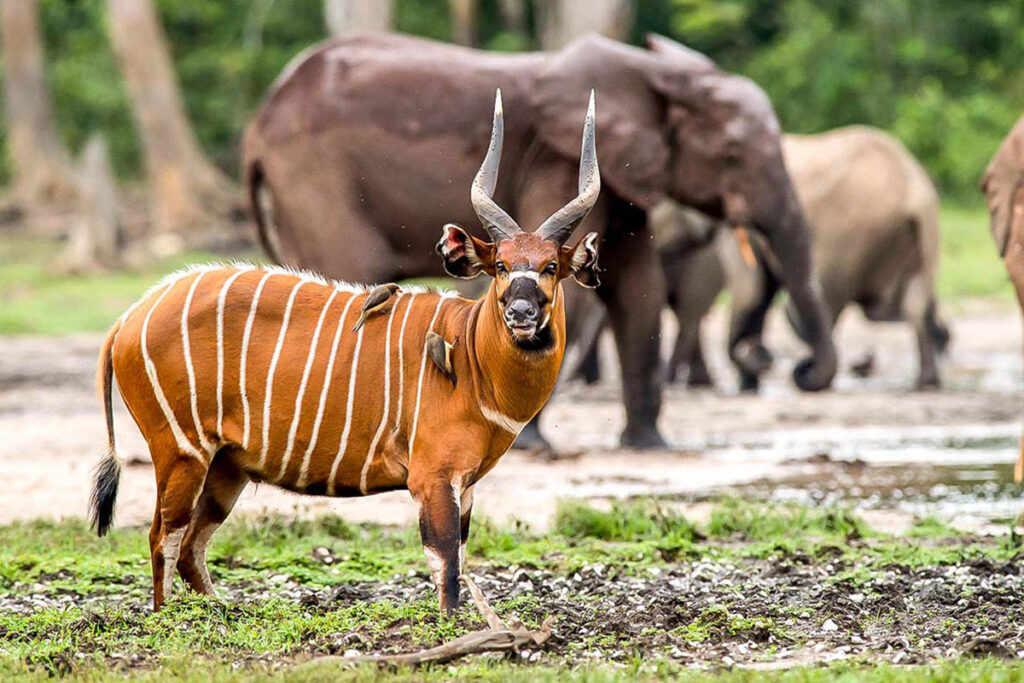
Lobéké National Park – Cameroon’s Pristine Congo Basin Rainforest of Forest Elephants, Western Lowland Gorillas, Bais, and Exceptional Wildlife Diversity
Lobéké National Park is one of Central Africa’s most extraordinary rainforest destinations—a vast, remote wilderness situated deep within the southeastern corner of Cameroon. Covering 2,179 km² of untouched lowland rainforest, swamp systems, and iconic mineral-rich clearings known as bais, Lobéké is internationally renowned for its exceptional wildlife concentrations, especially forest elephants, western lowland gorillas, bongos, and African grey parrots. As part of the UNESCO-listed Sangha Trinational Conservation Landscape, Lobéké forms one of the world’s most intact and ecologically important rainforest blocks, making it a global stronghold for Congo Basin biodiversity.
What sets Lobéké apart is its unparalleled wildlife viewing at bais—magnet-like forest openings where animals gather in remarkable numbers to feed on mineral salts. These natural clearings create one of Africa’s most spectacular and photogenic wildlife scenes, offering safari experiences found nowhere else on the continent. For researchers, conservationists, primatologists, and nature lovers, Lobéké represents one of Earth’s last true paradises of raw rainforest wilderness, untouched ecosystems, and endangered species thriving in their natural state.
Overview of Lobéké National Park
Established in 2001, Lobéké National Park is a cornerstone of Cameroon’s commitment to protecting the Congo Basin—the world’s second-largest rainforest after the Amazon. It is part of the pioneering Sangha Trinational (TNS) conservation initiative, linking Lobéké with Dzanga-Sangha (Central African Republic) and Nouabalé-Ndoki (Republic of Congo). This transboundary collaboration creates a conservation landscape of global significance, enabling species to move freely across borders and maintaining ecological processes that would be impossible to sustain within isolated parks.
Lobéké is globally recognized for having some of the highest wildlife densities in Central Africa, particularly at key bais such as Mbeli Bai, Petit Savanna, and Ndoki Bai. Observation towers and sustainably managed wildlife platforms allow visitors to safely watch elephants, gorillas, sitatunga, buffalos, birds, and primates gather in large mixed-species groups—an experience considered one of the most unique wildlife encounters anywhere in Africa.
Location and Size
The park lies in Cameroon’s East Region, within the Moloundou district, bordering both the Republic of Congo and the Central African Republic. Its strategic placement within the Sangha River Basin gives Lobéké seamless ecological connectivity with neighboring forests, forming a massive, continuous rainforest mosaic stretching across three nations. This uninterrupted landscape is essential for wide-ranging species such as forest elephants, bongos, and western lowland gorillas.
At 2,179 km², Lobéké National Park may be smaller than other Central African parks, but the quality of its intact habitat and the extraordinary abundance of wildlife around its bais make it one of the most productive rainforest ecosystems in the entire Congo Basin—an ecological powerhouse of both plant and animal life.
Geography and Geology
Lobéké’s geography is defined by dense lowland rainforest interspersed with natural, open clearings. These bais are geological formations created by mineral-rich groundwater rising to the surface, supporting nutrient-dense soils that cannot sustain typical rainforest vegetation. This provides an irresistible attraction to herbivores like elephants, buffalo, and bongo, which visit these clearings daily to feed on mineral salts.
Surrounding the bais are ancient tropical soils, rolling low hills, and riverine systems that shape vegetation patterns and wildlife distribution. The park lies within one of the oldest rainforest regions on Earth, with geological stability enabling the long-term evolution of highly specialized species—many of which are found nowhere else on the planet.
Climate
Lobéké’s equatorial climate ensures warm, humid, and rain-soaked conditions year-round. Temperatures typically range between 22°C and 28°C, with humidity often exceeding 80%. Rainfall averages 1,500–2,000 mm per year, supporting evergreen rainforest and continuous water availability.
The climate drives biological cycles such as fruiting seasons, gorilla movements, bird migrations, amphibian breeding events, and elephant visitation patterns at the bais. The lush vegetation, constant canopy moisture, and stable rainfall create ideal conditions for primates, forest ungulates, amphibians, and rare bird species.
Hydrology and Water Systems
Lobéké’s hydrological network is incredibly rich and vital. Numerous rivers—most notably the Ndoki, Sangha, and Djombé Rivers—flow through the region, nourishing swamp forests, seasonally flooded areas, and wetland ecosystems. The Sangha River, one of the Congo River’s major tributaries, plays a central role in maintaining regional ecological connectivity.
The park’s mineral-rich bais are formed by hydrological upwellings that push mineral-laden groundwater to the surface. These clearings are essential drinking and feeding sites for elephants, gorillas, and other mammals, particularly during the dry season. This hydrological phenomenon makes Lobéké one of the most reliable wildlife-viewing regions in the Congo Basin.
Ecosystems and Habitats
Lobéké contains some of the Congo Basin’s most intact and diverse ecosystems, providing refuge for species that have disappeared from much of Central Africa due to habitat loss and poaching. Key habitats include:
- Lowland evergreen rainforest: Towering trees, dense canopy layers, and abundant fruiting species supporting primates and birds.
- Bais (saline clearings): Unique open areas attracting major wildlife concentrations.
- Swamp forests: Permanently waterlogged zones with raffia palms and sedges.
- Riparian corridors: Forest galleries along rivers supporting elephants, sitatunga, and crocodiles.
- Marshlands: Important feeding grounds for antelope and aquatic birds.
These habitats create an ecological mosaic unmatched in richness and accessibility, positioning Lobéké as one of the Congo Basin’s most ecologically valuable protected areas.
Vegetation
Lobéké’s vegetation is structured in classic Congo Basin rainforest layers, including emergent giants 40–50 m tall, a dense main canopy, a mid-level understory of shrubs, and a dark, humid forest floor teeming with fungi, mosses, and herbs. Dominant trees include Terminalia superba, Entandrophragma cylindricum, Celtis species, mahoganies, and ironwoods.
Swamp forests host raffia palms, water-loving herbs, and wetland grasses. Around bais, unique plant communities adapted to mineral-rich soils create open landscapes unlike any other forest habitat. Overall, the park supports hundreds of plant species, many with medicinal, ecological, or cultural significance.
Wildlife of Lobéké National Park
Western Lowland Gorillas
Lobéké is one of the most important sanctuaries for western lowland gorillas. These great apes inhabit the dense rainforests surrounding bais and are known for their shy yet curious behavior. Gorilla tracking in Lobéké offers exceptional opportunities to observe these impressive primates feeding, playing, and interacting in their natural environment.
The abundance of fruiting trees and low human disturbance make Lobéké one of the best regions in Central Africa for gorilla conservation and research.
Forest Elephants
Forest elephants are a signature species of Lobéké National Park. These smaller, more elusive cousins of the savanna elephant are frequently seen in large numbers at the park’s bais. Their presence helps shape forest ecology by dispersing seeds, opening pathways, and maintaining vegetation structure.
Because forest elephants are heavily threatened elsewhere by poaching, Lobéké’s protected environment is vital for sustaining the species’ long-term survival.
Other Primates
Lobéké boasts remarkable primate diversity, including:
- Central chimpanzee
- Black-and-white colobus
- Putty-nosed monkey
- Moustached monkey
- De Brazza’s monkey
- Agile mangabey
These primates depend on fruiting cycles, figs, forest galleries, and canopy highways that remain undisturbed due to low human presence.
Mammals
Lobéké supports one of the richest mammal assemblages in the region. Key species include:
- Bongo antelope: A striking forest antelope commonly seen at bais.
- Sitatunga: A semi-aquatic species thriving in swamp forests.
- Forest buffalo: Smaller, more secretive, and often found in groups.
- Leopards: Apex predators inhabiting dense forest regions.
- Giant forest hog: Africa’s largest wild pig species.
- Blue and bay duikers: Abundant across forest floors.
The healthy mammal population makes Lobéké a stronghold for several rare and declining species.
Birds
Birdlife in Lobéké National Park is exceptional, with over 300 species recorded. The park is particularly famous for:
- African grey parrots: Often seen in spectacular flocks.
- Great blue turacos: Iconic forest birds with striking plumage.
- Hornbills: Including black-casqued and pied species.
- Kingfishers and bee-eaters: Abundant along waterways.
- Raptors: Including eagles, hawks, and forest specialists.
- Swamp and marsh birds such as herons and storks.
Birdwatching is especially rewarding at bais, where mixed-species aggregations occur throughout the year.
Reptiles, Amphibians, and Insects
Reptiles include forest cobras, vipers, chameleons, geckos, monitor lizards, and dwarf crocodiles. Amphibians thrive in the wet climate, with numerous frog and toad species active year-round.
Insects are extraordinarily diverse, including thousands of butterfly species, beetles, ants, termites, and dragonflies. These invertebrates play essential roles in nutrient recycling, pollination, and providing prey for birds and small mammals.
Unique Features of Lobéké National Park
- High wildlife densities at bais, offering some of the best rainforest wildlife viewing in Africa.
- Part of a UNESCO World Heritage Site within the Sangha Trinational Conservation Landscape.
- Intact lowland rainforest with minimal human disturbance.
- Exceptional gorilla, elephant, and bongo sightings.
- Presence of rare birds and primates found only in the Congo Basin.
Cultural and Indigenous Communities
The Indigenous Baka (Pygmy) communities are the original inhabitants of the Lobéké region. Their deep knowledge of the forest, wildlife behavior, medicinal plants, and survival techniques is unparalleled. The Baka maintain spiritual traditions tied to the forest, viewing certain animals and sites as sacred.
Modern conservation programs actively involve Baka communities as trackers, guides, eco-guards, and cultural interpreters. This partnership enhances conservation outcomes while supporting local livelihoods and promoting cultural preservation.
Conservation Importance
Lobéké National Park is vital for protecting globally threatened species such as:
- Western lowland gorillas
- Forest elephants
- Bongo antelopes
- Forest buffalo
- Rare primates
- Endemic birds
The park provides crucial ecosystem services, including carbon storage, climate regulation, and hydrological stabilization. It is managed by Cameroon’s Ministry of Forestry and Wildlife (MINFOF) and supported by WWF and the Sangha Trinational Foundation.
Threats and Challenges
Despite strong protection, Lobéké faces ongoing threats such as:
- Elephant poaching for ivory
- Bushmeat hunting
- Illegal logging in buffer zones
- Wildlife trafficking networks
- Encroachment and habitat disturbance
Enhanced ranger patrols, transboundary enforcement, and community partnerships are essential for mitigating these threats and protecting the park’s long-term ecological health.
Research and Monitoring
Lobéké is a leading research destination for tropical ecology, gorilla behavior, elephant biology, bird migration, and forest dynamics. Long-term monitoring programs involve:
- Camera trap networks
- Acoustic monitoring of forest elephants and primates
- Vegetation and phenology surveys
- Elephant and gorilla census programs
- Climate and hydrological monitoring
Scientists from universities and NGOs rely on Lobéké to study Congo Basin ecosystems that remain largely untouched elsewhere.
Tourism Activities
Lobéké offers some of Central Africa’s best rainforest wildlife experiences, including:
- Bai wildlife viewing: Watch elephants, gorillas, buffalo, and parrots gather in large numbers.
- Gorilla tracking: Guided treks to observe habituated gorilla groups.
- Forest walks: Explore pristine rainforest ecosystems with expert trackers.
- Birdwatching: Exceptional sightings of Congo Basin specialties.
- Community visits: Experience Baka culture, music, and forest traditions.
- Photography: Remote viewing towers provide unmatched opportunities.
Access and Getting There
Access to Lobéké usually begins in Cameroon’s capital Yaoundé or in Bertoua. Visitors travel to Libongo or Mbang, from where forest tracks or river routes lead into the park. The region is remote and requires well-organized transport, guides, and 4×4 vehicles.
Due to limited infrastructure, travel arrangements are typically made through tour operators, conservation agencies, or research organizations familiar with the region.
Permits, Fees, and Park Rules
Visitors require permits for entry, gorilla tracking, bai viewing, and specialized activities. Fees contribute directly to conservation and community development.
- Stay quiet at observation platforms.
- No sudden movements near wildlife.
- No littering or damaging vegetation.
- Maintain a 7-meter distance from gorillas.
- Follow all ranger instructions.
Accommodation
Accommodation consists mainly of basic forest camps, community-run lodges, eco-guard stations, and guesthouses in nearby towns. While facilities are simple, they provide authentic access to one of Africa’s most pristine rainforests.
Future eco-lodges are planned through sustainable tourism partnerships linked to the Sangha Trinational Project.
Best Time to Visit
The best time to visit Lobéké National Park is during the dry seasons—December to March and June to September. During these months, forest paths are easier to navigate, and wildlife gathers more frequently at bais.
Birdwatching, primate tracking, and elephant viewing are excellent year-round, though accessibility improves significantly in the drier periods.
Why Lobéké National Park Is Unique
Lobéké National Park is unique for its extraordinary wildlife gatherings at mineral-rich bais, its pristine lowland rainforest ecosystems, and its role within the UNESCO-listed Sangha Trinational landscape. It offers one of the most exclusive and immersive rainforest safari experiences in Africa, where elephants, gorillas, bongos, buffalo, and vibrant birdlife appear in unforgettable scenes of natural drama.
For travelers seeking raw wilderness, world-class wildlife encounters, and immersion in the Congo Basin’s ecological heart, Lobéké stands among the most remarkable and undisturbed national parks on the African continent.