
Semien Mountains National Park
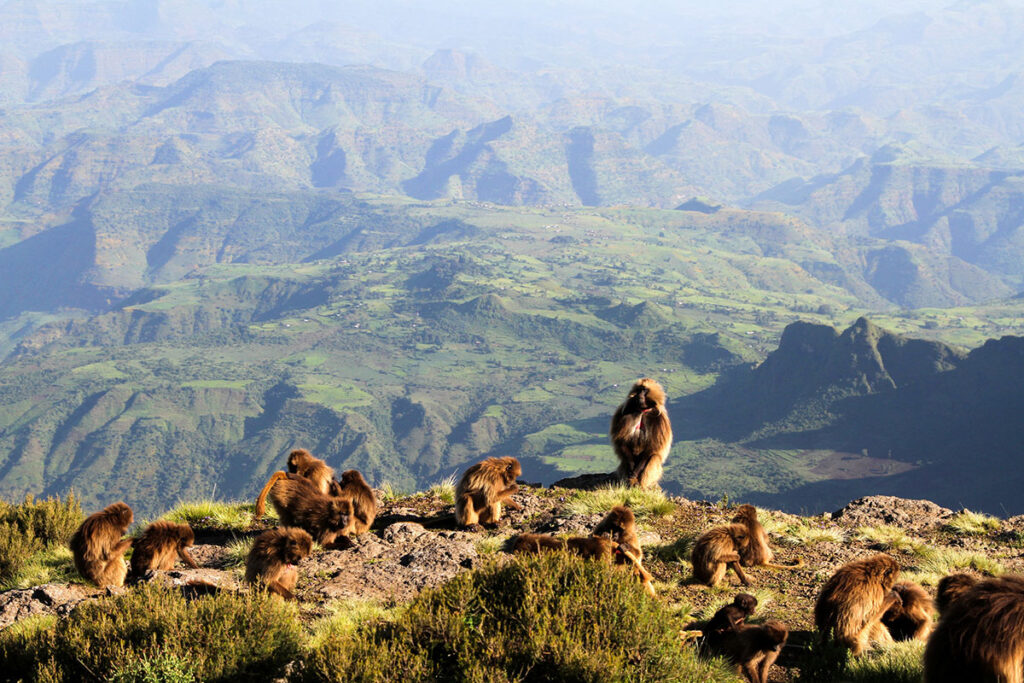
Semien Mountains National Park, Ethiopia – UNESCO World Heritage Highlands, Epic Escarpments, Ancient Volcanoes and Africa’s Greatest High-Altitude Wilderness
Overview
Semien Mountains National Park established in 1969, is one of Africa’s most extraordinary natural wonders—an enormous high-altitude kingdom sculpted from ancient volcanic rock and shaped by millions of years of erosion. The park’s jagged skyline, plunging cliffs, deep canyons and sweeping plateaus create a landscape so dramatic that early travelers compared it to a natural fortress built by giants. This stark, powerful beauty is enhanced by the extreme altitude, crystal-clear air and panoramic horizons stretching across the Ethiopian Highlands.
Covering 412 km², the Semien Mountains are a sanctuary for rare and ancient species found nowhere else on Earth. The park protects iconic wildlife such as the Walia ibex—a mountain goat that clings to near-vertical cliffs; the Gelada baboon, the world’s only grass-eating primate; and the elusive Ethiopian wolf, Africa’s most endangered carnivore. This combination of high-altitude wilderness and irreplaceable biodiversity earned the park UNESCO World Heritage status as one of Earth’s most globally significant landscapes.
Beyond biodiversity, the Semien Mountains are home to centuries-old communities whose terraced farms, stone houses and traditional grazing practices represent a cultural heritage as enduring as the mountains themselves. Trekking through the Semien Mountains is not only a journey through geological history, but also through living traditions that have shaped Ethiopia’s highlands for generations.
Key Facts and Figures
- Location: Amhara Region, Northern Ethiopia, 100 km from Gondar
- Established: 1969
- UNESCO Inscription: 1978 (Natural Criteria vii & x)
- Total Area: 412 km²
- Altitude Range: 1,900 m – 4,550 m
- Highest Peak: Ras Dashen (4,550 m), the highest point in Ethiopia
- Major Peaks: Silki, Bwahit, Kidis Yared
- Dominant Ecosystem: Afro-alpine moorlands
- Endemic Mammals: Walia ibex, Gelada baboon, Ethiopian wolf
- Key Bird Species: Lammergeier, Rüppell’s vulture, Thick-billed raven
- Main Trekking Route: Sankaber → Gich → Chennek → Ambiko → Ras Dashen
Location
The park lies along the northern edge of the Ethiopian Highlands, a massive volcanic plateau stretching across much of northern and central Ethiopia. This elevated region forms one of the most important ecological corridors in East Africa and is often referred to as Africa’s “third pole” due to its extreme heights and cold climate. Its proximity to Gondar—Ethiopia’s former imperial capital—makes it accessible yet still wonderfully remote, giving visitors a sense of stepping into a world untouched by modern development.
Geology
The Semien Mountains are part of the Simien Traps, a gigantic volcanic formation created by the outpouring of basaltic lava during the Oligocene and Miocene periods. These lava flows, once stretching thousands of kilometers, hardened into massive horizontal layers of basalt. Over millions of years, rivers, winds and climatic forces carved this volcanic plateau into an architectural masterpiece of natural stone: towering pinnacles, knife-edge ridges, amphitheater-like valleys and sheer cliffs dropping more than 1,500 meters.
Key geological landmarks include:
- Ras Dashen (4,550 m): Ethiopia’s highest peak and a colossal volcanic remnant.
- Imet Gogo: A viewpoint offering sweeping 360-degree panoramic vistas of escarpments and valleys.
- Bwahit Peak and Pass: A dramatic mountain ridge crossed by trekkers en route to Ras Dashen.
- Jinbar Waterfall: A seasonal cascade plunging hundreds of meters into a deep canyon.
Few landscapes in Africa display such a perfect blend of geological age, scale and raw visual impact.
Climate
High altitude defines the Semien climate. Days are cool, nights are cold and weather can change rapidly due to thin air and strong winds. Temperatures at the highest elevations often dip below freezing, especially during the dry season from October to February. Frost is common, and ice crystals form on grass at night, creating a shimmering alpine landscape at dawn.
The rainy season (June–September) brings fog, mist, lush vegetation and increased water flow, transforming the park into a vibrant green highland. During the dry season, skies become intensely clear, offering some of the best mountain visibility in Africa.
Hydrology
The Semien Mountains feed major river systems, especially the Tekeze River, which drains enormous portions of northern Ethiopia. Alpine meadows capture water like natural sponges, releasing it slowly into streams, waterfalls and underground aquifers. These water sources sustain wildlife, support agriculture in valleys below and maintain unique wetland habitats home to amphibians and endemic plant species.
Ecosystems
The Semien Mountains are an ecological mosaic shaped by altitude, topography and temperature extremes. This means species distribution shifts dramatically across elevation zones, creating a spectacular diversity of habitats in a relatively small area.
- Afro-alpine Moorlands (above 3,700 m): Home to giant lobelia, helichrysum and endemic alpine flowers.
- Montane Grasslands: Rolling high meadows where Gelada baboons forage in massive troops.
- Montane Woodlands: Juniper and Hagenia trees thrive in sheltered valleys.
- Tree Heather Forests: Heather stands form dense evergreen forests at mid-altitudes.
- Escarpment and Cliff Ecosystems: Sheer walls of basalt where Walia ibex and raptors thrive.
- Wetlands and Alpine Bogs: Essential for amphibians and provide breeding grounds for insects.
Vegetation
The Afro-alpine vegetation of the Semien Mountains is some of the most spectacular on Earth. Towering giant lobelia plants—resembling natural sculptures—rise nearly 10 meters high and dominate the high plateaus. Surrounding them are carpets of helichrysum (everlasting flowers), mosses, tussock grasses and hardy shrubs adapted to cold temperatures and intense sunlight.
Lower elevations support juniper forests, Hagenia trees with bright red flowers, stands of wild olive and woodlands that host a wide array of birdlife and smaller mammals. The biodiversity contained within these vegetation zones reflects the park’s unique combination of elevation and climate.
Wildlife
Semien Mountains National Park is a stronghold for globally important wildlife, particularly species that evolved in extreme environments and isolated habitats. Its evolutionary significance cannot be overstated: several species here represent ancient genetic lineages that survived only because the highlands acted as climatic refuges.
Mammals
The mountain range supports an exceptional array of mammals, the most iconic being:
- Walia ibex: A critically endangered mountain goat found only in the Semien Mountains. With their curved horns and incredible climbing ability, they thrive on near-vertical cliffs inaccessible to predators.
- Gelada baboon: Often seen in groups of 200–400 individuals, Geladas spend nearly all day plucking grasses, roots and herbs. Their red chest patches, expressive behavior and complex vocalizations make them one of Africa’s most fascinating primates.
- Ethiopian wolf: Africa’s most endangered carnivore, this elegant red-coated wolf hunts rodents in open Afro-alpine grasslands. Though sightings are rare, the Semien Mountains are within its historical range.
- Menelik’s bushbuck, klipspringer, Abyssinian hare
- Spotted hyena, golden jackal, serval
Birds
The Semien Mountains are one of Africa’s premier birdwatching destinations. High-altitude cliffs and grasslands support rare raptors and specialized Afro-alpine birds.
- Lammergier (Bearded Vulture): Known for dropping bones onto rocks to access marrow—the only bird with this behavior.
- Rüppell’s griffon vulture
- Thick-billed raven (endemic)
- Wattled ibis (endemic)
- Verreaux’s eagle
- Abyssinian longclaw
- White-collared pigeon
Reptiles and Amphibians
- Ethiopian highland viper
- High-altitude gecko species
- Tree frogs and alpine toads in wet meadows
Insects
The park’s seasonal wildflowers attract a range of butterflies, beetles, alpine bees and endemic grasshoppers, forming the essential foundation of the highland food web.
Unique Features
- One of the world’s highest and longest cliff escarpments
- Ras Dashen—Ethiopia’s highest summit
- UNESCO World Heritage natural and cultural landscape
- Rare endemic wildlife found nowhere else on Earth
- Breathtaking viewpoints like Imet Gogo and Chennek
- Jinbar Waterfall cascading into a deep gorge
Cultural and Indigenous Communities
For hundreds of years, highland communities have shaped and been shaped by the Semien landscape. Stone houses, livestock enclosures, terraced farms and ancient footpaths carve human presence into the mountains. Families practice subsistence agriculture, raising barley, potatoes and livestock adapted to cold climates. Traditional mule trails, linking villages and pastures, form the backbone of today’s trekking routes.
These communities have preserved unique cultural traditions, including highland music, farming rituals, religious festivals and hospitality customs that blend seamlessly with the natural environment. UNESCO recognizes their cultural significance as part of the park’s heritage value.
Conservation Importance
Semien Mountains National Park is a critical refuge for high-altitude biodiversity. Its steep cliffs, isolated valleys and varied elevations protect evolutionary lineages that have survived since the Pleistocene. Conservation efforts focus on limiting overgrazing, protecting Walia ibex habitats, monitoring Ethiopian wolf populations, restoring degraded slopes and promoting sustainable community-based tourism.
Threats
- Overgrazing on fragile alpine meadows
- Land pressure from expanding villages
- Climate change reducing Afro-alpine habitats
- Soil erosion on steep slopes
- Fuelwood collection from natural forests
Research and Monitoring
Semien Mountains National Park is a hub for conservation science and high-altitude ecological research. Ongoing studies include:
- Walia ibex behavioral and genetic research
- Gelada baboon social structure and communication studies
- Long-term vegetation and climate-impact monitoring
- Studies on cliff ecology and raptor nesting
- Watershed and hydrology modeling
- Ethiopian wolf conservation programs
Trekking Routes and Viewpoints
The Semien Mountains offer Africa’s most spectacular multi-day trekking routes. Trails traverse escarpments, alpine meadows, deep gorges and high mountain passes, giving trekkers immersive exposure to both nature and culture.
- Sankaber → Gich → Chennek: The classic route offering dramatic escarpment views and large Gelada troops.
- Chennek → Ambiko → Ras Dashen: High-altitude ascent to Ethiopia’s tallest mountain.
- Imet Gogo Circuit: One of the most beautiful viewpoints in Africa.
- Bwahit Pass: High-altitude crossing with sweeping panoramas.
- Jinbar Waterfall Trail: Cliffside trek to a massive seasonal waterfall.
Mule support is used throughout the park, allowing trekkers to travel comfortably while rural communities gain reliable income from tourism.
Access
The park is accessed from Gondar via Debark, where permits, guides, scouts and mules are arranged. From Debark, the journey continues by 4×4 to trailheads such as Sankaber or Gich. Roads vary in condition depending on season, but professional tour operators ensure smooth logistics for trekking groups.
Permits
All visitors must obtain entry permits from the national park office in Debark. Hiring a licensed guide and armed scout is required for safety and conservation oversight. Mule rental and camping fees are also handled through the same office.
Accommodation
Accommodation includes designated mountain campsites (Sankaber, Gich, Chennek, Ambiko), rustic trekking huts, community lodges and eco-lodges near the park’s borders. Lodges and hotels in Debark offer comfortable pre- and post-trek stays.
Best Time to Visit
The best time to visit is during the dry season from October to May. Weather conditions are stable, trails are dry, wildlife is active and visibility is excellent. The months immediately after the rainy season—October to December—offer lush green landscapes, blooming wildflowers and ideal photography conditions.
Why Semien Mountains National Park Is Unique
Semien Mountains National Park stands among the world’s greatest mountain destinations—a sweeping high-altitude wilderness of volcanic peaks, dramatic escarpments, ancient ecosystems and critically endangered wildlife. Its blend of geology, ecology and human heritage is unmatched anywhere in Africa. For trekkers, photographers, wildlife enthusiasts and cultural travelers, the Semien Mountains offer an experience that is profound, immersive and unforgettable—a true natural masterpiece carved into the very Roof of Africa.