
Waterberg Plateau Park
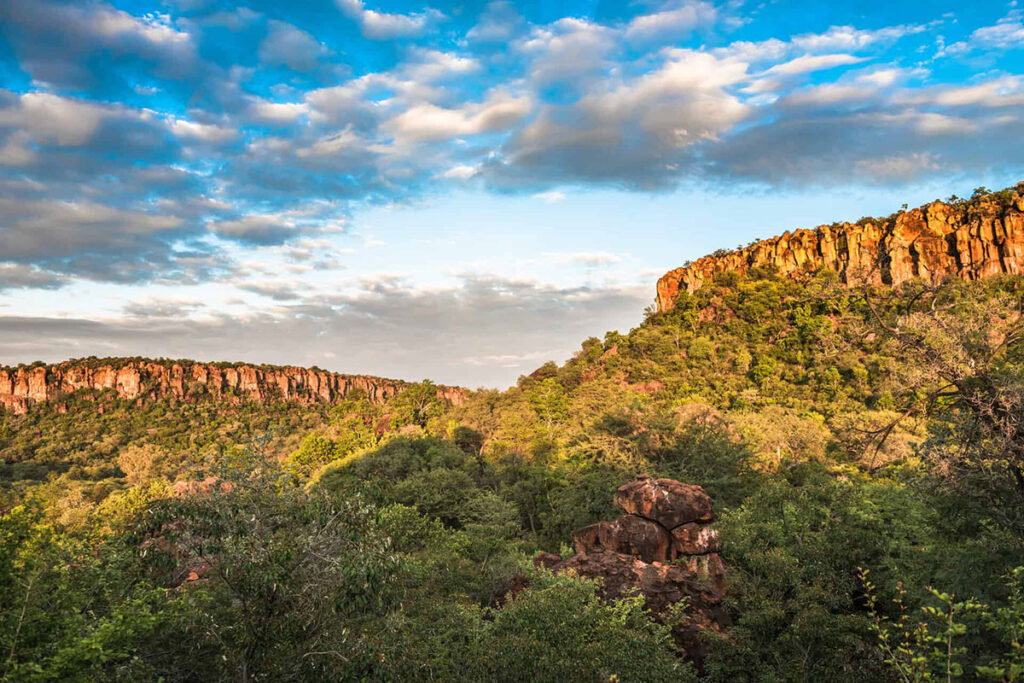
Waterberg Plateau Park – Namibia’s Ancient Table Mountain, Rare Wildlife Sanctuary, Dramatic Cliffs, Wilderness Trails and a Biological Stronghold of the Central Plateau
Waterberg Plateau Park is one of Namibia’s most dramatic and ecologically significant protected areas—an immense sandstone table mountain rising abruptly from the surrounding Kalahari plains and hosting some of the rarest and most carefully protected wildlife in the country. Established in 1972 and covering approximately 405 km², this iconic park combines towering red cliffs, lush vegetation zones, prehistoric geology, perennial springs and a high-altitude plateau ecosystem that is unlike any other landscape in Namibia. The Waterberg’s natural fortress-like structure allowed it to become a safe haven for endangered species such as Cape buffalo, roan antelope, sable antelope, white rhinos and black rhinos, which were reintroduced through pioneering conservation programs that helped restock populations across Namibia.
The Waterberg Plateau rises more than 200 meters above the plains, stretching for over 50 kilometers and creating a natural ecological island. This elevated environment traps moisture, supports denser vegetation and provides unique habitats for birds, mammals, reptiles and plants not commonly found in the surrounding savannah. Its springs feed the area’s only permanent water systems for many kilometers, making the plateau crucial for wildlife survival. Combined with its cultural history—including Herero heritage, German colonial-era battles and ancient human occupation—Waterberg Plateau Park is a cornerstone of both Namibia’s natural and cultural heritage, offering visitors an unforgettable experience of wilderness, geology, biodiversity and conservation excellence.
Location, Size and Geographic Setting
Waterberg Plateau Park is situated in north-central Namibia, approximately 68 km southeast of Otjiwarongo and 280 km from Windhoek. This strategic location places the park at the transition zone between the semi-arid Kalahari Basin and the savannah ecosystems of the central highlands. The plateau itself is a massive geological uplift standing about 1,800 meters above sea level, with sheer cliffs and rugged escarpments defining its boundaries. These physical features create a natural stronghold ideal for protecting rare wildlife.
- Established: 1972 as a national park
- Area: ~405 km²
- Elevation: Up to 1,800 m above sea level
- Landscape: Sandstone plateau, cliffs, springs, woodland, savannah
- Nearest town: Otjiwarongo
The plateau’s vast height and isolated environment create distinct ecological zones—from arid plains to cool, moist plateau forests—making Waterberg a hotspot of biodiversity and a critical reservoir for endangered species.
Geology, Landscape Formation and Sandstone Sculpting
The Waterberg Plateau is a geological masterpiece sculpted over 200 million years. The striking red and ochre cliffs are composed of massive sandstone deposits formed during the Jurassic period when ancient rivers deposited sediment that later hardened into towering rock formations. Over millions of years, erosion carved deep ravines, caves and ledges into the plateau’s flanks, creating dramatic scenery and microhabitats for diverse species.
The porous nature of the sandstone allows it to trap rainfall and release it slowly through natural springs—an ecological marvel in one of Namibia’s driest regions. These springs feed lush vegetation zones and act as lifelines for wildlife that depends on permanent water sources. The elevated plateau surface is mostly flat, dotted with shrubs, grasses and woodland pockets, while the lower slopes transition into savannah woodland and thornveld.
Climate and Seasonal Patterns
Waterberg Plateau Park experiences a semi-arid climate with warm summers, cool winters and highly variable rainfall. Because of its elevation, the plateau receives more moisture than the surrounding plains, allowing for richer vegetation growth and a noticeable difference in temperature and humidity.
- Rainy season: November–April
- Dry season: May–October
- Annual rainfall: 400–500 mm, with higher rainfall on the plateau
- Temperature range: 8°C–32°C depending on season and elevation
The plateau’s microclimate plays a crucial role in sustaining its unique biodiversity. Mist and cloud cover often accumulate along the cliffs, creating cool, moist conditions that support plants typically found at higher elevations. These climatic gradients enrich Waterberg’s ecological complexity and support species not found elsewhere in central Namibia.
Hydrology – Springs, Ravines and Water Sources
Waterberg is named after its most defining characteristic: water. Unlike much of Namibia, the park contains permanent springs that emerge from the sandstone layers of the plateau. These springs form streams that flow through ravines, feeding lush vegetation and attracting wildlife year-round.
- Perennial springs: Provide constant water supply even in the dry season.
- Seasonal streams: Flow down the slopes during rains, shaping ravines and valleys.
- Groundwater reservoirs: The plateau acts as a sponge, filtering and retaining rainwater.
These hydrological features have made the park one of the most ecologically stable landscapes in Namibia. Without the Waterberg’s springs, much of the area would remain dry savannah with far fewer species able to thrive.
Ecosystems and Vegetation Diversity
The contrast between the dry plains and the lush plateau forests makes Waterberg one of the most diverse ecological zones in Namibia. The lower slopes are home to savannah woodland, dominated by acacia species, terminalia, thorn bushes and hardy grasses. As one climbs toward the plateau top, vegetation shifts into denser woodland and patches of thick bush supported by increased moisture.
- Savannah woodlands: Camelthorn, shepherd’s tree, raisin bush.
- Mixed dry woodland: Acacia, commiphora and mopane patches.
- Plateau forests: Fig trees, water-loving shrubs, tall grasses and dense undergrowth.
- Cliff vegetation: Aloes, succulents, lichens and ferns growing in crevices.
The plateau’s microhabitats—shaded ravines, rocky ledges, moist forest floors and grassy openings—provide refuges for rare species and create the ecological complexity that makes Waterberg such an important conservation site.
Wildlife of Waterberg Plateau Park
Waterberg Plateau Park is renowned for its rare and protected wildlife populations. Because the plateau is naturally difficult for predators and poachers to access, it has become a safe haven for highly threatened species that struggled to survive elsewhere in Namibia. It has played a crucial role in the national recovery of species such as black rhinos and Cape buffalo.
Mammals
The park is especially important for its populations of large antelope and endangered mammals. Historically, the plateau served as an intensive breeding area for reintroductions of species into other Namibian parks—a conservation model that has become one of the country’s greatest success stories.
- Black and white rhinos: Thriving populations protected from poaching.
- Cape buffalo: Reintroduced to northern Namibia, now stable.
- Roan antelope: One of Namibia’s strongest populations.
- Sable antelope: Rare in the country, thriving at Waterberg.
- Giraffes, kudu, eland and klipspringer: Common throughout slopes and plateau edges.
Predators such as leopards and cheetahs occur in low densities, mostly along the lower slopes, while wild dogs and hyenas occasionally move through the surrounding landscape. The plateau’s isolation limits predator access, allowing herbivores to flourish.
Birdlife
Waterberg is an outstanding birding destination with over 200 recorded species. Its cliffs, forests and ravines attract species not commonly found in Namibia’s drylands, making the park a hotspot for endemic and specialized birds.
- Raptors: Cape vulture, Verreaux’s eagle, peregrine falcon.
- Forest birds: Hartlaub’s spurfowl, African hawk-eagle, white-browed robin-chat.
- Plateau species: Rosy-faced lovebird, Rüppell’s parrot, Monteiro’s hornbill.
Reptiles, Amphibians and Insects
The rocky cliffs and warm slopes host numerous reptiles, including agama lizards, geckos, tortoises and several snake species. Amphibians thrive near permanent water sources, while insects—particularly butterflies and beetles—flourish during and after the rainy season.
Unique Features of Waterberg Plateau Park
- High-altitude plateau ecosystems: Rare in Namibia, rich in biodiversity.
- Critical breeding ground: For endangered antelope and rhinos.
- Prehistoric geology: 200-million-year-old sandstone formations.
- Natural fortress: Cliffs protect wildlife from human disturbance.
The combination of elevation, moisture, geology and conservation history makes Waterberg unlike any other protected area in Namibia.
Cultural and Historical Significance
Waterberg Plateau is not only a natural wonder—it is also a landscape of deep cultural and historical importance. It was the site of the 1904 Battle of Waterberg, where the Herero people resisted German colonial forces in a tragic conflict that shaped Namibian history. Archaeological findings show that humans have lived around the plateau for thousands of years, using its springs and shelter as vital resources. Today, local communities remain closely connected to the land, contributing to conservation and tourism initiatives.
Conservation Importance
Waterberg Plateau Park plays a central role in Namibia’s wildlife conservation strategy. Because of its isolated and secure plateau environment, the park was chosen as a breeding and relocation center for rare species. Many animals reintroduced elsewhere in Namibia—including Etosha—originated from Waterberg Plateau. The park is vital for maintaining genetic diversity and safeguarding endangered species from poaching and habitat loss.
Threats and Environmental Challenges
- Fire mismanagement: Natural fires help vegetation, but uncontrolled burns can cause damage.
- Invasive species: Alien plants compete with native species on plateau edges.
- Climate change: Alters rainfall patterns and threatens springs.
- Human pressure: Surrounding livestock grazing and land use affect buffer zones.
Careful fire management, community engagement and ecosystem monitoring are essential for maintaining the plateau’s ecological balance.
Research and Monitoring Programs
Waterberg supports ongoing ecological studies focused on rare antelope populations, rhino genetics, fire ecology, hydrological systems and vegetation change. Scientists also monitor predator movement, bird populations and the health of spring-fed ecosystems. The park’s role as a breeding and relocation center provides valuable research opportunities that strengthen conservation throughout Namibia.
Tourism Activities
Visitors to Waterberg Plateau Park can enjoy a blend of wildlife viewing, scenic hiking, photography, birdwatching and cultural exploration. Guided plateau hikes offer incredible views over the Kalahari Basin, while game drives explore woodland areas at the base of the cliffs. The park’s trails, viewpoints and historical sites provide immersive experiences for nature lovers and history enthusiasts alike.
- Guided hikes to the plateau summit
- Game drives at the plateau base
- Birdwatching in ravines and forests
- Historical tours of the Waterberg battle sites
- Photography of red cliffs and panoramic vistas
Access – How to Reach the Park
- By road: Accessible via B1 highway from Otjiwarongo.
- By air: Nearby airstrips available for charter flights.
- Self-drive: Popular option for visitors touring Namibia’s northern circuit.
Permits and Park Regulations
- Entry fees required for all visitors.
- Guided hiking mandatory for plateau access.
- No off-road driving or disturbing wildlife.
- Strict fire regulations due to sensitive vegetation.
Accommodation Options
Waterberg offers a range of accommodation options from Namibia Wildlife Resorts lodges to private camps and community-managed facilities. Most lodges provide stunning views of the plateau, guided hikes, swimming pools and excellent birdwatching opportunities.
Best Time to Visit
- May–October: Dry season with excellent wildlife viewing.
- November–April: Rainy season, greener scenery and richer birdlife.
Why Waterberg Plateau Park Is Unique
Waterberg Plateau Park is one of Namibia’s most extraordinary landscapes—a towering ecological island that protects rare wildlife, nurtures springs in an arid region and preserves ancient geological formations sculpted over millions of years. Its plateau ecosystems, conservation successes and cultural history make it a priceless sanctuary. Whether exploring its forests, hiking its cliffs, studying its wildlife or reflecting on its history, Waterberg offers an experience that is both deeply enriching and undeniably unique within the African wilderness.