
Wadi El Rayan National Park
North Africa’s Travel ExpertsWadi El Rayan National Park, Egypt – Lakes, Waterfalls, Desert Dunes and a Unique Wetland–Desert Ecosystem in the Heart of the Fayoum Depression
Overview
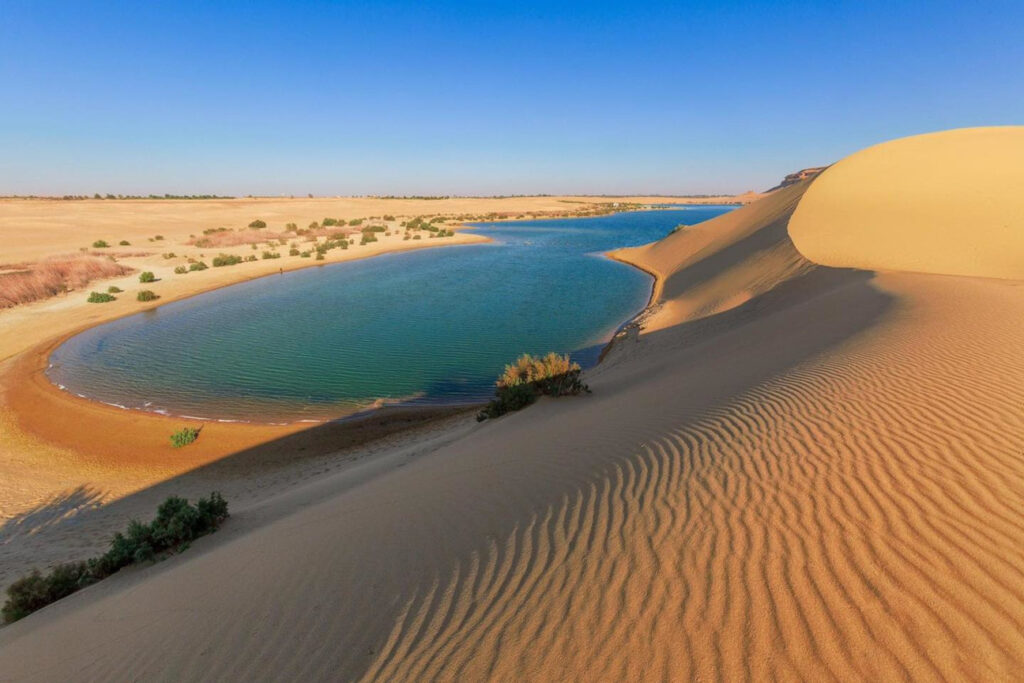
Wadi El Rayan National Park is one of Egypt’s most striking protected landscapes—a rare and beautiful interaction of desert, lakes and wetlands where nature and hydrological engineering have shaped a thriving ecological sanctuary. Located in the deep Fayoum Depression, this vast protected area covers 1,759 km² of shimmering water bodies, sweeping dunes, rugged limestone cliffs and fertile wetlands, creating an environment unlike any other in Egypt.
Originally established in 1989, the park was created to protect the rapidly developing ecosystems that formed after agricultural drainage water was directed into the area, unintentionally creating two large lakes. Over the decades, these lakes evolved into vibrant biological systems supporting a surprising diversity of wildlife—especially migratory birds that depend on the wetlands as a stopover site along their Africa–Eurasia flyway route.
Today, Wadi El Rayan is celebrated not only for its ecological significance but also for its dramatic scenery. From the golden curves of desert dunes to the cascading waters of Egypt’s only natural waterfalls, the park offers an unforgettable blend of natural beauty, adventure and scientific interest, attracting local visitors, international travellers, birdwatchers and researchers throughout the year.
Key Facts and Figures
- Country: Egypt
- Location: Fayoum Governorate
- Established: 1989 (Prime Ministerial Decree No. 943/1989)
- Total Area: 1,759 km²
- Coordinates: 29.22°N, 30.60°E
- Elevation Range: Between -43 m and -60 m below sea level
- Climate Type: Hot desert climate (BWh)
- Main Ecosystems: Lakes, wetlands, dunes, escarpments, salt marshes
- Recorded Bird Species: 180+ species
- Nearest Major City: Cairo (75–90 minutes by road)
- Governing Authority: Egyptian Environmental Affairs Agency (EEAA)
- Neighboring Protected Area: Wadi Al Hitan (UNESCO World Heritage Site)
Location
The park lies southwest of Cairo and west of Fayoum City in one of the oldest continuously inhabited regions in Egypt. Set within the broad Fayoum Depression, Wadi El Rayan occupies a geological basin that lies well below sea level, creating a microclimate and terrain distinct from the surrounding Western Desert. Its strategic location makes it an ideal day-trip destination for visitors from Cairo while still providing a sense of vast desert remoteness and tranquility.
Geography
Wadi El Rayan is dominated by two major lakes—the Upper Lake and the Lower Lake—along with the waterfalls that link them. Surrounding these lakes are vast expanses of undulating sand dunes, rock-strewn plateaus, limestone bluffs and salt marshes. This mix of landforms produces an intricate landscape where each zone supports its own ecological functions.
The dunes in particular are a defining geographical feature, evolving constantly under the force of desert winds. These dunes act as natural barriers, influence microhabitats, and create unique photographic opportunities at sunrise and sunset, when the contours glow with deep shades of gold and crimson.
In contrast, the limestone cliffs and escarpments reveal layers of geological history, some dating back millions of years. These rugged formations provide nesting grounds for raptors and shelter for desert foxes, while also forming scenic lookouts for observing the lakes below.
Geological History
The geological story of Wadi El Rayan is deeply connected to the wider Fayoum Basin, which was once part of the ancient Tethys Sea during the Eocene epoch over 40 million years ago. As the sea retreated and climatic conditions evolved, thick layers of marine sediments were exposed, leaving behind limestone formations, fossil-bearing ridges and ancient shorelines still visible today.
The region’s proximity to Wadi Al Hitan (Valley of the Whales)—a UNESCO World Heritage Site famed for its Eocene-era whale fossils—reminds visitors that this desert was once an ocean teeming with early marine mammals. The geological formations in Wadi El Rayan share much of this marine heritage, with fossil-rich rock layers and sediments that tell the story of dramatic climatic shifts, tectonic uplift and long-term desertification.
Climate
Wadi El Rayan experiences a hot desert climate characterized by long, intensely dry summers and mild, sunny winters. Summer temperatures often exceed 40°C, with hot dry winds intensifying evaporation from the lakes. Winter temperatures range from 10°–22°C, creating an ideal environment for outdoor exploration.
The limited rainfall—usually less than 20 mm annually—means that the lakes rely almost entirely on agricultural drainage inflows. Seasonal temperature fluctuations also influence wildlife behaviour, particularly migratory birds and desert mammals that move between shaded escarpments and open plains.
Hydrology
The hydrology of Wadi El Rayan is central to its ecological importance. The lakes were created beginning in the 1970s when agricultural drainage from the fertile Fayoum farmlands was diverted into two natural depressions. The water first filled the Upper Lake, and later overflowed naturally, forming a lower basin connected by a flowing channel that developed into Egypt’s only natural waterfalls.
- Upper Lake: Higher salinity, shallower, bordered by mobile dunes
- Lower Lake: Larger, deeper, containing extensive wetland vegetation
- Natural Waterfalls: A constantly changing cascade sculpted by water erosion
Over the years, the lakes evolved from simple water catchments into complex ecological systems. Evaporation increases salinity in the Upper Lake, influencing fish species and plant composition, while the Lower Lake remains comparatively stable due to greater depth and wetland cover. These hydrological dynamics create seasonal changes in bird populations, fish presence and shoreline vegetation patterns.
Ecosystems
Wadi El Rayan contains several ecosystems rarely found together in an arid region. The rich interplay between desert and wetland habitats creates high ecological diversity for a desert environment.
- Lake ecosystems: Supporting fish, aquatic plants and migratory birds
- Wetlands and reedbeds: Crucial breeding and feeding grounds
- Salt marshes: Home to halophytic vegetation and wader birds
- Desert dunes: Habitat for foxes, reptiles and hardy shrubs
- Limestone escarpments: Used by raptors and burrowing mammals
- Arid plains: Supporting gazelles and roaming predators
This diverse habitat mosaic makes Wadi El Rayan one of Egypt’s most ecologically significant protected areas.
Vegetation
Vegetation in Wadi El Rayan transitions sharply between lush wetland plant life and sparse desert flora. Around the lakes and marshes, tall reeds (Phragmites australis), rushes (Juncus) and halophytic shrubs thrive. These plants help stabilize the shoreline, filter water and create shelter for countless bird and insect species.
Further into the desert, hardy shrubs such as Tamarix, acacia trees, saltbush and Zilla spinosa survive on minimal moisture, providing food and cover for herbivores such as gazelles and hares. Their ability to withstand drought plays an essential role in maintaining desert soil structure and supporting wildlife across the drier zones.
Wildlife
Despite its desert setting, Wadi El Rayan is home to an impressive diversity of wildlife. The lakes and wetlands attract vast numbers of migratory birds, while the surrounding desert supports species adapted to the harsh, dry climate.
Mammals
- Dorcas gazelle (reintroduced population)
- Fennec fox
- African wolf
- Rüppell’s fox
- Sand cat (rare)
- Cape hare
- Egyptian mongoose
- Desert hedgehog
Birds
Wadi El Rayan is internationally recognized for its birdlife, particularly during migration seasons when flocks of waterbirds, raptors and waders stop to feed and rest. With more than 180 bird species recorded, it is one of the most important migratory bird sites in Egypt.
- Flamingos
- White storks
- Pelicans
- Herons and egrets
- Marsh harriers
- Greater spotted eagles
- Little grebes
- Kentish plovers
- Ferruginous ducks
- Ospreys and kites
Reptiles and Amphibians
- Horned viper
- Desert cobra
- Uromastyx (spiny-tailed lizards)
- Geckos
- Toads and frogs around wetland edges
Fish and Aquatic Life
Fish species include various tilapias and catfish, while the surrounding marshes support a large number of aquatic invertebrates essential for bird life. Water salinity levels directly influence the composition and abundance of aquatic species, with fluctuations occurring between seasons.
Unique Features
- Egypt’s only natural waterfalls
- A rare desert wetland ecosystem created from redirected irrigation water
- Extensive dune fields ideal for photography and adventure
- Close proximity to the world-famous Wadi Al Hitan fossil valley
- A landscape combining water, desert and cliffs in a single protected area
Cultural and Indigenous Communities
The broader Fayoum area has been inhabited since ancient times and still supports Bedouin and rural communities who maintain deep cultural ties to the land. Traditional livelihoods include herding, fishing, weaving with reed materials, pottery production and guiding desert routes.
Visitors often interact with Bedouin families who offer traditional meals, camel rides, overnight desert camps and handicrafts. This cultural element enriches the park experience while supporting sustainable tourism that benefits local communities.
Conservation Importance
Wadi El Rayan is vital to Egypt’s protected area network for several reasons:
- It protects one of Egypt’s only desert wetland ecosystems.
- It shelters key habitats for endangered and vulnerable species such as the Dorcas gazelle.
- It serves as a crucial stopover for migratory birds traveling between Africa, Europe and Asia.
- It preserves geological formations and fossil-rich landscapes linked to the Eocene era.
- It offers opportunities for scientific research on desert hydrology and wetland development.
Threats
- Increasing salinity levels affecting aquatic species
- Water pollution from agricultural runoff
- Litter and habitat disturbance from unregulated tourism
- Overgrazing by livestock in buffer zones
- Off-road driving damaging fragile dune systems
- Water level changes threatening wetland vegetation
- Invasive reeds altering wetland distribution
Research and Monitoring
- Water quality and salinity studies
- Bird migration and population monitoring
- Vegetation mapping and habitat analysis
- Gazelle population monitoring and anti-poaching efforts
- Climate and evaporation studies at the lakes
- Research collaboration with conservation groups and universities
Tourism Activities
Tourism in Wadi El Rayan is steadily growing due to its accessibility, natural beauty and recreational opportunities.
- Visiting the waterfalls between the two lakes
- Birdwatching along the lake edges and wetlands
- Desert safaris and guided dune exploration
- Sandboarding on high dunes
- Photography tours of lakes, dunes and sunsets
- Boat rides in designated areas of Lower Lake
- Bedouin-style camping and cultural dinners
- Stargazing in low-light desert zones
- Trips to Wadi Al Hitan to see prehistoric whale fossils
Access
Wadi El Rayan is reachable within 1.5–2 hours from Cairo via the Fayoum Desert Road. Visitors can enter using standard vehicles, while a 4×4 is recommended for deeper dune regions. Road signage clearly directs travelers to major attractions such as the Upper Lake, Lower Lake and waterfall area.
Permits and Fees
Entrance fees are required and collected at the main gate. Additional charges may apply for vehicles, camping, filming, guided tours and photography sessions. These fees contribute to conservation activities, ranger salaries and park maintenance.
Accommodation
- Eco-lodges around Fayoum offering nature-based stays
- Desert camps operated by Bedouin families
- Guesthouses in surrounding villages
- Hotels in Fayoum City for comfortable overnight stays
Best Time to Visit
The ideal time to visit is between October and April when temperatures are cool enough for hiking, dune excursions and outdoor photography. Winter also coincides with peak bird migration, making this period particularly rewarding for ornithologists and wildlife photographers.
Why Wadi El Rayan National Park Is Unique
Wadi El Rayan’s uniqueness lies in its extraordinary blend of desert and water—a landscape where shimmering lakes sit beneath vast dunes, waterfalls cascade through ancient limestone depressions, and wildlife thrives in habitats shaped by both natural and human forces. Its scenic beauty, scientific importance and cultural heritage make it one of Egypt’s most distinctive protected areas and a must-visit destination for travelers seeking wild, dramatic and unforgettable desert experiences.