
Augrabies Falls National Park
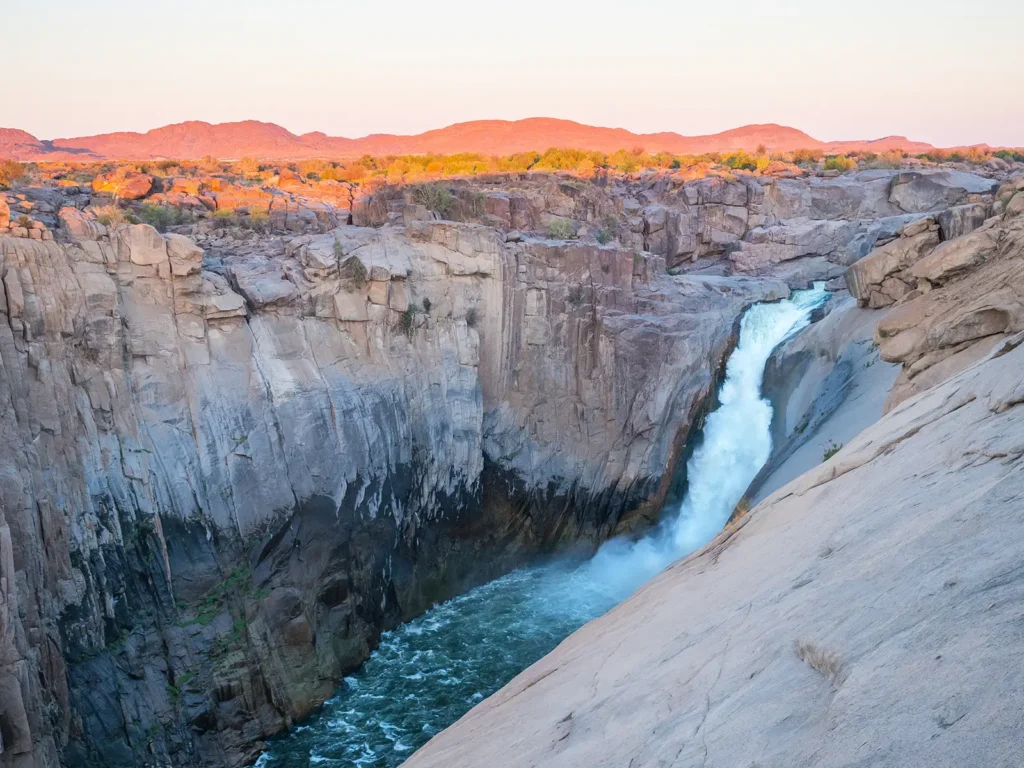
Augrabies Falls National Park – South Africa’s Mighty Waterfall and Desert Wilderness
Augrabies Falls National Park in South Africa’s Northern Cape is one of the country’s most dramatic natural landmarks. Named “Aukoerebis” by the Khoi people — meaning “place of great noise” — the park is home to the thunderous Augrabies Falls, where the Orange River plunges 56 meters into a massive granite gorge. Beyond its iconic waterfall, Augrabies is a paradise for photographers, hikers, and wildlife lovers, offering a blend of desert beauty, geological wonder, and vibrant biodiversity unique to the Northern Cape.
Key Facts and Figures
- Location: Northern Cape, South Africa – about 120 km west of Upington.
- Established: 1966.
- Area: Approximately 820 km².
- Altitude: 400–600 meters above sea level.
- Main Features: Augrabies Falls, Orange River Gorge, Moon Rock, quiver tree forests, desert plains.
- Wildlife Highlights: Giraffe, gemsbok, klipspringer, springbok, caracal, leopard, and over 180 bird species.
- Climate: Semi-arid – hot summers and mild, dry winters.
- Best Time to Visit: March–May for high river flow and June–August for hiking and photography.
Overview and Location
Located near the town of Upington in the Northern Cape Province, Augrabies Falls National Park protects a stretch of the Orange River as it cuts through ancient granite cliffs, forming one of Africa’s most spectacular gorges. The park spans both sides of the river and covers a mosaic of ecosystems where desert meets oasis. Despite its arid conditions, Augrabies is alive with color and movement — a place where quiver trees bloom, gemsbok stride through open plains, and the thunder of the falls echoes across the landscape.
Geography, Landscape, and Ecosystem
The park’s defining feature, the Orange River, sustains life across an otherwise semi-desert environment. During the rainy season, the river transforms into a torrent that cascades over the falls, plunging 56 meters into the gorge below. This geological masterpiece stretches for 18 kilometers and reaches depths of up to 240 meters. The surrounding terrain includes rocky outcrops, dry riverbeds, and expansive plains dotted with quiver trees (Aloidendron dichotomum), camelthorn acacias, and succulents adapted to harsh desert conditions.
The park lies at the intersection of the Nama-Karoo and Kalahari biomes, making it one of South Africa’s most ecologically diverse desert regions. Its unique climate and topography support numerous endemic plant and animal species, many of which have evolved specialized survival strategies such as nocturnal behavior, water storage, and camouflage.
History and Cultural Heritage
Long before becoming a national park, Augrabies was home to the Khoi and San peoples, who revered the waterfall as a sacred place of power and spiritual energy. The name “Aukoerebis” — meaning “place of great noise” — reflects the awe they felt at the roaring water. Rock engravings and archaeological sites throughout the area testify to thousands of years of human presence, making Augrabies not only a natural wonder but also a site of deep cultural significance. The park was officially declared in 1966 to protect both its biodiversity and its heritage.
Wildlife Safari in Augrabies Falls National Park
While Augrabies is renowned for its landscapes, it also offers rewarding wildlife viewing opportunities. The park shelters desert-adapted species perfectly suited to its arid environment. The open terrain and sparse vegetation provide excellent visibility for self-drive safaris and photography.
Large Mammals
Among the most commonly seen animals are gemsbok, springbok, eland, giraffe, and klipspringer, which are often spotted balancing on steep granite slopes. Predators such as caracal, black-backed jackal, and the elusive leopard roam the park, while small mammals like rock hyraxes and ground squirrels add liveliness to the rocky terrain.
Birdlife
With more than 180 recorded species, the park is a birdwatcher’s dream. Raptors including Verreaux’s eagle, martial eagle, and peregrine falcon soar above the cliffs, while bee-eaters, kingfishers, and sociable weavers add color to the riverbanks. The wetlands around the Orange River attract herons and African fish eagles, especially after seasonal rains.
Flora and Desert Adaptations
Despite the harsh environment, Augrabies boasts rich plant diversity. The famous quiver tree, an aloe species used by San hunters to craft arrow holders, dominates the landscape. During winter, it blooms with golden-yellow flowers, attracting nectar-feeding birds. Other desert plants like milkbush, wild melons, and succulents thrive on minimal rainfall, creating a resilient yet beautiful ecosystem.
Main Attractions and Things to Do at Augrabies Falls National Park
Augrabies Falls National Park is far more than a single waterfall — it’s an entire world of discovery. Visitors can explore waterfalls, granite domes, hiking trails, and ancient river gorges while learning about the delicate balance of desert ecology and water. Below are the most popular things to do when visiting this spectacular park:
1. Augrabies Waterfall Viewpoints
The Augrabies Falls are the centerpiece of the park. A series of safe wooden walkways and observation decks lead to breathtaking views over the gorge. Top viewpoints such as Ararat, Oranjekom, and Arrow Point provide different angles of the cascading water. During the rainy season (March–May), the river can swell dramatically, and the sound of the falls reverberates through the canyon. Visit at sunrise or sunset for the most dramatic light and misty rainbows.
2. Moon Rock – The Iconic Granite Dome
Moon Rock is one of the park’s most photographed landmarks. This enormous granite monolith offers an easy hike to the top, rewarding visitors with panoramic 360-degree views of the surrounding plains and Orange River Gorge. It’s especially popular at sunrise and sunset when the granite glows red under the desert light — a perfect spot for photographers and nature enthusiasts.
3. Dassie Nature Trail
The Dassie Trail is a short 5-kilometer circular route ideal for families and casual walkers. It winds through rocky terrain near the rest camp, passing small viewpoints and offering close encounters with rock hyraxes (dassies), lizards, and vibrant birdlife. Educational signboards along the trail explain the geology, plant life, and animal behavior of this unique desert ecosystem.
4. Klipspringer Hiking Trail – A Wilderness Adventure
For experienced hikers, the Klipspringer Trail is a challenging 39-kilometer route spread over three days. It crosses rugged canyons and desert plateaus, with overnight huts offering simple shelter and breathtaking stargazing opportunities. The trail reveals the park’s wildest areas, where gemsbok roam freely and leopards leave tracks in the sand. It’s one of South Africa’s top wilderness hikes and requires advance booking and moderate fitness.
5. Game Viewing and Self-Drive Safaris
Augrabies offers rewarding self-drive safaris through its network of gravel roads. Wildlife sightings are frequent and visibility is excellent. Drive slowly along routes like the Hartmanns Loop and Black Mountain Drive to spot giraffes, kudu, ostriches, and occasionally predators. The contrast between wildlife and the barren, sunlit rock formations makes for stunning photography.
6. 4×4 Adventure Routes
Thrill-seekers can tackle the park’s 4×4 eco-trails, designed for those eager to explore off the main paths. These routes traverse sandy washes, rocky hills, and panoramic viewpoints that reveal the geological diversity of the Augrabies landscape. Permits are required, and routes vary in difficulty — perfect for adventurers seeking solitude and off-road excitement.
7. Birdwatching and Photography
Birdwatchers will find a paradise along the Orange River, where herons, kingfishers, and African fish eagles abound. Raptors patrol the cliffs, while the dry plains are home to sociable weavers and larks. With its sharp light, dramatic backdrops, and reflective water, the park offers year-round opportunities for professional and hobbyist photographers alike.
8. Scenic Drives and Lookout Points
The park’s road network connects a range of scenic viewpoints. Echo Corner is famous for its acoustics — shout into the gorge and hear your voice echo back. Oranjekom Viewpoint offers the best view of the gorge itself, revealing the power of the river below. Each lookout captures a different mood of the landscape, from tranquil riverbanks to wind-carved desert cliffs.
9. Cultural and Historical Experiences
The visitor center features exhibits about the Khoi and San heritage of the region, along with displays on local geology and wildlife. Rock engravings scattered across the park tell the stories of ancient communities that lived in harmony with the river. Learning about these cultures adds depth to the Augrabies experience and underscores its long-standing significance to humanity.
10. Night Sky Viewing and Stargazing
Few places rival Augrabies for stargazing. The desert air is clear and unpolluted, allowing stunning views of the Milky Way, constellations, and even shooting stars. Night photographers will find endless opportunities to capture the cosmos above Moon Rock and the gorge. The stillness of the park at night makes it an unforgettable experience.
11. Family Activities and Picnicking
Designated picnic areas near the main camp are equipped with shaded seating and braai facilities. Families can enjoy easy nature walks, short drives, and educational programs about wildlife and geology. The park’s facilities make it one of the most family-friendly destinations in the Northern Cape, balancing comfort with adventure.
12. Seasonal Attractions
During the rainy season, the Augrabies Falls reach their full power, creating misty rainbows and a thunderous roar. In the dry season, the river reveals hidden rock pools and sculpted formations ideal for photography and exploration. Each visit offers a new perspective depending on the season, ensuring no two trips are alike.
Accommodation in and Around the Park
The main rest camp offers chalets, self-catering cottages, and well-equipped campsites. The Oranjekom Gorge Cottage provides a private stay with sweeping views of the gorge. In nearby towns such as Kakamas and Upington, travelers can find lodges, guesthouses, and farm stays catering to every budget. Many accommodations follow eco-friendly practices and source local produce for an authentic Northern Cape experience.
Getting There and Accessibility
Augrabies Falls National Park lies 120 kilometers west of Upington and 800 kilometers from Cape Town. Visitors can drive via the N14 highway and R359 road, both in excellent condition. The nearest airport, Upington International Airport, offers daily flights from Johannesburg and Cape Town. Car rentals are available at the airport, and all major routes to the park are suitable for standard vehicles. Inside the park, roads are gravel but well maintained.
Conservation and Sustainable Tourism
Augrabies Falls National Park is managed by SANParks (South African National Parks) with a focus on sustainability. Conservation efforts include habitat restoration, invasive species control, and community development. Eco-education programs, such as the Kids in Parks initiative, help raise awareness about biodiversity among local schools. Tourism revenue supports anti-poaching operations, infrastructure improvements, and employment for nearby communities, ensuring that conservation and livelihoods work hand in hand.
Travel Tips for Visitors
- Best visited between March and May when the falls are most powerful.
- Bring sunscreen, a hat, hiking shoes, and plenty of drinking water.
- Book accommodation and hiking permits in advance, especially in high season.
- Respect wildlife and maintain safe viewing distances.
- Early morning and sunset are best for photography and cool temperatures.
Why Visit Augrabies Falls National Park
Augrabies Falls National Park is one of South Africa’s most spectacular destinations — a place where desert silence meets the thunder of water. Its unique combination of geological wonder, wildlife diversity, and cultural heritage makes it an essential stop for any Northern Cape safari itinerary. Whether you’re hiking across Moon Rock, watching eagles soar over the gorge, or stargazing beneath crystal skies, Augrabies captures the untamed spirit of Africa’s wilderness.
Conclusion
Augrabies Falls National Park stands as a monument to nature’s power and persistence. From its roaring waterfall to its serene desert plains, every corner tells a story of time, erosion, and life adapted to extremes. A visit here is more than a sightseeing trip — it’s an encounter with one of South Africa’s most enduring natural treasures.