
Camdeboo National Park
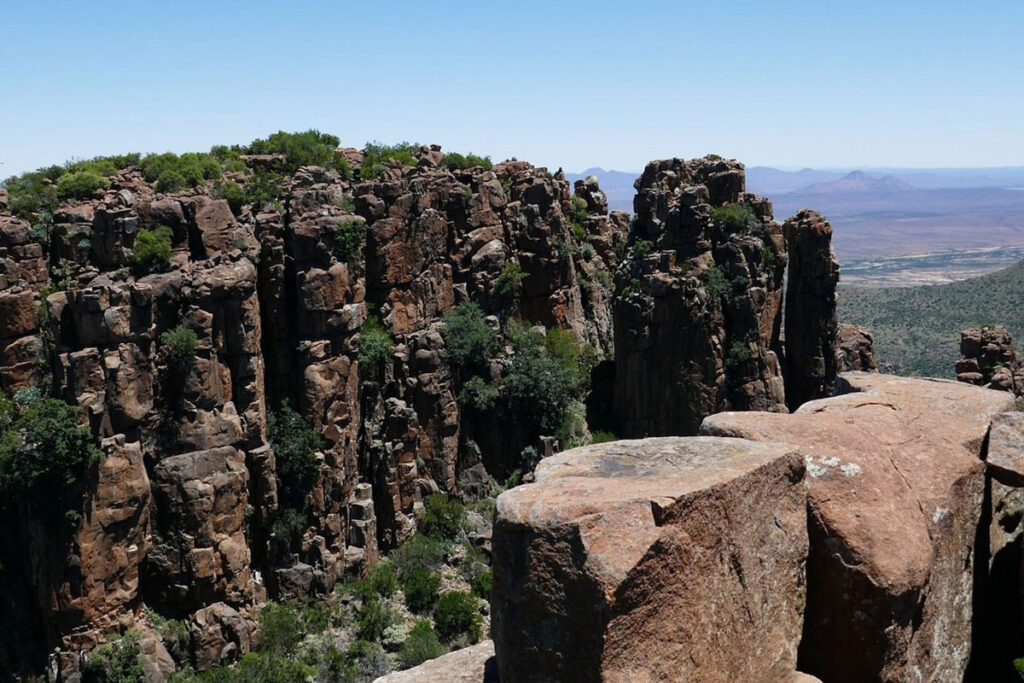
Camdeboo National Park – South Africa’s Great Karoo Wilderness of Towering Dolerite Cliffs, Ancient Fossils, Wildlife, and the Iconic Valley of Desolation
Camdeboo National Park, encircling the historic town of Graaff-Reinet in South Africa’s Eastern Cape, is one of the country’s most intriguing protected areas—not only for its dramatic geological formations and open landscapes, but also for its incredible fusion of natural and cultural history. The park represents millions of years of Earth’s evolution in a compact, easy-to-explore environment. With its semi-arid climate, craggy mountain ridges, vast plains, and remarkable biodiversity, Camdeboo feels simultaneously ancient and alive, offering travelers a rare chance to connect with South Africa’s deep-time geological heritage and the rich ecology of the Great Karoo.
Stretching across 194 km², the park protects ecosystems and geological structures that date back hundreds of millions of years. Yet, it is remarkably accessible—surrounding a thriving town and offering some of the most dramatic vistas in the region. From wildlife grazing on Karoo plains to the towering, flame-colored dolerite cliffs of the Valley of Desolation, Camdeboo offers a wilderness experience marked by silence, vastness, and endless horizons.
Overview and Location
Camdeboo National Park lies in one of the most scenically and historically significant regions of South Africa. Graaff-Reinet, located at its center, is often referred to as the “Jewel of the Karoo” due to its beautifully preserved Cape Dutch architecture, vibrant cultural life, and dramatic surrounding landscapes. The park’s unusual placement around a town allows visitors to move seamlessly between wilderness and heritage, exploring museums, restaurants, and attractions within minutes of rugged mountain viewpoints and open plains filled with wildlife.
Its location within the Eastern Cape interior means Camdeboo sits at a crossroads of ecological zones. This results in an intermingling of fynbos, Nama-Karoo shrublands, valley thicket, and savanna elements—making it one of the most botanically diverse small parks in the SANParks network. The surrounding Sneeuberg mountain range shapes local weather patterns and contributes to the stunning panoramic views available from high ridges and lookouts.
Landscape, Ecosystems, and Climate
The heart of Camdeboo’s landscape is shaped by a spectacular combination of volcanic activity and erosion. Around 120 million years ago, molten magma intruded into the sedimentary rocks of the Karoo Supergroup, creating immense dolerite sheets and sills. Over millions of years, erosion carved away the softer sediments, leaving behind the towering dolerite pillars of the Valley of Desolation. These vertical columns, some rising more than 120 meters above the plains, are among the most photographed natural formations in South Africa.
The rest of the park contains a mosaic of ecological zones. The Nqweba Dam forms a lush focal point in an otherwise semi-arid environment, supporting waterbirds and wildlife throughout the year. Mountain slopes contain pockets of fynbos and succulents, while the plains are covered with Karoo shrubs, dwarf plants, grasses, and hardy acacias. Seasonal rainfall can transform the entire landscape—from dusty yellows and browns to vibrant greens and bursts of wildflowers that carpet the plains.
Flora and Vegetation
The plant life of Camdeboo is shaped by extreme temperatures, low rainfall, and nutrient-poor soils. This has created a diverse assemblage of resilient and fascinating species. Karoo shrubs such as renosterbos, kapokbos, and sweat-scented dwarf shrubs dominate large sections of the plains. Meanwhile, the presence of speckboom thicket and pockets of fynbos on higher ridges highlights the ecological transition zones found within the park.
Aloes, especially in winter, produce striking red and orange blossoms that attract sunbirds and insects. Euphorbia species, with their sculptural forms, add to the otherworldly beauty of the Karoo vegetation. Acacia (Vachellia) karroo trees provide shade for antelope and perching sites for birds of prey. During wet years, ephemeral flowers and grasses sprout rapidly, creating a surprising burst of color in an otherwise dry region.
Wildlife in Camdeboo National Park
While Camdeboo is not known for Africa’s Big Five, its wildlife diversity is remarkable for a semi-desert environment. Animals in the park display fascinating adaptations to the Karoo climate. Herbivores such as black wildebeest, blesbok, springbok, and gemsbok conserve water by being most active during cooler parts of the day. Mountain zebra and klipspringer use their agility to navigate rocky slopes and ridges, while eland and kudu browse on leaves and shrubs along thickets and foothills.
Smaller predators such as caracal and black-backed jackal play an important ecological role, helping regulate populations of rodents and small antelope. Nocturnal species including aardwolf, aardvark, porcupine, and African wildcats emerge after sunset, making night drives around the Graaff-Reinet area especially rewarding for those with patience and sharp eyes.
Birdlife
Camdeboo is a stronghold for a wide variety of Karoo and raptor species. The cliffs of the Valley of Desolation offer prime nesting habitat for Verreaux’s eagles, while open plains attract secretary birds, karoo korhaans, and pale chanting goshawks. The presence of Nqweba Dam introduces a wetland element unusual for the Karoo—bringing in flamingos, pelicans, herons, terns, and grebes.
Endemic Karoo bird species such as the Karoo prinia, Karoo chat, and Bokmakierie make the park a rewarding destination for serious birders. Migrants from Europe and Central Asia arrive during summer months, taking advantage of insect blooms brought about by sporadic rainfall.
Fossils, Paleontology, and Geological History
The Camdeboo region is part of the fossil-rich Karoo Supergroup, one of the most studied geological formations in the world. Its rocks hold evidence of life and mass extinction events dating back more than 250 million years, including the Permian–Triassic extinction—the most catastrophic biological collapse in Earth’s history.
Fossils of dicynodonts (tusked herbivores), gorgonopsians (early saber-toothed predators), and therapsids (mammal-like reptiles) have been uncovered in the area. These fossils provide critical clues about evolutionary transitions that gave rise to modern mammals. Camdeboo’s geology bridges deep prehistoric time with the park’s contemporary scenery, making it a destination of both scientific and scenic importance.
Cultural and Historical Heritage
Human history intertwined with the Camdeboo landscape stretches back millennia. Early inhabitants—the San hunter-gatherers—left behind stone tools, shell middens, and rock engravings in the region. Later, the Khoi-Khoi pastoralists and the mixed-heritage Griqua people shaped the region through livestock herding and trade.
With the arrival of Dutch settlers in the 18th century, Graaff-Reinet became a center of agriculture, politics, and culture. Today the town boasts over **220 heritage buildings**, making it one of the most architecturally significant towns in South Africa. Museums, old churches, and historic homes provide insights into life during the colonial and frontier eras.
Nqweba Dam – Water, Wildlife, and Recreation
In an arid landscape where water is scarce, the Nqweba Dam is a life-giver. It attracts large concentrations of wildlife, especially during dry months when natural springs are limited. Birdlife flourishes here: flamingos appear when water levels and salinity are right, pelicans glide over the surface, and African spoonbills forage along the shoreline.
Visitors often enjoy slow drives around the dam’s perimeter, capturing photographs of antelope framed against shimmering waters or birds silhouetted by deep Karoo sunsets. Anglers can target species such as yellowfish and carp on a catch-and-release basis, while kayakers can explore certain sections of the reservoir.
Top Attractions and Experiences
1. Valley of Desolation
The dramatic cliffs of the Valley of Desolation are the park’s crown jewel. From the viewing platforms, visitors enjoy sweeping vistas stretching over the Plains of Camdeboo and across to the Sneeuberg mountains. The interplay of light and shadow on the dolerite pillars is especially striking after dawn or before sunset, when the rocks ignite in rich hues of red, copper, and gold.
2. Scenic Drives
Several scenic routes traverse the park, including the Viewpoint Loop leading up to the Valley of Desolation, and the Loper se Hoogte lookout with elevated views of rolling plains and mountains. The Game Viewing Loop near Nqweba Dam is ideal for wildlife, offering sightings of antelope, jackals, and birds along open grassland and thornveld.
3. Hiking Trails
The Crag Lizard Trail and other hiking routes allow visitors to explore the park’s geology and vegetation up close. Trails wind through rocky formations, past viewpoints, and along ridges, providing immersive opportunities to observe small mammals, reptiles, insects, and Karoo flora.
4. Birdwatching
Birders benefit greatly from Camdeboo’s mix of open plains, mountain cliffs, and wetland habitats. Each season brings new species and listening for calls such as those of the Korhaan and Bokmakierie adds to the experience. Raptors frequently soar over the cliffs—making the Valley of Desolation a prime raptor-watching spot.
5. Cultural Tourism in Graaff-Reinet
Graaff-Reinet complements the park perfectly. Visitors can explore iconic heritage sites, museums, and art galleries, including the Reinet House Museum, the Dutch Reformed Church, the Hester Rupert Art Museum, and artisanal shops offering Karoo crafts and cuisine. The town’s neatly preserved streets, lined with whitewashed Cape Dutch houses, offer charm unmatched anywhere else in the Karoo.
Accommodation and Visitor Facilities
Camdeboo offers a range of accommodation options suited to all travelers, from SANParks cottages overlooking the plains to rustic campsites set beneath thorn trees. Graaff-Reinet adds an additional spectrum of lodging, from boutique hotels and refurbished Cape Dutch guesthouses to farm stays and luxury safari-style retreats—making it easy to tailor your visit to any budget or travel style.
Conservation and Management
SANParks employs a wide array of conservation strategies to protect Camdeboo’s ecosystems. These include suppressing invasive alien plants, monitoring erosion in sensitive areas, maintaining predator-prey balance, and restoring spekboom thicket in degraded zones. wildlife reintroductions continue where feasible, ensuring the park remains ecologically functional and resilient to climate challenges.
Conservation Challenges
Camdeboo faces several conservation pressures, including prolonged droughts, increased temperatures, unpredictable rainfall patterns linked to climate change, and grazing pressures from surrounding farmlands. Invasive plants like mesquite and prickly pear require consistent management, while limited water resources mean that even small climatic shifts can have major ecological consequences. Despite these challenges, the park remains a vital refuge for Karoo biodiversity.
Why Visit Camdeboo National Park?
Visitors to Camdeboo discover an evocative, unforgettable wilderness where silence, wide horizons, and ancient rock formations invite contemplation. It is a place where deep time—from prehistoric fossils to spectacular dolerite cliffs—coexists with living ecosystems, cultural heritage, and the charm of Graaff-Reinet. Whether you come for photography, birding, geology, wildlife, hiking, or simply to experience the vastness of the Karoo, Camdeboo offers one of South Africa’s most unique and soul-stirring national park experiences.