
Campo Ma’an National Park
Campo Ma’an National Park – Cameroon’s Atlantic Rainforest Stronghold of Gorillas, Elephants, Chimpanzees, Drills, and Extraordinary Coastal Biodiversity
Campo Ma’an National Park, situated in the extreme southwest of Cameroon along the Atlantic coast and bordering Equatorial Guinea, is one of Central Africa’s most biologically rich and ecologically important protected areas. Spanning approximately 2,680 km², this remarkable landscape combines lowland rainforests, mangroves, coastal ecosystems, granite inselbergs, freshwater swamps, and estuary forests into a single, highly diverse conservation mosaic. Campo Ma’an sits at a unique ecological crossroads, where the Congo Basin forests meet the Atlantic coastal zone—creating a hotspot of biodiversity that supports gorillas, forest elephants, chimpanzees, mandrills, drills, pangolins, and hundreds of rare bird, reptile, amphibian, and plant species.
Despite external pressures from logging, agro-industrial plantations, and infrastructure expansion, Campo Ma’an remains a cornerstone of Cameroon’s conservation network. Its rainforest interior is largely intact, its primate populations are regionally significant, and its community-based conservation programs serve as a model for coexistence between biodiversity and local livelihoods. Today, Campo Ma’an stands as one of the most accessible entry points for rainforest tourism in Central Africa, offering a rare chance to experience the wildlife and culture of the Congo Basin with relative ease.
Overview and Location
Campo Ma’an National Park lies in Cameroon’s South Region, stretching inland from the Atlantic coastline and bordering Río Campo Natural Reserve in Equatorial Guinea. The park is positioned within a broader conservation landscape that includes industrial zones, community forests, timber concessions, and agricultural plantations. This makes Campo Ma’an a critical ecological link between protected areas across national borders, especially for wide-ranging mammals such as forest elephants and migrating primates.
The park is managed through a structured system of zones that balance conservation, research, and sustainable use:
- Integral Protection Zone – Strictly protected core rainforest, home to gorillas, chimpanzees, drills, elephants, and rare birds.
- Ecotourism Zones – Areas designated for guided gorilla tracking, cultural tourism, and controlled wildlife viewing.
- Community Use / Buffer Zones – Areas where local communities practice sustainable harvesting, agroforestry, and fishing.
- Research & Monitoring Zones – Managed by WWF, academic partners, and the Cameroon Ministry of Forests and Wildlife.
This zoning structure allows Campo Ma’an to function not only as a national park but also as a living landscape where people and wildlife coexist through carefully managed resource use.
Landscape, Ecosystems, and Climate
Campo Ma’an features some of the most varied ecosystems in the Congo–Atlantic region. Its landscapes range from sprawling rainforests to coastal wetlands, including:
- Evergreen lowland rainforest with tall canopy trees exceeding 50 meters in height.
- Swamp forests and seasonally flooded freshwater forests along river valleys.
- Mangrove forests near the Ntem River estuary and Atlantic coastline.
- Montane outcrops and granite inselbergs rising abruptly above the forest canopy.
- Beachfront vegetation, estuary systems, coastal grasslands, and sandy marine edges.
Granite inselbergs—isolated rock mountains—harbor specialized plants, pools, reptiles, and serve as vantage points for raptors and unique endemic species. Swamp forests support amphibians, crocodiles, and forest buffalo, while coastal mangroves shelter marine fish nurseries and migratory birds.
Campo Ma’an receives 2,000–3,000 mm of rainfall per year, with two rainy and two dry seasons. Humidity is high throughout the year due to proximity to the Atlantic Ocean. Trails can become muddy and waterlogged during peak rains, affecting accessibility but enhancing wildlife tracking opportunities.
Flora and Vegetation
The park boasts over 1,500 plant species, making it one of Cameroon’s richest botanical reserves. Vegetation includes:
- Okoumé (Aucoumea klaineana) – a key species of West African forests.
- Moabi (Baillonella toxisperma) – valued for edible oil and forest elephant dispersal.
- Sapelli, Azobé, Iroko, and other hardwood giants.
- Ebony and mahogany species.
- Rattan palms, massive lianas, and orchids.
- Raffia palms dominating swamp regions.
- Herbaceous understorey plants eaten by gorillas and antelope.
The botanical diversity supports entire food webs—from great apes that rely on fruits and leaves, to insects and pollinators that feed on flowers, to elephants that disperse seeds across long distances.
Wildlife in Campo Ma’an National Park
Campo Ma’an is one of Cameroon’s most wildlife-rich parks, protecting a spectacular array of species that represent the heart of Congo Basin biodiversity. Its dense forests and river systems provide critical habitat for some of Africa’s most iconic and endangered species.
Great Apes
Campo Ma’an holds nationally significant populations of:
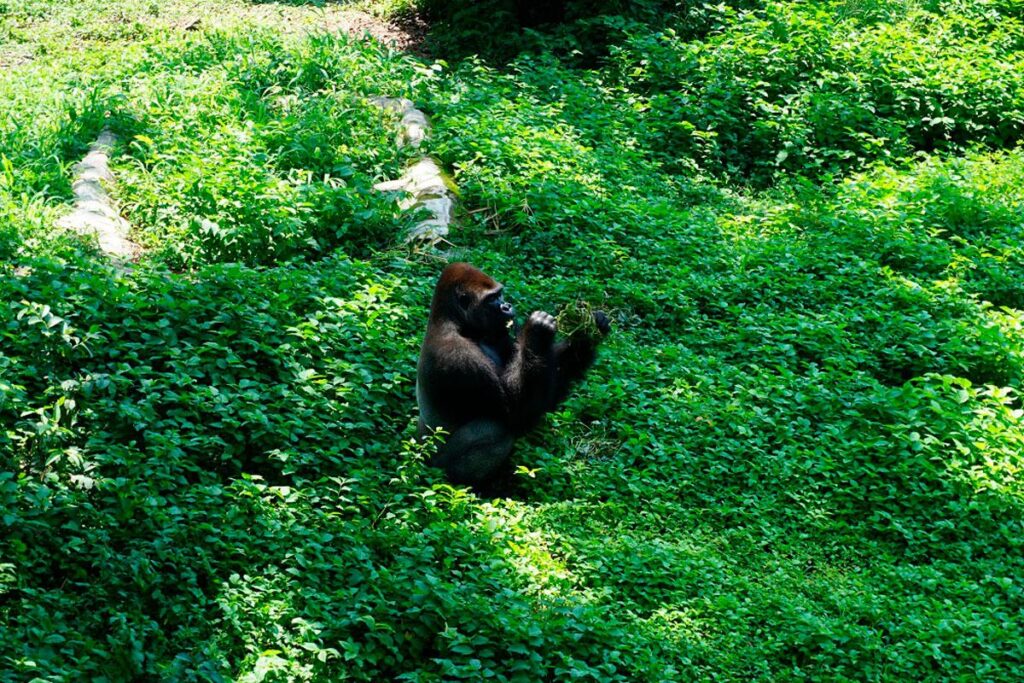
- Western Lowland Gorillas (Critically Endangered)
- Central Chimpanzees (Endangered)
These primates rely on intact rainforests rich in fruiting trees. Gorillas tend to occupy the remote interior, while chimpanzees use a wider range of forest habitats. Some communities are partially habituated for research, but tourism is limited and strictly controlled to avoid disease transmission.
Drills, Mandrills & Other Primates
Campo Ma’an is one of the best places on Earth to see:
- Drills – one of Africa’s rarest primates, found only in Nigeria, Cameroon, and Equatorial Guinea.
- Mandrills – known for their striking coloration and large social groups.
- Black Colobus
- Red-capped Mangabey
- Putty-nosed and Mona Monkeys
Forest Elephants
The park remains a stronghold for African forest elephants, though populations are pressured by poaching and habitat fragmentation. These elephants move between Cameroon and Equatorial Guinea, following traditional corridors along rivers and salt licks. Their seed-dispersal role is essential for rainforest regeneration.
Cats & Pangolins
- Leopard
- African golden cat
- Giant pangolin (heavily trafficked species)
- White-bellied pangolin
Other Mammals
- Forest buffalo
- Sitatunga
- Duikers (yellow-backed, blue, bay)
- Brush-tailed porcupine
- Forest hogs
Reptiles, Amphibians & Invertebrates
Campo Ma’an hosts:
- Nile crocodile
- Dwarf crocodile
- Monitor lizards
- Multiple frog and toad species breeding during heavy rains
- Colorful chameleons and geckos
- More than 300 butterfly species
The amphibian diversity is particularly rich, tied to pristine rainforest streams and swamp ecosystems.
Birdlife – A Premier Birdwatching Destination
Campo Ma’an contains over 500 bird species, making it one of Central Africa’s greatest birding destinations. The park is especially important for:
- Grey-necked Rockfowl (Picathartes) – rare and globally significant.
- Great Blue Turaco
- African Grey Parrot
- Piping Hornbill
- Cassins’s Hawk-Eagle
- Forest Kingfishers
- White-crested Tiger Heron
- Long-tailed Hawk
The coastal mangroves attract:
- Goliath Heron
- Shorebirds and terns
- Pelicans
Inselbergs provide nesting sites for raptors, while forest streams support kingfishers, hornbills, and insectivorous species. Wet season birding is exceptional due to breeding activity.
Hydrology and Key Rivers
Water defines the park’s ecological health. Major waterways include:
- Ntem River – forms the border with Equatorial Guinea, featuring mangrove estuaries.
- Ma’an River – flows through dense rainforest into freshwater pools.
- Nyong River tributaries – supporting amphibians, crocodiles, and fish.
These rivers create:
- Flooded forests critical for breeding wildlife
- Fish nurseries
- Elephant drinking and bathing areas
- Natural corridors linking wildlife habitats
Cultural and Community Heritage
The park is home to Bantu-speaking agricultural groups and the indigenous Baka and Bagyeli forest peoples. These communities maintain profound ecological knowledge of medicinal plants, wildlife behavior, forest navigation, honey collection, and traditional rituals tied to forest spirits.
Many villages participate in:
- Eco-guard patrols
- Community forestry programs
- Sustainable fishing cooperatives
- Cultural tourism guided tours
Their involvement is essential to reducing poaching and ensuring long-term forest protection.
Tourism and Ecotourism Potential
Campo Ma’an is one of the most accessible Congo Basin parks. Activities include:
- Gorilla and chimpanzee tracking (research-based, low-impact)
- Birdwatching safaris
- Hiking to inselbergs and waterfalls
- River boat tours
- Cultural visits to Baka villages
- Forest night walks
Accommodation ranges from simple guesthouses in Campo to small ecolodges and research camps. Most wildlife activities require a guide or ranger due to dense vegetation and safety concerns.
Conservation Challenges
Campo Ma’an faces a number of conservation pressures, including:
- Poaching of elephants, pangolins, and primates.
- Logging concessions around the park, creating fragmentation.
- Agro-industrial plantations reducing wildlife corridors.
- Bushmeat trade impacting primate and small mammal populations.
- Infrastructure development increasing access for illegal hunters.
WWF, government agencies, and communities collaborate on anti-poaching patrols, wildlife monitoring, forest regeneration, and education initiatives to mitigate these threats.
Scientific Research and Partnerships
Campo Ma’an has strong research programs led by:
- WWF (long-term great ape and elephant monitoring)
- Cameroon’s Ministry of Forests and Wildlife
- International universities studying ecology and primate behavior
- Conservation NGOs focused on human–wildlife coexistence
These studies guide conservation strategies, land-use planning, and sustainable forest management at both local and national levels.
Best Time to Visit Campo Ma’an National Park
The best periods for visitor activities are:
- December–March – Dry season, best for tracking primates and hiking.
- June–September – Short dry season, excellent birding and river activities.
The rainy seasons bring lush forest scenery but make trails slippery and access challenging.
How to Get There
The park is accessible via:
- Kribi – coastal town with hotels and beach resorts.
- Campo town – gateway community with basic services.
- Road connections from Douala and Yaoundé via Ebolowa.
4×4 vehicles are recommended for traveling deeper into the forest or reaching inselbergs and research zones.
Why Visit Campo Ma’an National Park?
Campo Ma’an offers one of Central Africa’s most accessible and rewarding rainforest experiences—a rare opportunity to encounter gorillas, elephants, drills, chimpanzees, and rare birds in intact, pristine ecosystems. Its breathtaking landscapes, coastal influences, rich cultural traditions, and conservation importance make it a must-visit destination for travelers seeking authentic Congo Basin adventures.
Conclusion
Campo Ma’an National Park stands today as one of Cameroon’s greatest natural treasures—a sanctuary of rainforest biodiversity, cultural heritage, and coastal ecological richness. As conservation partnerships strengthen and ecotourism potential grows, Campo Ma’an is poised to become a flagship rainforest destination in Central Africa. Its forests protect endangered species, support local communities, regulate coastal ecosystems, and preserve the natural legacy of the Congo Basin for future generations.