
Cangandala National Park
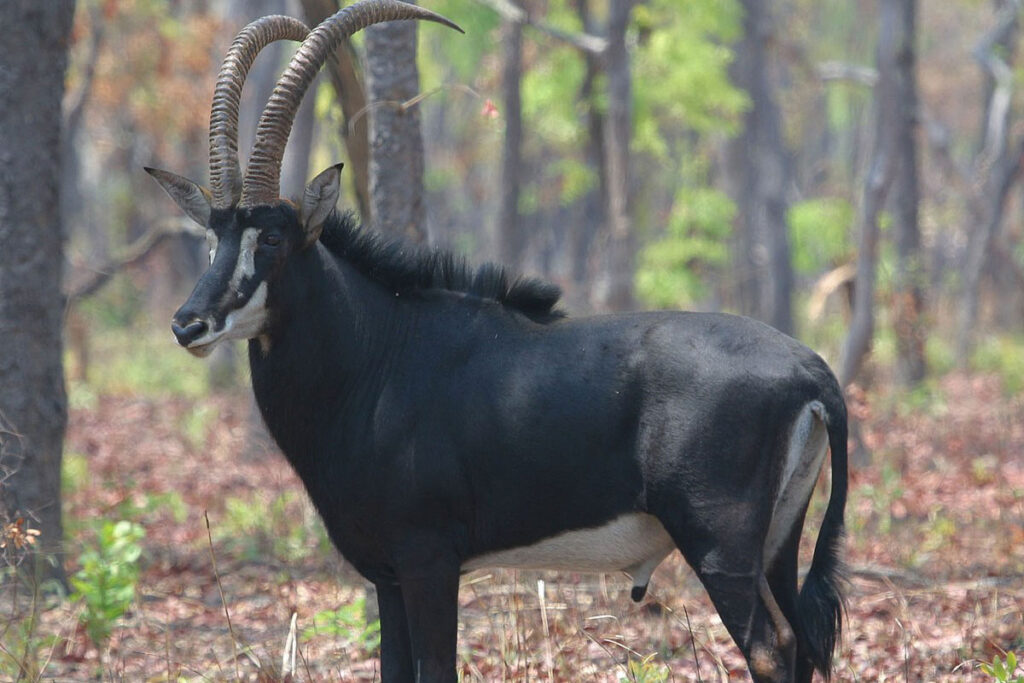
Cangandala National Park – Angola’s Legendary Sanctuary of the Giant Sable Antelope and a Vital Miombo Woodland Conservation Landscape
Cangandala National Park, located in Angola’s Malanje Province, is the country’s smallest protected area yet one of its most globally significant. Its modest 630 km² size belies its extraordinary importance as the primary refuge of the Giant Sable Antelope (Palanca Negra Gigante), one of the rarest and most charismatic antelope species on Earth. The park’s quiet woodlands protected the giant sable through decades of conflict, allowing it to survive a period when scientists feared the species had vanished forever. Today, Cangandala stands as a symbol of hope, heritage, and the resilience of Angola’s natural ecosystems.
Though famous for its giant sable population, Cangandala is also a biodiverse stronghold of miombo woodlands, seasonal floodplains, and open grassland glades, hosting a rich community of birds, reptiles, amphibians, and smaller mammals. Its intact woodland mosaic makes it an important ecological node within Angola’s central plateau and a key landscape for scientific research on post-war wildlife recovery, genetics, and woodland restoration.
Overview and Location
Cangandala National Park lies just south of Malanje city, making it one of Angola’s most accessible national parks for both tourists and researchers. Its location between the Cuije and Cacuso rivers creates a natural boundary that shelters wildlife during the dry season and provides freshwater for local communities. Although compact, the park’s ecological influence extends far beyond its borders, connecting with surrounding riparian corridors, wooded savannas, and community-managed areas.
Ecologically, Cangandala works in tandem with the Luando Strict Nature Reserve, located to the south. Together, these two protected areas form the entire natural range of the giant sable antelope. Conservation plans today are increasingly landscape-wide, treating Cangandala and Luando as a single interconnected sanctuary where genetics, movement patterns, and habitat restoration are jointly managed. This integrated approach is essential for ensuring the long-term survival of the species.
Landscape, Ecosystems, and Climate
The park is part of the vast Angolan plateau, where rolling terrain, scattered wetlands, and miombo woodland dominate the environment. Cangandala’s landscape is shaped by water and fire—two forces that define the morphology and biodiversity of miombo ecosystems. Seasonal rain fills depressions and wetlands, creating essential grazing pockets, while periodic fires maintain open grasslands that giant sable and roan antelope favor.
Vegetation structure varies subtly across the park. In higher, drier areas, woodland is more open, with tall Brachystegia trees allowing sunlight to penetrate the forest floor. In lower areas, soils retain moisture longer, promoting dense shrublands and wet meadows that support amphibians, insects, and flowering plants. This ecological diversity within a small geographic area makes Cangandala an excellent field site for studying microhabitat specialization.
Fire Ecology and Miombo Dynamics
Fire is a natural and essential ecological process in miombo landscapes. In Cangandala, controlled fires clear old grasses, stimulate fresh growth, and support nutrient cycling in the soil. Many plant species have evolved fire-resistant bark or deep root systems that allow them to flourish after burns. Woodland birds and antelopes rely on post-fire regrowth for food, while termites benefit from the flush of new vegetation, expanding their mounds and creating nutrient-rich islands that host unique microflora.
However, uncontrolled fires—particularly those set too frequently—can degrade woodland cover, reduce food availability, and encourage invasions of less nutritious grass species. Conservationists in Cangandala now work closely with local communities to implement fire-management plans that strike a balance between traditional practices and ecological needs.
Flora and Vegetation
Cangandala’s flora reflects the classic patterns of miombo woodland, with dominant tree species such as Brachystegia boehmii, Julbernardia paniculata, and Isoberlinia forming a semi-open canopy. These trees shed their leaves during the dry season, reducing transpiration and allowing grasses beneath to flourish—a dynamic that directly benefits the giant sable’s grazing habits.
The woodland understory is composed of medicinal shrubs, edible wild fruits, ferns, orchids, and a colorful seasonal wildflower display. Floodplain areas host sedges and water-tolerant grasses that become lush feeding grounds during the rainy season. Termite mounds—abundant throughout the park—create nutrient-enriched soil that supports flowering herbs and attracts insectivorous birds and reptiles.
Wildlife in Cangandala National Park
Although known globally for its giant sable antelope, Cangandala supports a broader wildlife community adapted to woodland and wetland mosaics. The park’s open glades, moist depressions, and sparse canopy create a favorable habitat for several antelope species, alongside small carnivores and a rich diversity of birds.
Species commonly observed in the park include:
- Giant sable antelope – critically endangered, Angola’s national symbol.
- Roan antelope – often using similar habitats as sable in open glades.
- Hartebeest – preferring mixed woodland-grassland edges.
- Reedbuck – thriving near wetter grasslands.
- Blue duiker and red duiker – commonly found in woodland thickets.
- Warthog and bushpig – utilizing marsh edges.
- Smaller predators such as serval, civets, genets, and mongooses.
The Giant Sable Antelope – Angola’s National Treasure
The Giant Sable Antelope (Hippotragus niger variani) is one of Africa’s most striking antelope species. Males display deep black coats with brilliant white stripes, contrasted by long, curved horns that can reach 1.6 meters. Females have chestnut coats and slightly shorter horns. The species is culturally revered in Angola, appearing on national emblems, currency, and folklore.
During Angola’s 27-year civil war, giant sable populations were devastated by poaching, starvation, and habitat disturbance. After the war ended, researchers feared the species had gone extinct. Their rediscovery in 2005 through camera-trap images inside Cangandala remains one of the most dramatic conservation moments of the century.
Genetic Protection and Hybridization Management
A significant threat emerged when post-war surveys revealed that some giant sable females had mated with roan antelope, producing hybrids. This hybridization threatened to dilute the species’ unique genetic lineage. To protect the gene pool, conservationists established a secure breeding sanctuary within Cangandala, where genetically pure individuals could be monitored, protected, and bred.
This program includes:
- GPS collaring to monitor sable movements.
- DNA sampling for genetic purity analysis.
- Camera trapping for population monitoring.
- Anti-poaching patrols staffed by trained local rangers.
Today, Cangandala hosts a growing population of genetically verified giant sables, contributing to one of Africa’s most remarkable conservation success stories.
Birdlife
Cangandala is a rewarding birdwatching site, especially for miombo specialists rarely seen outside the region. With more than 150 recorded species, the park supports both resident species and seasonal migrants following rainfall and food availability.
Key species include:
- Rufous-bellied tit
- Anchieta’s barbet
- Miombo double-collared sunbird
- Pale-billed hornbill
- Southern ground hornbill
- Crowned eagle
- Firefinches, waxbills, and cisticolas
Wetlands attract herons, storks, and ibises, particularly during the rainy season when shallow pools become rich feeding grounds. Termite mounds support colonies of birds feeding on emerging insects after rains.
Reptiles, Amphibians, and Termite-Mound Biodiversity
The park contains a wide spectrum of herpetofauna associated with woodland and wetland habitats. Common species include:
- Monitor lizards and blue-headed agamas.
- Geckos and ground skinks.
- Tree frogs, reed frogs, and African clawed frogs.
- Butterflies and beetles dependent on miombo plant cycles.
Termite mounds are biodiversity hotspots: their elevated, nutrient-rich soils support unique herbs and grasses that attract insects, reptiles, and birds. Some small mammals use these mounds as den sites, making them essential ecological microhabitats.
Hydrology and Seasonal Wetlands
Cangandala’s wetlands are shallow, seasonal, and highly productive during the rainy months. Fed by rainfall and the Cuije–Cacuso water system, these wetlands create mosaic habitats essential for amphibian breeding, bird nesting, and antelope grazing. During the dry season, shrinking waterholes become wildlife congregation points, improving viewing opportunities.
These hydrological cycles also influence the giant sable’s foraging routes, as they move seasonally between wetland edges and higher woodland browsing areas.
Local Communities and Cultural Heritage
Communities surrounding Cangandala rely on small-scale farming, beekeeping, charcoal production, and the collection of wild fruits and medicinal plants. Traditional knowledge plays a central role in fire management, identification of edible plants, and understanding wildlife movement patterns. Many residents now serve as eco-guards, community monitors, and field assistants in the giant sable conservation program.
Cultural heritage is deeply tied to the land: elders tell stories of the “sacred antelope,” and the giant sable’s image remains a symbol of strength and endurance in local folklore.
Conservation Significance
Cangandala’s global importance lies in its protection of the last pure populations of giant sable antelope. Without this park, the species would almost certainly have vanished. The park also helps safeguard miombo woodland biodiversity, supports ongoing ecological research, and anchors Angola’s broader conservation strategy, linking protected areas across the country’s central plateau.
Threats
The most persistent threats to Cangandala include poaching, fire mismanagement, habitat encroachment, and the legacy of hybridization. Uncontrolled fires may degrade woodland structure, while illegal snares pose risks to sable calves and other antelopes. Limited resources, aging infrastructure, and remote monitoring challenges add complexity to long-term conservation.
Tourism and Visitor Experience
Cangandala offers a unique safari experience focused on conservation and ecological understanding. Visitors can track the giant sable with expert guides, explore woodland clearings at dawn, and observe diverse birdlife in tranquil surroundings. Because wildlife is elusive and the park is lightly visited, guided tours are essential for maximizing sightings and gaining insight into conservation efforts.
Accommodation options are primarily located in Malanje city, offering hotels, guesthouses, and supplies for day trips into the park. Photography is especially rewarding in the dry season, when light penetrates the open woodlands and sable are more predictable.
How to Get There
Cangandala is reachable via well-maintained roads from Luanda to Malanje (4–5 hours), followed by a short drive south to the park entrance. A 4×4 vehicle is advisable during the rainy season. Permits, guides, and visits can be arranged through local tourism operators or wildlife authorities in Malanje.
Best Time to Visit
The dry season (May–September) is the best time for wildlife viewing and sable tracking, as vegetation is thinner and wildlife gathers near reliable water sources. The early wet season offers excellent birdwatching, lush scenery, and dramatic skies ideal for photography.
Why Visit Cangandala?
Travelers visit Cangandala for its exclusivity, its serenity, and its globally unique wildlife. It is the only place on Earth where one can encounter the giant sable antelope in its natural habitat. For conservation-minded travelers, birders, and researchers, the park provides an immersive and meaningful experience in one of Africa’s most historically significant landscapes.
Conclusion
Cangandala National Park stands as a testament to Angola’s dedication to protecting its natural heritage. By preserving the world’s last remaining populations of giant sable antelope and safeguarding the ecological richness of miombo woodlands, Cangandala represents one of the greatest conservation success stories of the post-war era. Its peaceful forests, rare wildlife, and cultural significance make it a truly exceptional destination for anyone seeking authentic, conservation-focused travel in Africa.