
Gashaka-Gumti National Park
Gashaka-Gumti National Park – Nigeria’s Largest, Wildest, and Most Biodiverse Protected Area
Gashaka-Gumti National Park is Nigeria’s largest and most ecologically rich protected area, spanning over 6,700 km² across Taraba and Adamawa States in the remote northeastern corner of the country. As part of the wider Nigeria–Cameroon mountain ecosystem, the park encompasses lowland rainforest, montane forests, alpine grasslands, rugged mountain peaks, bamboo thickets, deep valleys, river gorges, and cloud-draped highlands. It shelters an extraordinary concentration of wildlife—including Nigeria’s largest chimpanzee population, rare forest elephants, antelopes, and more than 500 bird species—making it one of the most important biodiversity hotspots in all of West and Central Africa. Its vastness, remoteness, and dramatic topography create a rare wilderness experience unmatched elsewhere in Nigeria.
Overview of Gashaka-Gumti National Park
Gashaka-Gumti National Park represents the pinnacle of Nigeria’s conservation efforts. Created in 1991 by merging the former Gashaka Game Reserve in Taraba State with the Gumti Game Reserve in Adamawa State, the park forms a massive conservation landscape that extends from dense tropical rainforests to some of the highest mountains in West Africa. Because of its biodiversity richness and relatively intact habitats, it is considered Nigeria’s most important stronghold for wildlife conservation, ecological research, and long-term habitat preservation.
Despite its spectacular scenery and astounding diversity, Gashaka-Gumti remains one of Africa’s least-known but most rewarding wilderness destinations. Its remote setting and challenging terrain preserve its wild character, offering adventurous travelers, scientists, and conservationists access to landscapes that have remained unchanged for centuries. The park is often described as “Nigeria’s lost world” or “Africa’s hidden Eden” because much of it remains unexplored and biologically mysterious.
Location and Size
Gashaka-Gumti lies along Nigeria’s eastern frontier with Cameroon, stretching across Taraba and Adamawa States. Covering approximately 6,700 km², it is the largest national park in Nigeria—bigger than some entire countries. Its southern sector lies within the Mambilla Plateau and Chappal Waddi highlands, while the northern sector extends into the drier Gumti region near the Mandara Mountains.
Its location within a major transboundary conservation corridor allows wildlife—including chimpanzees, elephants, leopards, and numerous migratory bird species—to move freely between Nigeria and Cameroon. This ecological connectivity strengthens genetic diversity, supports species migration, and maintains long-term ecosystem resilience.
Geography and Geology
Gashaka-Gumti’s geography is among the most dramatic in all of West Africa. The park includes Nigeria’s highest peak, Chappal Waddi (2,419 m), often called the “Roof of Nigeria,” which towers over vast expanses of mountain slopes, ridge lines, and forested valleys. These mountains form part of the Cameroon Highlands, a geologically ancient formation composed of volcanic and metamorphic rocks dating back hundreds of millions of years.
Steep escarpments, granite outcrops, sharp ridges, and plunging ravines define the southern part of the park, while the northern sector transitions into rolling savannas, tall grasslands, and open woodlands. Numerous natural caves, rock shelters, and weathered boulders throughout the park create unique microhabitats that support rare flora, reptiles, and invertebrates. This remarkable geological variety supports an equally diverse range of plant and animal life.
Climate
The climate of Gashaka-Gumti varies dramatically with elevation. The lowlands experience hot, humid tropical conditions, while the highlands enjoy cool mountain air, mist-laden mornings, and temperatures that can drop sharply at night. The rainy season typically stretches from April to October and delivers heavy tropical rains that nourish the dense forests, spark waterfalls to life, and fill rivers and streams across the park.
The dry season, from November to March, is characterized by cooler, clearer weather with reduced cloud cover and excellent visibility for trekking and wildlife observation. Harmattan winds from the Sahara occasionally reach the higher altitudes, bringing crisp, fresh mornings and breathtaking mountain views. These climatic gradients significantly influence the park’s ecosystems and seasonal wildlife activity.
Hydrology and Rivers
Gashaka-Gumti is one of Nigeria’s most important freshwater reservoirs, home to hundreds of clear mountain streams and several major rivers, including the Kam, Gashaka, Mayo, and Gumti Rivers. These rivers originate in the highlands, carving deep valleys and creating river gorges, rapids, cascades, and pristine pools that support aquatic life.
The park’s waters provide essential habitats for fish, amphibians, aquatic insects, otters, and riverine vegetation. Riparian forests along these waterways serve as vital wildlife corridors, particularly for primates, elephants, and bird species that depend on year-round water access. These hydrological systems also support communities downstream, making the park crucial for regional water security.
Ecosystems and Habitats
The ecological diversity of Gashaka-Gumti is unmatched in Nigeria. Its ecosystems span several major biomes, creating a mosaic of habitats that support rare and endemic species. This variety results from the park’s vast altitudinal range, complex topography, and position at the intersection of West African and Central African ecological zones.
- Lowland rainforests: Dense, humid forests with towering hardwood trees, rich biodiversity, and thick canopies.
- Montane forests: Moss-covered cloud forests characterized by orchids, ferns, and misty conditions.
- Bamboo forests: Extensive bamboo stands that support primates, birds, and unique invertebrates.
- Montane grasslands: Sweeping high-altitude meadows that provide grazing habitats for antelopes and vantage points for predators.
- Savanna woodlands: Mixtures of scattered trees and tall grasses that support large herbivores and carnivores.
- Riparian ecosystems: Lush corridors along rivers providing cover, food, and nesting grounds for wildlife.
Vegetation
Vegetation in Gashaka-Gumti is as varied as its terrain. The park’s lowland forests contain African walnut, iroko, mahogany, silk-cotton trees, massive strangler figs, and dense understory vegetation. As the terrain rises, the forests transition into montane and submontane vegetation filled with moss-draped tree trunks, lichens, orchids, and understory shrubs adapted to cooler temperatures.
High-altitude grasslands and bamboo zones dominate the upper reaches of the park, supporting a wealth of herbivores and pollinators. During the rainy season, wildflowers blanket the meadows in vibrant colors, attracting butterflies, bees, and other insect species. This diverse vegetation structure feeds and shelters everything from primates to antelopes to migratory birds.
Wildlife of Gashaka-Gumti National Park
Mammals
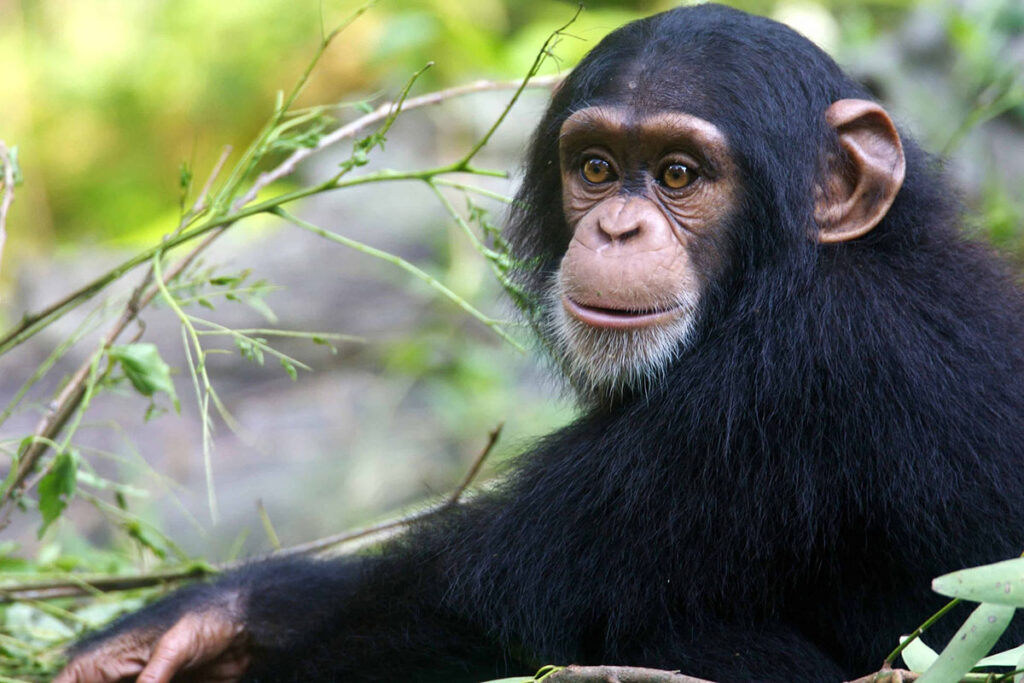
Gashaka-Gumti is Nigeria’s most important stronghold for mammal diversity. It contains the country’s largest population of Nigeria–Cameroon chimpanzees, one of the rarest and most intelligent subspecies of chimpanzees. These primates inhabit the dense forests and remote mountains, where research teams continue to uncover new insights into their behavior, communication, and social structure.
Other primates include drill monkeys, olive baboons, putty-nosed monkeys, mona monkeys, and black-and-white colobus. Large mammals include forest elephants, buffalo, bushbuck, roan antelope, waterbuck, kob, duikers, warthogs, and hartebeest. Carnivores such as leopards, golden cats, civets, genets, hyenas, and jackals patrol the forests and savannas. Servals, pangolins, and rare rodents also inhabit specialized niches across the park.
Birds
Gashaka-Gumti is one of the best birding destinations in all of Africa, boasting more than 500 recorded species. Its montane forests, savannas, bamboo stands, and riverine habitats create a paradise for both resident and migratory birds. The park forms an important section of the Cameroon Mountains Endemic Bird Area, home to several species found nowhere else on Earth.
Commonly seen species include the African grey parrot, Ross’s turaco, crowned eagle, long-crested eagle, hornbills, kingfishers, sunbirds, bee-eaters, flycatchers, and the rare Bannerman’s weaver. High-altitude specialties and forest-dwelling birds make the park a major attraction for ornithologists and nature photographers.
Reptiles, Amphibians, and Insects
The park hosts Nile monitors, chameleons, skinks, pythons, spitting cobras, vipers, and gecko species across its forests and grasslands. Amphibians flourish in the moist river valleys, especially during the rainy months when temporary pools and streams become breeding grounds for frogs and toads.
Gashaka-Gumti’s insect diversity is immense. The park is filled with butterflies, beetles, dragonflies, ants, pollinators, grasshoppers, and termite species. In the montane areas, wildflowers and alpine meadows attract colorful butterflies and hoverflies, while the forest floors teem with detritivores essential for nutrient cycling.
Unique Features of Gashaka-Gumti National Park
Gashaka-Gumti’s uniqueness lies in its combination of towering mountains, mist-covered forests, expansive grasslands, and river gorges—all within one massive protected area. It contains Nigeria’s highest peak, one of West Africa’s most dramatic mountain ranges, and some of the continent’s most pristine rainforest ecosystems.
The park’s impressive altitudinal range—from lowland rainforests at 450 m to nearly 2,500 m above sea level—makes it a global hotspot for biodiversity and endemism. Its remote, unspoiled landscapes offer a true sense of wilderness that is becoming increasingly rare across West Africa.
Cultural and Indigenous Communities
Gashaka-Gumti is surrounded by culturally-rich communities such as the Fulani, Kaka, Mambilla, Ndoro, and Jukun peoples. These communities maintain deep cultural traditions, including pastoralism, cattle herding, farming, traditional fishing, weaving, and seasonal festivals tied to nature.
Many communities engage in conservation programs, supporting forest protection, ecotourism, and wildlife monitoring. Their traditional ecological knowledge—ranging from medicinal plants to weather patterns—adds significant value to long-term conservation strategies.
Conservation Importance
As Nigeria’s largest national park and one of Africa’s most biodiverse mountain ecosystems, Gashaka-Gumti is vital for the conservation of endangered and endemic species. It is a critical refuge for Nigeria–Cameroon chimpanzees, elephants, rare primates, and hundreds of bird species.
The park also plays a vital role in stabilizing regional climate patterns, protecting watersheds, preventing soil erosion, and preserving freshwater sources for surrounding communities. It serves as a major center for research, responsible tourism, and long-term habitat protection.
Threats and Challenges
Like many protected areas in West Africa, Gashaka-Gumti faces threats including poaching, illegal grazing, agricultural encroachment, unsustainable fire use, and occasional human–wildlife conflict. Limited infrastructure and remote terrain make enforcement difficult in some regions.
Nevertheless, park authorities, conservation groups, and local communities continue working together to strengthen protection, restore habitats, and promote sustainable alternatives that benefit both people and wildlife.
Research and Monitoring
The park is a major hub for scientific research. The Gashaka Primate Project, established in partnership with Nigerian and international institutions, conducts long-term studies on chimpanzees, biodiversity, vegetation, and climate impacts. The project is one of Africa’s leading primate research initiatives.
Scientists use camera traps, acoustic recorders, biodiversity surveys, GPS tracking, and genetic studies to monitor wildlife populations, ecosystem health, and environmental changes. These efforts provide critical data that inform adaptive management strategies.
Tourism Activities
Gashaka-Gumti offers Nigeria’s most spectacular and adventurous ecotourism opportunities. The park’s immense landscapes and rich wildlife provide unforgettable experiences for hikers, wildlife enthusiasts, birders, researchers, and photographers.
- Trekking and mountaineering: Ascend Chappal Waddi or explore deep forest trails.
- Primate tracking: Guided treks through chimpanzee habitats.
- Birdwatching: Explore rainforest, montane, and savanna hotspots.
- Waterfall and river excursions: Visit scenic rivers, natural pools, and waterfalls.
- Photography: Capture landscapes, wildlife, and mist-covered mountains.
Access and Getting There
The park is accessible via towns such as Serti, Gashaka, and Gumti. Jalingo, the capital of Taraba State, serves as the main gateway. From Jalingo, visitors travel toward the park’s southern entrance through the Mambilla Plateau—a scenic highland region known for its temperate weather and rolling hills.
Many internal routes require 4×4 vehicles due to rugged terrain, and guided tours are recommended for safe navigation. Access can be more challenging during the rainy season, when rivers swell and trails become muddy.
Permits, Fees, and Park Rules
Visitors must obtain entry permits from the Nigerian National Park Service. Fees help fund conservation initiatives, ranger patrols, research programs, and community development. Regulations ensure that tourism remains sustainable and safe.
- Follow ranger and guide instructions.
- Respect wildlife and avoid disturbing animals.
- Stay on designated trails.
- Keep noise low to preserve natural habitats.
- Respect cultural sites and local communities.
Accommodation
Accommodation options include park guesthouses, eco-lodges, basic chalets, and designated camping areas near Serti, the Gashaka village area, and the Mambilla Plateau. Some research camps also host scientists and conservation workers. The Mambilla Plateau offers additional lodging with cooler weather and scenic views, making it a popular base for exploring the park.
Accommodation should be booked in advance, especially during peak seasons or research periods when facilities may be limited.
Best Time to Visit
The best time to visit Gashaka-Gumti National Park is during the dry season (November–March), when trails are accessible, skies are clearer, and wildlife is easier to see. This period is ideal for trekking to Chappal Waddi, birdwatching, exploring mountain forests, and photographing sweeping highland landscapes.
The rainy season (April–October) transforms the park into a lush paradise filled with wildflowers, amphibians, and vibrant greenery. While hiking becomes more challenging, the rainy season offers exceptional scenery and unique wildlife encounters.
Why Gashaka-Gumti National Park Is Unique
Gashaka-Gumti National Park is unique for its combination of towering mountain landscapes, deep rainforest valleys, alpine meadows, bamboo forests, and pristine river systems—all within a single protected area. Its biodiversity richness is unparalleled in Nigeria and among the highest in West Africa.
As a sanctuary for endangered species, a center for scientific research, and one of Africa’s most authentic wilderness destinations, Gashaka-Gumti stands as a timeless emblem of natural beauty and ecological importance. Its remote, untouched nature offers visitors an unforgettable experience of Africa at its wildest and most breathtaking.