
Garamba National Park
Garamba National Park – Africa’s Historic Wilderness Stronghold and UNESCO World Heritage Site in the Democratic Republic of Congo
Garamba National Park, located in the northeastern Democratic Republic of Congo, is one of Africa’s oldest, most iconic, and biologically important protected areas. Established in 1938 and designated a UNESCO World Heritage Site in 1980, Garamba spans more than 4,900 km² of breathtaking savannas, vast grasslands, woodlands, wetlands, and gallery forests. It is globally renowned for its extraordinary biodiversity, sweeping open plains, and its critical role in conserving some of the continent’s most threatened species. Despite historical challenges—from poaching to regional instability—Garamba remains a living symbol of resilience, ecological importance, and the enduring power of African wilderness.
Overview of Garamba National Park
Garamba National Park stands as a beacon of hope for central African conservation. Managed collaboratively by the Congolese Institute for Nature Conservation (ICCN) and African Parks, it has undergone significant revitalization, including advanced anti-poaching strategies, aerial monitoring, and community-driven conservation programs. These efforts have positioned Garamba as a model for modern protected area management in volatile regions.
The park is known worldwide for being the last known natural home of the Northern White Rhino before the subspecies became functionally extinct. This historical legacy has placed Garamba at the center of global conservation discourse. Today, the park continues to protect thriving populations of elephants, Kordofan giraffes, large carnivores, and scores of antelope species. Its expansive grasslands—punctuated by towering termite mounds—offer some of the most dramatic savanna scenery outside East Africa, creating unmatched photographic opportunities and safari experiences.
Location and Size
Garamba lies in the Haut-Uélé Province of northeastern DRC, close to the country’s borders with South Sudan and the Central African Republic. Covering approximately 4,900 km², the park anchors a broader conservation landscape that includes hunting domains, buffer zones, and migratory corridors. This vast area is essential for maintaining ecological connectivity for elephants, giraffes, and large carnivores that move seasonally across shared habitats.
The park’s position at the transition between the Congo Basin forests to the south and Sudanian savannas to the north creates a rare biogeographical convergence. As a result, species typical of East Africa, Central Africa, and even the Sahel coexist within the same protected landscape, contributing to Garamba’s exceptional ecological uniqueness.
Geography and Geology
Garamba National Park is defined by its sweeping, open grasslands—some of the last remaining in the Congo Basin—and gently rolling plains that extend to the horizon. Scattered across the landscape are dramatic granite outcrops and inselbergs that rise abruptly from the savannas, offering panoramic views and unique habitats for specialized plants and wildlife. These geological formations date back millions of years and provide natural refuges that remain cooler and more sheltered than the surrounding plains.
The park’s soils vary significantly, ranging from rich black cotton soils that support tall elephant grass to gravelly and sandy substrates that favor acacia-dominated woodlands. Seasonal rivers carve through the landscape, forming fertile floodplains and wetlands that sustain large herbivores and predators alike. This combination of geological diversity creates a dynamic and resilient ecosystem capable of supporting life even during challenging seasonal transitions.
Climate
Garamba experiences a tropical savanna climate characterized by a pronounced wet and dry season. The rainy season, from April to November, brings dramatic thunderstorms, abundant vegetation growth, and a flourishing of wildlife activity. Rivers swell, wetlands expand, and the landscape transforms into a lush, green paradise teeming with migratory birds and newborn wildlife.
The dry season, extending from December to March, reveals Garamba’s golden plains and concentrates wildlife around permanent water sources—making this period ideal for wildlife viewing. Temperatures generally range from 23°C to 32°C throughout the year, although soaring heat during peak dry months can create powerful mirages over the open savannas. These seasonal rhythms shape Garamba’s ecological dynamics, wildlife movements, and visitor experiences.
Hydrology and Rivers
Several major rivers flow through Garamba, including the Garamba, Dungu, and Aka Rivers. These waterways form the lifeblood of the park, feeding wetlands, marshes, and riparian forests that support a wide range of species. During the wet season, the rivers overflow into expansive alluvial plains, creating nutrient-rich floodplains grazed by elephants, buffalo, hartebeest, and countless antelopes.
Permanent waterholes and seasonal pools dotted across the savannas become vital during the dry months, drawing wildlife from miles around. These hydrological systems not only sustain large mammals but also support frogs, aquatic insects, and waterbirds, making them essential to Garamba’s ecological integrity.
Ecosystems and Habitats
Garamba National Park is home to one of Central Africa’s most distinctive ecosystems—a blend of Sudanian savanna and Congo Basin woodland that creates exceptional habitat diversity. This unique combination of biomes supports a broad array of wildlife species seldom found together in a single landscape.
- Open savanna grasslands: Iconic plains that support giraffes, elephants, lions, and large antelope herds.
- Wooded savannas: Transition zones with scattered trees and shrubs providing crucial shade and browse.
- Gallery forests: Dense riverbank forests teeming with primates, birds, amphibians, and reptiles.
- Marshes and wetlands: Seasonal floodplains that support hippos, crocodiles, and waterbirds.
- Rocky inselbergs: Isolated rocky formations hosting raptors, reptiles, and rare plants.
Vegetation
Garamba’s vegetation ranges from towering elephant grasses—sometimes exceeding three meters—to acacia woodlands and lush gallery forests. The rainy season brings a dramatic green flush, with wildflowers blooming across the plains and new leaves appearing on the savanna woodlands.
Woodland areas feature species such as acacias, Combretum, Terminalia, and Brachystegia, which support fruit-eating birds, browsing antelopes, and insect-rich microhabitats. Along rivers, gallery forests host ferns, vines, and moisture-loving plants that are rare in the savanna biome. This botanical richness underpins the park’s complex food webs and provides habitat diversity essential for long-term ecological resilience.
Wildlife of Garamba National Park
Mammals
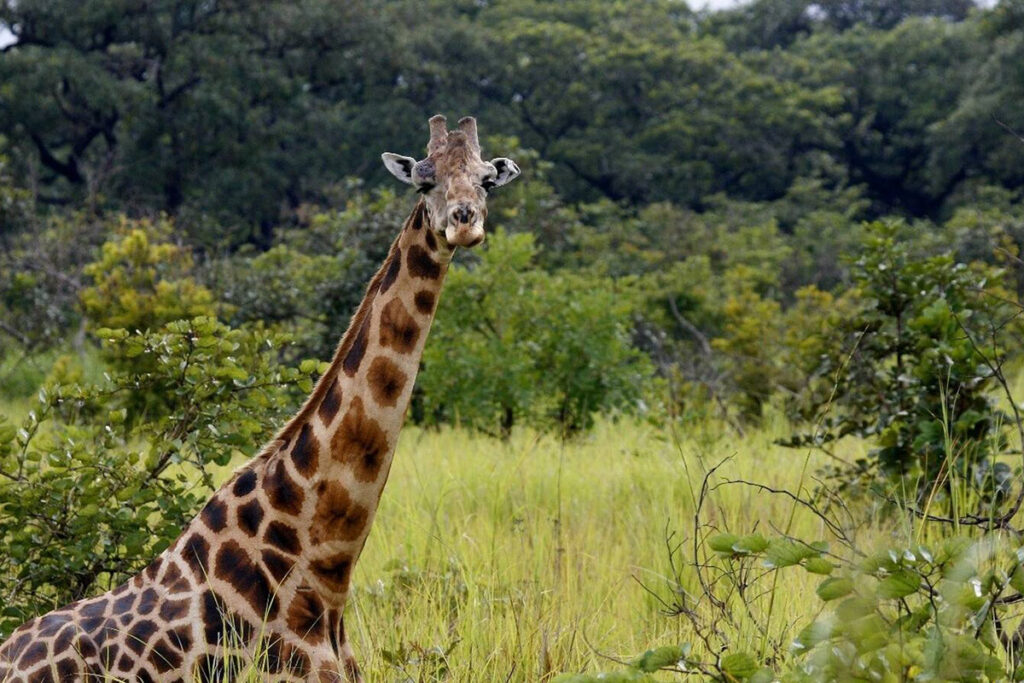
Garamba National Park is home to exceptional mammal diversity, including elephants, buffalo, hippos, hartebeest, waterbuck, and oribi. The Kordofan giraffe—one of Africa’s rarest giraffe subspecies—finds one of its last viable populations here, making Garamba a critical conservation stronghold for this species.
The park also supports lions, leopards, spotted hyenas, and smaller predators such as servals and civets. Although the Northern White Rhino is now considered functionally extinct in the wild, Garamba’s historical role as their final refuge has cemented its place in conservation history. Smaller mammals such as warthogs, aardvarks, pangolins, and various rodents contribute to the park’s ecological complexity and biodiversity.
Birds
With over 380 recorded species, Garamba is a paradise for birdwatchers. The combination of wetlands, savannas, and forest edges supports everything from majestic raptors to colorful forest birds. Notable species include the secretarybird, Abyssinian ground hornbill, martial eagle, saddle-billed stork, herons, kingfishers, turacos, and numerous migratory birds.
Wetland areas attract flocks of storks, ibises, and ducks, while rocky outcrops provide ideal nesting sites for eagles and vultures. This diversity makes Garamba a key bird conservation area and a major draw for ornithologists.
Reptiles, Amphibians, and Insects
Garamba’s reptilian fauna includes Nile crocodiles, savanna monitors, rock pythons, puff adders, spitting cobras, and numerous smaller lizard species. Amphibians thrive in the wetlands and gallery forests, especially during the rainy season when temporary pools create breeding hotspots.
The park’s insect diversity is extraordinary. Dragonflies dance over rivers, butterflies flutter through woodland edges, and termite mounds tower over the savannas, forming essential habitats for birds, reptiles, and small mammals. These invertebrates play a vital role in pollination, decomposition, and nutrient cycling.
Unique Features of Garamba National Park
Garamba stands out for its vast, uninterrupted savannas—an extremely rare landscape in the Congo Basin. The sheer openness of its plains allows visitors to witness wildlife interactions in the same way East African explorers once described their adventures in the Serengeti.
The park’s historical legacy as the last refuge of the Northern White Rhino also adds profound global significance. Combined with its rocky inselbergs, dramatic sunsets, and immense wilderness scale, Garamba offers a safari experience unlike any other in Central Africa.
Cultural and Indigenous Communities
The park is surrounded by culturally diverse communities such as the Azande, Mangbetu, and Babenza, who maintain deep-rooted connections to the land. These communities practice traditional farming, fishing, and craftsmanship while contributing valuable knowledge about local ecology, wildlife behavior, and seasonal changes.
Community participation is central to Garamba’s management strategy. Programs include education initiatives, sustainable livelihoods, human-wildlife conflict mitigation, and eco-enterprise development that provide alternatives to resource extraction while strengthening conservation outcomes.
Conservation Importance
Garamba National Park is one of Africa’s most important conservation landscapes. It safeguards endangered species, stabilizes ecological processes, protects watersheds, and preserves genetic diversity. Through strong partnerships, advanced monitoring tools, and highly trained ranger teams, the park has made significant strides in reducing poaching and restoring wildlife populations.
Garamba’s strategic location also makes it vital for regional ecological connectivity, supporting wildlife movements across national borders and contributing to the stability of surrounding ecosystems in South Sudan and the Central African Republic.
Threats and Challenges
Despite progress, Garamba continues to face challenges such as poaching, armed incursions, and pressure from regional instability. Elephant populations in particular have suffered from targeted poaching due to ivory trafficking networks.
However, increased aerial surveillance, intelligence-led operations, sophisticated communication systems, and cooperation with local communities have strengthened the park’s defense against illegal activities. Continued investment in security, community engagement, and sustainable development is essential to securing Garamba’s future.
Research and Monitoring
Scientific research is a core pillar of Garamba’s conservation strategy. Ongoing studies focus on elephant movement patterns, giraffe genetics, vegetation dynamics, fire ecology, wetland health, predator-prey relationships, and climate impacts on savanna ecosystems.
Advanced tools such as satellite tracking, GIS mapping, camera traps, and aerial census surveys provide critical data that guide adaptive management decisions. Partnerships with universities and conservation institutions ensure that Garamba remains a leading center for ecological research and wildlife monitoring in Central Africa.
Tourism Activities
Garamba offers highly exclusive, low-impact tourism experiences for adventurous travelers seeking raw, authentic wilderness. Visitors can explore vast savannas, track wildlife with expert guides, and discover landscapes that feel unchanged for centuries.
- Guided game drives: Explore wildlife-rich plains, wetlands, and woodland habitats.
- Walking safaris: Experience close encounters with nature in remote areas.
- Birdwatching: Spot rare and migratory birds across diverse ecosystems.
- Aerial scenic flights: Gain breathtaking aerial views of Garamba’s vast wilderness.
Access and Getting There
Due to its remote location, Garamba is typically accessed via charter aircraft to the park’s airstrip, coordinated through African Parks or partner operators. Travelers may also journey from nearby towns like Dungu, although road conditions and security must be considered.
Most visitors arrive through Entebbe (Uganda) or Juba (South Sudan) before continuing to Garamba. All travel should be arranged in coordination with park management to ensure safety and logistical support.
Permits, Fees, and Park Rules
Entry permits must be arranged in advance, with fees supporting ranger operations, community programs, and conservation activities. Strict adherence to park rules ensures visitor safety and wildlife protection.
- Follow ranger and guide instructions at all times.
- Stay in designated areas unless authorized for walking activities.
- Do not disturb or feed wildlife.
- No off-road driving or littering.
- Respect cultural sites and local communities.
Accommodation
Accommodation within Garamba is exclusive and limited, offering intimate stays that immerse visitors in wild central African nature. Lodges and tented camps provide comfortable facilities, guided activities, and stunning views of wildlife and plains. Remote bush camps may also be used for research teams, photographers, or special expeditions.
Due to limited capacity and managed tourism, reservations must be made well in advance through the park’s management or affiliated operators.
Best Time to Visit
The best time to visit Garamba National Park is during the dry season (December to March), when vegetation is lower, water sources become focal points for wildlife, and accessibility improves across the park. This season is ideal for game viewing, walking safaris, and landscape photography.
The rainy season (April to November) transforms the park into a lush, green wilderness filled with birdlife, newborn animals, and dramatic stormy skies. Although some areas may be challenging to access, the scenery is extremely rewarding for nature lovers and photographers seeking vibrant landscapes.
Why Garamba National Park Is Unique
Garamba National Park is unique because it preserves an ancient African savanna landscape unlike any other in the Congo Basin. Its open plains, scattered woodlands, and dramatic inselbergs create breathtaking vistas rarely found in central Africa. The park’s extraordinary biodiversity, global conservation history, and remote wilderness make it one of the continent’s most remarkable protected areas.
As a UNESCO World Heritage Site and a vital stronghold for endangered species, Garamba remains a symbol of both natural beauty and conservation resilience. For travelers seeking raw wilderness, scientific importance, and a deep sense of Africa’s untamed spirit, Garamba offers a safari experience that is powerful, authentic, and unforgettable.