
Fazao-Malfakassa National Park
Fazao-Malfakassa National Park – Togo’s Largest, Wildest, and Most Biodiverse Protected Area
Fazao-Malfakassa National Park is Togo’s crown jewel of biodiversity and the country’s largest protected area, spanning nearly 1,920 km² of pristine wilderness in central-western Togo. Renowned for its dramatic mountains, lush rainforest patches, wooded savannas, and river valleys, the park sits at the ecological crossroads between the Guinean rainforest and the Sudanian savanna. This rare transition zone makes Fazao-Malfakassa one of the richest wildlife refuges in West Africa, home to forest elephants, diverse primates, rare birds, unique reptiles, and countless plant species. Established in 1975 and strengthened through international conservation partnerships, it stands today as the most important stronghold of natural heritage in Togo.
Overview of Fazao-Malfakassa National Park
Unlike many parks in West Africa that have suffered severe habitat loss, Fazao-Malfakassa remains remarkably intact. It merges two historically separate conservation zones—the Fazao sector and the Malfakassa sector—creating a continuous, ecologically diverse landscape that protects montane forests, riparian woodlands, and sweeping savanna hillsides. This variety of habitats supports a high density of wildlife and a remarkable mix of species typically found in both Central and West Africa.
As an emerging destination for ecotourism, nature photography, and scientific research, the park offers an authentic wilderness experience with minimal commercialization. Its rugged terrain and low visitor numbers ensure that the wildlife encounters remain intimate and undisturbed, making Fazao-Malfakassa a rare gem for adventurous travellers searching for remote and untouched environments.
Location and Size
The park is located in central-western Togo, positioned strategically between the Plateaux and Centrale regions. This area falls along the Atakora mountain range, which extends into neighboring Ghana and Benin. Covering approximately 1,920 km², Fazao-Malfakassa is not only Togo’s largest park but also one of the region’s most ecologically significant reserves, forming a buffer between human settlements and remaining wildlife habitats.
Its position within a transboundary ecological corridor allows species such as primates, antelope, and forest elephants to move between fragmented habitats in nearby countries. This makes Fazao-Malfakassa a crucial biodiversity anchor in the West African conservation network.
Geography and Geology
The park’s geography is dominated by dramatic mountain ranges, steep escarpments, granite ridges, and deep forested valleys. The Fazao Hills create a gentle but rugged landscape in the west, while the Malfakassa Mountains form a higher, more imposing massif in the northeast. These ancient formations date back to the Precambrian era and contain some of the oldest exposed rocks in West Africa.
This geological diversity shapes the park’s stunning scenery—from panoramic hilltop viewpoints to narrow forest gorges, boulder-strewn slopes, and isolated waterfalls. Elevation variations create distinct microclimates, which in turn support a wide range of plant and animal life adapted to very different environmental conditions.
Climate
Fazao-Malfakassa National Park experiences a tropical climate influenced by both equatorial moisture and drier Sahelian winds. This gives the park two clearly defined seasons: a rainy season from April to October and a dry season from November to March. The rainy months transform the park into a lush, green sanctuary bursting with flowering plants, mushrooms, and amphibious life, while the dry months unveil golden savannas and improve wildlife visibility.
Temperatures remain generally warm throughout the year but tend to be cooler in higher elevations. The Malfakassa Mountains often experience light mist in the early mornings, creating atmospheric scenery ideal for photography. The balance of rainfall and sunshine also supports year-round plant productivity, making the park a vital water catchment for surrounding communities.
Hydrology and Rivers
The park is fed by a rich hydrological network of rivers, streams, and seasonal brooks that nourish its forests and savannas. Key waterways such as the Kpondjo, Koué, and Fazao rivers flow through deep valleys, providing essential water sources for wildlife and fostering dense gallery forests along their banks. These river systems eventually contribute to major watersheds feeding the Oti and Mono basins.
During the rainy season, higher elevations in the Malfakassa Mountains produce impressive waterfalls and cascades, turning hidden valleys into thriving aquatic habitats teeming with amphibians, insects, and unique flora. These watercourses act as vital corridors for wildlife movement and biodiversity conservation throughout the year.
Ecosystems and Habitats
Fazao-Malfakassa is renowned for its ecological mosaic—a rare blending of Guinean rainforest characteristics with Sudanian savanna traits. This overlapping of biomes supports one of the highest concentrations of species diversity in Togo and the broader West African region.
- Guinean rainforest patches: Dense, humid forests sheltering primates, forest birds, and rare plant species.
- Semi-deciduous woodland: Transitional zones with mixed vegetation and abundant birdlife.
- Savannas and grasslands: Open habitats where buffalo, antelopes, and large herbivores graze.
- Montane forests: Cool, moisture-rich slopes supporting endemic vegetation.
- Gallery forests: Lush riverbanks providing year-round refuge for diverse wildlife.
Vegetation
The park’s vegetation is among the richest in Togo. Its forests host species such as mahogany, iroko, kapok, African walnut, and tropical almond, along with a vibrant understory of ferns, vines, orchids, and medicinal plants. These forests remain relatively intact compared to other regions in West Africa, offering botanists significant opportunities for new discoveries.
The savanna regions boast tall grasses—such as Hyparrhenia and Andropogon—alongside scattered acacias, shea trees, and ironwood. In higher altitudes, montane flora thrives in cooler, wetter conditions, providing a stark contrast to lowland savannas. This vegetation diversity supports a wide range of herbivores, seed dispersers, and pollinators essential to the ecosystem’s resilience.
Wildlife of Fazao-Malfakassa National Park
Mammals
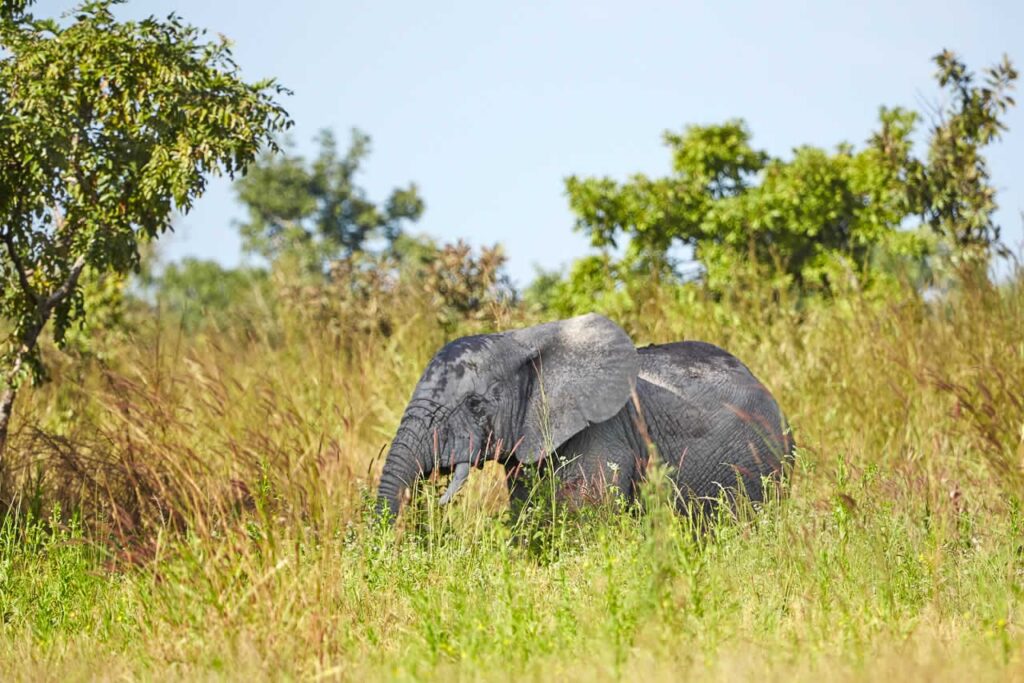
Fazao-Malfakassa National Park hosts an impressive array of mammal species, making it one of the most important wildlife refuges in Togo. Although forest elephant populations have greatly declined due to historic poaching, the park remains one of the last places in Togo where they can still be encountered. Antelope species such as kob, bushbuck, harnessed bushbuck, waterbuck, and several duiker varieties roam the savannas and forest edges.
Primates—including olive baboons, patas monkeys, mona monkeys, and colobus monkeys—are widely distributed throughout the park. The park also supports predators such as leopards, civets, caracals, servals, and African wildcats, although sightings may be rare because of dense vegetation and low human disturbance. Smaller mammals such as aardvarks, porcupines, honey badgers, and numerous rodents contribute to the ecological richness.
Birds
Birdlife is exceptionally diverse due to the park’s unique position at the overlap of rainforest and savanna ecosystems. More than 200–300 species have been recorded, including turacos, hornbills, rollers, barbets, kingfishers, and a wide range of raptors such as crowned eagles and bateleurs.
The Malfakassa highlands are ideal for spotting forest specialists, while riverine forests support sunbirds, weavers, jacanas, and bee-eaters. This combination of habitats makes the park a paradise for ornithologists and nature photographers seeking species found nowhere else in Togo.
Reptiles, Amphibians, and Insects
Reptiles found in the park include Nile monitors, pythons, vipers, spitting cobras, chameleons, and geckos. The park’s humid forests also support a significant variety of amphibians, including tree frogs, puddle frogs, and toads that emerge in abundance during the rainy season.
The insect population is vast. Dragonflies thrive around rivers, while butterflies—especially swallowtails and charaxes—are commonly seen in forest clearings. Termites, beetles, ants, and moths play essential roles in nutrient recycling and pollination.
Unique Features of Fazao-Malfakassa National Park
Fazao-Malfakassa’s most distinguishing feature is its dramatic mountainous terrain—unlike any other park in Togo. The Malfakassa Mountains offer challenging hiking routes, hidden waterfalls, and elevated viewpoints overlooking endless forests. This rugged scenery provides an unparalleled wilderness ambiance rarely found elsewhere in West Africa.
Another unique feature is the park’s ecological transition zone, allowing visitors to experience rainforest and savanna wildlife within a single protected area. These overlapping ecosystems make the park scientifically valuable and visually stunning.
Cultural and Indigenous Communities
The park is surrounded by culturally rich ethnic groups including the Kabyé, Tem, Lamba, and Bassar peoples. These communities maintain long-standing traditions tied to the land, such as iron-smelting, farming, and ancestral rituals conducted in sacred groves and forest patches.
Local communities contribute significantly to conservation through community-based forest management and eco-tourism cooperatives. Their traditional ecological knowledge provides invaluable insights into sustainable resource use, medicinal plants, and wildlife behavior.
Conservation Importance
Fazao-Malfakassa is one of Togo’s last bastions of biodiversity and plays a vital role in regional conservation. It protects rare species threatened by deforestation, hunting, and habitat loss across West Africa. The park also conserves genetic diversity crucial for climate resilience and helps to stabilize local water cycles through its thick vegetation cover.
Recent conservation programs have focused on improving anti-poaching patrols, involving local communities in sustainable tourism, and restoring degraded areas through reforestation and habitat monitoring.
Threats and Challenges
Threats to the park include illegal hunting, agricultural encroachment, charcoal production, and logging in buffer zones. Population pressure in surrounding villages increases demand for farmland and natural resources, placing stress on wildlife corridors and forest integrity.
Limited staffing, difficult terrain, and financial constraints can impede effective patrolling. However, greater conservation partnerships and community engagement have strengthened monitoring efforts and improved the park’s long-term survival prospects.
Research and Monitoring
Fazao-Malfakassa is a key site for research on forest-savanna transition zones. Ongoing studies focus on primate behavior, elephant movement, bird distribution, hydrology, and plant diversity. Researchers also monitor climate effects on montane ecosystems and the regeneration of degraded forest patches.
International collaborations with conservation NGOs and universities support biodiversity surveys and capacity-building for local rangers, ensuring that management decisions are scientifically informed.
Tourism Activities
Tourism in Fazao-Malfakassa caters to adventurous travelers seeking authentic and immersive nature experiences rather than mass tourism. Visitors can explore a wide range of activities designed to showcase the park’s natural beauty and wildlife diversity.
- Mountain hiking: Trails lead to panoramic viewpoints and remote forested slopes.
- Birdwatching: Particularly rewarding in the Malfakassa highlands and gallery forests.
- Waterfall excursions: Seasonal cascades appear in multiple mountain valleys.
- Guided wildlife tracking: Follow ranger-led routes to see primates, antelopes, and forest species.
- Cultural tours: Engage with local communities through traditional craft demonstrations and village visits.
Access and Getting There
Fazao-Malfakassa can be accessed from nearby cities such as Sokodé, Kara, or Bafilo via well-known regional roads. While some park entrances remain accessible year-round, internal routes can be difficult during the rainy season, making a 4×4 vehicle highly recommended for visitors.
Travelers arriving in Togo through Lomé or Kara airports can arrange transport to the park through tour operators or local guides. Entry points with ranger stations help coordinate guided visits and ensure safety throughout the park.
Permits, Fees, and Park Rules
Entry permits are required and can be obtained through park authorities or licensed guides. Fees support conservation and local community development. Visitors must follow strict rules designed to protect both people and wildlife:
- Remain on marked trails and roads.
- Do not disturb wildlife or vegetation.
- No hunting, trapping, or unauthorized camping.
- Respect cultural sites and local customs.
- Follow ranger instructions during guided activities.
Accommodation
Accommodation options near Fazao-Malfakassa include eco-lodges, rustic guesthouses, and community-run facilities offering simple but comfortable stays. These lodgings often provide guided hikes, birding tours, and cultural experiences tailored to visitors seeking authentic immersion in nature and culture.
Due to the park’s remote setting, visitors should book accommodation in advance, particularly during the peak dry season when hiking and wildlife viewing are at their best.
Best Time to Visit
The ideal time to visit Fazao-Malfakassa National Park is during the dry season (November to March), when trails are manageable, river levels recede, and wildlife congregates around limited water sources. This period is especially good for hiking, photography, and spotting wildlife.
During the rainy season (April to October), the park becomes a lush green paradise with abundant birdlife, flowering plants, and flowing waterfalls. Although wildlife is more dispersed, nature lovers, botanists, and adventurers find the rainy season rewarding for its vibrant scenery and cooler temperatures in the highlands.
Why Fazao-Malfakassa National Park Is Unique
Fazao-Malfakassa National Park is unique because it combines dramatic mountain ranges, rainforest biodiversity, savanna wildlife, and rich cultural heritage in one vast, relatively untouched landscape. It offers a rare opportunity to experience nature as it existed before widespread human impact—quiet, wild, and incredibly diverse.
As Togo’s largest protected area and one of the most important conservation landscapes in West Africa, the park is essential for preserving endangered species, safeguarding ecological processes, and supporting local communities through sustainable tourism. For travelers seeking an off-the-beaten-path safari destination, Fazao-Malfakassa delivers an unforgettable blend of adventure, beauty, and authentic wilderness.