
Gishwati–Mukura National Park
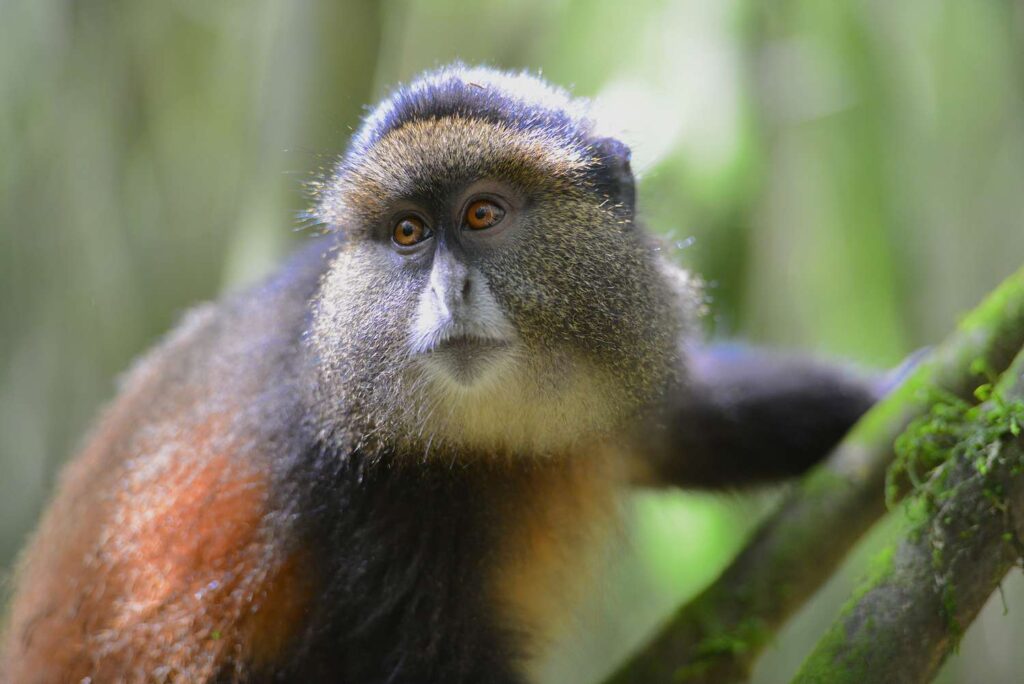
Gishwati–Mukura National Park – Rwanda’s Youngest National Park and a Powerful Story of Forest Restoration, Primates, and Biodiversity Conservation
Gishwati–Mukura National Park is Rwanda’s newest national park and one of the most inspiring conservation success stories in Africa. Established in 2015, the park protects two ancient high-altitude forests—Gishwati and Mukura—situated along the biodiverse Albertine Rift. Though once heavily degraded, these forests have undergone remarkable restoration through Rwanda’s nationwide commitment to reforestation, habitat connectivity, and community-led conservation. Today, Gishwati–Mukura shelters chimpanzees, golden monkeys, L’Hoest’s monkeys, more than 230 bird species, stunning waterfalls, and thriving native vegetation. Its revival symbolizes Rwanda’s leadership in ecological restoration and offers visitors an intimate, peaceful experience in a forest ecosystem returning to life.
Overview of Gishwati–Mukura National Park
Gishwati–Mukura National Park spans approximately 34 km², making it one of Africa’s smallest—but ecologically significant—protected areas. The park is formed by two separate high-altitude forests: the larger Gishwati Forest in the north and the smaller Mukura Forest in the south. Between them lies a 30 km-long corridor under restoration, which aims to reconnect the forests and allow wildlife, especially primates, to move freely for generations to come.
Despite its modest size, Gishwati–Mukura features exceptionally high biodiversity. It belongs to the Albertine Rift, one of the most biologically rich regions on the continent and home to numerous endemic species. The park’s revival has attracted global recognition as an outstanding example of how degraded landscapes can be healed through science, community cooperation, and strict environmental stewardship.
Location and Size
Gishwati–Mukura National Park is located in western Rwanda, stretching between Rutsiro and Ngororero Districts. The two forest sections together protect roughly 34 km² of montane rainforest. Gishwati Forest sits on the western slopes of the Congo–Nile Divide, while Mukura Forest lies closer to the Kivu Belt.
Although small compared to Rwanda’s Volcanoes National Park or Nyungwe Forest, this protected area forms a critical ecological corridor that maintains forest connectivity across the western highlands, enabling wildlife movement and supporting hydrological cycles vital for the region.
Geography and Geology
The park rests within the steep, rugged highlands of the Albertine Rift, characterized by rolling ridges, deep valleys, fertile volcanic soils, and dramatic slopes. These high-altitude landscapes were formed by tectonic forces that shaped the East African Rift system, creating ideal conditions for montane and bamboo forests.
The park’s geology includes volcanic rock formations, weathered lava flows, iron-rich soils, and granite outcrops. These features support varied vegetation and influence rainfall distribution, stream flow, and soil fertility. The park’s uneven topography also makes it a scenic destination for hiking, primate tracking, and photography.
Climate
Gishwati–Mukura National Park enjoys a cool, moist tropical climate typical of Rwanda’s high-altitude forests. Rainfall is abundant throughout the year, with the heaviest rains falling between March–May and September–December. Temperatures remain mild, ranging from 10°C to 20°C depending on altitude and season.
This consistent moisture supports lush forest growth and provides suitable conditions for primates, mosses, ferns, orchids, and amphibians. Mist often blankets the forests, creating dramatic, almost mystical scenery—especially during early mornings and late afternoons.
Hydrology and Rivers
The park is part of the Congo–Nile watershed and contains many streams, springs, and rivers that supply clean water to surrounding communities. Rivers such as the Sebeya, Pfunda, and Kanama originate or flow through the park, supporting riparian vegetation and aquatic ecosystems.
These rivers also play a critical role in preventing soil erosion, maintaining downstream agriculture, and supporting hydroelectric potential. The restoration of Gishwati Forest has significantly improved water quality and reduced the flooding that once plagued nearby settlements.
Ecosystems and Habitats
Gishwati–Mukura National Park is dominated by montane rainforest ecosystems rich in biodiversity and ecological complexity. These forests are part of the Albertine Rift, recognized globally for high levels of endemism.
- Montane rainforest: Dense, moisture-rich forests with hardwoods, epiphytes, moss, and ferns.
- Bamboo zones: Patches that support golden monkeys and small mammals.
- Riparian forests: Vegetation along streams offering critical habitat for amphibians and birds.
- Regenerating secondary forest: Areas recovering from past human activities, now showing rapid growth.
- Forest-edge habitats: Rich in butterflies, birds, and pollinator species.
Vegetation
The park’s vegetation includes native afro-montane plant species, hardwood trees, bamboo, climbers, and a thriving understory of mosses, shrubs, and ferns. Species such as Macaranga, Hagenia abyssinica, Dombeya, Mahogany, Symphonia globulifera, and giant tree ferns create a multi-layered canopy supporting countless species.
Reforestation efforts have planted thousands of indigenous trees to restore degraded areas. These efforts have already shown success, with wildlife returning and forest cover increasing steadily each year.
Wildlife of Gishwati–Mukura National Park
Mammals
Gishwati–Mukura National Park is home to several primate species, making it an excellent destination for primate tracking. The star attraction is the chimpanzee population, which has stabilized and grown thanks to effective protection and habitat restoration. These intelligent primates live in social communities and are regularly seen feeding, climbing, and interacting in the forest canopy.
Other mammals include golden monkeys, L’Hoest’s monkeys, blue monkeys, black-and-white colobus, serval cats, duikers, and small carnivores. Although the park is compact, its biodiversity richness is remarkable due to the ecological sensitivity of the Albertine Rift.
Birds
More than 230 bird species have been recorded in Gishwati–Mukura, including several Albertine Rift endemics and forest specialists. Its birdlife is one of the park’s biggest attractions, drawing birdwatchers from around the world.
Notable species include the Ruwenzori turaco, mountain yellow warbler, grey crowned crane, handsome francolin, red-throated alethe, stripe-breasted tit, and regent trogon. Riparian zones host kingfishers, sunbirds, and a variety of flycatchers, while forest clearings attract bee-eaters and swallows.
Reptiles, Amphibians, and Insects
The park shelters several reptile and amphibian species, many of which thrive in moist, shaded habitats. Chameleons, skinks, tree frogs, and brightly colored toads inhabit the forest. The high moisture and dense vegetation also support spectacular insect diversity, including butterflies, beetles, moths, and pollinators that play vital ecological roles.
As the forest regenerates, scientists continue to discover previously unrecorded species, reinforcing the park’s importance as a biodiversity hotspot.
Unique Features of Gishwati–Mukura National Park
Gishwati–Mukura is unique because it represents one of the most successful large-scale forest restoration projects in Africa. Communities, government, and conservation groups have collaborated to transform a once heavily degraded landscape into a thriving national park.
Its combination of chimpanzees, golden monkeys, high-altitude forests, scenic ridges, and tranquil walking trails makes it a distinctive destination compared to Rwanda’s other national parks. The isolation of the two forests—and the ongoing efforts to reconnect them—add scientific and conservation significance.
Cultural and Indigenous Communities
Communities surrounding the park include Rwandan highland farmers and agro-forestry households who rely on crops, livestock, and small-scale trade. Traditionally, people depended on forest resources for timber, honey, medicinal plants, and weaving materials.
Community programs now support sustainable agriculture, beekeeping, reforestation, ecotourism, and environmental education. These partnerships reduce pressure on the forest while offering alternative livelihoods that improve community well-being.
Conservation Importance
Gishwati–Mukura National Park is a vital refuge for endangered primates, birds, and forest ecosystems. It protects watershed functions, prevents erosion, and supports regional climate stability. As one of the few remaining montane forests in western Rwanda, the park ensures genetic connectivity across the Albertine Rift.
Long-term restoration projects, scientific research, and community-based conservation initiatives make this park a global model for environmental recovery.
Threats and Challenges
Historical threats included deforestation, illegal logging, mining, livestock grazing, and agricultural expansion. Although much has been restored, challenges remain, such as human–wildlife conflict, pressure on forest edges, and the need to maintain continuous funding for conservation.
Ongoing monitoring, strict protection, education, and community partnerships are key to ensuring the park’s long-term survival.
Research and Monitoring
Gishwati–Mukura is a growing hub for ecological research, particularly in primate behavior, forest regeneration, hydrology, soil restoration, and biodiversity monitoring. Researchers use GPS tracking, camera traps, vegetation mapping, and acoustic surveys to study wildlife populations and forest recovery.
As the forest expands and wildlife returns, research continues to reveal new insights into the resilience of montane ecosystems.
Tourism Activities
Tourism at Gishwati–Mukura is low-impact, intimate, and designed to minimize disturbance to wildlife. Visitors enjoy quiet forest walks, primate tracking, birdwatching, and cultural encounters with surrounding communities.
- Chimpanzee tracking: Observe Rwanda’s growing chimpanzee population in regenerating forest.
- Golden monkey tracking: Visit bamboo-rich areas where these rare primates thrive.
- Nature walks: Explore forest trails, waterfalls, and scenic viewpoints.
- Birdwatching: Spot Albertine Rift endemics and rare forest species.
- Cultural experiences: Learn about traditional beekeeping, crafts, and agro-forestry practices.
Access and Getting There
The park is located about 2–3 hours from Rubavu (Gisenyi) and approximately 1.5–2 hours from Karongi (Kibuye). Road access is improving, and visitors can reach the park via well-maintained routes leading to Gishwati Forest’s northern entrance.
Because the park is relatively small and still developing, guided visits are recommended to maximize the experience and ensure safe, responsible exploration.
Permits, Fees, and Park Rules
Visitors must obtain permits for primate tracking and guided walks through the Rwanda Development Board (RDB). Fees contribute directly to conservation programs, community development, and forest restoration.
- Do not disturb or feed wildlife.
- Stay on marked trails at all times.
- Follow ranger instructions when viewing primates.
- Keep noise levels low to protect sensitive species.
- Respect community lands surrounding the park.
Accommodation
Accommodation options include eco-lodges and community-based guesthouses near the park’s borders. A notable option is the Gishwati Lodge area, offering comfortable stays with beautiful views, forest walks, and guided activities.
More lodging options can be found in nearby towns such as Rubavu and Karongi, making the park accessible for day trips or multi-day visits.
Best Time to Visit
The best time to visit Gishwati–Mukura is during the dry seasons—June to September and December to February—when trails are easier to navigate and wildlife viewing conditions are optimal. These periods offer clearer skies, minimal rainfall, and improved accessibility.
The rainy seasons bring lush vegetation, active birdlife, and dramatic forest ambiance, offering excellent opportunities for photographers and nature enthusiasts who prefer quiet, immersive experiences.
Why Gishwati–Mukura National Park Is Unique
Gishwati–Mukura is unique because it transforms a story of severe forest loss into one of hope, renewal, and ecological revival. Its growing chimpanzee family, vibrant forests, waterfall trails, and Albertine Rift scenery create a deeply rewarding experience for conservation-minded travelers.
As Rwanda’s youngest national park and a global example of successful forest restoration, Gishwati–Mukura shows the world that degraded landscapes can be healed when communities, governments, and conservationists unite. For visitors seeking a peaceful, intimate, and meaningful nature experience, this park represents the future of responsible ecotourism in Africa.