Gola Rainforest National Park
Gola Rainforest National Park – Sierra Leone’s Last Great Rainforest and a Global Stronghold for Endangered Wildlife, Carbon Storage, and Biodiversity Conservation
Gola Rainforest National Park is Sierra Leone’s largest and most biodiverse protected area, safeguarding the last remaining stretch of the once-vast Upper Guinean Rainforest. Straddling the southeastern border with Liberia and covering approximately 710 km², Gola is one of West Africa’s most important ecological havens. It shelters forest elephants, chimpanzees, pygmy hippos, rare duikers, over 330 bird species, and extraordinary plant diversity. Known as “The Green Diamond of Sierra Leone,” this pristine rainforest plays a crucial role in climate regulation, watershed protection, and global biodiversity conservation. Its ancient, mist-covered canopy and deep, untouched valleys offer one of the most authentic rainforest experiences in the world.
Overview of Gola Rainforest National Park
Gola Rainforest National Park was officially established in 2011 and forms part of the transboundary Gola Rainforest landscape shared with Liberia. The park protects a section of the Upper Guinean Rainforest—one of the planet’s most threatened biodiversity hotspots. Gola’s exceptional plant and animal diversity, coupled with its intact forest cover, makes it a vital sanctuary for endangered species and an essential component of West Africa’s ecological resilience.
Beyond its wildlife, Gola Rainforest is globally recognized for its progressive, community-centered conservation model. The park is jointly managed by the Government of Sierra Leone, the Conservation Society of Sierra Leone (CSSL), and the Royal Society for the Protection of Birds (RSPB), ensuring that local communities benefit directly from forest conservation. This collaborative approach has made Gola one of Africa’s leading examples of sustainable rainforest protection.
Location and Size
The park is located in southeastern Sierra Leone, extending across the districts of Kenema, Kailahun, and Pujehun. Covering approximately 710 km² of primary and secondary rainforest, Gola Rainforest National Park forms part of a larger 2,000 km² transboundary ecosystem shared with the adjacent Gola Forest in Liberia.
Its vast expanse of untouched rainforest is extremely rare in West Africa, where deforestation has significantly reduced natural forest cover. Gola’s location within the Upper Guinean Biodiversity Hotspot makes it a lifeline for globally endangered species and an essential refuge for climate-sensitive ecosystems.
Geography and Geology
Gola Rainforest sits on a landscape of rolling hills, steep ridges, deep river valleys, and rugged highlands rising up to 600 meters above sea level. The region is part of the ancient West African Craton, with geological formations dating back billions of years. Rich lateritic soils support dense tropical forest growth, while granite outcrops and erosion-sculpted ridges give the landscape its dramatic character.
The forest structure features towering canopy trees that rise above layers of mid-story vegetation, lianas, palms, ferns, and a vibrant understory. This mosaic of microhabitats creates ideal conditions for species diversity and ecological complexity.
Climate
Gola Rainforest National Park experiences a warm, humid, tropical climate with substantial rainfall, typically ranging from 2,500 to 3,500 mm annually. The rainy season runs from May to October, bringing dense mist, flowing rivers, and lush forest vegetation. The dry season from November to April offers clearer conditions and easier access for trekking and wildlife tracking.
Humidity remains high year-round, which supports thriving epiphytes, amphibians, reptiles, and evergreen vegetation. The park’s stable climate also helps regulate regional weather patterns and supports vital hydrological functions for surrounding communities.
Hydrology and Rivers
The park is an important watershed for southeastern Sierra Leone. Several major rivers, including the Moa, Mano, and Lofa Rivers, originate or pass through Gola Rainforest. These rivers supply clean water to thousands of households and feed agricultural lands downstream.
River valleys within the park support riparian forests, provide breeding grounds for fish and amphibians, and enable wildlife movement during seasonal migrations. The hydrology also helps mitigate flooding and ensures year-round water availability for both humans and wildlife.
Ecosystems and Habitats
Gola Rainforest National Park protects some of West Africa’s most intact rainforest ecosystems. Its habitats represent a rich mosaic of primary forest, swamp forest, riverine forest, secondary growth areas, and specialized niches for endemic flora and fauna.
- Primary rainforest: Dense, ancient forests with towering canopies and high biodiversity.
- Secondary forests: Regenerating areas recovering from past human activity.
- Riparian zones: Moist, shaded areas along rivers that support amphibians, birds, and mammals.
- Swamp forests: Seasonally flooded areas that form crucial habitats for pygmy hippos and waterbirds.
- Forest-edge habitats: Rich in flowering plants, butterflies, and pollinators.
Vegetation
Gola Rainforest contains an extraordinary diversity of plant life, including over 600 recorded tree and plant species. Towering species such as Lophira alata, Chrysophyllum spp., Dacryodes klaineana, and Nauclea diderrichii dominate the canopy. Understory vegetation includes palms, giant ferns, mosses, gingers, and hundreds of herbs and shrubs.
Rare and endemic plant species thrive in Gola’s humid microclimates, and the dense forest structure supports epiphytes, orchids, fungi, and lianas that form complex ecological webs essential for the park’s wildlife.
Wildlife of Gola Rainforest National Park
Mammals
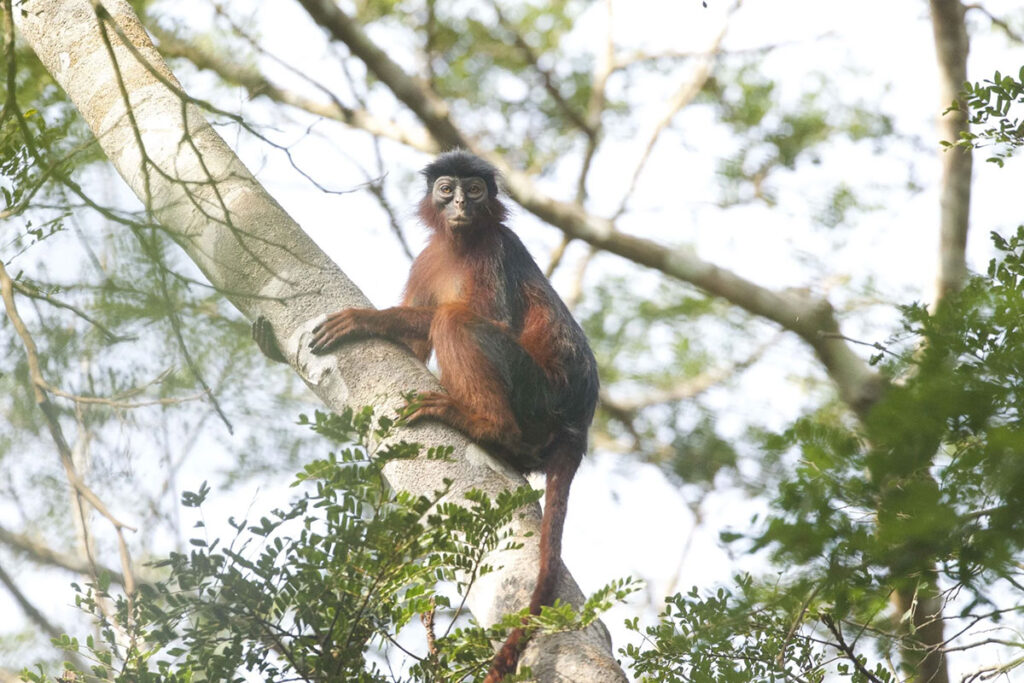
Gola Rainforest is one of the most important wildlife refuges in West Africa, supporting over 50 mammal species, many of them globally endangered. The park’s flagship mammals include forest elephants, western chimpanzees, pygmy hippos, Diana monkeys, and the elusive zebra duiker.
Other mammals include sooty mangabeys, Campbell’s monkeys, colobus monkeys, genets, bush pigs, Maxwell’s duikers, and African civets. Camera trap studies reveal a rich community of nocturnal mammals, emphasizing Gola’s importance for wildlife survival in the Upper Guinean Forest.
Birds
With more than 330 recorded bird species, Gola Rainforest is one of the finest birding destinations in West Africa. It is home to 14 of the 15 Upper Guinean rainforest endemics, making it a magnet for ornithologists and bird enthusiasts from around the world.
Notable species include the white-necked rockfowl (picathartes), Gola malimbe, western wattled cuckoo-shrike, yellow-bearded greenbul, fire-bellied woodpecker, and African grey parrot. Swamp forests and rainforest clearings attract hornbills, turacos, bee-eaters, and kingfishers.
Reptiles, Amphibians, and Insects
The park’s humid environment supports a diverse community of reptiles and amphibians. Species include forest cobras, chameleons, skinks, dwarf crocodiles, frogs, and several toad species. Many amphibians are endemic to the Upper Guinean rainforest and depend on intact forest cover and clean waterways.
Insects are abundant, with countless butterflies, dragonflies, beetles, ants, termites, and pollinating species that support ecosystem functioning. Gola’s insect life is especially rich in the wet season, attracting researchers and photographers alike.
Unique Features of Gola Rainforest National Park
Gola Rainforest is unique because it preserves a rare portion of the Upper Guinean Forest, one of Earth’s most threatened rainforest systems. It shelters species found nowhere else in Sierra Leone and forms the only stronghold for several West African endemics.
Its untouched canopies, rich birdlife, pygmy hippo habitat, and community-based conservation model set it apart from other African parks. The tranquil, deeply forested environment provides a wilderness experience that feels ancient, secluded, and spectacularly untouched.
Cultural and Indigenous Communities
Communities bordering Gola Rainforest belong to diverse ethnic groups including the Mende, Kissi, and Kpelle peoples. These communities rely on farming, cocoa growing, fishing, and forest products for their livelihoods. Traditionally, the forest held cultural and spiritual significance and provided materials for medicine, shelter, and ceremonies.
Conservation programs now partner with these communities to support sustainable agriculture, eco-friendly farming, beekeeping, forest monitoring, education, and alternative income projects. Revenue-sharing models ensure communities directly benefit from conservation and eco-tourism.
Conservation Importance
Gola Rainforest National Park is one of the last strongholds of the Upper Guinean Rainforest, a global biodiversity hotspot. It supports endangered species, protects carbon-rich forests, and helps stabilize regional climate patterns. The park plays a critical role in:
- Carbon storage and climate mitigation
- Watershed protection and flood prevention
- Wildlife habitat connectivity across West Africa
- Soil stabilization and erosion control
- Preservation of endemic species
Its conservation success is internationally recognized and forms a blueprint for rainforest protection across West Africa.
Threats and Challenges
Key threats include illegal logging, poaching, mining pressure, slash-and-burn agriculture, and habitat fragmentation. Human–wildlife conflict occasionally occurs near forest edges, particularly involving monkeys and crop-raiding wildlife.
Concerted conservation efforts—including ranger patrols, environmental education, community management committees, and livelihood support programs—are helping mitigate these challenges and ensure long-term forest protection.
Research and Monitoring
Gola Rainforest is a major research hub for primatology, ornithology, botany, and tropical ecology. Scientific teams conduct biodiversity surveys, camera trap monitoring, habitat mapping, and long-term studies on forest elephants, chimpanzees, and bird species.
Research findings contribute to sustainable forest management, climate resilience strategies, and adaptive conservation planning. Gola’s research programs also offer training opportunities for local students and future conservationists.
Tourism Activities
Tourism in Gola Rainforest National Park is low-impact, carefully regulated, and focused on immersive rainforest experiences. Activities allow visitors to appreciate the forest’s serenity, wildlife, and cultural richness while supporting conservation.
- Chimpanzee tracking: Follow forest trails to observe chimpanzees in their natural habitat.
- Birdwatching: Search for rare Upper Guinean endemics, including the white-necked rockfowl.
- Guided forest hikes: Explore deep rainforest trails, scenic viewpoints, and river corridors.
- Butterfly and insect tours: Discover the incredible diversity of rainforest insects.
- Cultural experiences: Visit local villages, learn traditional crafts, and participate in community projects.
Access and Getting There
Gola Rainforest National Park is accessible from Kenema, Kailahun, and Pujehun, with Kenema serving as the primary gateway for visitors. The park is approximately 4–6 hours’ drive from Freetown depending on road conditions.
Road upgrades have improved accessibility, but some interior tracks may require a 4×4 vehicle, especially during the rainy season. Guided visits are recommended for safety and to enhance the wildlife experience.
Permits, Fees, and Park Rules
Visitors must obtain entry permits through park management offices or authorized tour operators. Fees support conservation activities, community development, ranger patrols, and research.
- Follow ranger and guide instructions at all times.
- Do not disturb wildlife or remove forest products.
- Stay on designated trails during all activities.
- No feeding or touching wildlife.
- Respect cultural practices and community lands.
Accommodation
Accommodation around Gola includes eco-lodges, community-run guesthouses, research bases, and simple forest-edge cottages. These facilities offer comfortable stays with opportunities for guided walks, birdwatching, and cultural interactions.
More options are available in Kenema, where visitors can find hotels and guesthouses suitable for both leisure and research trips.
Best Time to Visit
The best time to visit Gola Rainforest National Park is during the dry season (November–April), when trails are most accessible, wildlife viewing is easier, and insects are less abundant. This period is ideal for chimpanzee tracking, birdwatching, and hiking.
The rainy season (May–October) transforms the forest into a lush, intensely green world rich in amphibians, fungi, and waterfalls. This is an excellent time for researchers, photographers, and visitors who enjoy immersive tropical rainforest experiences.
Why Gola Rainforest National Park Is Unique
Gola Rainforest National Park is unique as the last great refuge of Sierra Leone’s ancient Upper Guinean Rainforest—a globally irreplaceable ecosystem. It shelters endangered species, protects vast carbon-rich forests, and supports thousands of people who depend on its ecological services.
For nature lovers, birders, primate enthusiasts, and eco-travelers, Gola offers an experience unlike anywhere else in West Africa: a true, untouched rainforest where conservation success, cultural heritage, and extraordinary biodiversity come together in harmony.