
Korup National Park
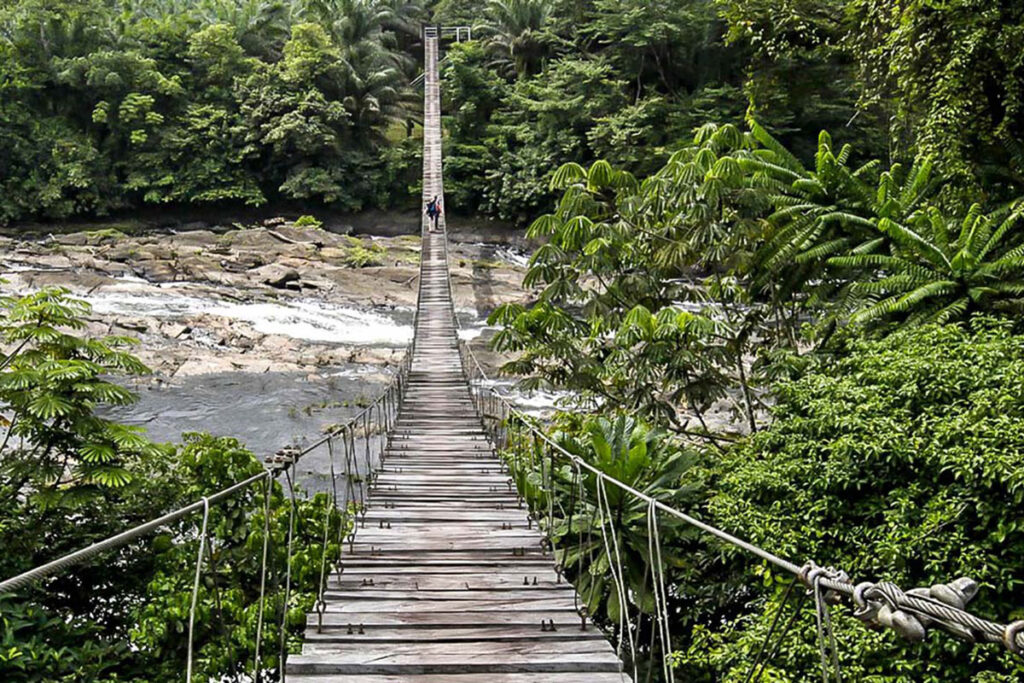
Korup National Park – Cameroon’s Ancient Rainforest Eden of Primates, Rare Plants, Medicinal Trees, Waterfalls, and One of Africa’s Oldest Biodiversity Hotspots
Korup National Park is one of Africa’s most powerful showcases of ancient rainforest biodiversity—a truly extraordinary landscape where time seems frozen in a lush green world that has existed for over 60 million years. Located in southwest Cameroon near the border with Nigeria, this 1,260 km² tropical sanctuary is globally acclaimed for its unrivaled levels of endemism, exceptional rainforest age, medicinal plant diversity, and rare primates found nowhere else on Earth. Korup is not simply a park; it is a living relic of prehistoric Africa and one of the most intact and ecologically valuable lowland rainforest ecosystems in the entire Guinean Forests of West Africa biodiversity hotspot.
Visitors entering Korup National Park experience towering ancient trees, dense emerald canopies, mist-covered foothills, dramatic waterfalls, pristine rivers, and an overwhelming richness of wildlife. More than 1,500 plant species, 620 butterfly species, over 400 bird species, and numerous endangered mammals—including drills, the Nigeria–Cameroon chimpanzee, and Preuss’s red colobus—live within this rainforest jewel. Its ecological significance, cultural heritage, and scientific importance make Korup one of the most crucial protected areas in West and Central Africa.
Overview of Korup National Park
Founded in 1986, Korup National Park represents Cameroon’s oldest and most scientifically studied rainforest protected area. Its global importance stems from the fact that Korup contains one of the oldest surviving tropical forests on Earth—forests that remained stable and unfragmented during the last Ice Age while other African forests contracted or disappeared altogether. This remarkable geological and climatic stability allowed species to persist, adapt, and evolve over millions of years, resulting in today’s extraordinary levels of biodiversity.
Korup is recognized internationally as a hotspot for rainforest research. It hosts long-term ecological monitoring plots, ethnobotanical research programs, primate behavioral studies, climate change resilience research, and conservation biology initiatives focused on endangered species. Scientists are continuously discovering new species, many of which are endemic or extremely rare. At the same time, Korup remains culturally connected to nearby villages whose traditional forest knowledge continues to shape sustainable uses of plants, fruits, and medicinal resources.
Location and Size
Korup National Park occupies a large block of southwest Cameroon’s Ndian Division, a region characterized by dense evergreen forest, rugged terrain, and proximity to the Gulf of Guinea. Covering approximately 1,260 km², the park stretches from the lowland areas near the Cross River on the Nigeria–Cameroon border to the foothills of the Cameroon Highlands. This location places Korup at the crossroads of West African and Central African ecosystems, making it a biological bridge between two major biogeographic zones.
Korup borders Nigeria’s Cross River National Park, forming a vast transboundary rainforest landscape of immense ecological importance. This cross-border forest block is a refuge for numerous endangered species and represents one of the last large, unbroken stretches of rainforest in West Africa.
Geography and Geology
The geology of Korup is ancient, dominated by Precambrian granite and metamorphic rock formations that have remained relatively stable over hundreds of millions of years. This stability allowed Korup’s rainforest to survive major climatic shifts and persist through multiple geological eras without significant disturbance—a major reason why its plant and animal communities display such incredible evolutionary depth.
Geographically, Korup is characterized by:
- Mountainous foothills surrounding the Cameroon Highlands, creating steep slopes and dramatic viewpoints above the forest canopy.
- Deep river valleys carved by the Ndian, Mana, Bake, and Moko Rivers.
- Alluvial plains where nutrient-rich sediments promote lush vegetation growth.
- Rocky outcrops emerging above the canopy and serving as perches for raptors.
- Dense evergreen forest blanketing the entire park, from lowlands to foothill elevations.
This topographic complexity supports numerous microhabitats, each contributing to Korup’s extraordinary species richness.
Climate
Korup National Park has a consistently wet equatorial climate, influenced by strong Atlantic monsoon systems. The region receives extraordinary rainfall—often exceeding 5,000 mm annually—making Korup one of the wettest rainforests in Africa. The high humidity and warm temperatures create ideal conditions for dense vegetation layers and continuous plant growth throughout the year.
The climate consists of:
- Rainy season (April–November) – Dominated by heavy showers, swollen rivers, amphibian breeding, and rapid plant regeneration.
- Dry season (December–March) – Marked by clearer skies, slightly reduced humidity, better hiking conditions, and increased wildlife visibility along streams.
Even during the dry season, Korup remains moist and humid, ensuring that its evergreen rainforest retains lush foliage all year long.
Hydrology and River Systems
Korup’s rivers are the lifeblood of the park. The Ndian River system, one of the most significant river networks in southwest Cameroon, flows through the heart of the park, creating pristine aquatic habitats and supporting countless species. The region’s geological structure allows rivers to form deep gorges, cascading waterfalls, and series of rapids that contribute to the park’s dramatic scenery.
Important hydrological features include:
- Blackwater rivers rich in organic tannins that create dark, reflective waters.
- Powerful waterfalls such as Chutes de Mana and Chimpanzee Falls, major attractions for adventurous hikers.
- Rain-fed creeks that swell during the rainy season and nourish diverse aquatic life.
- Swampy lowlands serving as breeding habitats for amphibians and aquatic insects.
These water systems also act as natural wildlife corridors and contribute to the complex forest microclimates that define Korup.
Ecosystems and Habitats
Korup National Park protects some of the most intact and diverse lowland rainforest ecosystems in West Africa. Its habitats include towering primary rainforest, swamp forest, riverine forest, montane foothill forest, and regenerating secondary forest near park margins.
Major habitat types include:
- Old-growth evergreen rainforest with multi-layered canopies, emergent trees exceeding 60 meters, thick understory vegetation, and liana-draped trunks.
- Riparian forest along rivers and streams, offering dense cover and rich food resources for primates and birds.
- Mountain foothill forest with cooler temperatures and distinct species composition at higher elevations.
- Swamp forest supporting frogs, snakes, and water-dependent plants.
- Forest clearings (bais) used by animals such as duikers, monkeys, and forest hogs for feeding.
This ecological diversity sustains a huge number of species and makes Korup a prime destination for scientific research and eco-tourism.
Vegetation
Korup is renowned for its exceptionally rich plant diversity. More than 1,500 plant species have been documented in the park, including an estimated 400 tree species—one of the highest tree diversities in any African protected area. Because the forest is extremely old, some plant species have no close relatives outside the region.
Notable vegetation includes:
- Large buttress-rooted trees such as Lophira alata and Heritiera utilis.
- Medicinal plants used in traditional healing practices, including species sought for antimalarial and anti-inflammatory properties.
- Korupodendron songweanum – a critically endangered tree species found only in Korup.
- Massive hardwoods like Azobé and Afzelia.
- Dense understory plants including ferns, palms, mosses, and orchids.
The forest’s dense vegetation provides food and shelter for thousands of animal species and plays a major role in climate regulation and carbon storage.
Wildlife of Korup National Park
Mammals
Korup is one of the best places in West and Central Africa to observe rare and endangered primates. The park’s mammal diversity is exceptionally high, with several species found nowhere else or only in the Cross River–Korup region.
Notable mammals include:
- Nigeria–Cameroon chimpanzee – critically endangered and living in isolated populations.
- Preuss’s red colobus – one of Africa’s rarest primates.
- Drill (Mandrillus leucophaeus) – a highly endangered species closely related to the mandrill.
- Red-eared guenon – strikingly colored and endemic to the region.
- Forest elephants – once common, now rare due to poaching.
- Giant forest hogs, duikers, pangolins, civets, and genets.
Karup’s primate community alone makes the park globally significant for conservation.
Birds
Korup boasts more than 400 bird species, making it one of Cameroon’s finest birdwatching destinations. Its blend of West African and Central African species creates a unique avian assemblage that draws ornithologists from around the world.
Noteworthy bird species include:
- Great blue turaco – a large and colorful forest emblem.
- African grey parrot – globally threatened due to trade pressure.
- Lyre-tailed honeyguide – a highly specialized forest species.
- White-crested hornbill – found primarily in evergreen forests.
- Raptors such as crowned eagles and long-tailed hawks.
- Numerous sunbirds, flycatchers, and forest finches.
Korup’s birdlife is especially active in riverine habitats and at forest edges, where insects and fruiting trees are abundant.
Reptiles, Amphibians, and Insects
Reptiles in Korup include forest cobras, pythons, chameleons, geckos, and skinks. Amphibians thrive in the wet rainforest environment and include numerous frog and toad species, some of which may be endemic.
Insect diversity is spectacular: more than 620 butterfly species are documented, making Korup one of the continent’s most important butterfly habitats. Beetles, ants, dragonflies, and thousands of understudied arthropods contribute to the park’s complex ecological webs.
Unique Features of Korup National Park
- An ancient rainforest ecosystem older than 60 million years.
- Rare endemic species including Korupodendron and Preuss’s red colobus.
- One of Africa’s highest tree diversities in a single protected area.
- A primate hotspot supporting globally endangered species.
- Rich ethnobotanical knowledge preserved by local communities.
- Magnificent waterfalls, rivers, and rocky forest landscapes.
Cultural and Indigenous Communities
Several indigenous groups live near Korup’s boundaries, including the Ejagham people and other communities with deep cultural and spiritual ties to the forest. For generations, they have practiced traditional medicine, forest-product harvesting, fishing, and small-scale agriculture in ways that often align with ecological sustainability.
Local communities contribute significantly to conservation through:
- Traditional herbal remedies derived from forest plants.
- Customary laws that protect certain sacred groves or animal species.
- Forest-friendly livelihoods such as wild honey harvesting.
- Participatory conservation projects and eco-tourism partnerships.
Conservation Importance
Korup National Park’s conservation value cannot be overstated. It protects:
- One of the last surviving blocks of Guinean lowland rainforest.
- Critical habitat for endangered primates and forest elephants.
- Hundreds of plant species with medicinal and scientific significance.
- Vital carbon-storage ecosystems mitigating climate change.
- River systems essential for freshwater biodiversity.
The park is a cornerstone of Cameroon’s biodiversity strategy and a centerpiece of global rainforest conservation efforts.
Threats and Challenges
Despite its significance, Korup faces threats that could compromise its ecological integrity if not managed effectively.
- Poaching of primates, ungulates, and elephants.
- Illegal logging of high-value hardwoods.
- Encroachment from nearby farms.
- Unsustainable harvesting of non-timber forest products.
- Limited conservation funding and infrastructure.
Efforts to address these threats include strengthened ranger patrols, community awareness programs, livelihood alternatives, and transboundary conservation cooperation with Nigeria.
Research and Monitoring
Korup is one of Africa’s premier rainforest research locations and hosts a large number of long-term ecological studies. Researchers investigate:
- Primate behavior and population dynamics.
- Tree species demography and rainforest regeneration.
- Climate change impacts on canopy structure.
- Carbon storage and forest productivity.
- Medicinal plant chemistry and ethnobotany.
The park’s research stations enable scientists to conduct multi-year studies that help guide global understanding of rainforest ecology.
Tourism Activities
Although Korup remains relatively undeveloped for tourism, it offers some of the most immersive rainforest experiences in Africa. Adventure travelers, naturalists, and wildlife photographers will find Korup especially rewarding.
- Jungle trekking through dense, ancient rainforest.
- Waterfall expeditions to scenic cascades such as Mana Waterfalls.
- Guided primate tracking for drills, red colobus, and chimpanzees.
- Birdwatching in species-rich riverine and canopy habitats.
- Butterfly photography in forest clearings and sunlit paths.
- River canoeing along the Ndian and its tributaries.
Access and Getting There
The main gateway to Korup National Park is the town of Mundemba, which provides access to ranger stations and trailheads. Roads can be challenging, particularly during the rainy season, so 4×4 vehicles are recommended. Hiking is the primary means of exploring the interior of the park.
Permits and Park Rules
Visitors must obtain entry permits through Cameroon’s Ministry of Forestry and Wildlife. Additional permits are required for overnight camping, research activities, and filming.
Park rules include:
- No hunting or wildlife disturbance.
- No logging or removal of forest products.
- Stay on designated trails unless accompanied by guides.
- Respect cultural sites and local customs.
- Practice low-impact, eco-friendly tourism at all times.
Accommodation
Accommodation options include modest guesthouses in Mundemba, eco-lodges near the park entrance, simple forest camps, and guided camping inside the rainforest. These facilities offer rustic but rewarding experiences immersed in nature.
Best Time to Visit
- December–March (Dry Season): Best for hiking, wildlife spotting, and photography.
- April–November (Rainy Season): Peak rainforest activity, lush landscapes, and excellent amphibian diversity.
Why Korup National Park Is Unique
Korup National Park is unique because it represents a living relic of ancient rainforest evolution—a biodiversity treasure trove where endemic plants, primates, and rare wildlife have thrived for millions of years. Its ecological stability, richness of species, pristine rivers, and breathtaking landscapes make it one of the world’s most important natural heritage sites. For conservationists, scientists, and adventurous travelers seeking untouched wilderness, Korup stands among the most extraordinary rainforest destinations on Earth.