
Mapungubwe National Park
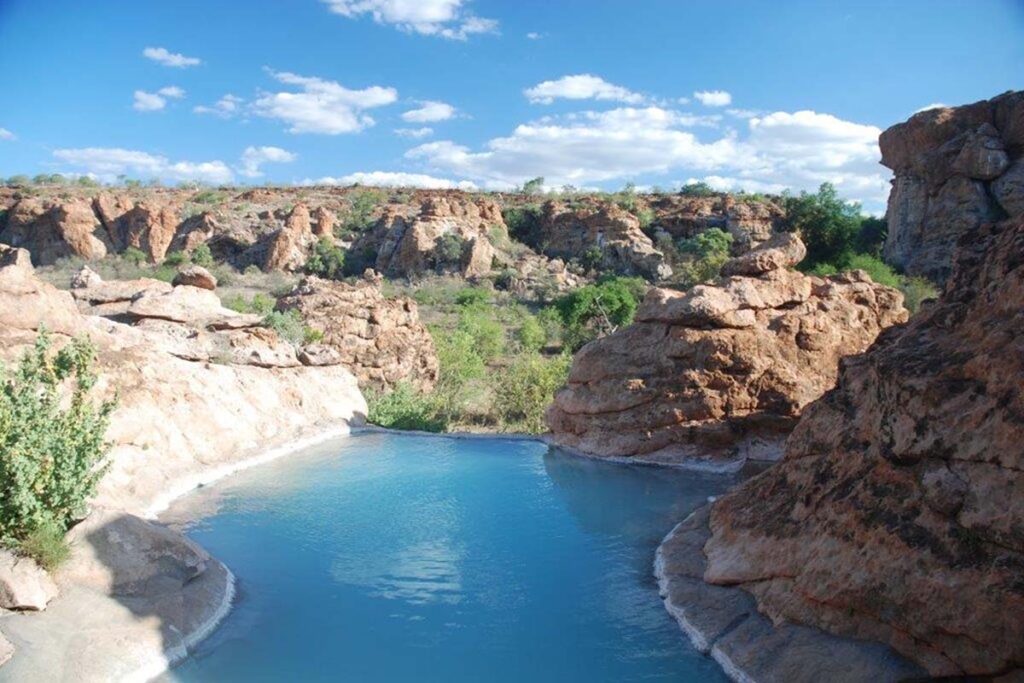
Mapungubwe National Park, South Africa – UNESCO World Heritage Site, Ancient African Kingdom and Limpopo–Shashe River Wilderness
Mapungubwe National Park South Africa is a unique safari and heritage destination where big skies, sandstone ridges, giant baobabs and riverine forests frame one of Africa’s most important archaeological landscapes. Set at the confluence of the Limpopo and Shashe Rivers near the borders with Botswana and Zimbabwe, this compact but diverse park combines classic bushveld wildlife viewing with a powerful cultural story: the rise and fall of the first indigenous kingdom in southern Africa.
For travellers researching Mapungubwe National Park safari holidays, UNESCO World Heritage Sites in South Africa, Limpopo safari parks or cultural and archaeological tours in the African bush, Mapungubwe stands out. It offers game drives, birding, guided heritage walks, a spectacular confluence viewpoint and a world-class interpretation centre that tells the story of the Kingdom of Mapungubwe and its famous golden artefacts.
Overview – Why Visit Mapungubwe National Park South Africa?
Mapungubwe National Park is a South African National Parks (SANParks) reserve and a core part of the Mapungubwe Cultural Landscape, recognised by UNESCO for its outstanding cultural and archaeological value. The park forms South Africa’s contribution to the Greater Mapungubwe Transfrontier Conservation Area, a vast cross-border conservation region shared with Botswana and Zimbabwe.
The park protects a mosaic of habitats, from sandstone plateaus and mopane woodland to riverine forest along the Limpopo floodplain. It is home to elephants, antelope, predators, abundant birds and impressive baobab trees. Yet Mapungubwe is not just about wildlife: the remains of an Iron Age capital on Mapungubwe Hill reveal a complex kingdom that traded gold and ivory with the outside world between roughly 900 and 1300 AD.
Visitors come to Mapungubwe National Park to experience a combination of:
- Scenic drives through rugged sandstone landscapes and open savanna.
- Heritage tours that explore Mapungubwe Hill and royal burial sites.
- Wildlife viewing, including elephants, giraffes, antelope and predators.
- Outstanding birdwatching along the Limpopo floodplain and riverine forest.
- Quiet viewpoints over the confluence of the Limpopo and Shashe Rivers.
- Architecturally renowned museums and interpretation centres.
Location and Size – Where Is Mapungubwe National Park?
Mapungubwe National Park is located in South Africa’s Limpopo Province, in the far north of the country, close to the point where South Africa, Botswana and Zimbabwe meet. The nearest town is Musina, with good road links from Polokwane, Pretoria and Johannesburg. The park lies along the Limpopo River, directly opposite Botswana to the north and near Zimbabwe to the northeast.
The park covers roughly 280 square kilometres (around 28,000 hectares), making it relatively small compared with some of South Africa’s other flagship parks, but its ecological and cultural importance is exceptionally high. Mapungubwe forms the heart of the Mapungubwe Cultural Landscape World Heritage Site and is a key component of the Greater Mapungubwe Transfrontier Conservation Area, which extends over thousands of square kilometres across three countries.
Geography and Landscapes of Mapungubwe National Park
Mapungubwe’s landscape is striking and varied. The park lies in the lowveld, a semi-arid savanna region characterised by gently undulating plains, rocky hills and broad river valleys. Sandstone plateaus and weathered rock formations create dramatic ridges and cliffs, especially around Mapungubwe Hill and other koppies (rocky outcrops).
Along the Limpopo and Shashe Rivers, wide alluvial floodplains support fertile soils and tall riverine forests. Further inland, mopane woodlands and mixed bushveld dominate, with scattered baobab and acacia trees providing classic African silhouettes. This combination of open plains, rocky hills and dense riparian vegetation gives Mapungubwe a distinctive visual identity and offers visitors sweeping views from numerous viewpoints and hideouts.
Climate – Weather and Best Seasons in Mapungubwe
Mapungubwe National Park has a hot, semi-arid climate with distinct wet and dry seasons. Summers (roughly October to March) are hot to very hot, with daytime temperatures frequently exceeding 30°C and sometimes surpassing 40°C. This period coincides with the rainy season, when thunderstorms bring short, intense downpours that transform the bush into a lush green landscape.
Winters (May to August) are generally dry, sunny and mild, with warm days and cool nights. Early mornings and evenings can be chilly, especially along the river and in open areas, so warm layers are recommended. The transition months of April and September can be particularly pleasant, with fewer extreme temperatures and relatively clear skies.
For comfortable game drives and clear views, most visitors consider the dry season and shoulder seasons the best time to visit Mapungubwe National Park. During these months, vegetation is less dense, wildlife tends to concentrate near remaining water sources, and dust-tinted sunsets over the Limpopo River can be spectacular.
Hydrology – Limpopo, Shashe and Seasonal Watercourses
Water defines Mapungubwe’s landscape and ecology. The park is centred on the confluence of the Limpopo and Shashe Rivers, two major waterways that drain large catchments in South Africa, Botswana and Zimbabwe. The Limpopo River forms much of the park’s northern boundary and is lined with rich alluvial soils and riverine forest.
Within the park, smaller seasonal streams and drainage lines feed into the Limpopo, creating patches of denser vegetation and providing important water sources for wildlife in the wet season. In the dry months, many of these minor watercourses shrink or stop flowing, increasing the importance of the main river and any artificial waterholes or dams managed for wildlife.
Ecosystems and Habitats in Mapungubwe National Park
Despite its modest size, Mapungubwe National Park supports a wide range of ecosystems, each contributing to the area’s biodiversity and scenic value. The main habitat types include:
- Riverine forests and woodland along the Limpopo and Shashe floodplains.
- Mopane woodlands covering much of the interior plains.
- Mixed bushveld with acacias, combretums and other savanna trees and shrubs.
- Sandstone plateaus and rocky koppies with sparse vegetation and specialised plants.
- Open grasslands and lightly wooded savanna in valley bottoms and on gentle slopes.
This mosaic of habitats supports both typical lowveld savanna species and more specialised birds, plants and reptiles associated with riverine forest and rocky outcrops. The riparian zones along the Limpopo are especially important for biodiversity, providing shade, water and dense cover in an otherwise hot, open environment.
Vegetation – Baobabs, Mopane and Riverine Forest
Mapungubwe’s vegetation reflects its semi-arid climate and varied topography. Mopane trees dominate large parts of the park, forming short, relatively dense woodland with a grassy understory. Mopane leaves are an important food source for elephants and many other browsers, while the woodland matrix hosts diverse shrubs and grasses.
The riverine fringe along the Limpopo is particularly lush and supports some of the park’s most impressive trees. Here, fever trees, ana trees, fig trees, leadwoods and other large species form a dense canopy over rich alluvial soils. On the floodplain and in adjacent thickets, nyala berry and other fruiting trees provide important food for birds and mammals.
Baobab trees are another signature feature of Mapungubwe’s vegetation. Some individual baobabs are exceptionally large and ancient, with massive trunks and spreading crowns that dominate the landscape. These iconic trees provide nesting cavities for birds, shelter for animals and a strong sense of place for visitors exploring the park’s viewpoints and walking trails.
Wildlife of Mapungubwe National Park
Mapungubwe National Park offers rewarding wildlife viewing in a scenic, low-traffic environment. While it is not a classic Big Five destination on the scale of Kruger National Park, Mapungubwe supports a healthy mix of large mammals, smaller predators, diverse birds and interesting reptiles. The combination of savanna, riverine forest and rocky habitats creates excellent opportunities for both general game viewing and specialist birdwatching.
Mammals – Elephants, Antelope and Predators
Visitors to Mapungubwe National Park have good chances of seeing elephants, particularly in and around the Limpopo River valley. Elephants move through the park and adjacent reserves, feeding on mopane, riparian vegetation and floodplain grasses.
- Elephants along riverine forest and floodplain areas.
- Common antelope such as impala, kudu, waterbuck and blue wildebeest.
- Other herbivores including zebra, giraffe, eland and smaller antelope species.
- Predators such as leopard, hyena and, occasionally, cheetah and African wild dog in the wider transfrontier area.
Nocturnal mammals like civets, genets, porcupines and aardvarks occur in the park but are more difficult to see outside of night drives or camera-trap studies. Baboons and vervet monkeys are commonly encountered during drives and at some picnic spots and viewpoints.
Birds – A Birding Hotspot Along the Limpopo
With nearly 400 bird species recorded in and around the park, Mapungubwe is one of South Africa’s notable birding destinations. The Limpopo floodplain, riverine forest, rocky hills and open savanna all support distinct bird communities, making it easy to build an impressive trip list in a relatively small area.
- Raptors such as Verreaux’s eagle and various hawks and kites over cliffs and ridges.
- Owls, including Verreaux’s eagle-owl and smaller owl species in riverine woodland.
- Ground hornbills, bustards and other large terrestrial birds in open savanna.
- Colorful bee-eaters, rollers, starlings and shrikes around woodland edges.
- Waterbirds, storks and waders along the Limpopo floodplain and seasonal pools.
For serious birders, Mapungubwe combines rewarding birdwatching with scenic viewpoints and heritage sites, making it easy to blend birding with cultural and photographic interests.
Reptiles, Amphibians and Insects
Mapungubwe’s warm climate and river systems support a variety of reptiles and amphibians. Nile crocodiles occur in and along the Limpopo River, while Nile monitors and other lizards can be seen basking on rocks or moving through the bush. Various snake species inhabit the park, including both harmless and venomous species, though they are not commonly seen by casual visitors.
Frogs and toads are most active during the rainy season, when temporary pools form and nights echo with calls. Insects, including butterflies, beetles, termites and ants, play vital ecological roles in pollination, decomposition and soil turnover. After summer rains, termite emergences and flowering flushes can create particularly interesting conditions for observing insect life and the animals that feed on it.
What Makes Mapungubwe National Park Unique?
Mapungubwe National Park is distinctive because it blends scenic savanna landscapes and wildlife viewing with one of Africa’s most significant archaeological and cultural sites. Few other parks allow you to view elephants on the Limpopo floodplain in the morning, explore an ancient royal hilltop in the afternoon and end the day at a viewpoint overlooking the meeting of two great rivers.
- UNESCO-listed cultural landscape with the remains of a powerful Iron Age kingdom.
- Mapungubwe Hill, a royal capital associated with gold and long-distance trade.
- Striking sandstone formations, cliffs and panoramic viewpoints.
- Large baobabs, riverine forests and classic lowveld savanna.
- A peaceful, low-visitor-density alternative to more crowded safari parks.
For travellers seeking a destination that tells a deeper story about African history, early state formation and trade, Mapungubwe offers an experience that goes far beyond standard game drives.
Cultural and Local Communities Around Mapungubwe
The Mapungubwe area has been inhabited for centuries, long before modern park boundaries were drawn. Local communities in the broader Limpopo Valley have connections to the land through ancestral heritage, farming, livestock keeping and more recent employment in conservation and tourism.
Park interpretation and community projects increasingly highlight the human stories of Mapungubwe, from the ancient kingdom and its trade networks to the modern struggles over land use, conservation and development. By choosing responsible operators and accommodation partners, visitors can help ensure that tourism benefits local people through jobs, guiding, craft sales and community-based initiatives.
Conservation Importance of Mapungubwe National Park
Mapungubwe National Park plays an important regional conservation role despite its small area. It protects crucial habitat along the Limpopo River, conserves populations of large mammals and birds and maintains ecological connectivity within the Greater Mapungubwe Transfrontier Conservation Area. The park also safeguards a rich assemblage of plants, including numerous woodland and riparian species under pressure elsewhere in the Limpopo Valley.
Equally significant is Mapungubwe’s role in preserving cultural heritage. The park and surrounding cultural landscape protect archaeological sites, burial grounds and artefacts that illuminate early African state formation, social hierarchy and trade links across the continent and beyond. Maintaining the integrity of this landscape is vital for both science and identity, and for educating future generations.
Threats and Conservation Challenges
Like many protected areas, Mapungubwe faces several conservation challenges. Pressure for resource extraction, including mining and associated infrastructure, has created concerns about impacts on water availability, landscape integrity and cultural values in the broader region. Agricultural expansion, water abstraction and climate variability can also affect river systems and wildlife corridors.
- Proposed or existing mining developments in the wider landscape.
- Competing demands for water in a semi-arid region.
- Habitat fragmentation outside park boundaries.
- Potential impacts of climate change on rainfall patterns and river flow.
Conservation agencies, NGOs, local communities and international partners work together to address these threats, advocating for sustainable land-use planning, stronger protection of buffer zones and responsible tourism that reinforces the economic value of conservation.
Research and Monitoring in Mapungubwe
Mapungubwe National Park and the broader cultural landscape have long been focal points for research. Archaeologists have excavated royal burials and settlement remains on Mapungubwe Hill and surrounding sites, revealing gold artefacts, beads and imported items that testify to widespread trade networks and sophisticated social organisation.
Ecologists and conservation scientists also study Mapungubwe’s vegetation, river systems and wildlife populations, monitoring trends in elephants, predators, birds and plant communities. These studies inform park management decisions, from controlling invasive species to planning fire regimes and managing human–wildlife interactions in the wider transfrontier area.
Tourism Activities – What to Do in Mapungubwe National Park
Mapungubwe National Park offers a variety of activities that combine wildlife, culture and scenery. Most visitors explore the park by self-drive or on guided drives, stopping at viewpoints, hides and interpretive sites along the way.
- Game drives on designated roads through mopane woodland and open savanna.
- Heritage tours to Mapungubwe Hill and surrounding archaeological sites (with authorised guides).
- Visits to the Interpretation Centre and museum to learn about the Golden Rhino and Mapungubwe’s history.
- Birdwatching along the Limpopo River and at hides overlooking waterholes and floodplains.
- Short walks on designated trails or boardwalks (where permitted), often with viewpoints over the river and sandstone formations.
- Photography of landscapes, baobabs, rock formations, wildlife and sunsets at river viewpoints.
Because visitor numbers are relatively low compared to larger flagship parks, experiences in Mapungubwe often feel quiet and contemplative, allowing time to absorb both the scenery and the historical context.
Access – How to Get to Mapungubwe National Park
Most visitors reach Mapungubwe National Park by road. The park lies north of Polokwane and is typically accessed via Musina or Alldays, depending on the chosen route and gate. The last stretches of road to the park may include gravel sections, so a high-clearance vehicle is recommended, especially during or after heavy rains.
Mapungubwe is often combined with other Limpopo or northern South Africa destinations, such as Kruger National Park, private reserves in the Limpopo Valley or neighbouring parks in Botswana and Zimbabwe. The park has designated gates and opening hours, and visitors should plan travel times carefully to arrive and depart during daylight and within gate schedules.
Permits, Conservation Fees and Park Rules
Entry to Mapungubwe National Park requires payment of standard South African National Parks conservation fees or possession of a valid Wild Card. These fees contribute directly to the management of the park, including law enforcement, infrastructure maintenance and conservation programmes.
- All visitors must check in at reception or gate offices and comply with park regulations.
- Remain on designated roads and tracks unless in authorised walking or heritage tour areas.
- Do not disturb, remove or damage any cultural artefacts or natural features.
- Observe speed limits and respect wildlife viewing distances.
- Do not feed animals or leave food waste accessible to wildlife.
Respecting these rules helps protect both the park’s natural ecosystems and its irreplaceable archaeological sites, ensuring that Mapungubwe remains intact for future generations.
Accommodation – Where to Stay in Mapungubwe National Park
Accommodation in and around Mapungubwe National Park is primarily provided through SANParks rest camps and nearby lodges or guesthouses. Options vary from self-catering cottages to more rustic bush camps, allowing visitors to choose the level of comfort and remoteness that suits their travel style.
- Rest camps with self-catering units, family cottages and chalets inside or near the park.
- Smaller bush or tented camps offering a more secluded, nature-immersive experience.
- Nearby private reserves and lodges in the broader Limpopo Valley for combined itineraries.
Because Mapungubwe is a relatively small, specialised park, it is wise to book accommodation well in advance, especially during school holidays and peak domestic travel periods. Many visitors stay for two to three nights to explore both the cultural sites and wildlife areas at a relaxed pace.
Best Time to Visit Mapungubwe National Park
Mapungubwe National Park can be visited year-round, but the experience differs by season. The cooler, dry months from May to August are often considered the most comfortable for game drives and heritage tours, with clear skies, mild days and limited rainfall. Wildlife is easier to spot as vegetation thins and animals concentrate near remaining water sources.
- May to August: Dry, cooler season with pleasant daytime temperatures and good visibility.
- September to October: Hot and dry, with increasing temperatures and dramatic, dust-filtered sunsets.
- November to March: Hot, rainy season with green landscapes, thunderstorms and more challenging road conditions.
Birders may prefer the warmer months, when migrant species are present and riverine habitats are especially active. Photographers may enjoy both the green vibrancy of the wet season and the golden light and clear views of the dry season.
Why You Should Visit Mapungubwe National Park
Mapungubwe National Park offers something rare: a place where the story of an ancient African kingdom unfolds in the same landscape that now shelters elephants, baobabs and riverine forests. It is both a wildlife destination and an outdoor museum, a quiet corner of South Africa where archaeology, culture and nature come together at the meeting point of three countries and two great rivers.
For travellers searching for a South African safari that goes beyond the usual routes, Mapungubwe National Park provides a powerful sense of history, striking scenery, rewarding birding and wildlife, and a tranquil atmosphere far from the crowds. Whether you come for a Mapungubwe heritage tour, a Limpopo safari or a broader transfrontier journey, this UNESCO World Heritage Site offers a memorable, thought-provoking experience in one of southern Africa’s most evocative landscapes.