
Marromeu National Reserve
Marromeu National Reserve, Mozambique – Zambezi Delta Wetland Safari, Giant Buffalo Herds, Birdwatching and Remote Floodplain Wilderness
Marromeu National Reserve Mozambique (also called the Marromeu Game Reserve or Marromeu Special Reserve) is one of Africa’s most important wetland safari destinations. Set in the heart of the lower Zambezi Delta, this vast protected area is famous for its seasonal floodplains, papyrus swamps, mangroves, huge herds of African buffalo and spectacular concentrations of waterbirds. For travelers searching for Marromeu National Reserve safaris, Zambezi Delta wetland safaris, remote Mozambique safari destinations and serious birding hotspots, Marromeu offers an off-the-beaten-path wilderness that still feels truly wild.
Part of a larger Ramsar-listed wetland complex, Marromeu National Reserve Mozambique anchors the southern half of the Zambezi Delta and protects a mosaic of floodplain grasslands, permanent lagoons, river channels, miombo woodland and mangrove-lined estuaries. After decades of recovery, wildlife numbers are rising, conservation programs are in full swing, and a small number of specialist operators now offer carefully managed Marromeu National Reserve tours for birders, photographers and conservation-focused safari-goers.
Overview – Why Marromeu National Reserve Is a Top Mozambique Safari Destination
Marromeu National Reserve Mozambique is best known for three things: its immense herds of African buffalo, its globally important waterbird populations and its wild, remote floodplain scenery. The reserve forms the core of the broader Marromeu Complex – a conservation landscape that includes hunting concessions (coutadas), miombo woodlands on the Cheringoma Escarpment and vast Zambezi Delta wetlands. Together, they protect tens of thousands of hectares of coastal floodplain and wet savanna that rank among the most valuable wetlands in Southern Africa.
Unlike crowded big-name parks, Marromeu Mozambique is still a genuine frontier destination. Safaris here are intimate and specialized, with low visitor numbers and high conservation value. If you are researching uncrowded Mozambique safari parks, Zambezi Delta safari experiences or little-known wetland reserves where your visit supports long-term ecosystem restoration, Marromeu deserves a place high on your list.
Location and Size – Where Is Marromeu National Reserve in Mozambique?
Marromeu National Reserve lies in Sofala Province in central Mozambique, on the southern side of the lower Zambezi Delta where the Zambezi River fans out into a maze of distributary channels before reaching the Indian Ocean. The reserve is located east of the Cheringoma Plateau and northwest of the coastal city of Beira, in one of the most ecologically productive river-delta regions in Africa.
The core Marromeu National Reserve Mozambique covers around 1,500 km² of floodplain and wetland habitats. However, the wider Marromeu Complex – which includes hunting blocks (Coutadas 10, 11, 12 and 14) and associated wetlands and woodlands – extends across approximately 11,000 km². For travelers planning a Zambezi Delta safari, it’s helpful to think of Marromeu as the protected heart of a much larger, interconnected delta ecosystem.
Geography and Landscapes of Marromeu National Reserve Mozambique
The geography of Marromeu National Reserve Mozambique is defined by the flat, alluvial floodplains of the lower Zambezi. Over thousands of years, seasonal floods have sculpted a landscape of open grasslands, shallow pans, oxbow lakes, papyrus swamps and branching channels. During the rainy season, huge areas are inundated, turning the reserve into a shimmering inland sea dotted with grassy islands and tree clumps.
Scattered termite mounds and slightly higher ground support clusters of acacias and other savanna trees, creating essential refuge for wildlife when surrounding grasslands are under water. Toward the eastern, more coastal fringes, the floodplain transitions into mangrove forests and tidal creeks, while to the west and south it rises gently toward the miombo-dominated Cheringoma Escarpment. This combination of open wetlands, flooded savanna, woodland islands and mangrove-fringed estuaries gives Marromeu National Reserve its distinctive character and makes it a visually striking location for a remote Mozambique wetland safari.
Climate – Best Weather for a Marromeu National Reserve Safari
Marromeu National Reserve Mozambique has a warm, tropical climate influenced by the Indian Ocean and the Zambezi Delta’s extensive wetlands. Like much of coastal central Mozambique, it experiences a distinct warm, rainy season and a cooler, drier season.
The rainy season generally runs from November to March. Heavy rains, storms and upstream Zambezi flows combine to flood the delta, expanding lagoons and marshes. This is an ecologically vital time when grasses grow rapidly, fish spawn and waterbirds breed, but it can be challenging for visitors due to waterlogged tracks and limited road access. The dry season, from about May to October, brings more stable weather, lower humidity and retreating floodwaters. Wildlife concentrates on remaining green grazing and permanent water, making this period widely regarded as the best time to visit Marromeu National Reserve for game viewing and photography.
Hydrology – Zambezi River Floodplains and Wetlands in Marromeu
The hydrology of Marromeu National Reserve Mozambique is entirely dependent on the Zambezi River and its delta. As the Zambezi slows and splits into multiple channels near its mouth, it deposits sediments and creates shallow depressions that fill seasonally with floodwaters. Natural flood pulses historically inundated the floodplain each year, replenishing soils, ensuring grass regrowth and supporting massive herds of grazers and huge flocks of waterbirds.
Today, upstream dams and changing rainfall patterns have modified the timing and intensity of floods, but the Marromeu floodplain still follows a strong seasonal rhythm. In the wet season, extensive areas become shallow wetlands; in the dry season, waters recede, leaving behind nutrient-rich grazing lawns and isolated lagoons. Permanent channels, papyrus-lined swamps and oxbow lakes remain wet year-round, providing critical refuge for hippos, crocodiles, fish and waterbirds and sustaining the Zambezi Delta wetland ecosystem.
Ecosystems and Habitats in Marromeu National Reserve
Marromeu National Reserve Mozambique protects one of the best remaining examples of zambezian coastal flooded savanna, a habitat type that is rare and highly threatened. Within this broad category, a variety of ecosystems and habitats support high biodiversity and power the reserve’s safari appeal:
- Seasonally flooded grasslands that turn lush and green after floods and then become dry, short-grass grazing lawns in the dry season.
- Permanent marshes and papyrus swamps that shelter hippos, crocodiles and aquatic birds.
- Lagoons, pans and backwaters that provide year-round water and key fish nurseries.
- Wooded islands and termitaria with scattered trees and shrubs used by antelope, predators and nesting raptors.
- Mangrove forests and tidal creeks in lower, more saline portions of the delta closer to the coast.
- Adjacent miombo and mopane woodlands on slightly higher ground, adding structural and botanical diversity.
This habitat mosaic makes a Marromeu National Reserve safari very different from classic dry savanna safaris. Here, the focus is on floodplain dynamics, wetland wildlife and seasonal movements, rather than permanent roads and high-density game-viewing loops.
Vegetation – Flooded Savanna, Grasslands, Reeds and Mangroves
The vegetation of Marromeu National Reserve Mozambique reflects both the influence of floodwaters and the coastal climate. The dominant plant communities are seasonally flooded grasslands, with tall grasses during the wet season and shorter, highly palatable species emerging as waters retreat. These nutritious grasses support buffalo, waterbuck, reedbuck and other grazers, particularly in the late dry season.
In wetter zones, dense stands of papyrus, reeds and sedges fringe channels and lagoons. These wetland plants help stabilize banks, filter sediments and provide nesting sites for herons, egrets and other waterbirds. Scattered trees, often on termite mounds or raised ridges, include acacias and other savanna species that offer shade and vantage points for raptors. In tidally influenced areas, mangrove forests line creeks and channels, functioning as nurseries for fish and invertebrates and offering protection against erosion. This rich mosaic of vegetation types is a key reason why Marromeu is so important from both a biodiversity and a wetland conservation perspective.
Wildlife of Marromeu National Reserve Mozambique
The wetlands and grasslands of Marromeu National Reserve support an impressive array of mammals, birds, reptiles, amphibians and invertebrates. Once heavily impacted by conflict and poaching, wildlife populations are now rebounding thanks to conservation efforts, making Marromeu Mozambique an exciting destination for travelers who appreciate seeing ecosystems in recovery.
Mammals – Buffalo Herds, Elephants and Antelope
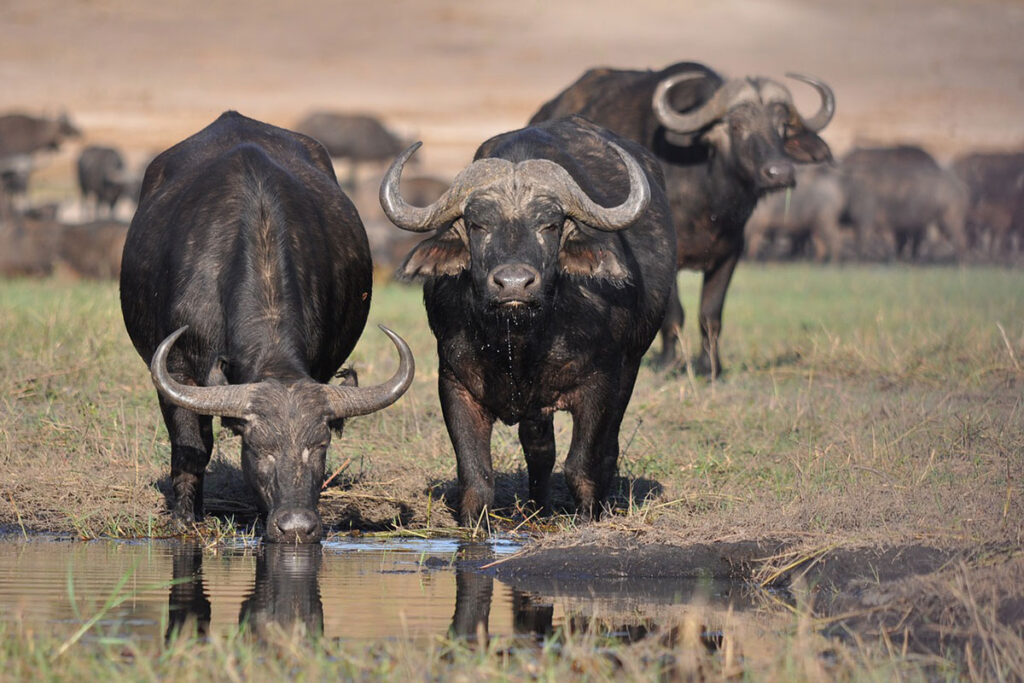
Marromeu National Reserve Mozambique is historically famous for its huge herds of African buffalo, and these iconic animals are once again a defining feature of the reserve. Dry-season game drives across the open plains often reveal large buffalo herds grazing the short, fresh grasses left behind by retreating floodwaters.
- African buffalo – the signature species of Marromeu, often seen in sizeable herds across the floodplains.
- African elephant – using the wetland edges, woodlands and adjacent areas of the Zambezi Delta as part of their wider range.
- Antelope such as waterbuck, reedbuck, sable antelope, Lichtenstein’s hartebeest and zebra occupying different parts of the savanna and floodplain mosaic.
- Hippos in lagoons and channels, and Nile crocodiles along the banks and sandbars.
Predators in and around Marromeu National Reserve include lion, leopard, spotted hyena and African wild dog, with cheetah present in parts of the broader delta landscape. Predator sightings can be less predictable than in some highly developed parks, but the combination of rising prey numbers and vast, remote habitat makes the Marromeu Complex a fascinating area for patient, conservation-minded safari-goers.
Birds – Marromeu as a Premier Zambezi Delta Birding Destination
For birders, Marromeu National Reserve Mozambique is a true highlight of the Zambezi Delta. The reserve and surrounding wetlands hold some of the largest concentrations of waterbirds in Mozambique and are recognized internationally for their importance as breeding and feeding grounds.
- Large breeding colonies of pelicans, storks, herons, egrets and cormorants on remote islands, sandbanks and tree-clumps.
- Significant numbers of wattled cranes and other threatened wetland birds using the floodplains for nesting and feeding.
- Ibises, spoonbills, African skimmers, terns and kingfishers along channels, lagoons and sandbars.
- Raptors such as African fish eagles, harriers, kites and eagles hunting over grasslands and wetlands.
Seasonal changes in water levels and food availability mean birding highlights vary throughout the year. For many dedicated birders planning a Mozambique birding safari, a visit to Marromeu National Reserve – particularly around the post-flood period – is considered essential.
Reptiles, Amphibians and Insects
The warm, water-rich environment of Marromeu National Reserve Mozambique supports a wealth of reptiles, amphibians and invertebrates that form the foundation of the Zambezi Delta food web. Nile crocodiles are common along channels and lagoons, while monitor lizards and smaller reptiles inhabit the floodplain edges and wooded islands.
Amphibians – especially frogs and toads – become highly active in the rainy season, when flooded grasslands and marshes provide ideal breeding conditions. Insects such as dragonflies, damselflies, butterflies, beetles and aquatic invertebrates are abundant, providing key food sources for fish, birds and other wildlife. For keen naturalists and macro photographers, Marromeu’s wetlands offer rich opportunities to explore these often-overlooked components of a functioning delta ecosystem.
Unique Features That Make Marromeu National Reserve Stand Out
Several unique features make Marromeu National Reserve Mozambique stand out among African safari destinations:
- It protects one of the largest and most intact coastal floodplain and wetland systems in Southern Africa.
- It forms the core of a Ramsar-listed Zambezi Delta wetland complex recognized for its global importance.
- It is a historic and recovering stronghold for African buffalo and wetland antelope in a flooded savanna setting.
- It offers rare, low-impact Zambezi Delta safari experiences that combine floodplain wildlife, river channels and mangroves.
- It remains remote, wild and lightly visited, ideal for travelers seeking authentic, non-commercialized safari experiences.
If you are searching for “Marromeu National Reserve safari”, “Zambezi Delta wetland safari” or “Mozambique buffalo and birding destination”, these distinctive features make Marromeu a truly special place to visit.
Cultural and Local Communities Around Marromeu Mozambique
The broader Zambezi Delta, including the area around Marromeu National Reserve Mozambique, is home to local Mozambican communities who have long relied on delta resources for fishing, subsistence farming and harvesting of natural products. Traditional knowledge of floods, fish migrations, grazing patterns and wild plants has developed over generations and remains essential for sustainable use of the landscape.
Many modern conservation and tourism projects in the wider Marromeu Complex work closely with local communities to promote community-based resource management, sustainable fishing and employment in guiding, camp operations and anti-poaching units. When travelers choose responsible Marromeu National Reserve tours, they help channel income into these programs, reinforcing the idea that healthy wetlands and wildlife are more valuable protected than exploited.
Conservation Importance of Marromeu National Reserve Mozambique
From a conservation standpoint, Marromeu National Reserve is one of Mozambique’s most critical protected areas. By safeguarding a large portion of the lower Zambezi floodplain, it:
- Protects key populations of buffalo, waterbuck, reedbuck, sable antelope and other herbivores.
- Maintains vital breeding and feeding grounds for waterbirds, including globally threatened species.
- Supports regional predator populations by preserving prey and habitat connectivity.
- Helps maintain wetland hydrological processes that underpin fisheries, soil fertility and coastal resilience.
As climate change and upstream water management continue to alter river systems across Africa, the role of Marromeu National Reserve Mozambique in buffering the Zambezi Delta and safeguarding biodiversity becomes increasingly important at both national and international scales.
Threats and Conservation Challenges in Marromeu
Despite its importance, Marromeu National Reserve has faced – and continues to face – several significant threats. Past civil conflict and unmanaged hunting dramatically reduced wildlife numbers and undermined management capacity. Today, key challenges include:
- Hydrological changes linked to upstream dams and water regulation, which may alter natural flood patterns and reduce floodplain productivity.
- Poaching and illegal hunting for bushmeat and trade, particularly targeting large mammals.
- Unsustainable natural resource use, including overfishing and unregulated grazing, in and around the reserve.
- Long-term climate change impacts on rainfall, sea level, storm surges and coastal erosion in the Zambezi Delta.
In response, Mozambique’s conservation authorities and international partners are investing in anti-poaching, aerial and ground monitoring, community outreach and large-scale restoration projects. By choosing conservation-focused Marromeu National Reserve safaris, visitors help provide vital financial and political support for these efforts.
Research and Monitoring in Marromeu National Reserve Mozambique
The Zambezi Delta and Marromeu National Reserve Mozambique have been the subject of numerous ecological studies and wildlife surveys. Aerial counts monitor trends in buffalo, elephant, antelope and bird populations, while hydrological and vegetation studies track how changing flood regimes affect habitats and species distributions.
These research and monitoring programs are essential for adaptive management. They guide decisions on where to focus anti-poaching patrols, how to prioritize habitat restoration and how to integrate Marromeu into wider conservation corridors linking it with other key areas such as Gorongosa National Park. For tourism partners and visitors, this science-based approach reinforces Marromeu’s status as a serious, conservation-led Mozambique safari destination.
Tourism Activities – What to Do on a Marromeu National Reserve Safari
Tourism inside Marromeu National Reserve Mozambique is still low volume and typically arranged through specialist operators or conservation-linked projects. This keeps the experience intimate and focused on nature rather than mass tourism. Depending on season and operator, a Marromeu safari itinerary may include:
- Dry-season game drives across floodplain tracks to look for buffalo herds, antelope and predators.
- Birdwatching safaris targeting waterbirds, cranes, pelicans, storks, skimmers and raptors.
- Boat trips along channels and lagoons to see hippos, crocodiles and aquatic birdlife at close range.
- Photographic safaris focused on big herds, dramatic skies, storm fronts and wetland reflections.
- Conservation-focused experiences (where available) such as meeting rangers, viewing aerial survey work or learning about monitoring and anti-poaching strategies.
Because of the logistical complexity and sensitive habitat, Marromeu is best visited as part of a carefully designed Marromeu National Reserve Mozambique safari package with an experienced operator.
Access – How to Get to Marromeu National Reserve Mozambique
Getting to Marromeu National Reserve Mozambique takes planning, but the journey is part of the adventure. Most travelers start in Beira, a coastal city with a regional airport that connects to other Mozambican hubs and sometimes to international gateways.
- By air: The most practical option is a charter flight from Beira or another hub to airstrips in or near the Marromeu Complex. This offers fast access and superb views of the Zambezi Delta from the air.
- By road: In the dry season, 4×4 routes may connect Beira or surrounding towns to certain camps or hunting concessions, but they are long, rough and best handled by experienced safari operators.
- By boat: In some itineraries, boat transfers along delta channels are used to reach specific areas, particularly for combined Zambezi Delta and Marromeu safaris.
Because access is seasonal and infrastructure is limited, most visitors book Marromeu National Reserve tours through established operators who manage flights, transfers, permits and logistics.
Permits, Fees and Park Rules in Marromeu
Visiting Marromeu National Reserve Mozambique requires appropriate permits and payment of conservation fees, typically included in your safari package and handled by your tour operator. These fees fund ranger salaries, monitoring, community programs and basic management costs.
- Visitors should always travel with licensed guides or professional safari operators familiar with local conditions.
- Off-road driving is usually restricted to protect fragile floodplain soils and vegetation.
- Wildlife must not be fed, chased or harassed; sightings should be enjoyed at respectful distances.
- No collection of plants, animals, eggs, feathers or other natural items is allowed.
- All waste must be carried out or disposed of in designated facilities to keep the wetland pristine.
By respecting these rules and traveling with responsible operators, your Marromeu National Reserve safari will support conservation while maintaining the reserve’s wild, low-impact character.
Accommodation – Where to Stay for a Marromeu National Reserve Safari
Because Marromeu National Reserve Mozambique is so remote and sensitive, accommodation is limited and generally available only through a few specialized camps, lodges and concessions in the wider Marromeu Complex. Many itineraries also include nights in Beira before and after the delta portion of the trip.
- Fly-in safari camps: Small, often seasonal camps within or near the floodplain, offering guided activities, full-board stays and a strong focus on conservation and low-impact tourism.
- Conservation or research-linked camps: Simple but atmospheric bases that support monitoring and restoration projects and occasionally welcome guests as part of conservation-focused trips.
- Hotels and guesthouses in Beira: Used as staging points before charter flights or 4×4 transfers into the Zambezi Delta.
Because capacity is low and seasons are short, it is important to book Marromeu National Reserve Mozambique safari packages well in advance, especially for peak dry-season months when wildlife viewing is at its best.
Best Time to Visit Marromeu National Reserve Mozambique
Marromeu National Reserve Mozambique can, in theory, be visited year-round, but conditions and experiences vary with the seasons. For most visitors, the dry season from May to October is the best time to plan a Marromeu safari.
- May to August: Cooler, drier weather; receding floodwaters; increasingly good game viewing as wildlife concentrates on remaining water and grazing.
- September to October: Hotter and drier, but often excellent for buffalo, antelope and predator sightings on open plains.
- November to March (wet season): Very wet and humid with extensive flooding. Access can be challenging, but this is a key period for bird breeding, fish migrations and dramatic wetland landscapes.
Birders may prioritize early wet or early dry season for peak waterbird activity, while general safari travelers usually prefer mid- to late dry season for easier logistics and concentrated wildlife. When planning your Marromeu National Reserve Mozambique itinerary, it’s important to balance comfort, access and your specific wildlife interests.
Why You Should Visit Marromeu National Reserve Mozambique
Marromeu National Reserve Mozambique is one of Africa’s last great, little-known wetland wildernesses. This is a place where buffalo herds graze on flooded savannas, cranes and pelicans spiral over glittering lagoons, hippos grunt in papyrus-lined channels and the seasonal pulse of the Zambezi still shapes life for wildlife and people alike.
For travelers searching for off-the-beaten-path Mozambique safaris, Zambezi Delta wetland adventures, serious buffalo and birding destinations and conservation-led trips that have real impact, Marromeu offers something rare: a safari that feels both pioneering and purposeful. A well-planned journey to Marromeu National Reserve Mozambique is more than a wildlife holiday – it is a chance to experience, support and help secure one of Africa’s most valuable and fragile wetland ecosystems for the future.