
Mayumba National Park
Mayumba National Park – Gabon’s Leatherback Turtle Nesting Beaches, Humpback Whale Watching, Atlantic Coast Marine and Coastal Wilderness
Mayumba National Park is one of Gabon’s most extraordinary coastal and marine protected areas, celebrated for its long Atlantic beaches where thousands of leatherback sea turtles nest and for its rich offshore waters where humpback whales, dolphins, sharks, and rays thrive. Located in the far southwest of Gabon near the town of Mayumba and the Republic of Congo border, this narrow coastal strip and adjoining marine zone is a premier destination for travelers searching for leatherback turtle nesting in Africa, humpback whale watching in Gabon, and untouched Atlantic coastal wilderness. Its blend of intact beaches, lagoon systems, lowland forest, dunes, and high-biodiversity waters makes it one of Africa’s most unique nature travel experiences.
Stretching over 60 km of wild shoreline and extending 15 km offshore into the Atlantic Ocean, Mayumba National Park protects sandy beaches, coastal dunes, savannas, rainforest, mangroves, lagoons, and productive marine habitats. It is Gabon’s only primarily marine national park and a vital refuge for leatherback turtles, green turtles, humpback whales, dolphins, sharks, rays, and forest wildlife such as elephants, buffalo, primates, and antelope. Its rare mix of coastal scenery, wildlife encounters, and pristine wilderness makes Mayumba ideal for eco-tourism, turtle conservation tours, whale watching trips, and nature photography.
Overview of Mayumba National Park
Established in 2002 as part of Gabon’s trailblazing national parks network, Mayumba National Park spans an estimated 870–900 km² of coastal and marine habitat. It was created primarily to protect one of the world’s most important leatherback turtle nesting grounds and to conserve Gabon’s southern Atlantic coastline as an intact ecological system. Its long beaches host thousands of nesting leatherback turtles each year, while its offshore waters form a seasonal breeding and calving zone for humpback whales and a feeding area for dolphins and pelagic fish.
On land, the park encompasses beaches, dunes, coastal savannas, lowland rainforest, swamp forest, and the edges of the enormous Banio Lagoon. These interconnected habitats create an unusual ecological corridor where elephants and buffalo may walk near the beach, and hippos and crocodiles navigate lagoon channels not far from the ocean. Managed by the National Agency for National Parks in collaboration with conservation partners, Mayumba is a core pillar of Gabon’s “Blue Gabon” strategy to safeguard coastal and marine ecosystems.
Location and Size
Mayumba National Park lies in Nyanga Province in southwestern Gabon, close to the Congolese border. The nearest town is Mayumba, located on a narrow peninsula separated from the mainland by the expansive Banio Lagoon. The protected area stretches south of town along a thin ribbon of coastline bordered by the Atlantic Ocean on one side and lagoon wetlands on the other, extending seaward into protected marine waters.
Covering approximately 870–900 km², the park includes a 60 km stretch of sandy nesting beach of global significance for leatherback turtles and around 15 km of offshore Atlantic waters. Despite its compact size, this combination of land and sea habitats makes Mayumba one of Africa’s most important coastal-marine national parks.
Geography and Coastal Landscape
The geography of Mayumba National Park is defined by a narrow coastal margin where the Atlantic Ocean meets dunes, wetlands, and forest. The coastline features long sandy beaches backed by low dunes, seasonal wetlands, and grassy plains. Moving inland, the terrain transitions into low hills, swamp forest, and coastal rainforest linked to the Banio Lagoon.
Banio Lagoon, one of Gabon’s largest coastal lagoons, is a vast brackish water system separated from the ocean by a narrow sandbar. Its network of mangrove channels, rivers, and wetlands supports fish, hippos, crocodiles, manatees (in the wider region), and abundant waterbirds. Offshore, the ocean floor gradually deepens, with sandy bottoms, upwelling zones, and rich fisheries. Mayumba’s combination of beaches, forests, marine waters, and lagoon systems makes it one of Gabon’s most geodiverse coastal landscapes.
Climate
Mayumba National Park experiences a warm, humid equatorial climate with clear wet and dry seasons. Temperatures typically range from 24°C to 30°C year-round, moderated by coastal breezes that make conditions pleasant for beach walks and wildlife viewing.
The rainy season runs roughly from October/November to May, with a short dry spell in between, while the main dry season lasts from June to September. Leatherback turtle nesting overlaps with the wetter months, while humpback whales arrive during the cooler, drier season. Travelers planning their visit often time trips according to these wildlife cycles.
Hydrology and Marine Waters
The park’s hydrology is shaped by the interplay of the Atlantic Ocean, Banio Lagoon, rivers, mangrove channels, and coastal currents. Ocean waves continually reshape sandy beaches and dunes, while tides flush estuaries and mix freshwater with seawater, creating productive brackish environments.
The lagoon gathers freshwater runoff and sometimes connects with the ocean through natural channels. These dynamic hydrological conditions support rich plankton populations and fisheries. Offshore, seasonal upwellings provide nutrients that sustain fish, dolphins, and whales, making this one of Gabon’s most productive marine zones.
Ecosystems and Habitats
Mayumba National Park contains a complete sequence of ecosystems transitioning from forest to open ocean. Each habitat supports its own suite of species:
- Sandy beaches: Key nesting habitat for leatherback, green, and olive ridley turtles.
- Dunes and savannas: Grasslands and wind-shaped dunes used by antelope, buffalo, and sometimes elephants.
- Coastal rainforest and swamp forest: Home to forest elephants, primates, birdlife, and other forest species.
- Lagoon and estuaries: Banio Lagoon supports hippos, crocodiles, fish, and waterbirds.
- Mangroves and wetlands: Vital nursery grounds for fish and crustaceans and important for shoreline stability.
- Offshore marine zone: Habitat for humpback whales, dolphins, sharks, rays, and pelagic fish.
This tight convergence of habitats—forest, lagoon, beach, and ocean—makes Mayumba a top destination for travelers interested in coastal ecology and marine wildlife.
Vegetation and Plant Communities
Vegetation in Mayumba ranges from salt-tolerant dune plants and grasses along the beaches to savanna vegetation behind the dunes and lush coastal rainforest farther inland. These forests are part of the greater Congo Basin and support forest elephants, monkeys, birds, and diverse plant communities. Mangroves and swamp forests around Banio Lagoon provide essential ecosystem services, including carbon storage and habitat for fish and waterbirds.
Wildlife of Mayumba National Park
Mammals
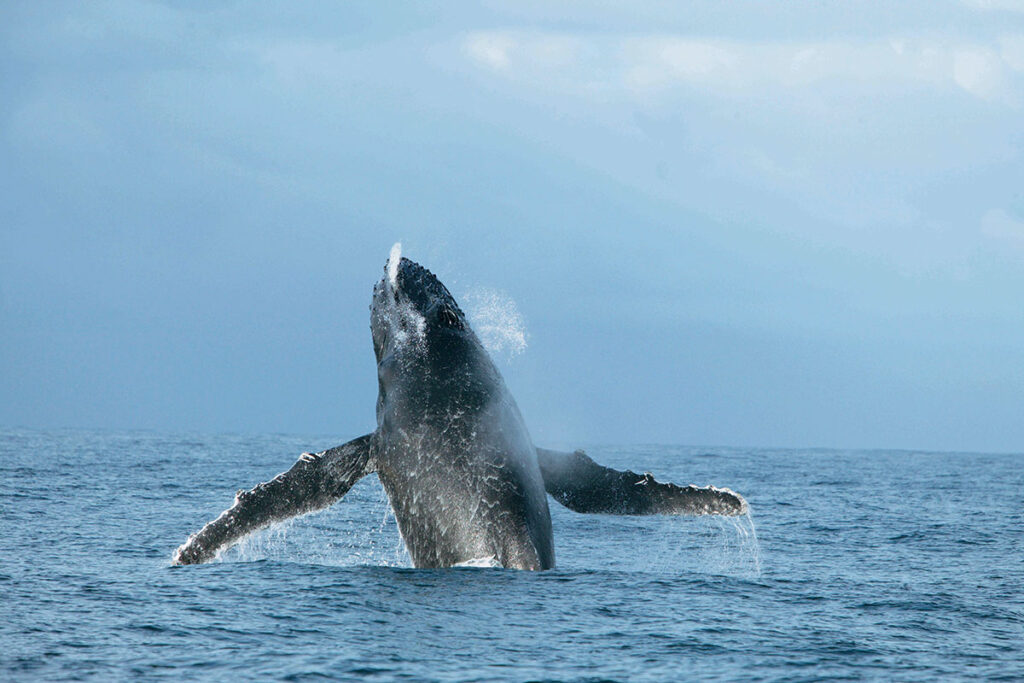
Mayumba is globally significant for marine mammals and sea turtles. Offshore, humpback whales migrate through the park’s waters to breed and calve, offering spectacular sightings of breaching, tail-slapping, and vocalizing whales. Dolphins—including bottlenose and Atlantic spotted dolphins—are frequently seen near boats.
On land, forest elephants, buffalo, duikers, monkeys, and occasionally gorillas or chimpanzees (in the wider region) use the coastal corridor. Hippos and crocodiles are common in lagoon channels and wetlands, adding to the park’s diverse mammal list.
Birds
Mayumba is a prime birdwatching destination thanks to its mix of beaches, mangroves, forest, and lagoon. Seabirds such as terns, gulls, and waders forage along the shore, while migratory shorebirds use the beaches as stopovers. Forest species include hornbills, turacos, bee-eaters, sunbirds, and kingfishers. Banio Lagoon supports herons, storks, egrets, and African fish eagles.
Reptiles and Amphibians
Leatherback turtles are the park’s most iconic species, with Mayumba considered one of the world’s top nesting sites for this endangered giant. Green and olive ridley turtles also nest here. Crocodiles inhabit rivers and lagoon margins, while frogs and amphibians thrive in wetlands and forests.
Insects and Other Invertebrates
The region hosts a rich array of insects and invertebrates, from butterflies and dragonflies to crabs, mollusks, and sand-dwelling organisms. Offshore, plankton and marine invertebrates form the foundation of the Atlantic marine food web.
Unique Features of Mayumba National Park
- One of the world’s most important leatherback nesting beaches.
- Gabon’s only primarily marine national park.
- Exceptional humpback whale watching from June to October.
- Rare rainforest-to-ocean interface where large mammals approach the shoreline.
- Intact lagoon and mangrove ecosystems with outstanding biodiversity.
- Low visitor numbers offering solitude and authentic wilderness.
Cultural and Indigenous Communities
The town of Mayumba and nearby villages are home to coastal communities with deep cultural ties to fishing, lagoon navigation, and turtle traditions. Local knowledge of tides, turtle nesting behavior, and seasonal wildlife patterns plays a key role in conservation. As tourism grows, local residents are increasingly involved as guides, turtle monitors, and hosts, helping ensure that benefits flow back to communities.
Conservation Importance
Mayumba is vital for the global survival of leatherback turtles, hosting one of the planet’s largest nesting populations. Protecting the park also safeguards breeding humpback whales and nesting sites for green and olive ridley turtles. It forms a core component of Gabon’s expanding marine protected area network and plays a crucial role in maintaining coastal ecosystem processes essential for fisheries, climate resilience, and biodiversity conservation.
Threats and Challenges
- Illegal and industrial fishing pressure.
- Light pollution and disturbance on nesting beaches.
- Potential land conversion and logging near park boundaries.
- Climate change impacts—sea-level rise and stronger storms.
- Limited resources for patrols in a remote region.
Addressing these issues requires strong cooperation among park authorities, communities, and conservation partners, as well as responsible visitor behavior.
Research and Monitoring Programs
Research in Mayumba focuses on sea turtles, whales, dolphins, fisheries, mangroves, and forest wildlife. Turtle monitoring teams conduct night patrols, protect nests, and track migration using satellite tags. Whale and dolphin research examines migration routes and habitat use, while lagoon studies monitor fish populations, water quality, and ecosystem health.
Tourism Activities in Mayumba National Park
- Turtle watching: Guided night walks during nesting season.
- Whale watching: Seasonal boat tours for humpback whales.
- Dolphin watching and marine excursions.
- Beach walks and dune hikes.
- Lagoon and mangrove boat trips.
- Birdwatching across coastal and forest habitats.
- Cultural visits to Mayumba town and villages.
Access and How to Get There
Most travelers reach Mayumba town by road from Tchibanga or via longer connections from Libreville. Roads may be challenging, especially in the rainy season. Once in Mayumba, local guides arrange excursions by boat or vehicle to the park’s beaches, lagoon channels, and offshore waters. Due to limited infrastructure, visitors are advised to book with experienced operators or conservation-based tourism groups.
Permits, Regulations, and Responsible Travel
Park entry fees or activity permits may be required. Visitors must follow guidelines to protect sensitive wildlife, especially nesting turtles and whales:
- Comply with all instructions from trained guides.
- Avoid lights on beaches during turtle nesting.
- Observe whale-watching distance and speed regulations.
- Do not collect shells, eggs, plants, or animals.
- Carry out all waste and avoid littering.
Accommodation Options
Accommodation in and around Mayumba is basic but atmospheric, ranging from small guesthouses to community-run lodges. Some specialized tours may include temporary eco-camps. Visitors should expect simple facilities and limited services—part of the charm of exploring one of Africa’s least developed coastal wildernesses.
Best Time to Visit Mayumba National Park
- Leatherback turtle nesting: October/November to March/April.
- Humpback whales: June/July to September/October.
- General coastal exploration: Year-round, with drier months offering easier access.
Why Mayumba National Park Is Unique
Mayumba National Park stands out as one of the world’s few places where rainforest, lagoon, and ocean meet seamlessly—and where giant leatherback turtles and humpback whales share the same protected coastline. For adventurous travelers, wildlife lovers, and conservation-focused visitors, it offers some of Africa’s most intimate and awe-inspiring natural encounters in a setting that remains wild, untouched, and authentically Gabonese.