
Nkasa Rupara National Park
Nkasa Rupara National Park, Namibia – Linyanti Swamps, Caprivi Wetlands, Floodplain Islands and Namibia’s Most Untamed Wilderness
Nkasa Rupara National Park—formerly Mamili National Park—is Namibia’s wettest, wildest and most ecologically dynamic protected area, a place where vast swamp systems, waterlogged floodplains, papyrus-lined channels and riverine forests merge into a spectacular, wildlife-rich landscape. Situated deep in the Zambezi Region (Caprivi Strip), the park forms the beating heart of the Linyanti Swamps and stands as Namibia’s closest ecological equivalent to Botswana’s Okavango Delta—yet far less visited, making it an exceptional destination for adventurous travelers seeking raw nature, solitude, wildlife abundance and a truly immersive African wilderness experience.
Unlike Namibia’s iconic desert parks, Nkasa Rupara is defined not by dunes or dryness but by water, wetlands and constant ecological change. Seasonal floods reshape the terrain, transforming dry plains into deep marshes and creating shifting corridors that wildlife follows as the landscape floods and recedes. This hydrological heartbeat makes Nkasa Rupara one of the most biodiverse areas in the entire KAZA Transfrontier Conservation Area, home to elephants, buffalo, wild dogs, lions, hippos, red lechwe, sitatunga and more than 450 species of birds.
Overview
Covering approximately 320 km², Nkasa Rupara National Park is Namibia’s largest formally protected wetland ecosystem. Its terrain consists of swamp islands (including Nkasa and Rupara), seasonally flooded grasslands, deep papyrus marshes, oxbow lakes, riverine forests and mopane-dominated higher ground. Because of the extreme seasonal flooding, the park remains one of Namibia’s least developed and least disturbed wilderness areas. Visitors encounter muddy 4×4 tracks, water crossings, natural animal highways and pristine habitats thriving with wildlife—an experience that feels more like early African exploration than modern tourism.
The park plays a critical ecological role within KAZA, the world’s largest transfrontier conservation area, enabling wildlife to move freely between Namibia, Botswana, Angola and Zambia. This open landscape supports significant elephant migrations, predator dispersal, genetic exchange among species and large-scale movement of wetland-dependent animals across international borders.
Location, Size and Key Facts
Nkasa Rupara lies in the southwest of the Zambezi Region, where the Kwando River flows south into the Linyanti Marsh before turning eastwards. Its strategic location makes it a gateway for wildlife traveling between Botswana’s Linyanti Wildlife Reserve, Namibia’s Wuparo and Nkasa Rupara conservancies, and Zambia’s Sioma Ngwezi National Park.
- Country: Namibia
- Region: Zambezi Region (Caprivi Strip)
- Protected Area: 320 km²
- Elevation: ~950 m above sea level
- Main Rivers: Kwando and Linyanti
- Landscape Type: Floodplains, marshes, channels, riverine forests, islands
- Key Islands: Nkasa Island, Rupara Island
- Conservation Network: Part of the Kavango–Zambezi Transfrontier Conservation Area (KAZA)
Geology and Soil Composition
Nkasa Rupara’s geological foundation lies within the vast Kalahari Basin, a sedimentary depression filled with ancient river deposits, clay-rich alluvial soils and sandy sediments from past flood events. Over thousands of years, the Kwando–Linyanti river system has sculpted the landscape through deposition, erosion and flooding, producing nutrient-rich black soils in floodplains and loamy sands in drier woodland zones.
The wetlands sit on thick layers of organic-rich peat and silt, built up by decaying papyrus, reeds and aquatic vegetation. These soils store water, filter nutrients and support lush plant growth, making the park one of Namibia’s most productive biological systems. Annual flood cycles replenish nutrients, maintain soil fertility and drive the ecosystem’s immense productivity.
Geography and Landscapes
The park’s geography is defined by the seasonal rise and fall of the Kwando and Linyanti rivers. Floodplains dominate the southern and central areas, while mopane woodland occupies elevated patches in the northern interior. During the wet season, nearly 70% of the park becomes submerged, transforming dry savannas into a shimmering expanse of interconnected lagoons, reeds and water channels.
- Floodplains: Support large herds of buffalo, red lechwe and wading birds.
- Papyrus Marshes: Home to sitatunga, hippos, fish nurseries and otters.
- Riverine Forests: Lush corridors favored by elephants, leopards and birds.
- Swamp Islands: Elevated ground providing refuge during high floods.
- Mopane Woodlands: Used by elephants and generalist herbivores.
These diverse landscapes create a visually stunning environment and support extensive ecological niches, making Nkasa Rupara one of Namibia’s richest wildlife habitats.
Climate
Nkasa Rupara experiences a subtropical climate with significant rainfall variation. The seasons determine access, wildlife movement and vegetation change:
- Rainy Season (Nov–Apr): Heavy rains and high river inflows from Angola flood the park, bringing lush greenery and intense birdlife.
- Early Dry Season (May–July): Waters recede, channels narrow, and cooler temperatures attract large herds to permanent wetlands.
- Late Dry Season (Aug–Oct): Wildlife concentrates around shrinking water sources, offering superb game viewing.
Because of its wetland nature, Nkasa Rupara stays greener than most Namibian parks throughout the year, offering a refreshing contrast to desert landscapes.
Hydrology – Flood Cycles, Rivers and the Angolan Connection
Hydrology is the defining force of Nkasa Rupara. The park’s water comes primarily from the Kwando River, which begins in the high rainfall zones of Angola. Rain falling there in December–February arrives months later in Namibia, producing a delayed flood pulse between March and June. This water spread across the Linyanti Marsh fills lagoons, revives oxbow channels and breathes life into the region’s wetland ecosystems.
- Kwando River: Main artery feeding the wetlands.
- Linyanti River: Forms a natural border with Botswana.
- Floodplains: Essential for grazing animals and fish spawning cycles.
- Permanent Channels: Provide year-round safety for hippos and crocodiles.
The flood cycle drives plant growth, wildlife dispersal, predator movement and the seasonal accessibility of roads, making Nkasa Rupara a living, shifting landscape.
Fire Ecology
Natural and managed fires shape vegetation patterns and maintain habitat diversity in Nkasa Rupara. Fire plays several key ecological roles:
- Encouraging fresh grass growth after burns
- Reducing invasive woody encroachment on floodplains
- Supporting nutrient cycling in marsh soil
- Creating ideal grazing grounds for red lechwe and reedbuck
Traditionally, local communities used fire to manage grazing areas and access routes. Today, controlled burns are carefully planned to balance ecological needs with conservation priorities.
Ecosystems and Habitats
The park’s ecosystems support a remarkable range of wildlife adapted to wetland, woodland and floodplain environments:
- Wetland Swamps: Habitat for sitatunga, hippos, crocodiles and aquatic birds.
- Riverine Forests: Dense zones where elephants feed, leopards hunt and monkeys forage.
- Mopane Woodland: Dominant in dry areas, home to kudu, impala and elephants.
- Reedbeds and Papyrus Zones: Serve as nurseries for fish and amphibians.
- Floodplain Grasslands: Support large grazing herds and predators.
These habitats merge to form one of the most ecologically productive areas in Namibia.
Vegetation
The diversity of vegetation in Nkasa Rupara reflects its wet-dry seasonal cycles and rich alluvial soils. Key plant communities include:
- Papyrus & Reeds: Found in perennial swamp areas.
- Sedges & Floodplain Grasses: Thrive in seasonal wetlands.
- Mopane Trees: Dominant on elevated ground and critical for elephant foraging.
- Jackalberry & Sausage Trees: Provide shade, fruit and nesting habitats for birds and mammals.
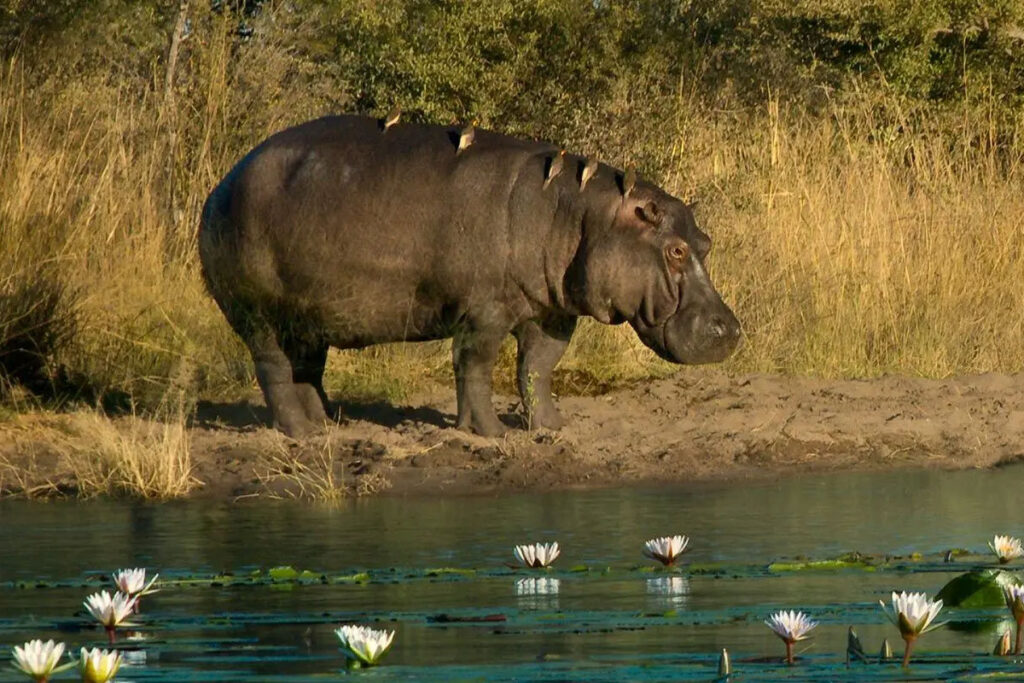
- Waterlilies: Add beauty to shallow lagoons and support aquatic insects.
The lush plant cover supports strong herbivore populations and sustains predators throughout the year.
Endemic and Near-Endemic Species
Nkasa Rupara holds species that are rare, locally specialized or regionally important:
- Sitatunga: Shy, wetland-dwelling antelope rarely seen outside swamp habitats.
- Red Lechwe: A marsh-dependent antelope that thrives on floodplain grasses.
- Slaty Egret: One of Africa’s rarest wetland birds with strongholds in Linyanti.
- Regional Butterflies & Dragonflies: Dependent on permanent water bodies.
These species highlight the park’s importance as a specialized wetland ecosystem within the otherwise arid Namibian landscape.
Wildlife of Nkasa Rupara National Park
Mammals
Nkasa Rupara is one of Namibia’s most rewarding wildlife destinations thanks to its strong population of elephants, buffalo and predators. Large mammals move freely across borders between Namibia and Botswana, creating a dynamic viewing experience.
- Elephants: Hundreds migrate through the wetlands annually.
- Buffalo: Massive herds—some of the largest in Namibia—graze on floodplain grasses.
- Lions: Often hunt buffalo and lechwe in marshy areas.
- Wild Dogs: Nkasa Rupara is one of Namibia’s last strongholds for this endangered predator.
- Leopards: Thrive in riverine forests.
- Hippos: Abundant in lagoons and river channels.
- Crocodiles: Common along deep waterways.
- Sitatunga & Red Lechwe: Wetland specialists rarely seen elsewhere in Namibia.
The presence of multiple apex predators and large migratory herds makes Nkasa Rupara one of southern Africa’s most ecologically functional and dynamic landscapes.
Birdlife
Nkasa Rupara is one of Namibia’s premier birdwatching destinations, recording over 450 species—many of them wetland specialists or intra-African migrants.
- Wattled crane
- Slaty egret
- Saddle-billed stork
- African skimmer
- Malachite kingfisher
- Bee-eaters and rollers
- Herons, egrets and storks
- Fish eagle
- Broad-billed roller
- Raptors including bateleur and martial eagle
The wet season offers spectacular bird concentrations around flooded plains and papyrus swamps.
Reptiles, Amphibians and Aquatic Life
- Nile Crocodiles: Present in large numbers.
- Hippos: Highly territorial in backwater channels.
- Frogs & Toads: Breed explosively after rains.
- Fish: Tigerfish, catfish, tilapia and barbel thrive in wetlands.
- Monitor Lizards & Turtles: Common in marshes.
These aquatic species maintain critical food webs throughout the wetland system.
Archaeology and Early Human Presence
Historical evidence shows that the Kwando–Linyanti region has been inhabited by humans for thousands of years. Archaeological finds—such as stone tools, pottery fragments and ancient fishing structures—suggest continuous use of the wetlands for fishing, gathering and seasonal settlement. Local Mafwe and Mayeyi oral traditions recount ancestral stories tied to specific islands and river channels, linking cultural identity to the wetland landscape.
Cultural and Indigenous Communities
Nkasa Rupara is surrounded by community conservancies, where local people participate in sustainable tourism, natural resource management and wildlife conservation. The Mafwe and Mayeyi communities engage in traditional activities such as fishing, basket weaving, beekeeping and reed harvesting. Joint-venture lodges within conservancies create employment, support schools and provide incentives to protect wildlife, making community conservation a core pillar of the park’s success.
KAZA Transboundary Connectivity
One of Nkasa Rupara’s greatest strengths is its role within the Kavango–Zambezi Transfrontier Conservation Area (KAZA), which links five countries—Namibia, Botswana, Zambia, Zimbabwe and Angola—into a single ecological network. Wildlife moves freely through Nkasa Rupara into Botswana’s Linyanti Wildlife Reserve, Zambia’s floodplain systems and Angola’s upper catchment forests.
- Elephants travel long distances between wetlands and woodlands.
- Wild dogs use Nkasa Rupara as a corridor for territory expansion.
- Predators disperse across borders, increasing genetic diversity.
- Bird species migrate annually between KAZA wetlands.
This cross-border connectivity makes Nkasa Rupara a crucial conservation anchor point in southern Africa.
Conservation Importance
Nkasa Rupara plays a critical role in regional biodiversity, sustaining species that cannot thrive in Namibia’s arid interior. Conservation priorities include:
- Protecting wetland-dependent species such as sitatunga and red lechwe
- Maintaining elephant migration routes
- Preserving predator populations including lions and wild dogs
- Supporting aquatic biodiversity and fish breeding cycles
- Acting as a climate buffer through wetland carbon storage
The park’s protected status ensures long-term preservation of Namibia’s wet savanna ecosystems.
Threats and Challenges
- Climate variability: Changing flood cycles affect wildlife distribution.
- Poaching: Monitored by anti-poaching units in conservancies.
- Human–wildlife conflict: Occurs at the edges of the park.
- Unregulated fishing: Potential threat in some areas.
- Habitat encroachment: Controlled through community agreements.
Climate Change Impacts
Climate change influences the timing, duration and intensity of the flood pulses that define Nkasa Rupara’s ecosystem. Decreased rainfall in Angola may reduce wetland productivity, while extreme rain events could cause prolonged flooding. Both scenarios present challenges for wildlife, vegetation regeneration and fish populations. Adaptive conservation strategies aim to anticipate and mitigate these risks.
Research and Monitoring Programs
Research in Nkasa Rupara focuses on wetland ecology, predator movement, elephant migration, fish populations and hydrological mapping. Community-based monitoring contributes data on:
- Bird breeding patterns
- Plant cover changes
- Water level fluctuations
- Wildlife sightings and distribution
These studies ensure effective, evidence-driven conservation management across the KAZA network.
Tourism Activities
Nkasa Rupara offers a wide range of safari activities ideal for adventurous travelers:
- 4×4 Game Drives: Navigate through swamp forests, islands and floodplains.
- Walking Safaris: Explore wildlife-rich terrain on foot with expert guides.
- Boat Safaris (Seasonal): Travel through channels and lagoons when water levels permit.
- Birdwatching: Incredible for rare waterbirds, raptors and migratory species.
- Cultural Experiences: Visit conservancies and learn about local traditions.
- Photography: Capture dramatic wetland panoramas and migrating wildlife.
Because the park is less commercialized than other Namibian destinations, visitors enjoy exclusive and intimate wildlife encounters.
Photography Highlights
- Elephants wading through papyrus-lined channels
- Buffalo herds moving across golden floodplains
- Lions stalking prey in marshes
- Sunset reflections on Linyanti lagoons
- Close-up bird photography of kingfishers, skimmers and cranes
Access and How to Get There
Nkasa Rupara is remote, and reaching it is part of the adventure:
- Self-Drive: 4×4 essential; tracks can become waterlogged.
- Nearest Town: Kongola, 120 km away, provides supplies and fuel.
- By Air: Charter flights available to nearby airstrips.
- Cross-Border Access: Linked ecologically to Botswana’s Linyanti system.
Many travelers combine Nkasa Rupara with nearby Mudumu National Park for a broader wetland safari.
Permits and Park Regulations
Entry permits are required and can be purchased at the park gate. Off-road driving is prohibited to protect fragile soils. Fishing and boating require additional licensing. Visitors must respect wildlife, keep to designated tracks, and follow conservation regulations at all times.
Accommodation
Accommodation combines wilderness immersion with comfort and sustainability:
- Nkasa Rupara Lodge: A stunning riverside lodge offering guided activities and boat access.
- Community Campsites: Affordable, scenic and operated by local conservancies.
- Tented Camps: Eco-friendly accommodations located in private conservancy zones.
These lodges and camps support local communities while offering excellent opportunities for wildlife and wetland exploration.
Best Time to Visit Nkasa Rupara National Park
- June–October: Ideal conditions, excellent wildlife visibility, drier tracks.
- November–April: Spectacular birdlife and lush landscapes, but access can be challenging.
Why Nkasa Rupara National Park Is Unique
Nkasa Rupara stands alone as Namibia’s most water-rich, biodiverse and truly wild protected area. Its network of floodplains, swamp forests, papyrus channels and wildlife-rich wetlands offers a safari experience unlike any other in the country. As part of the KAZA Transfrontier Conservation Area, the park plays a vital role in maintaining elephant migrations, predator movement, wetland ecology and regional biodiversity. For travelers seeking raw wilderness, rare wetland species, immersive experiences, dramatic scenery and adventure far from crowds, Nkasa Rupara National Park is an unforgettable and unmatched destination at the heart of Namibia’s green savanna.