
Nxai Pan National Park
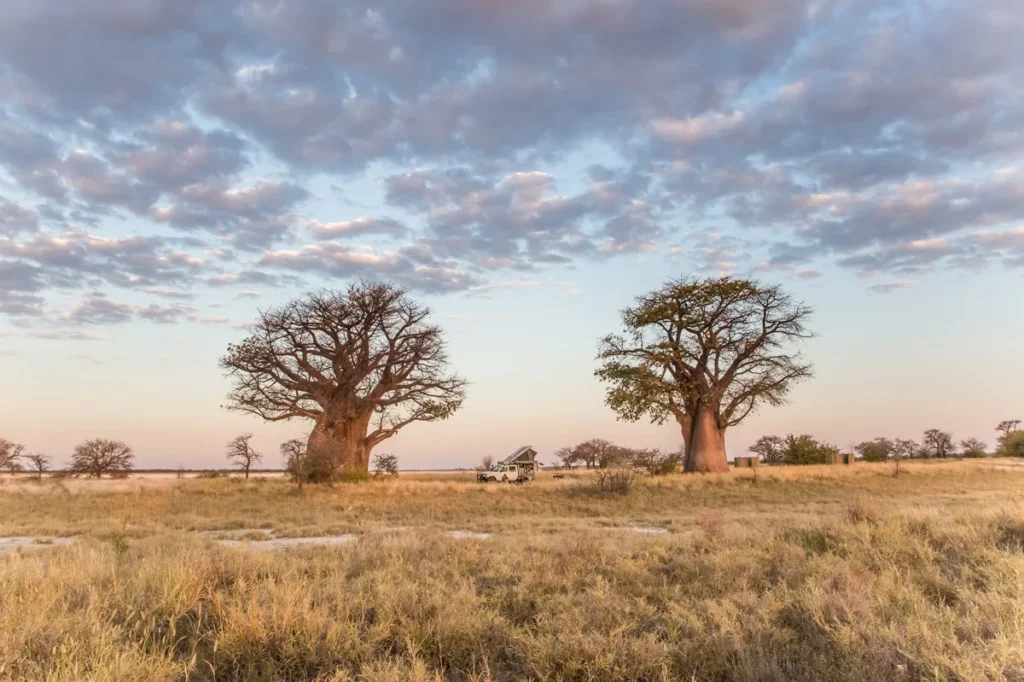
Nxai Pan National Park – Botswana’s Salt Pan Wilderness, Zebra Migration, Baobab Landmarks and Classic Kalahari Safari Landscapes
Nxai Pan National Park is one of Botswana’s most captivating wilderness areas, a place where vast salt pans, open grasslands, fossil dunes and celebrated baobab trees come together to form an unforgettable Kalahari safari experience. Covering around 2,100 km² and forming part of the greater Makgadikgadi Basin, Nxai Pan is renowned for its dramatic seasonal transformation. During the rainy season, the pans turn into shallow wetlands that attract thousands of zebras, wildebeest and springbok, creating one of Africa’s largest and most spectacular wildlife migrations. In the dry season, the sun-bleached pans shimmer white under the intense Kalahari sky, offering a completely different but equally striking landscape. For travellers seeking authentic Botswana safaris with open horizons, iconic baobabs and remarkable predator encounters, Nxai Pan National Park is a uniquely rewarding destination.
What makes Nxai Pan special is its ability to look and feel like two different parks depending on the season. When the rains arrive, the entire region erupts with vibrant life—fresh green grasses carpet the pans, herds gather in huge numbers and predators patrol the plains in pursuit of prey. As the rains fade, the land returns to a stark desert beauty: brilliant white salt flats, fossil dunes etched by wind, night skies filled with stars and silhouettes of massive baobabs standing like monuments to time. This dual character gives Nxai Pan an unmatched depth, offering compelling experiences for photographers, wildlife lovers and visitors who want to witness Africa’s ancient ecological rhythms.
Overview of Nxai Pan National Park
Nxai Pan National Park was officially established in 1992, expanding a former game reserve to protect the unique salt pan environment and one of southern Africa’s most important migratory wildlife routes. The park’s centrepiece, Nxai Pan itself, is a large, shallow fossil lakebed—once part of a massive prehistoric lake system that covered much of central Botswana. Today, it forms a vital seasonal grazing ground and an ecological anchor for numerous species. The park is quieter and less crowded than many other Botswana destinations, making it ideal for travellers seeking solitude, expansive views and meaningful wildlife encounters.
Visitors also come to see the iconic Baines’ Baobabs near Kudiakam Pan, a group of seven colossal baobab trees immortalized in 1862 by the British explorer and artist Thomas Baines. Remarkably, they look almost exactly as he painted them more than 160 years ago, a testament to the longevity and resilience of these extraordinary trees. Together with the park’s wide horizons and diverse wildlife, these historic baobabs create one of Botswana’s most photogenic and spiritually evocative landscapes.
Location, Size and Key Facts
Nxai Pan National Park lies northeast of the Makgadikgadi Pans and north of the main Maun–Nata road. It is approximately 160 km east of Maun and near the village of Gweta, making it one of the more accessible parks in the Kalahari region. The park forms part of the vast Makgadikgadi-Nxai Pan complex, a dryland system shaped by ancient lakebeds, wind-blown dunes and savanna vegetation adapted to long dry periods.
- Country: Botswana
- Region: Northeastern Kalahari
- Coordinates: Approx. 20.1°S, 24.9°E
- Size: Roughly 2,100 km²
- Established: 1992
- Key Features: Nxai Pan salt flats, Baines’ Baobabs, zebra migration
- Nearest Towns: Gweta and Maun
Geography and Landscape
Nxai Pan sits within the Makgadikgadi Basin, one of the largest salt pan systems in the world. The pan itself is a wide, flat expanse of hardened clay and salt that reflects sunlight with brilliant intensity. These pans were formed when an ancient super-lake evaporated thousands of years ago, leaving behind mineral-rich sediments and expansive open plains. The surrounding landscape is relatively flat but dotted with fossil dunes, low ridges and sparse woodlands, creating subtle variations that help support a variety of plant and animal life.
The openness of the terrain provides exceptional visibility, making Nxai Pan one of Botswana’s best locations for spotting predators such as cheetahs and lions. Umbrella thorn acacias, camelthorn trees and mopane woodlands fringe the pans, offering shade and structure in an otherwise stark landscape. During the wet season, temporary pools form across the pans, creating reflective surfaces and attracting migratory birds, while the grasslands turn lush and green.
Climate and Weather Patterns
Nxai Pan National Park experiences a semi-arid Kalahari climate characterized by hot summers, cooler winters and highly seasonal rainfall. The rainy season typically begins in November and runs through April, bringing short but intense thunderstorms that convert the dry pans into shallow wetlands. These rains trigger the annual zebra migration and support the growth of nutrient-rich grasses essential for grazing animals.
The dry season runs from May to October and brings cooler temperatures, clear skies and dry air. During this period, the pans become entirely dry and extremely reflective. Daytime temperatures are warm, but nights—especially in June and July—can be cold. Wildlife becomes concentrated around permanent waterholes and artificial boreholes, making the dry season excellent for predator sightings and general game viewing.
Hydrology and Water Systems
Water plays an essential role in shaping Nxai Pan’s ecology. Although the region is dry for most of the year, rainfall accumulates in the shallow depressions of the pans, forming temporary wetlands. These ephemeral water bodies stimulate the germination of grasses and support a rapid increase in insect life, which in turn attracts birds and grazing mammals.
Permanent water sources are provided primarily through boreholes that operate throughout the year. These carefully managed water points are critical during the long dry months, allowing elephants, giraffes, zebras, wildebeest and predators such as lions and hyenas to survive. Waterholes become focal points of wildlife activity in the dry season, offering outstanding safari viewing opportunities.
Ecosystems and Vegetation
Nxai Pan’s ecosystems range from barren salt flats to open grasslands and hardy woodlands. The diversity of vegetation reflects adaptations to both drought and occasional flooding. Plant life in the park has evolved to survive extreme temperature variations, alkaline soils and long dry spells. Despite these harsh conditions, the vegetation plays a vital role in supporting grazing herbivores and maintaining soil health.
Salt Pan Ecosystem
The core of Nxai Pan is dominated by pale, baked salt flats with minimal vegetation during the dry months. After rain, however, these salt pans transform dramatically. Moisture triggers the rapid growth of short, nutrient-rich grasses that attract zebras, springbok and migratory birds. For a few months each year, Nxai Pan becomes one of the most important grazing grounds in Botswana.
Grasslands
The grassy plains surrounding the salt pans consist of drought-tolerant species such as buffalo grass and couch grass. These grasses respond quickly to rainfall and provide essential forage for migrating herbivores. Their presence also supports large predators that depend on open terrain for hunting.
Mopane and Acacia Woodlands
Small pockets of mopane, camelthorn and umbrella thorn acacia trees grow on slightly higher terrain. These woodlands offer shade, shelter and alternative food sources for browsers such as giraffes, elephants and kudu. They also provide nesting sites for birds and denning areas for predators.
Wildlife of Nxai Pan National Park
Zebra Migration
Nxai Pan hosts one of Africa’s greatest natural spectacles: the second-largest zebra migration on the continent. Each year, thousands of zebras travel between the Okavango Delta and the Makgadikgadi–Nxai Pan region in search of mineral-rich grasses. The migration peaks between December and March when the pans are flooded and the grass is at its most nutritious. The sight of vast herds crossing the plains is not only breathtaking but also ecologically crucial for nutrient cycling in the region.
Large Mammals and Predators
Beyond the famous zebras, Nxai Pan supports a diverse array of large mammals. Blue wildebeest, springbok, oryx (gemsbok), giraffes, elephants, kudu and steenbok are frequently observed. Large herds often gather around waterholes, particularly during the dry months.
Predators thrive in this open ecosystem. Lions are common and often seen near water sources, while cheetahs benefit from the wide visibility that helps them spot and pursue prey. Black-backed jackals, bat-eared foxes and spotted hyenas add to the park’s predator diversity. The open terrain and sparse vegetation make Nxai Pan exceptionally good for photographing predators and observing hunting behaviour.
Birdlife
Over 200 bird species have been recorded in Nxai Pan, making it an excellent destination for birders. The open plains are ideal for sighting ground-dwelling birds such as kori bustards, secretary birds, ostriches and numerous lapwings and coursers. Raptors are abundant and include martial eagles, tawny eagles, bateleurs and lappet-faced vultures. After rains, shallow pools attract waders and migratory species, creating dynamic birdwatching opportunities.
Reptiles, Amphibians and Insects
Reptiles such as sand lizards, puff adders, leopard tortoises and snakes adapted to arid environments are frequently encountered. Amphibians are less numerous due to the dry climate but emerge quickly after heavy rains to breed in temporary pools. Insects, especially termites, play an important ecological role. Termite mounds are prominent features across the park, providing microhabitats for numerous species and contributing to soil fertility.
Local Communities and Cultural Heritage
Although no permanent settlements exist inside Nxai Pan National Park, the surrounding region has a deep cultural history linked to San (Bushmen) communities. Their intimate knowledge of the Kalahari’s plants, wildlife and survival techniques reflects thousands of years of adaptation to this harsh environment. Today, communities in nearby villages such as Gweta engage in tourism, guiding, conservation and cultural programs that benefit both visitors and the park.
Conservation Management, Threats and Research
Nxai Pan National Park is managed by Botswana’s Department of Wildlife and National Parks (DWNP). Conservation efforts focus on protecting the zebra migration route, maintaining boreholes, preventing illegal hunting and monitoring predator populations. Scientific research includes studies on climate change impacts, herbivore movement patterns and vegetation regeneration on the pans.
Threats include climate variability, potential disruption of migratory corridors and human–wildlife conflict along park boundaries. Maintaining open landscapes and safe passage for migrating animals is essential for preserving Nxai Pan’s ecological integrity. Ongoing research and strict conservation enforcement help ensure the park remains a thriving Kalahari ecosystem.
Tourism Activities in Nxai Pan National Park
Game Drives
Game drives are the primary way to explore Nxai Pan. The park’s open terrain offers exceptional wildlife visibility, from large herds of zebras to stalking cheetahs. Early morning and late afternoon provide the best light and wildlife activity.
Photography Safaris
With vast horizons, striking baobabs, dramatic storm clouds and abundant wildlife, Nxai Pan is one of Botswana’s top photography destinations. Both wet and dry seasons provide unique lighting conditions and dramatic scenery.
Visiting Baines’ Baobabs
Baines’ Baobabs are among Botswana’s most iconic natural landmarks. Their massive, sculptural forms stand in bold contrast to the surrounding salt flats, creating a setting of remarkable beauty and emotional impact.
Birdwatching and Nature Walks
Some safari operators offer guided walks in designated safe zones, focusing on tracks, insects, birds and desert ecology. Birdwatching is excellent year-round, with species composition shifting between wet and dry seasons.
Access, Roads and Practical Information
Nxai Pan National Park is reached via the Maun–Nata road. A well-marked turnoff leads north to the park entrance. From Maun, the journey takes approximately 2–3 hours. Inside the park, tracks are sandy and require a 4×4 vehicle, especially during the wet season when mud can make certain areas challenging.
Self-drivers must bring sufficient fuel, water, food and recovery gear. Fuel is available in Maun and Nata but not inside the park. Lodge-based safaris are ideal for travellers who prefer guided experiences and comfortable accommodations.
Permits, Park Rules and Responsible Travel
Visitors must pay park entry fees at the gate or via a registered operator. Off-road driving is prohibited to protect the delicate pan crust. Camping is allowed only at designated sites, and travellers must carry out all waste. Respecting wildlife, adhering to speed limits and minimizing environmental impact are essential for preserving this fragile ecosystem.
Accommodation Options
Accommodation ranges from serviced campsites to mid-range lodges and luxury tented camps near or within the park. Many safari camps offer guided game drives, full-board dining and comfortable ensuite tents or chalets. For budget travellers, public camping areas provide basic but scenic facilities.
Best Time to Visit Nxai Pan National Park
The best time to visit depends on your interests. For the zebra migration and vibrant green scenery, the wet season (December to March) is ideal. Wildlife is abundant, and the pans are at their most photogenic. For easier travel, cooler temperatures and excellent predator watching, the dry season from June to October is recommended. Birdwatching remains strong throughout the year, with notable shifts between resident and migratory species.
Why Nxai Pan National Park Is Unique
Nxai Pan National Park is a one-of-a-kind Botswana safari destination where ancient geology, dynamic wildlife migrations and iconic desert trees come together to create an unforgettable wilderness experience. Its sweeping salt flats, dramatic skies, bountiful wet-season grazing, excellent predator sightings and historic baobabs make it a visually extraordinary and ecologically vital landscape.
Whether witnessed during the lush green wet season or the stark beauty of the dry months, Nxai Pan’s vast, open spaces and elemental beauty leave a lasting impression. It is a place where the rhythms of nature are on full display, offering visitors a rare chance to experience the Kalahari in its purest form.