
North Luangwa National Park
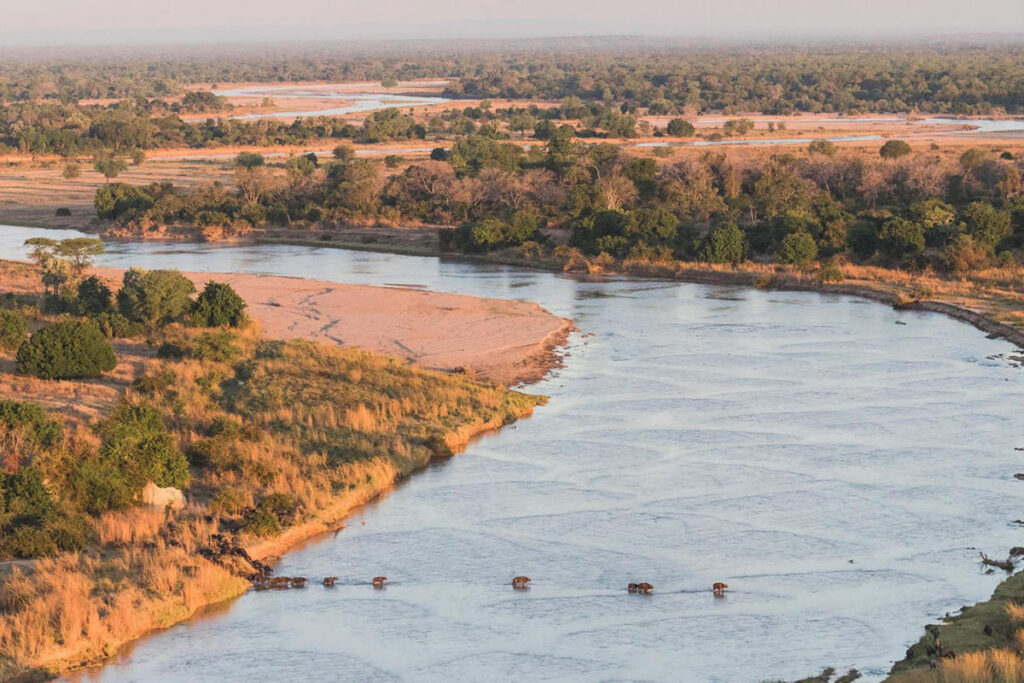
North Luangwa National Park, Zambia – Untouched Wilderness, Black Rhino Sanctuary, Predator Stronghold and Africa’s Most Exclusive Walking Safari Destination
North Luangwa National Park is one of Africa’s most pristine, untouched and least disturbed wilderness sanctuaries—a vast, wild, rift valley ecosystem where wildlife dominates the landscape, human presence is minimal and nature remains raw and unfiltered. This remote protected area in northern Zambia is renowned for its exceptional walking safaris, thriving predator populations, massive buffalo herds, healthy elephant numbers and the continent’s most successful black rhino reintroduction program. Unlike more accessible safari parks, North Luangwa remains a true frontier—quiet, untamed and breathtakingly wild—making it a premier destination for travelers seeking an immersive safari experience far removed from crowds and development.
Overview
North Luangwa National Park covers about 4,636 km² and forms the northern stronghold of the greater Luangwa Valley ecosystem—one of Africa’s most wildlife-rich regions. It was declared a national park in 1972 and, thanks to a long-term partnership between the Frankfurt Zoological Society (FZS) and Zambia’s Department of National Parks and Wildlife, the park has undergone a remarkable ecological revival. Anti-poaching investments, community partnerships and state-of-the-art monitoring programs have transformed North Luangwa into a secure refuge for elephants, buffalo, predators and black rhinos. The park’s safari philosophy is simple: low-impact, walking-focused tourism that preserves ecological integrity while offering unmatched wilderness immersion.
Location, Size and Key Facts
North Luangwa lies in Muchinga Province in northeastern Zambia, deep within the Luangwa Rift Valley. Isolated, rugged and difficult to access, the park is bordered by the Muchinga Escarpment to the west and the Luangwa River to the east. Remote yet ecologically vital, it forms a major part of a contiguous wildlife corridor connecting several game management areas and South Luangwa National Park.
- Country: Zambia
- Province: Muchinga Province
- Area: ~4,636 km²
- Established: 1972
- Main Rivers: Luangwa and Mwaleshi
- Tourism Model: Low-density, walking-only safaris
- Flagship Species: Black rhino, buffalo, lion, elephant, Cookson’s wildebeest
- Visitor Numbers: Among the lowest of any major Zambian park
Geology and Soil Composition
North Luangwa lies entirely within the Great East African Rift Valley, a vast geological depression formed by tectonic plate separation. Over millions of years, the Luangwa River system deposited layers of sediment across the valley floor, creating fertile alluvial soils that support productive floodplain grasslands. On higher ground, sandy loams, clay soils and rocky escarpment substrates support mopane and miombo woodland communities. The towering Muchinga Escarpment, composed of metamorphic and sedimentary rocks, defines the park’s western boundary and influences drainage, temperature and vegetation structure across the region.
Geography and Landscapes
The landscapes of North Luangwa are some of the most dramatic in Zambia. The Luangwa River snakes along the park’s eastern boundary, creating broad floodplains, oxbow lakes, sandbars and deep channels. Inland, the terrain transitions into mopane woodland, open plains, mixed thickets and beautiful gallery forests along the Mwaleshi River. The Muchinga Escarpment rises sharply in the west, sending seasonal streams down to the valley floor and creating a mosaic of habitats ideal for diverse wildlife.
- Oxbow lakes: Vital dry-season water sources for birds and mammals.
- Floodplains: Support massive buffalo herds and herds of wildebeest and zebra.
- Riverine forests: Evergreen zones providing shade, cover and food for elephants and leopards.
- Escarpment slopes: Scenic high ground rich in miombo woodland biodiversity.
- Grasslands: Ideal for grazers and the predators that follow them.
Climate
North Luangwa has three main seasons that dramatically transform the landscape:
- Cool Dry Season (May–August): Crisp mornings, pleasant afternoons and excellent walking conditions.
- Hot Dry Season (September–October): Intense heat, thinning vegetation and peak predator sightings.
- Rainy Season (November–April): Lush vegetation, full rivers and restricted access due to flooding.
The park is primarily open for tourism from June to October, when wildlife congregates around permanent water and visibility is highest.
Hydrology – Rivers, Channels and Oxbow Lakes
Water defines the ecological rhythms of North Luangwa. The Luangwa River—one of Africa’s last undammed major rivers—creates an ever-changing network of channels, sandbanks and nutrient-rich wetlands that sustain high wildlife densities. Oxbow lakes form as the river shifts, providing essential water sources deep into the dry season. The Mwaleshi River, a clear, shallow and scenic tributary, is central to walking safaris, with pools, side channels and shaded banks that attract elephants, buffalo, antelope and predators throughout the dry season.
Fire Ecology
Fire is a natural and essential force in the Luangwa ecosystem. Seasonal burns:
- Stimulate new grass growth for grazers
- Maintain open floodplains
- Prevent bush encroachment
- Cycle nutrients back into the soil
Conservation teams manage controlled burning to mimic natural cycles, reduce uncontrolled wildfires and preserve habitat diversity.
Ecosystems and Habitats
North Luangwa contains a rich blend of ecosystems shaped by soil type, altitude, water availability and fire patterns. Key habitat types include:
- Luangwa Floodplain: One of the richest wildlife areas in Africa.
- Mopane Woodland: Dominant habitat with high elephant utilization.
- Miombo Woodland: Upland slopes with sable, hartebeest and rare birds.
- Riverine Thicket: Dense evergreen forest ideal for leopards and rhino.
- Grassland Pans: Seasonal wetlands supporting diverse bird species.
Vegetation
Vegetation varies from open grasslands to dense woodlands. The floodplains support nutritious grasses ideal for buffalo and zebra, while mopane trees dominate inland plains. The Mwaleshi corridor is one of the park’s most scenic zones, with sausage trees, ebony, fig trees, mahogany and palms creating a rich, shaded habitat. During the rainy season, wildflowers carpet the valley floor, attracting butterflies and other pollinators.
Endemic and Near-Endemic Species
The Luangwa Valley is a global hotspot for endemism. North Luangwa contributes to the survival of several species found nowhere else on Earth, including:
- Cookson’s wildebeest: A Luangwa-only subspecies.
- Thornicroft’s giraffe (nearby in the ecosystem): A Luangwa endemic.
- Luangwa bush squirrels and localized reptiles.
- Valley-specialist birds: hornbills, barbets and finches.
Wildlife of North Luangwa National Park
Mammals
The park is famous for its big game populations and spectacular predator interactions. Massive buffalo herds—often more than 800 strong—dominate the floodplains. Elephants are widespread, and the park’s black rhino population, guarded by specialized units, is a remarkable conservation triumph.
- Lions (exceptional buffalo hunters)
- Wild dogs (a key stronghold population)
- Leopards (thriving in riverine forests)
- Spotted hyenas (abundant)
- Cookson’s wildebeest
- Zebra, kudu, puku and waterbuck
- Lichtenstein’s hartebeest and eland
- Elephants and hippos along major rivers
Predator–Prey Dynamics
North Luangwa is one of the few places where lions frequently tackle buffalo in dramatic hunts. Wild dogs thrive in the open plains, often hunting impala and puku. Leopards prefer dense riverine forests, taking advantage of steep banks and overhanging branches for ambush hunts. These interactions make North Luangwa one of Zambia’s most exciting predator-viewing destinations.
Birdlife
More than 400 bird species occur in North Luangwa, making it a rewarding destination for birdwatchers.
- Pel’s fishing owl (rare and iconic)
- African skimmers
- Saddle-billed and yellow-billed storks
- Southern ground hornbill
- Bee-eaters, rollers and sunbirds
- Raptors: crowned eagle, martial eagle, bateleur
- Cranes, herons and migratory waders
Reptiles, Amphibians and Invertebrates
The rivers host large Nile crocodiles and many hippos, while woodlands contain a variety of snakes, tortoises and lizards. Seasonal pools teem with frogs and aquatic insects that support higher predators. Butterflies are abundant during the green season.
Archaeology and Historical Human Presence
The Luangwa Valley has been inhabited for tens of thousands of years. Stone tools, pottery fragments and ancient settlement mounds found near rivers and escarpments indicate long-term occupation by early hunter-gatherer communities. Oral traditions among local tribes recall migration, hunting routes and spiritual ties to specific river pools and forests, giving the valley deep cultural and historical value.
Cultural and Indigenous Communities
The Bisa and Mukulu people live around the park’s periphery. Their livelihoods traditionally revolve around fishing, cattle, beekeeping, small-scale agriculture and harvesting natural resources. Today, community resource boards, conservation education programs and employment through anti-poaching units help align local livelihoods with wildlife conservation. Many community scouts are recruited locally and play an essential role in rhino protection.
Transboundary Connectivity
North Luangwa forms part of a critical ecological corridor linking:
- South Luangwa National Park
- Mukungule and Musalangu GMAs
- The Muchinga Escarpment forests
- The broader Luangwa Rift ecosystem
This landscape connectivity supports migration, dispersal and long-term genetic health of elephants, big cats, wild dogs and herbivores.
Conservation Importance
North Luangwa’s conservation achievements are among Africa’s greatest. Through decades of anti-poaching, ranger training and community involvement, the park has:
- Successfully restored a black rhino population
- Stabilized and increased elephant numbers
- Protected wild dog packs and lion prides
- Preserved one of Africa’s last intact floodplain ecosystems
North Luangwa is a model for large-scale wilderness restoration and long-term ecosystem management.
Threats and Modern Challenges
- Poaching: Still monitored but significantly reduced.
- Human–wildlife conflict: Mitigated through community programs.
- Encroachment pressures: Managed through zoning and cooperative land management.
- Climate change: Affecting rainfall patterns, river flow and vegetation cycles.
Climate Change Impacts
Climate change affects the Luangwa Valley through fluctuating rainfall, rising temperatures and altered river regimes. These shifts influence elephant movement, floodplain regeneration and the timing of wildlife migrations. Conservation plans now include climate resilience strategies to ensure long-term ecological stability.
Research and Monitoring Programs
- Rhino monitoring and genetic studies
- Lion, leopard and wild dog collaring programs
- Elephant movement tracking
- Fire and vegetation mapping
- Camera trap density surveys across habitats
These programs provide essential data for adaptive management and future-proof conservation.
Tourism Activities
North Luangwa is one of Africa’s premier walking safari destinations. Its low tourism density ensures private, meaningful wildlife encounters in a pristine setting.
- Walking safaris: The signature activity, offering close encounters with wildlife.
- Limited game drives: Offered only in concession areas.
- Birdwatching: Exceptional across rivers, floodplains and woodlands.
- Photography: Ideal for dramatic predator interactions and river scenes.
- Riverbank relaxation: Sundowners on sandbanks overlooking wildlife-rich pools.
Photography Highlights
- Buffalo herds on golden plains
- Lions hunting along sandbanks
- Crystal-clear pools of the Mwaleshi River
- Oxbow lakes reflecting sunset colors
- Elephants feeding beneath winterthorn trees
Access and How to Get There
- Fly-in: Charter flights to Mwaleshi or Chifunda airstrips.
- 4×4 access: Via Mano or Pontoon Gates (seasonal and challenging).
- From South Luangwa: Often combined in multi-park itineraries.
Permits and Regulations
Walking safaris require licensed guides and armed scouts. Rhino sanctuary zones have restricted access and require special permits. Off-road driving, night drives and any disturbance of wildlife are strictly prohibited to maintain the park’s ecological integrity.
Accommodation
Accommodation in North Luangwa is intentionally minimal, with only a few high-quality, eco-sensitive bush camps designed to blend into the environment. These camps typically offer:
- Comfortable tented rooms with open-air views
- Solar-powered systems
- Exceptional guiding teams
- Walking-focused safari itineraries
Best Time to Visit
- June–October: Dry season, peak wildlife visibility, optimal walking conditions.
- July–September: Prime predator action and comfortable temperatures.
- Rainy Season: Park closed due to flooding.
Why North Luangwa Is Unique
North Luangwa National Park stands as one of Africa’s most authentic wilderness destinations—a sanctuary where ecosystems flourish with minimal human disturbance, predators roam freely, buffalo herds move in astonishing numbers and black rhinos thrive under dedicated protection. Its walking safaris, unspoiled landscapes, ecological significance and exclusivity make it unmatched in Zambia and among the most remarkable wild areas on Earth. For travelers seeking true solitude, raw nature and deep, powerful encounters with Africa’s wildlife, North Luangwa delivers an experience that is profound, unforgettable and entirely genuine.