
Ranomafana National Park
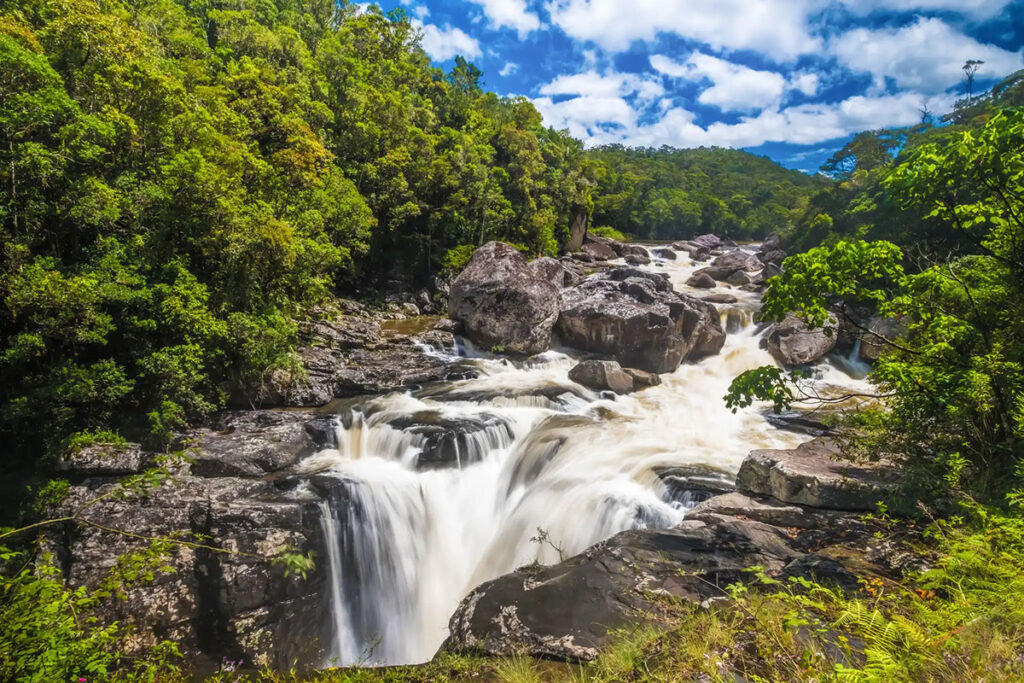
Ranomafana National Park, Madagascar – UNESCO Rainforest, Endangered Lemurs, Cloud Forest Hiking, Waterfalls and Extraordinary Biodiversity
Ranomafana National Park is one of Madagascar’s most breathtaking natural wonders—a cool, misty rainforest where steep emerald hills drop into deep river valleys, waterfalls crash over ancient bedrock, and rare wildlife calls echo through lush, evergreen canopies. Famous for its incredible biodiversity and dramatic scenery, this 416 km² protected area is part of the Rainforests of the Atsinanana UNESCO World Heritage Site and stands as one of the world’s most important strongholds for endangered lemurs, frogs, reptiles and endemic mountain rainforest species. Travelers searching for Ranomafana National Park Madagascar tours, lemur trekking adventures, rainforest hiking itineraries or Madagascar wildlife photography experiences will find Ranomafana to be one of the island’s most unforgettable destinations.
Stepping into Ranomafana feels like entering a living Eden. A cool mist hangs in the air each morning as sunlight pierces the canopy, illuminating droplets on moss, orchids and ferns. Tree ferns with arching fronds line the trails, their roots gripping steep slopes, while vines twist their way up towering rainforest giants. The constant music of rushing rivers fills the valleys as frogs, insects and birds call from every layer of the forest. In the canopy, bamboo lemurs chew bamboo shoots, Milne-Edwards’s sifakas leap between branches and chameleons cling silently to mossy limbs. Ranomafana is not merely a forest—it is a vibrant, ever-changing world where life thrives in extraordinary diversity.
Overview of Ranomafana National Park
Created in 1991 following the groundbreaking discovery of the critically endangered golden bamboo lemur (Hapalemur aureus), Ranomafana National Park quickly became one of Madagascar’s most celebrated conservation areas. Its establishment represented a major turning point in the country’s environmental history, demonstrating how scientific research can trigger wide-scale protection and international collaboration. Over the years, Ranomafana has evolved into a powerful symbol of tropical biodiversity conservation, ecological restoration and community-based stewardship.
Today the park is co-managed by Madagascar National Parks (MNP) with support from international partners, conservation NGOs, ecotourism stakeholders and local communities. Ranomafana is also the home of the renowned Centre ValBio, one of Madagascar’s most advanced scientific research centers. Founded by primatologist Dr. Patricia Wright, the center conducts long-term ecological monitoring and supports global research in primate biology, amphibian diversity, forest ecology, climate science, and sustainable development. It has transformed Ranomafana into a world-class research hub that attracts scientists, students and conservationists from across the globe.
Location, Size and Key Facts
Ranomafana lies in Madagascar’s southeastern highlands, roughly 65 km northeast of Fianarantsoa, stretching across the regions of Haute Matsiatra and Vatovavy. With a rugged topography, abundant rainfall and high humidity, it forms part of the island’s most critical montane rainforest corridor.
- Total Area: 416 km² of protected rainforest
- Altitude Range: 600–1,487 meters above sea level
- Climate Type: Cool, moist tropical rainforest climate
- Coordinates: approx. 21.2° S, 47.4° E
- UNESCO Status: Part of Rainforests of the Atsinanana World Heritage Site
- Main Village: Ranomafana (park gateway)
- Established: 1991
Geography, Terrain and Landscape
Ranomafana’s terrain is defined by its steep escarpments, rolling forested ridges, deep valleys and fast-moving rivers. These rugged geographical features create a dramatic landscape where every trail reveals new viewpoints, waterfalls or hidden forest microhabitats. The forest canopy forms a dense green cover over the slopes, while narrow ravines remain shaded and cool throughout the day.
The park’s hills are part of Madagascar’s eastern escarpment, shaped over millions of years by intense rainfall, erosion and tectonic activity. Rocks exposed in riverbeds reveal ancient geological history, and the forest floor is blanketed with rich leaf litter where amphibians, snakes, insects and small mammals hide. Photographers and hikers will find Ranomafana’s dramatic slopes and river vistas among the most striking in Madagascar’s highland rainforest belt.
Climate and Weather Patterns
Ranomafana experiences a moist tropical climate with high rainfall and frequent mist. Rain nourishes the dense vegetation year-round, while cooler mountain air moderates temperatures and creates a pleasant, refreshing forest environment. The forest remains green and vibrant regardless of season, but conditions vary greatly:
- Dry Season (May–October): cool temperatures, minimal rain, excellent hiking conditions, ideal for lemur trekking and photography.
- Wet Season (November–April): heavier rainfall, intense greenery, waterfalls at peak flow, and exceptional frog activity.
Humidity often reaches above 90%, creating ideal conditions for orchids, mosses and epiphytic ferns. Mist rolling through the canopy softens the forest’s colors and creates stunning moments for nature photographers.
Hydrology and Water Systems
Water shapes the entire ecosystem of Ranomafana. The Namorona River and its countless tributaries flow through the park, forming a network of rapids, cascades, natural pools and dramatic waterfalls. These waterways are essential for maintaining the park’s lush vegetation and serve as critical breeding grounds for frogs and aquatic insects.
Key hydrological features include:
- Namorona River Gorge – A powerful river carving deep channels through the southern park.
- Sahambavany Tributaries – Crystal-clear streams supporting frogs, invertebrates and freshwater fish.
- Misty Ravines – Cool, moist pockets ideal for epiphytes and moss-heavy vegetation.
- Seasonal Waterfalls – Some visible year-round, others appearing during the wet season.
These water systems regulate the rainforest’s climate, provide habitat for endemic species and influence species distribution in the park.
Ecosystems and Habitat Types
Ranomafana contains a rich mosaic of rainforest habitats shaped by topography and altitude.
Mid-Altitude Evergreen Rainforest
Characterized by towering canopy trees, tangled lianas, bamboo thickets and a multi-layered understory, this is the park’s dominant habitat. It supports the majority of lemur species and hosts abundant birdlife, reptiles and insects.
Montane Cloud Forest
At higher elevations, mist settles permanently across the canopy, coating trunks in thick layers of moss and lichens. These forests are cooler, quieter and darker, providing essential habitat for specialized amphibians and insects.
Riparian and Riverine Forests
Along rivers and streams, lush vegetation including pandanus palms, tree ferns and ground orchids thrives in constantly moist soils. River edges are ideal spots for spotting frogs, kingfishers, butterflies and occasionally lemurs coming to drink.
Secondary and Regenerating Forest
These areas, previously impacted by agriculture, are now recovering and support fast-growing pioneer species. Many lemurs forage in these zones for fruits and young leaves.
Vegetation and Botanical Diversity
Ranomafana’s rainforest is one of the richest botanical zones in Madagascar. More than a thousand plant species are found here, from giant evergreen trees to tiny mosses and orchids clinging to branches. The forest’s complex vertical layering allows species to occupy distinct strata, from canopy to forest floor.
- Canopy trees: towering hardwoods, many endemic
- Epiphytes: orchids, lichens, mosses, bromeliad-like plants
- Tree ferns: common in moist gullies
- Bamboo: essential for bamboo lemurs
- Pandanus and palms: dominating steep slopes and riverbanks
Local communities also use many forest plants for traditional medicine, weaving, food and rituals.
Wildlife of Ranomafana National Park
Ranomafana is one of Madagascar’s most important wildlife refuges, home to numerous endemic and endangered species.
Lemurs and Mammals
At least 12 lemur species inhabit Ranomafana, making it one of the top lemur-viewing destinations in Madagascar.
- Golden bamboo lemur – critically endangered, flagship species.
- Greater bamboo lemur – extremely rare.
- Milne-Edwards’s sifaka – often seen in family groups.
- Red-fronted brown lemur
- Grey bamboo lemur
- Small-toothed sportive lemur
- Brown mouse lemur – common on night walks.
Other mammals include tenrecs (hedgehog-like insectivores), Malagasy civets, endemic rodents, shrews, and the elusive ring-tailed vontsira.
Birdlife
With over 115 bird species, Ranomafana is a paradise for birdwatchers seeking Malagasy endemics.
- Pitta-like ground roller
- Rufous-headed ground roller
- Blue coua
- Velvet asity
- Brown mesite
- Tylas vanga and other vangas
- Sunbird-asities and greenbuls
Reptiles
- Leaf-tailed geckos
- Madagascar tree boa
- Numerous chameleon species (both large and dwarf)
Amphibians
Ranomafana is one of the world’s top amphibian hotspots with over 75 frog species, many micro-endemic.
- Mantella frogs
- Tree frogs
- Rainforest stream frogs
Invertebrates
The forest teems with insects and arachnids:
- Butterflies and swallowtails
- Giant stick insects
- Leaf insects
- Dragonflies and damselflies
- Rare beetles and nocturnal moths
Unique Features and Attractions
- Golden bamboo lemur discovery site
- Dramatic rainforest waterfalls
- Moss-draped cloud forests
- UNESCO World Heritage status
- Centre ValBio research station
- Exceptional amphibian diversity
Cultural and Local Communities
The forest is bordered by Betsileo and Tanala communities, whose livelihoods have historically depended on agriculture, fishing and forest resources. Ecotourism now plays a major role in supporting households through employment, guiding, handicraft production and conservation work. Community cooperatives engage in reforestation, sustainable agriculture training and environmental education programs aimed at reducing pressure on the rainforest.
Cultural traditions remain strong in surrounding villages, with local festivals, food traditions and medicinal plant knowledge passed down through generations. Ranomafana’s conservation success depends heavily on community involvement and partnership.
Conservation Importance
Ranomafana protects one of Madagascar’s last large blocks of mid-altitude rainforest—an ecosystem critical for lemur survival, amphibian conservation and long-term climate resilience. As part of the Atsinanana rainforest arc, the park contributes significantly to:
- genetic diversity preservation
- watershed protection and erosion control
- habitat connectivity for endemic species
- climate regulation and rainfall stability
Without protected forests like Ranomafana, many of Madagascar’s unique species would face rapid extinction.
Threats and Challenges
- Slash-and-burn agriculture (tavy): major cause of forest loss.
- Illegal logging: targeting precious woods like rosewood.
- Hunting pressure: affects small mammals.
- Habitat fragmentation: isolates lemur populations.
- Climate change: alters rainfall patterns and frog breeding cycles.
Sustainable livelihoods, forest monitoring and community collaboration are crucial for addressing these threats.
Research, Centre ValBio and Monitoring Programs
Ranomafana is one of Madagascar’s most important scientific landscapes. The Centre ValBio research station supports:
- decades-long lemur population studies
- forest dynamics and carbon monitoring
- amphibian and reptile surveys
- climate impact research
- student field programs and global research collaborations
- community training in sustainable development
These research efforts have created one of the longest-running ecological datasets in Madagascar, informing conservation decisions both locally and internationally.
Tourism Activities in Ranomafana National Park
Ranomafana offers a variety of guided ecotourism experiences suitable for all fitness levels:
- Guided lemur trekking – search for golden bamboo lemurs and sifakas.
- Birdwatching tours – target ground-rollers, vangas and rainforest endemics.
- Night walks – see mouse lemurs, chameleons, frogs, spiders and insects.
- Waterfall hikes – explore dramatic cascades and forest pools.
- Photography tours – rainforest macro photography, waterfalls and wildlife.
- Multi-day trekking circuits – deeper exploration of remote forest zones.
- Hot springs visits – relaxation after hiking.
Access and How to Get There
Ranomafana is reached via road from Fianarantsoa (1.5–2 hours). Roads are winding but accessible year-round. The park entrance and main visitor facilities are located in Ranomafana village. From there, visitors choose trails, hire guides and obtain maps or recommended itineraries.
Permits, Guides and Park Regulations
- Park entry fees apply (supporting conservation).
- Local guides are mandatory—trained in wildlife spotting and low-impact tourism.
- Visitors must remain on designated paths.
- No feeding or disturbing wildlife.
- No removal of plants, rocks or natural materials.
- Night walks only permitted in designated zones.
Accommodation Options
Accommodation options are concentrated in Ranomafana village and include:
- Eco-lodges overlooking the forest
- Comfortable mid-range hotels
- Budget-friendly bungalows
- Basic guesthouses
Most lodges offer meals, guide arrangements, transport coordination and spectacular early-morning forest views.
Best Time to Visit Ranomafana National Park
- May–October (Dry season): Excellent for hiking, lemur viewing, photography and comfort.
- November–April (Wet season): Lush scenery, stronger waterfalls, best frog-watching opportunities.
For most visitors, the best time to visit Ranomafana is during the cool, dry months when trails are less slippery and lemur sightings are more reliable.
Why Ranomafana National Park Is Unique
Ranomafana stands out as one of Madagascar’s most biologically important and visually stunning rainforest landscapes. Its misty highland forests, endangered lemurs, vibrant amphibian life, moss-laden cloud forests and dramatic waterfalls create an atmosphere unmatched anywhere on the island. As a UNESCO World Heritage rainforest and a leading center for ecological research, Ranomafana blends scientific significance with exceptional ecotourism value. For travelers seeking a deep, immersive rainforest adventure filled with wildlife encounters, rich botanical diversity, cultural insight and breathtaking scenery, Ranomafana National Park is one of Madagascar’s most extraordinary destinations.