
Sanganeb Marine National Park
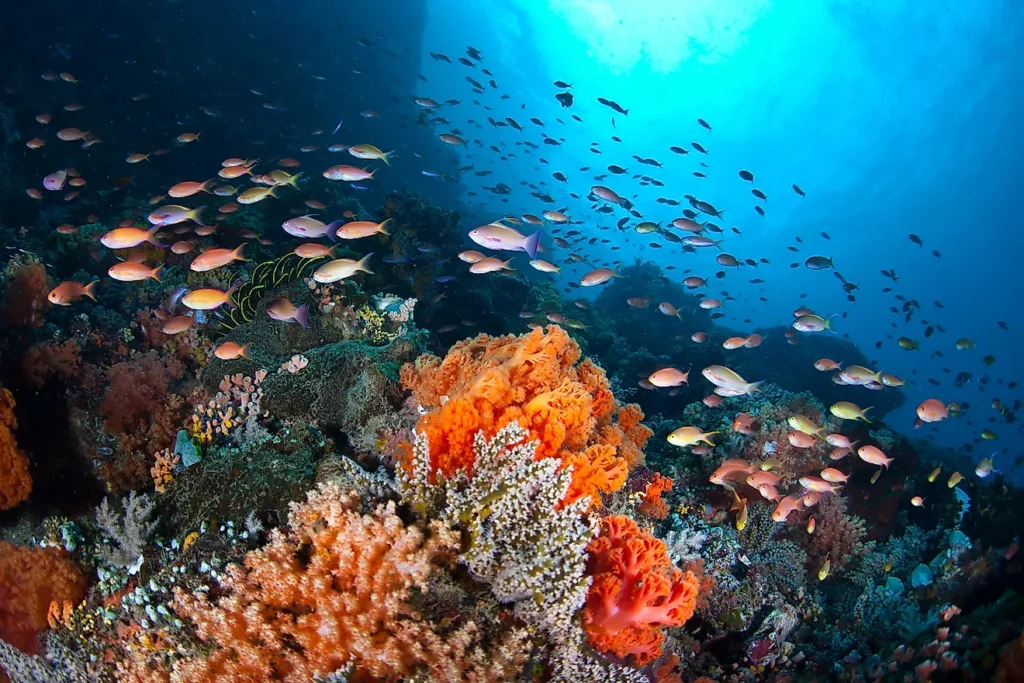
Sanganeb Marine National Park, Sudan – Red Sea’s Only Atoll Reef, Pristine Coral Wilderness, UNESCO Marine World Heritage Site, and One of the Planet’s Most Spectacular Diving Destinations
Sanganeb Marine National Park is one of the most extraordinary marine environments on Earth—an isolated, tower-like coral atoll rising from the deep central basin of the Red Sea and flourishing with vibrant corals, immense biodiversity, high reef walls, and pelagic species that travel along one of the world’s most important tropical marine corridors. Recognized as a UNESCO World Heritage Site since 2016, Sanganeb is celebrated not only as the Red Sea’s only true atoll-like reef but also as one of the last remaining examples of pristine, undisturbed coral ecosystems in the modern world.
This exceptional site combines geological rarity, ecological richness, historic maritime heritage, and unmatched underwater scenery. From shallow coral gardens teeming with life to dark blue drop-offs plunging nearly 800 meters into the abyss, Sanganeb represents a complete vertical marine world compressed into a single atoll structure. For divers, scientists and conservationists, it offers a living reference ecosystem—an invaluable benchmark for studying coral resilience, climate-change adaptation and pelagic migration patterns in the northern Red Sea.
Key Facts
- Country: Sudan
- Province: Red Sea State
- Location: Central Red Sea, 25–30 km northeast of Port Sudan
- Coordinates: Approx. 19.73° N, 37.34° E
- Protected Status: National Park; UNESCO World Heritage Site (inscribed 2016)
- Core Area (Sanganeb Component): ~17,400 hectares
- Elevation: Rises from ~800 m deep ocean floor to sea level
- Ecosystems: Atoll reef, coral gardens, lagoon systems, deep-sea drop-offs, pelagic migration zones
- Coral Diversity: 260+ coral taxa
- Fish Diversity: 300+ reef, pelagic and deep-sea species
- Major Megafauna: Sharks, dolphins, manta rays, turtles and seasonal whales
- Access: Only via licensed live-aboard and diving vessels from Port Sudan
Location and Geographic Setting
Sanganeb lies roughly 25–30 kilometers northeast of Port Sudan in Sudan’s Red Sea State, positioned far offshore where continental influences diminish and open-ocean conditions prevail. This position is central to its uniqueness: rather than forming part of a fringing coastal reef system, Sanganeb stands alone as an emergent coral platform built upon a submerged seamount whose base lies more than 800 meters below the surface.
The atoll rises sharply from the deep ocean floor, forming a striking oval reef structure that encircles a calm, shallow lagoon in its interior. The outer walls face the vast central Red Sea basin and are exposed to currents, upwellings and nutrient flows that enhance both coral growth and fish aggregation. Its isolation makes Sanganeb a magnet for pelagic species, from hammerhead sharks to dolphins and large predatory fish. This geographic position also places Sanganeb directly along the Red Sea’s north–south migratory pathway, linking tropical and subtropical marine ecosystems between the Gulf of Aden and northern Egypt.
Geological Origins and Oceanographic Dynamics
Sanganeb Marine National Park owes its origin to the tectonic evolution of the Red Sea Rift—the geological divergence of the African and Arabian plates. Millions of years of tectonic activity created deep troughs, submarine escarpments and uplifted blocks, providing ideal hard substrates for coral larvae to settle upon. Over vast timescales, successive coral generations built upward toward the surface, forming the atoll-like reef platform that exists today.
The Red Sea is one of the warmest, saltiest and most nutrient-poor seas in the world, yet paradoxically among the most biodiverse due to its extreme water clarity and consistent year-round temperatures. Sanganeb benefits from a unique combination of oceanographic conditions:
- Exceptional water clarity (visibility often 30–50 meters)
- Warm stable temperatures between 25–30°C throughout the year
- Strong north–south currents transporting larvae and pelagic species
- Localized upwellings enriching deeper reef sections with nutrients
- High salinity that favors coral dominance over algae
Together, these conditions enable Sanganeb to support both shallow and deep coral communities, as well as a thriving pelagic ecosystem that interacts directly with its steep outer walls. This rare combination of geological uplift and ideal oceanographic conditions creates one of the most ecologically complex atoll structures known to science.
Major Ecosystems and Habitat Diversity
Sanganeb’s ecological richness stems from its extraordinary range of habitats compressed into a relatively small geographic area. From sunlit terraces to deep shadowy drop-offs, the atoll represents a complete vertical ecosystem supporting species across the entire photic range.
Shallow Coral Terraces
The shallow reef terraces that encircle Sanganeb’s perimeter provide a dazzling array of branching, table and boulder corals. These zones are characterized by brilliant light penetration, minimal sedimentation and gentle water movement, creating ideal conditions for coral proliferation. Their three-dimensional structures support thousands of smaller fish species, juvenile fish nurseries and countless invertebrates.
Reef Crest Zones
Facing the open sea, Sanganeb’s wave-exposed reef crest is a powerful natural barrier shaped by strong wave energy and constant water flow. Only the hardiest species—massive Porites, compact Pocillopora and heavy encrusting corals—dominate this zone. Their resilience and strength protect the lagoon and inner habitats from wave stress.
Inner Lagoon and Patch Reefs
The inner lagoon, sheltered by the surrounding coral walls, contains calm, shallow waters dotted with coral pinnacles, seagrass patches and sandy bottoms. This area acts as a vital nursery ground for juvenile reef fish, rays, sea cucumbers and invertebrates. Patch reefs provide a staging area where small species grow before moving into deeper, more exposed habitats.
Mid-Slope Coral Gardens
Descending into depths of 10–25 meters, Sanganeb reveals an underwater tapestry of colorful soft corals, gorgonians, sponges and coral fans. Huge schools of anthias swirl around overhangs and ledges, creating a brilliant contrast against the deep blue background. These mid-slope habitats are prime diving zones, celebrated for their photographic clarity and density of marine life.
Deep Walls and Mesophotic Reefs
Beyond approximately 25 meters, the reef drops sharply into the depths, forming vertical walls covered in soft corals, black corals and slow-growing mesophotic species adapted to minimal light. These steep faces are frequented by sharks, large groupers, pelagic fish and deep-reef species that rarely appear in shallower waters. The presence of these habitats makes Sanganeb exceptional for studying deep-reef ecosystems, which remain among the least understood on the planet.
Pelagic Migration Zone
Encircling the entire atoll is the open ocean, an expansive pelagic environment where large predators and migratory species thrive. Schools of barracuda, jacks, tuna and trevally form shimmering clouds in open water, while hammerhead sharks gather in seasonal groups. Dolphins frequently ride the bow waves of visiting vessels, and whales are occasionally sighted passing through the area during migration.
Biodiversity and Marine Species
Corals
Sanganeb contains more than 260 coral species, making it one of the most diverse coral ecosystems in the Red Sea. These corals fall within numerous families and genera:
- Acroporidae: branching and table corals
- Poritidae: massive boulder corals
- Pocilloporidae: compact, wave-resistant species
- Faviidae: brain coral species
- Alcyoniidae: soft leather corals
- Gorgoniidae: sea fans and gorgonians at mid-depths
Fish Diversity
More than 300 fish species inhabit the atoll, including reef fish, pelagic predators and deep-water species. Common sightings include:
- Colorful butterflyfish and angelfish
- Wrasses, anthias and damselfish
- Snappers, emperors and groupers
- Barracuda and trevally hunting in packs
- Tunas and dogtooth tuna in deeper blue water
Sharks and Rays
Sanganeb is one of the best places in the Red Sea to encounter sharks. Species include:
- Scalloped hammerhead sharks (schooling, seasonal)
- Grey reef sharks patrolling outer walls
- Silky sharks and oceanic whitetips in pelagic zones
- Manta rays gliding through deeper sections
Marine Mammals and Reptiles
- Spinner, bottlenose and Risso’s dolphins
- Green and hawksbill turtles
- Occasional sightings of humpback and Bryde’s whales
Invertebrates
- Giant clams
- Nudibranchs and sea slugs
- Sea cucumbers and starfish
- Crabs, shrimp and lobsters
- Colorful sponge and anemone species
Cultural and Historical Significance
Sanganeb has long played a significant role in the maritime history of the Red Sea. For centuries, it functioned as a navigational reference point for traders, pearl divers, fishermen and travelers navigating the busy trade routes linking Africa, Arabia and Asia. The atoll’s dramatic rise from deep water made it both a navigational hazard and a vital landmark for seafarers.
The iconic Sanganeb Lighthouse, built during British colonial administration, stands as a testament to this maritime heritage. Still operational, it guides vessels approaching the Sudanese coast and offers visitors panoramic views of the atoll and the deep-blue expanse surrounding it. Its construction symbolizes the strategic importance of this reef within regional maritime navigation.
UNESCO World Heritage Recognition
Sanganeb Marine National Park was inscribed as part of a serial UNESCO World Heritage Site in 2016 under three criteria:
- Criterion (vii): Its outstanding natural beauty and dramatic seascapes, including crystalline reefs, vertical coral walls and rich blues of surrounding deep water.
- Criterion (ix): The ecological and biological processes at work, particularly coral reef development, larval dispersal, deep-reef adaptation and pelagic interactions.
- Criterion (x): Exceptional biodiversity, including threatened, endemic and migratory species such as sharks, turtles and coral communities resilient to extreme Red Sea conditions.
This designation emphasizes the global importance of Sanganeb as one of the purest and most ecologically intact coral reef systems on the planet—a marine sanctuary that continues to flourish despite growing global threats to reef ecosystems.
Threats and Conservation Challenges
Although Sanganeb remains one of the healthiest coral reef systems in the world, it faces several environmental and human-derived threats. Climate change poses the greatest long-term risk, with rising sea temperatures increasing the likelihood of coral bleaching events. While the Red Sea’s northern corals exhibit remarkable heat tolerance compared to global averages, sustained warming could eventually exceed their adaptive capacity.
Human threats include unregulated diving, accidental anchor damage, illegal fishing and marine litter drifting from neighboring regions. Pelagic shark species face additional pressure from overfishing elsewhere in the Red Sea, affecting long-term population trends.
Management and Ecosystem Protection
Sanganeb is protected under Sudanese marine conservation laws and monitored by a combination of national authorities, UNESCO and PERSGA (Regional Organization for the Conservation of the Environment of the Red Sea and Gulf of Aden). Conservation measures include:
- Zoning of dive areas and restricted regions
- Mandatory use of mooring buoys to prevent anchor damage
- Regulation of dive operators and vessel movements
- Patrolling to prevent illegal fishing
- Long-term biological monitoring of coral and fish populations
These efforts aim to ensure that Sanganeb remains one of the world’s most pristine coral ecosystems well into the future.
Visiting, Diving and Tourism Experiences
Sanganeb Marine National Park is internationally renowned as one of the world’s most extraordinary diving destinations. Its crystal-clear waters, dramatic topography, massive coral formations and abundance of marine life attract divers from across the globe. Because the atoll is far offshore, all visits are conducted via licensed live-aboard vessels departing from Port Sudan.
- Diving: Explore vertical walls, coral pinnacles, labyrinths and pelagic blue-water zones.
- Snorkeling: Ideal in lagoon areas with calm, shallow sections teeming with corals.
- Lighthouse Tours: Climb the Sanganeb Lighthouse for sweeping panoramic views.
- Pelagic Wildlife Encounters: Hammerhead schools, dolphins, turtles and giant fish species.
- Underwater Photography: Excellent wide-angle and macro opportunities.
Best Time to Visit
- October–June: Optimal for diving with excellent clarity.
- February–May: Best for hammerhead shark encounters.
- October–December: Highest underwater visibility.
Access and Travel Logistics
Access to Sanganeb is exclusively by sea via Port Sudan. Visitors board live-aboard diving vessels that navigate the open water to reach the atoll. These trips usually last between 3–10 days and often include dives at nearby reefs and the UNESCO-linked Dungonab Bay – Mukkawar Island Marine National Park.
Permits and Regulations
- Entry permits required for all vessels visiting the park.
- Diving allowed only with licensed operators adhering to reef-safe protocols.
- Fishing is strictly prohibited or heavily regulated within park boundaries.
- Anchoring on the reef is banned—mooring buoys must be used at all times.
Why Sanganeb Marine National Park Is Unique
Sanganeb Marine National Park is a masterpiece of nature—an isolated coral atoll rising from deep ocean waters, hosting some of the richest coral diversity in the Red Sea, sheltering pelagic megafauna, and presenting underwater landscapes of extraordinary beauty. Its pristine condition, dramatic geological structure, UNESCO status, historic lighthouse and ecological resilience make it not only a Sudanese treasure but also one of the most important marine sanctuaries on the planet.
For divers seeking world-class underwater experiences, scientists studying coral adaptation, or conservationists protecting Earth’s last remaining pristine reefs, Sanganeb stands as an irreplaceable marine wonder—a living sanctuary of biodiversity, beauty and natural heritage unmatched anywhere else in the Red Sea.