
Upper Niger National Park
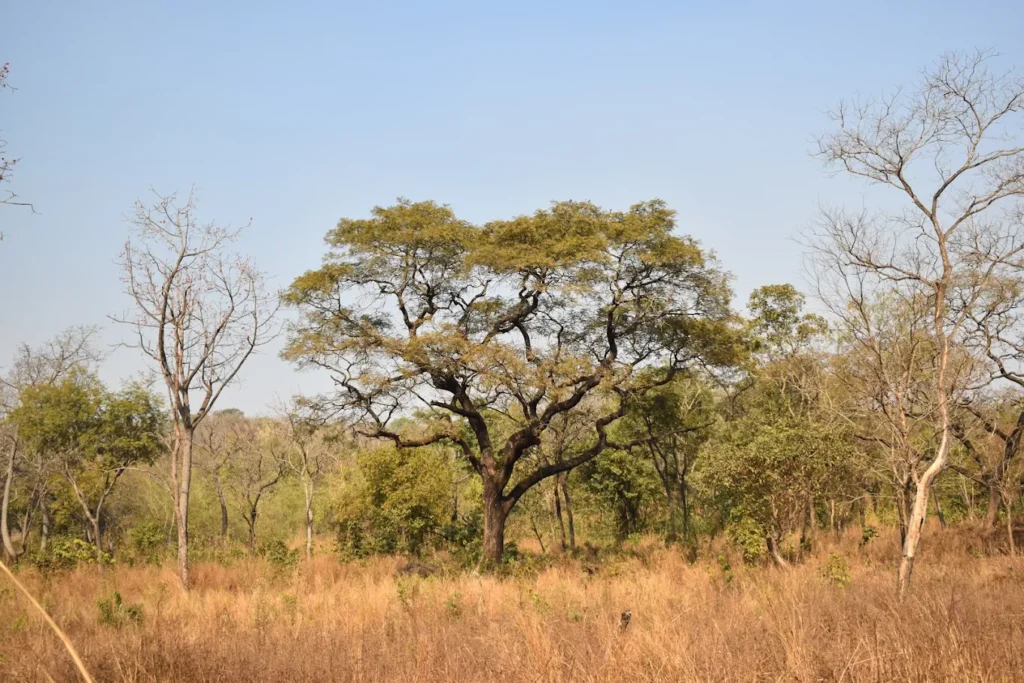
Upper Niger National Park, Guinea – Complete Safari Guide to Chimpanzees, Forest–Savanna Ecosystems & the Upper Niger River Wilderness
Upper Niger National Park (Haut Niger National Park) is one of the most ecologically valuable national parks in West Africa. Located in central-eastern Guinea, this protected area spans roughly 6,700–6,740 km² and preserves one of the region’s last intact forest–savanna mosaics. The park protects the headwaters of the Niger River — one of Africa’s most important waterways — while sheltering wildlife such as Western Chimpanzees, forest hogs, duikers, antelopes, otters, and over 300 species of birds.
Established in 1997, the park consists of dry tropical forest, grassy savanna plains, gallery forests, seasonal floodplains and riverine wetlands. Because West Africa has lost much of its wilderness to agriculture and development, Upper Niger remains one of the few places where large sections of dry forest and savanna still function naturally. This makes it not only a biodiversity refuge, but also a living laboratory for scientists and a challenging yet rewarding adventure destination for eco-travelers.
What makes Upper Niger National Park truly unique is that it supports one of the largest remaining populations of the critically endangered Western Chimpanzee (Pan troglodytes verus) — an estimated 500 or more individuals, making this park a global priority area for great ape conservation. With its combination of wilderness character, ecological importance and conservation relevance, this park stands at the heart of Guinea’s natural heritage.
Location & Geographic Context
Upper Niger National Park lies within the Faranah region of central-eastern Guinea. It sits strategically at the ecological transition between the humid Guinean forests to the south and the drier Sudanian savannas to the north. This positioning results in a remarkable overlap of flora and fauna typically found in both biomes — making it a hotspot for biodiversity.
The park surrounds the early flow of the Niger River and incorporates its tributaries, including the Mafou and Kouya rivers. The landscape consists of gently rolling plateaus, broad floodplains and shallow valleys carved by the river systems. Because of the park’s transitional climate zone and varied topography, the area supports diverse vegetation structures, ranging from dense dry forests to open grass savannas and riparian corridors.
Protected Area Zoning Structure
Upper Niger is divided into two key zones:
- Mafou Core Conservation Zone — A strictly protected region dominated by dry tropical forest, gallery forests and wooded savannas. Human activity is extremely limited, making it the primary refuge for chimpanzees and other sensitive wildlife.
- Kouya Buffer & Multi-Use Zone — A sustainably managed area that surrounds the core region. Controlled agriculture, grazing and resource harvesting are permitted here under regulation. This zone acts as a social and ecological buffer that reduces pressure on the core forest.
This zoning structure is essential for long-term conservation stability. The core protects wildlife and ecological processes, while the buffer integrates human livelihoods, reducing conflict — a practical model for West African conservation landscapes.
Landscape, Terrain & Natural Scenery
The scenery is varied and visually stunning — golden grasslands stretch across wide plateaus, forests rise in dark-green blocks along riverbanks, and shallow wetlands glisten seasonally with rain-fed waters. The terrain ranges from 400–500m elevation, with gradual hills and sandstone ridges providing sweeping views of uninterrupted wilderness.
During the rainy season, the park transforms into a lush green world, filled with fresh growth, flowering plants, and recharged wetlands. In the dry season, the landscape shifts to dusty gold and warm amber hues — a photographer’s dream — as wildlife clusters around rivers, making sightings easier.
Climate & Best Time to Visit Upper Niger National Park
The park experiences two major climatic phases:
- Rainy Season (May–October): Floodplains fill, forests flush green, and amphibians enter peak breeding season. Roads may be muddy, so access can be challenging.
- Dry Season (November–April): Best time for wildlife viewing. Water scarcity concentrates animals near the Niger River and tributaries. Landscapes become open, visibility improves, and temperatures remain comfortable.
For safari travelers, the peak visiting window is November–March. Birdwatchers also enjoy exceptional sightings in this period, especially around wetlands where Palearctic migrants mix with African species.
Hydrology & the Birthplace of the Niger River
The Niger River — Africa’s third-longest river — originates within this protected zone. Its seasonal flood cycles shape both vegetation and wildlife distribution. Floodplains expand during rains, creating breeding grounds for fish, frogs, aquatic insects, and waterbirds. As waters recede, deeper pools and river channels become essential dry-season life sources for mammals, birds and reptiles.
Gallery forests along waterways remain green year-round due to constant moisture. These forests act as climate stabilizers, carbon sinks and movement corridors for primates and pollinators. By protecting the river’s headwaters, the park indirectly supports millions of people downstream in Mali, Niger and Nigeria — making it a hydrological giant of regional importance.
Habitats & Ecosystems
Upper Niger National Park contains one of the richest habitat mixes in Guinea:
- Dry Tropical Forest — Rare and biologically dense. Supports chimpanzees, hornbills, civets and insect diversity.
- Wooded Savanna — Dominated by tall grasses, acacias and combretum trees. Ideal for ungulates and raptors.
- Gallery Forest — Permanent, green corridors following the rivers. Key for primates, birds, lianas and orchids.
- Wetlands & Floodplains — Seasonal breeding hubs for fish, frogs and wading birds.
- Agroforestry Zones — Where sustainable land use integrates with conservation.
Because different species depend on different zones seasonally, wildlife movement and ecological processes remain naturally dynamic — a sign of ecosystem health rarely seen in West Africa today.
Flora & Vegetation Diversity
Vegetation structure varies from semi-closed forest canopies to open grass plains. Dry forest trees like Isoberlinia and Afzelia dominate core zones, providing nesting sites for birds and fruiting resources for primates. Savanna zones host fire-resistant shrubs and grasses, some with thick bark or re-sprouting roots that allow fast recovery after seasonal burns.
Riparian vegetation along the Niger and Mafou rivers is evergreen and dense — offering shade, moisture and food even at the height of the dry season. These areas support the greatest density of wildlife and are crucial for chimpanzee range continuity, bird roosting and amphibian breeding.
Wildlife of Upper Niger National Park
Upper Niger is one of the most wildlife-rich parks in West Africa. It is home to:
Mammals
- ~500 Western Chimpanzees — one of the largest surviving populations globally.
- Forest hogs, duikers, kob, waterbuck, bushbuck, warthog and other antelopes.
- Carnivores such as genets, civets, servals, caracals, mongoose species and otters.
- Rodents, bats and insectivores that maintain soil health and seed dispersal.
The chimpanzee population is the park’s flagship treasure. Guinea holds one of the few remaining viable populations of this great ape, making Upper Niger indispensable to global ape conservation. The Chimpanzee Conservation Center (CCC), based near the park, rescues and rehabilitates orphaned chimpanzees, with monitored reintroduction initiatives that strengthen long-term survival prospects.
Birdlife
Birdwatching is superb here — with 300+ recorded bird species ranging from Upper Guinea forest specialists to broad-ranging savanna and wetland birds.
Expect species such as:
- Hornbills and turacos in forest canopies
- Storks, herons and egrets on wetlands
- Raptors like bateleur and brown snake eagle above plains
- Kingfishers, bee-eaters and rollers in riverine habitats
The park’s IBA (Important Bird Area) status makes it one of the most valuable birding destinations in Guinea — especially around riverbeds in late dry season.
Reptiles, Amphibians & Invertebrates
Seasonal wetlands transform into amphibian nurseries during rains. Frogs and toads reproduce explosively, attracting snakes, storks, herons and aquatic predators. Reptiles thrive across habitat types, including geckos, monitors, pythons and savanna snakes. Invertebrate diversity remains scientifically under-documented, making the park fertile ground for entomologists and field biologists.
Aquatic Biodiversity
Fish communities include catfish, tilapia and riverine species essential to upper Niger food webs. During floods, fish spread into wetlands to spawn. As waters recede, they gather in deep channels where crocodiles, otters and wading birds thrive. These aquatic cycles sustain both biodiversity and downstream community fisheries.
Local People, Culture & Coexistence
Villages surrounding the park rely on farming, livestock herding, honey collection, medicinal plant harvesting and fishing. Traditional ecological knowledge guides seasonal land use — but increasing resource demand has raised pressure on forest and wildlife. Instead of separating people from nature, the park works to integrate community livelihoods with conservation.
Community-based resource management, sustainable agriculture programs, beekeeping, fuel-efficient stoves, agroforestry and eco-tourism initiatives are emerging solutions that create economic incentives for conservation while protecting ecological integrity.
Conservation Value & Ecosystem Services
Upper Niger National Park is ecologically irreplaceable. It protects one of the last functional forest–savanna ecosystems in West Africa and one of Earth’s most significant chimpanzee populations. It stores carbon, regulates rainfall, stabilizes soils, maintains river flow and preserves genetic diversity across plant and animal populations.
Protecting Upper Niger is not just about wildlife — it safeguards water security for millions of people downstream and preserves a landscape capable of supporting future generations. Losing this system would represent one of the greatest ecological losses in the region.
Threats & Management Challenges
Despite its importance, the park faces challenges including:
- Bushmeat hunting pressure, particularly targeting primates and antelope
- Unregulated logging and firewood extraction in buffer zones
- Shifting agriculture and grazing encroachment
- Frequent forest-edge fires affecting gallery forest regeneration
- Limited enforcement capacity across vast terrain
Addressing these threats requires sustained funding, community partnerships, fire management programs, ranger training, wildlife monitoring and continued chimpanzee rehabilitation work.
Scientific Research & Future Priorities
Upper Niger is a research frontier. Studies have covered primate ecology, herpetofauna diversity, vegetation mapping, hydrology, bushmeat trade dynamics and land-use change. Yet much is still unknown — particularly in the areas of aquatic species, invertebrates and long-term wildlife population trends.
Future priorities include drone-assisted monitoring, camera trap networks, ecological corridor mapping and greater integration of local knowledge into research and management. With stronger support, Upper Niger could become a leading field research hub in West Africa.
Tourism — What to Do in Upper Niger National Park
- Chimpanzee-tracking walks in Mafou Forest
- Birdwatching safaris along river corridors
- Wetland exploration during early rainy season
- Nature photography across savanna and forest landscapes
- Cultural village visits and community-based tourism experiences
- Multi-day wilderness trekking for researchers and adventurers
Tourism here is raw and truly wild — no crowds, no mass tourism, just authentic nature.
Access, Permits & Travel Logistics
Access begins in Faranah, reachable by road from Conakry. The park’s interior requires 4×4 transport year-round, especially during rains. Camping may be possible with permits in designated zones. Guides, water, supplies and planning are essential — this is a frontier safari experience.
Where to Stay
Accommodation is simple: guesthouses in Faranah, basic field camps and researcher facilities in or near the Mafou sector. Rustic and remote — ideal for travelers seeking wilderness rather than luxury.
Why Upper Niger National Park is Unique
Upper Niger is one of West Africa’s last great wilderness areas. It protects chimpanzees, forests, savannas, wetlands and the headwaters of the Niger River — all within one living ecosystem. This is not a zoo or a commercial safari park; it is real, raw and ecologically alive.
For those seeking authentic Africa — unfiltered, unindustrialized and biologically rich — Upper Niger National Park offers something few destinations can still provide: a glimpse into the wild heart of West Africa.