
Kibale Forest National Park
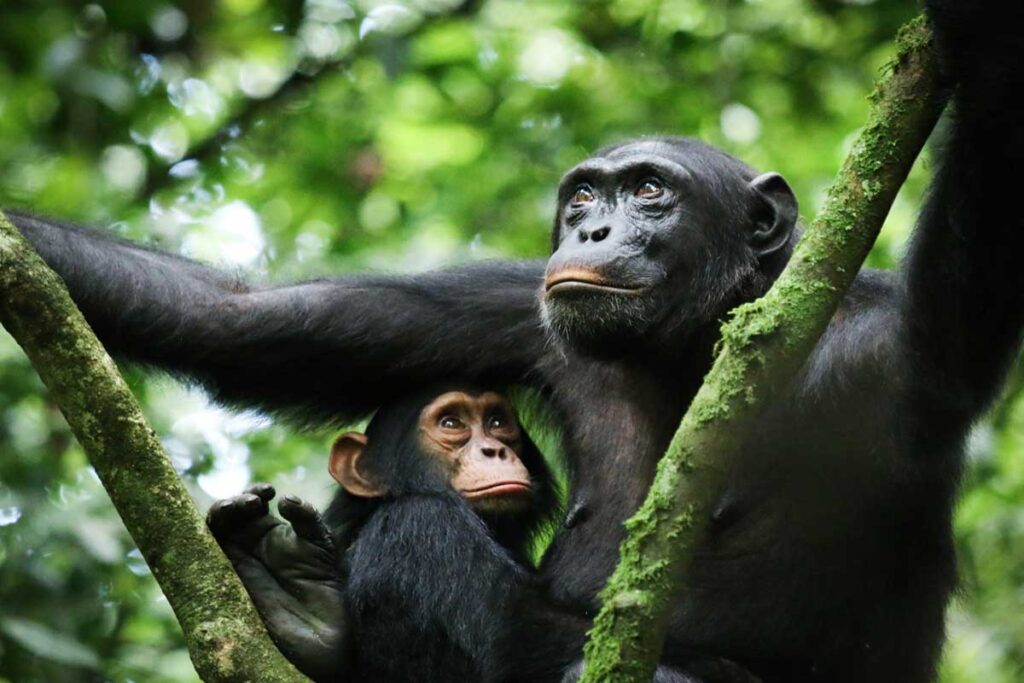
Kibale Forest National Park – Uganda’s Legendary Primate Capital and East Africa’s Ultimate Rainforest Destination for Chimpanzee Trekking, Biodiversity, Crater Lakes, and Immersive Eco-Tourism
Kibale Forest National Park is one of Africa’s greatest tropical rainforest jewels — a magnificent, thriving ecosystem renowned globally as the “Primate Capital of the World.” Located in western Uganda along the biodiverse Albertine Rift, Kibale spans approximately 795 km² of pristine tropical forest, lush wetlands, crater-lake landscapes, and savanna–forest mosaic habitats. It is home to over 1,500 wild chimpanzees, the highest primate richness in Africa with 13 species, more than 370 bird species, 250+ butterfly species, rare mammals, and thousands of plant species — making it one of the continent’s most important biodiversity hotspots.
For travelers, Kibale offers unforgettable experiences: world-class chimpanzee trekking, the exclusive Chimpanzee Habituation Experience (CHEX), forest hikes, birdwatching safaris, crater lake explorations, and cultural encounters with the Batooro, Bakiga, and indigenous Batwa communities. Its landscapes are among the most breathtaking in Uganda, with emerald-green forest canopies, volcanic hills, serene crater lakes, and rolling tea plantations stretching to the horizon. As part of Uganda’s premier tourism circuit, Kibale Forest National Park stands alongside Bwindi, Queen Elizabeth, and Murchison Falls as one of the country’s most spectacular conservation destinations.
Overview of Kibale Forest National Park
Gazetted in 1993, Kibale Forest National Park was established to protect one of East Africa’s last surviving expanses of lowland and montane tropical forest. It was designed not only to safeguard Uganda’s largest population of chimpanzees but also to conserve forest biodiversity that had been rapidly shrinking in the region. The park is managed by the Uganda Wildlife Authority (UWA) and is recognized internationally for its outstanding ecological value, long-term research programs, and community engagement initiatives.
Kibale’s scientific importance cannot be overstated. It hosts some of the longest-running primate research sites in Africa, with decades of continuous study on chimpanzees, red colobus monkeys, L’Hoest’s monkeys, forest ecology, plant regeneration, carbon dynamics, and climate impacts. These research initiatives contribute to global primate conservation strategies and have positioned Kibale as a premier destination for field biologists, conservationists, ecologists, and wildlife photographers.
Location and Size
The park lies in western Uganda, straddling Kabarole, Kamwenge, Kyenjojo, and Kasese Districts. It is located close to the city of Fort Portal — often called Uganda’s tourism capital — and sits near the foothills of the legendary Rwenzori Mountains (Mountains of the Moon). Kibale occupies a crucial ecological position linking several major conservation areas and serves as a natural corridor for wildlife movement.
Covering approximately 795 km², Kibale forms a continuous wildlife corridor with Queen Elizabeth National Park to the south. This 180 km corridor allows elephants, lions, chimpanzees, buffalo, and leopards to move freely between forest and savanna habitats, contributing to genetic diversity and resilience of regional wildlife populations.
Geography and Geology
Kibale’s landscapes reflect millions of years of geological evolution shaped by volcanic activity, tectonic uplift, and erosion associated with the formation of the Albertine Rift. Its terrain is dominated by rolling forested hills, elevated plateaus, volcanic craters, river valleys, and swamp systems that create a variety of ecological niches.
- Altitude: 1,100–1,590 meters, influencing forest composition and wildlife distribution.
- Soils: Deep, fertile, iron-rich volcanic soils that support luxurious plant growth.
- Crater lakes: Numerous lakes formed by volcanic explosions centuries ago.
- Fault lines: Sculpted by Rift Valley tectonics, shaping hills and river basins.
This geological diversity directly shapes the park’s vegetation, hydrology, wildlife, and climate — making it one of East Africa’s most ecologically dynamic landscapes.
Climate
Kibale Forest National Park experiences a cool tropical climate ideal for rainforest development. The region receives consistent rainfall, moderated temperatures, and high humidity throughout the year due to its elevated location within the Albertine Rift.
- Average rainfall: 1,200–1,700 mm annually.
- Temperature range: 14°C–27°C.
- Main rainy seasons: March–May and September–November.
- Dry seasons: June–August and December–February.
This stable climate supports year-round fruiting of key trees, providing essential food for chimpanzees and other primates, while also making the park suitable for tourism throughout the year.
Hydrology and Water Systems
Kibale Forest is a critical hydrological hub supplying freshwater to communities, wildlife, and agricultural zones across western Uganda. Its dense vegetation regulates rainfall, filters pollutants, and stabilizes soils, making it a lifeline for several watersheds.
- Mpanga River: Flows through the park into Lake George and the Kazinga Channel.
- Rwimi River: Supports local agriculture and drains into the Semuliki River.
- Dura River: Essential for Kibale’s swamp systems and wildlife.
- Crater lakes: Dozens of lakes dot the surrounding landscape, enhancing biodiversity.
Wetlands such as the Bigodi Swamp serve as natural water filters, home to abundant birdlife and wildlife, while providing flood control and groundwater recharge for surrounding communities.
Ecosystems and Habitats
Kibale’s extraordinary ecological richness comes from its mosaic of distinct habitats, which transition gradually from dense rainforest in the north to open savanna in the south. These habitats support species that would otherwise never coexist.
- Moist evergreen rainforest: Dominates the northern region and supports the highest primate densities.
- Medium-altitude dry tropical forest: Found in the south, hosting unique plant species.
- Swamps and papyrus wetlands: Important for amphibians, birds, and semi-aquatic mammals.
- Woodland and savanna patches: Provide habitat for elephants, antelope, and predators.
- Riparian forest: Thrives along rivers and streams, offering food and shade for wildlife.
This complexity positions Kibale among the most important forest–savanna transition ecosystems in Africa.
Vegetation
Kibale’s forests host more than 350 tree species, creating a layered canopy structure with towering emergent trees, dense mid-layers, and shaded undergrowth. Many plants found here are rare, medicinal, or endemic to the Albertine Rift.
- Ficus (fig) trees: Critical year-round food for primates and birds.
- Entandrophragma and lovoa (mahoganies): Form towering emergent canopies.
- Wild rubber and parasitic vines: Create structural networks across forest trees.
- Medicinal herbs: Used for generations in traditional healing.
- Ferns, mosses, climbers, orchids, and lianas: Thrive in humid forest environments.
The diversity of vegetation supports complex ecological interactions between primates, insects, birds, and microorganisms.
Wildlife of Kibale Forest National Park
Mammals
Kibale is internationally famous for its rich mammal life, particularly primates. The park hosts 13 primate species — the highest density in Africa — making it a global hotspot for primate conservation and tourism.
- Chimpanzees: Over 1,500 individuals; multiple habituated groups.
- Red colobus monkeys: A rare and endangered species.
- L’Hoest’s monkeys: Found primarily in the Albertine Rift.
- Black-and-white colobus monkeys: Abundant and easily seen.
- Grey-cheeked mangabeys, red-tailed monkeys, olive baboons, and more.
Larger mammals include forest elephants, African golden cats, serval cats, giant forest hogs, bushbucks, duikers, and occasionally lions moving through the corridor to Queen Elizabeth National Park.
Birds
With more than 370 recorded bird species, Kibale is one of Uganda’s most important birding destinations. Its forests, swamps, and crater lakes host globally threatened and endemic bird species.
- Green-breasted pitta: One of Africa’s most sought-after birds.
- Yellow-rumped tinkerbird: A forest specialist.
- African grey parrot: Seen in large flocks.
- Great blue turaco: Vibrant and unmistakable.
- Black bee-eater, Afep pigeon, crowned eagle, and many more.
Reptiles, Amphibians, and Insects
Kibale supports diverse populations of reptiles, amphibians, and insects — essential components of rainforest ecology.
- Chameleons: Including the rare three-horned species.
- Snakes: Pythons, vipers, and harmless forest species.
- Frogs and toads: Thrive in swampy and riparian areas.
- Butterflies: More than 250 species brighten the forest canopy.
Unique Features of Kibale Forest National Park
Kibale’s unique charm lies in its wealth of primates, intact rainforest, crater lakes, and the rare Chimpanzee Habituation Experience (CHEX), where visitors spend up to four hours observing wild chimpanzees from nest-to-nest. This rare activity is offered in only a few African parks and makes Kibale one of the most exceptional primate destinations worldwide.
The park’s enchanting landscapes — volcanic lakes, tea estates, mist-covered hills, and lush valleys — create a visual masterpiece that draws wildlife lovers, photographers, and adventurers from all over the world.
Cultural and Indigenous Communities
The Batooro and Bakiga communities surrounding Kibale have deep cultural ties to the forest, drawing on its resources for traditional medicine, ceremonies, spiritual rituals, and daily life. The indigenous Batwa (Pygmy) people, who were originally forest dwellers, maintain cultural links to Kibale despite resettlement.
Community tourism initiatives — including homestays, cultural dances, storytelling sessions, and handicraft workshops — provide sustainable income for local families while promoting conservation awareness and preserving cultural heritage.
Conservation Importance
Kibale’s conservation value extends far beyond Uganda’s borders. It plays a crucial role in protecting:
- The largest chimpanzee population in East Africa.
- Globally endangered primates like the red colobus.
- Critical water catchments that supply western Uganda.
- Carbon-rich forests that mitigate climate change.
- A key genetic corridor linking multiple protected areas.
Without Kibale, Uganda would lose one of its most important ecological engines and its most iconic primate habitats.
Threats and Challenges
Despite its ecological significance, Kibale faces several challenges that require continuous conservation action:
- Encroachment: Driven by population growth and farmland expansion.
- Poaching and snaring: Affecting primates and antelope species.
- Human–wildlife conflict: Mainly involving crop-raiding animals.
- Forest fires: Occurring during prolonged dry spells.
- Climate change: Increasing drought events and altering ecosystems.
UWA, local communities, researchers, and conservation NGOs collaborate to address these issues through ranger patrols, education, tourism revenue sharing, and livelihood-support programs.
Research and Monitoring
Kibale Forest National Park is one of the world’s leading research hubs for tropical ecology and primate science. Long-term projects have produced groundbreaking findings on:
- Chimpanzee communication, tool use, and social behavior.
- Primate population dynamics and habitat use.
- Forest regeneration and climate resilience.
- Bird ecology and species distribution patterns.
- Human–wildlife coexistence strategies.
The park’s research institutions attract students, scientists, filmmakers, and conservationists worldwide, contributing to global ecological knowledge.
Tourism Activities
Kibale Forest National Park offers an exceptional array of safari and nature-based activities, appealing to travelers seeking wildlife encounters, adventure, culture, and relaxation.
- Chimpanzee trekking: The park’s signature experience, offered twice daily.
- Chimpanzee Habituation Experience (CHEX): Spend 4–6 hours with semi-habituated chimps.
- Primate tracking: Spot up to 13 primate species.
- Nature walks: Including night walks to spot nocturnal species like bushbabies.
- Birdwatching: Especially rewarding at Bigodi Wetland Sanctuary.
- Crater lake tours: Explore volcanic lakes, caves, waterfalls, and scenic hills.
- Community cultural visits: Learn about local traditions and lifestyles.
Access and Getting There
Kibale is among the easiest parks to access in western Uganda and is well-connected by road and air.
- Kampala to Kibale: 5–6 hours via the Kampala–Fort Portal highway.
- Entebbe to Kibale: 6–7 hours by road.
- Domestic flights: Fly to Kasese or Fort Portal Airstrip for quick access.
Roads around Fort Portal, Bigodi, and Kanyanchu are generally in good condition, making the park accessible year-round.
Permits, Fees, and Park Rules
To participate in chimpanzee trekking or the habituation experience, visitors must secure permits through the Uganda Wildlife Authority or licensed tour operators. Important rules include:
- No touching or feeding primates.
- No flash photography during chimp encounters.
- Maintain a distance of 7 meters from chimpanzees.
- Do not visit if feeling sick, to protect primate health.
- Follow ranger instructions at all times.
Accommodation
Lodges and camps around Kibale range from budget to luxury, offering comfort for all types of travelers.
- Luxury: Kyaninga Lodge, Crater Safari Lodge, Papaya Lake Lodge.
- Mid-range: Turaco Treetops, Kibale Forest Camp, Isunga Lodge.
- Budget: Chimpanzee Guesthouse, Rweteera Safari Park, Lake Nkuruba Eco-Community Camp.
Best Time to Visit
Kibale Forest National Park is a year-round destination, but the best time for chimpanzee trekking is during the dry seasons from June–August and December–February. Trails are less slippery, sightings are easier, and weather conditions are ideal for forest walks and photography.
Why Kibale Forest National Park Is Unique
Kibale is unique because it combines Africa’s highest primate diversity, breathtaking rainforest scenery, one of the world’s top chimpanzee trekking experiences, crater lake beauty, and rich cultural heritage — all within a single, stunning protected area. Few places on Earth offer such intimate encounters with our closest animal relatives in such an accessible, well-conserved, and biodiverse environment.
For nature lovers, primate enthusiasts, photographers, adventure travelers, and conservation researchers, Kibale Forest National Park stands as one of Africa’s most extraordinary safari destinations — a place where the natural world thrives at its fullest, wildest, and most inspiring potential.