
Akagera National Park
Akagera National Park – Rwanda’s Big Five Safari & Wetland Wonder
Nestled in the eastern province of Rwanda along the border with Tanzania, Akagera National Park offers a breathtaking combination of rolling grasslands, papyrus wetlands, and woodland-covered hills. It’s Rwanda’s only savanna park and home to the famous Big Five — lions, leopards, rhinos, elephants, and buffaloes. After decades of decline, Akagera has risen again as one of Africa’s most remarkable conservation stories, offering unforgettable safaris, birdwatching, and scenic boat rides across its glittering lakes.
Overview and Location
Akagera National Park lies in Rwanda’s Kayonza and Nyagatare districts, approximately 110 kilometers east of Kigali. Covering about 1,122 square kilometers, it’s the largest protected wetland area in Central Africa. The park takes its name from the Akagera River, which flows along the eastern boundary and feeds a network of lakes, marshes, and rivers that define much of its scenery. Its proximity to Kigali — just a 2.5-hour drive — makes Akagera one of the easiest Big Five safari destinations to reach in East Africa.
History and Conservation Success
Established in 1934, Akagera once stretched across 2,500 square kilometers but suffered massive losses during the 1990s due to poaching and human encroachment. The park’s wildlife was decimated, and its ecosystem degraded. Everything changed in 2010 when the Rwanda Development Board partnered with African Parks to restore Akagera. Through anti-poaching technology, local engagement, and species reintroductions, the park made a dramatic recovery. Lions returned in 2015 after a 20-year absence, black rhinos in 2017, and white rhinos in 2021 — officially restoring Akagera as a full Big Five park and a beacon of hope for African conservation.
Landscape and Ecosystem
Akagera’s landscape is as diverse as its wildlife. The park transitions from low-lying wetlands and grassy plains in the east to wooded hills and savannas in the west. Lakes and marshes occupy over one-third of the area, creating a lush contrast to the dry acacia and combretum woodlands. Major lakes include Ihema, Shakani, Gishanju, and Rwanyakizinga, all linked by the Akagera River system. This blend of land and water habitats supports over 8,000 large mammals and 500 bird species, making Akagera one of East Africa’s most ecologically balanced parks.
Wildlife in Akagera National Park
The Big Five and Large Mammals
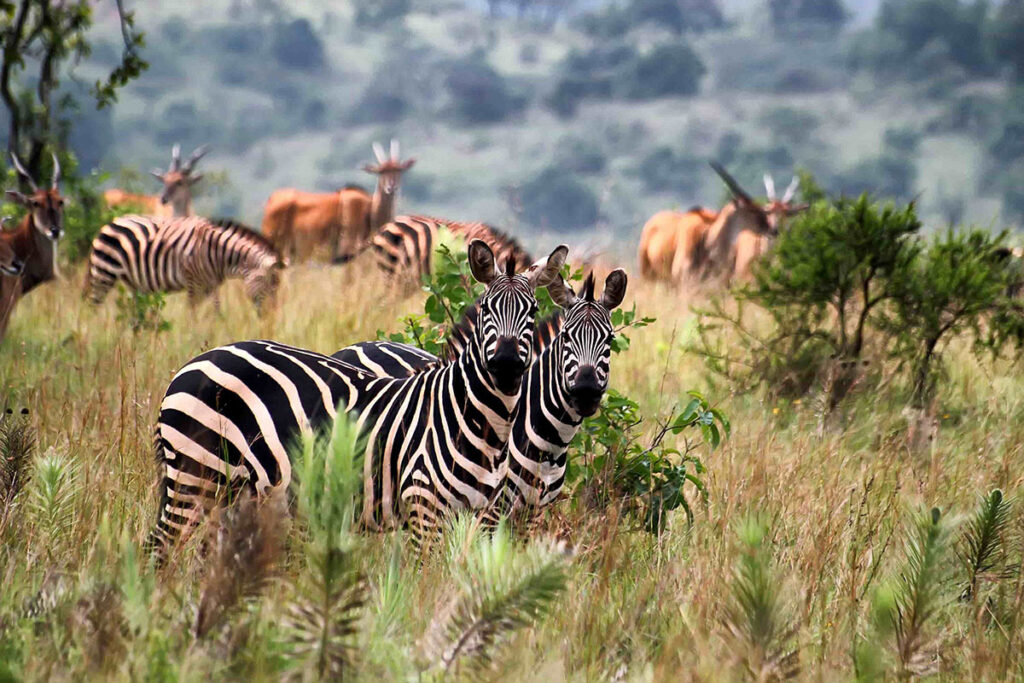
Akagera is Rwanda’s ultimate Big Five safari destination. Visitors can encounter lions stalking the northern plains, elephants grazing by lakeshores, rhinos browsing through bush thickets, leopards prowling the woodlands, and large herds of Cape buffalo crossing the grasslands. Plains game such as zebra, topi, impala, eland, roan antelope, and giraffe are common sights, while hippos and crocodiles dominate the aquatic zones. The park’s careful management ensures sustainable viewing and thriving populations.
Birdlife
Birdwatchers will find Akagera an absolute paradise. The park hosts more than 500 recorded bird species, including both East African savanna and Central African wetland varieties. Key species include the rare shoebill stork, papyrus gonolek, African fish eagle, grey crowned crane, and Ross’s turaco. Birdwatching can be enjoyed throughout the year, but the wet season (October to May) brings migratory birds and lush breeding habitats.
Reptiles and Aquatic Life
Akagera’s wetlands and lakes are alive with aquatic biodiversity. The park has one of Africa’s highest densities of hippos, alongside large Nile crocodiles that bask on the banks of Lake Ihema. Water monitors, frogs, and various fish species add to the aquatic richness, creating perfect conditions for boating and photography.
Top Activities and Things to Do in Akagera National Park
Akagera offers a wide variety of safari activities for travelers of all interests. From thrilling game drives and relaxing boat safaris to guided nature walks and cultural encounters, every visitor can discover a unique side of Rwanda’s wilderness. These activities not only enhance your safari experience but also contribute to conservation and local community development.
1. Game Drives in Akagera National Park
Game drives are the cornerstone of Akagera safaris and the best way to explore its varied ecosystems. Both guided and self-drive safaris are available. Early morning and late afternoon drives are ideal for spotting lions, leopards, elephants, and a variety of antelopes. The northern plains are particularly rewarding, offering open savannas teeming with wildlife. The southern woodlands provide more forested drives with scenic lake views. Visitors can hire a ranger guide for a deeper understanding of animal behavior and tracking.
2. Night Game Drives
Experience the magic of Akagera after dark on a night game drive. With spotlights and trained guides, these safaris reveal nocturnal species such as hyenas, civets, bushbabies, and occasionally leopards. Night drives start around 6:30 pm and last two to three hours. The cool air and haunting sounds of the savanna make it an unforgettable addition to any safari itinerary.
3. Boat Safari on Lake Ihema
A boat safari on Lake Ihema is one of Akagera’s most iconic experiences. The calm waters are home to hippos, crocodiles, and countless waterbirds. Visitors can spot African fish eagles swooping down for prey or flocks of cormorants sunning themselves on the banks. Boat trips depart several times daily, and the sunset cruise offers breathtaking views as golden light reflects off the lake surface. This is one of the top photography opportunities in Rwanda.
4. Birdwatching in Akagera
Birdwatching in Akagera is world-class. The park’s wetlands and savannas attract both resident and migratory species. Key birding zones include Lakes Ihema, Shakani, and Rwanyakizinga, as well as papyrus marshes along the Akagera River. Birders can look out for pelicans, African openbills, jacanas, herons, and the iconic shoebill stork. Guided birdwatching walks are available throughout the year, with the best conditions from November to April.
5. Community and Cultural Experiences
The communities surrounding Akagera play a vital role in protecting the park, and visitors can meet them through cultural visits. Learn traditional cattle-keeping practices, banana-beer brewing, and Rwandan dance performances. These tours offer a glimpse into local life and show how conservation benefits people. Community encounters can be arranged through park lodges or the visitor center.
6. Guided Nature Walks and Scenic Viewpoints
For those seeking a closer connection with nature, guided walks around the park’s southern section and near the headquarters reveal Akagera’s smaller wonders — butterflies, native plants, and bird calls. The Mutumba Hills provide hiking trails leading to panoramic viewpoints overlooking vast savannas and shimmering lakes. These areas are ideal for sunrise and sunset photography.
7. Fishing at Lake Shakani
Fishing at Lake Shakani offers a relaxing way to connect with Akagera’s waterside wildlife. Visitors can fish for tilapia and catfish while surrounded by hippos, birds, and peaceful scenery. Equipment and permits can be obtained at the park office. It’s a great activity for both experienced anglers and families.
8. Photography Safaris
Akagera’s landscape diversity provides excellent conditions for photography. Early morning light casts long shadows over the plains, while sunset reflections on the lakes create vivid backdrops. Photography safaris can be arranged through lodges with professional guides who know where to find the best subjects. From close-up portraits of elephants to wide shots of the Mutumba Ridge, Akagera offers every angle a photographer could wish for.
9. Camping and Bush Dining
For travelers who love the outdoors, Akagera offers safe and scenic campsites such as Shakani, Muyumbu, and Mutumba. Campers can enjoy starlit skies, campfire dinners, and the sounds of hippos grunting in the distance. Lodges also organize bush dinners and picnics in private wilderness areas for a touch of romance and adventure.
10. Conservation and Educational Tours
Akagera’s transformation makes it an excellent destination for learning about modern conservation. Educational tours offer behind-the-scenes insight into anti-poaching operations, drone surveillance, and animal monitoring projects. Visitors can learn about rhino tracking, ranger patrols, and community outreach initiatives that have made Akagera one of Africa’s safest and most sustainable parks.
11. Scenic Drives and Landscape Viewing
Akagera’s beauty lies not just in its animals but also in its landscapes. The Mutumba Ridge in the west offers spectacular views across lakes, valleys, and open plains. Scenic drives through the park’s hilltops are ideal for photography, birdwatching, and quiet reflection on Rwanda’s natural beauty.
12. Family-Friendly Safaris
Akagera is one of the most family-friendly safari destinations in Africa. The park is malaria-controlled, easily accessible, and offers comfortable lodges suitable for children. Families can enjoy short game drives, safe boat rides, and educational activities that teach kids about wildlife conservation. The park’s small size makes it easy to explore without long, tiring drives.
Suggested Safari Itineraries
- 1-Day Akagera Safari: Early morning departure from Kigali, half-day game drive, and afternoon boat safari on Lake Ihema before returning to Kigali.
- 2-Day Akagera Safari: Game drives, boat safari, and overnight stay inside the park; explore northern plains the following morning before exiting via the Nyagatare gate.
- 3-Day Akagera Adventure: Combine wildlife viewing, birdwatching, and community visits for a deeper experience.
Accommodation in Akagera National Park
Akagera offers accommodation options for all budgets. Luxury travelers can stay at Magashi Camp, overlooking Lake Rwanyakizinga, offering exclusive game drives and fine dining. Ruzizi Tented Lodge provides eco-friendly comfort by Lake Ihema, while Karenge Bush Camp offers seasonal, low-impact stays in the heart of nature. Akagera Game Lodge is a mid-range favorite near the southern gate, and basic campsites cater to budget travelers and backpackers.
Best Time to Visit Akagera National Park
Akagera is open year-round, but the dry season from June to September is best for game viewing when animals gather around water sources and the grass is short. The wet season from October to May transforms the park into a lush green paradise with abundant birdlife and beautiful scenery. Temperatures remain comfortable throughout the year, averaging between 20°C and 30°C.
Getting to Akagera National Park
Akagera is easily reached from Kigali via a 2.5-hour drive along the Rwamagana–Kayonza road. Visitors can enter through the southern gate and exit via the northern gate for a full traverse. Self-drivers, guided tours, and transfers are available, and helicopter charters can be arranged for high-end travelers seeking a scenic aerial route. Roads within the park are well maintained for both 4×4 and standard vehicles.
Conservation and Community Involvement
Akagera’s revival demonstrates the power of community-centered conservation. Since African Parks took over management, poaching has dropped to nearly zero thanks to a professional ranger force and modern surveillance. Revenue from tourism supports education, healthcare, and employment in surrounding villages. Local communities participate in conservation through tourism ventures and livestock management programs, ensuring Akagera’s benefits are shared equitably.
Key Species to Look Out For
- Lions and leopards in the northern plains.
- Black and white rhinos along woodland tracks.
- Large herds of elephants and buffaloes near lakeshores.
- Topis, zebras, and giraffes across the open grasslands.
- Hippos, crocodiles, and shoebill storks on Lake Ihema.
- Grey crowned cranes and papyrus gonoleks in wetland zones.
Frequently Asked Questions
Does Akagera have the Big Five?
Yes. Akagera is home to lions, leopards, rhinos, elephants, and buffaloes — making it Rwanda’s only Big Five safari park.
Is Akagera malaria-free?
No. Akagera’s low-altitude wetlands are not malaria-free, so visitors should take preventive measures and carry insect repellent.
How many bird species are found in Akagera?
Over 500 species have been recorded, making Akagera one of the best birdwatching destinations in East Africa.
How many days do you need for Akagera?
Two to three days are ideal to explore the park’s game drives, boat safaris, and birdwatching areas without rushing.
Can you visit Akagera from Kigali on a day trip?
Yes, the park is only about 2.5 hours from Kigali, making day trips possible, though staying overnight is recommended for a fuller experience.
Why Visit Akagera National Park
Akagera National Park offers one of Africa’s most complete safari experiences within a small, easily accessible area. It’s a place where visitors can track lions at dawn, glide past hippos on a boat safari by noon, and listen to the calls of night creatures under a star-filled sky. With its thriving wildlife, beautiful landscapes, and community-driven conservation model, Akagera represents Rwanda’s transformation into a premier eco-safari destination.
Conclusion
Akagera National Park is more than just Rwanda’s wildlife haven — it’s a living example of restoration and coexistence. From near destruction to flourishing success, the park now stands as one of Africa’s greatest conservation achievements. Whether you come for a Big Five safari, birdwatching adventure, or tranquil lakeside cruise, Akagera promises an experience filled with beauty, diversity, and inspiration.