
Andasibe-Mantadia National Park
Andasibe-Mantadia National Park – Madagascar’s Enchanted Rainforest of Lemurs and Orchids
Deep in Madagascar’s eastern highlands lies a mystical emerald world known as Andasibe-Mantadia National Park. Covered in lush rainforest, home to the haunting calls of the indri lemur, and rich with rare orchids, frogs, and chameleons, this park is a living showcase of Madagascar’s evolutionary wonders. Located just 140 kilometers east of Antananarivo, Andasibe-Mantadia is one of the country’s most accessible and rewarding wildlife parks. It offers unforgettable nature walks, close-up lemur encounters, and a chance to explore one of the most biodiverse ecosystems on the planet.
Key Facts and Figures
- Location: Eastern Madagascar, between Moramanga and Andasibe (Perinet region).
- Total Area: 155 km² (includes both Mantadia and Analamazaotra reserves).
- Established: 1989, as part of Madagascar’s rainforest conservation initiative.
- Altitude: 800–1,200 meters above sea level.
- Habitats: Humid lowland and montane rainforest, freshwater lakes, and river valleys.
- Main Species: Indri indri, Diademed sifaka, Parson’s chameleon, Madagascar tree boa, Golden Mantella frog, and over 100 bird species.
- Best Time to Visit: April to November (dry season).
Geography and Ecosystem
Andasibe-Mantadia National Park forms part of Madagascar’s dense eastern rainforest belt, a biodiversity hotspot stretching along the island’s escarpment facing the Indian Ocean. The park comprises two main sections: Analamazaotra Reserve (commonly called Perinet) and Mantadia National Park. While Analamazaotra is smaller, more accessible, and famous for its habituated indri lemurs, Mantadia covers vast, untouched primary rainforest that remains largely wild and pristine.
The park’s evergreen rainforest thrives on high rainfall exceeding 2,000 mm annually. The Sahatandra and Vohitra rivers meander through deep valleys, forming lush habitats for diverse plant and animal species. Thick canopies, tangled vines, and moss-covered trees create a fairy-tale atmosphere where countless endemic species have evolved in isolation. This is truly Madagascar’s living laboratory of evolution.
Biodiversity and Wildlife
Lemurs – The Soul of Andasibe
Andasibe-Mantadia is world-famous for its lemurs, especially the Indri indri — Madagascar’s largest living lemur. Standing up to one meter tall, the indri’s haunting, whale-like call resonates across the forest each morning, echoing up to two kilometers away. Watching a family of indris leap between trees or groom each other in the canopy is one of the most magical wildlife experiences in Madagascar. Unlike most lemurs, indris have no tail and live in small family groups, feeding on leaves, fruits, and flowers.
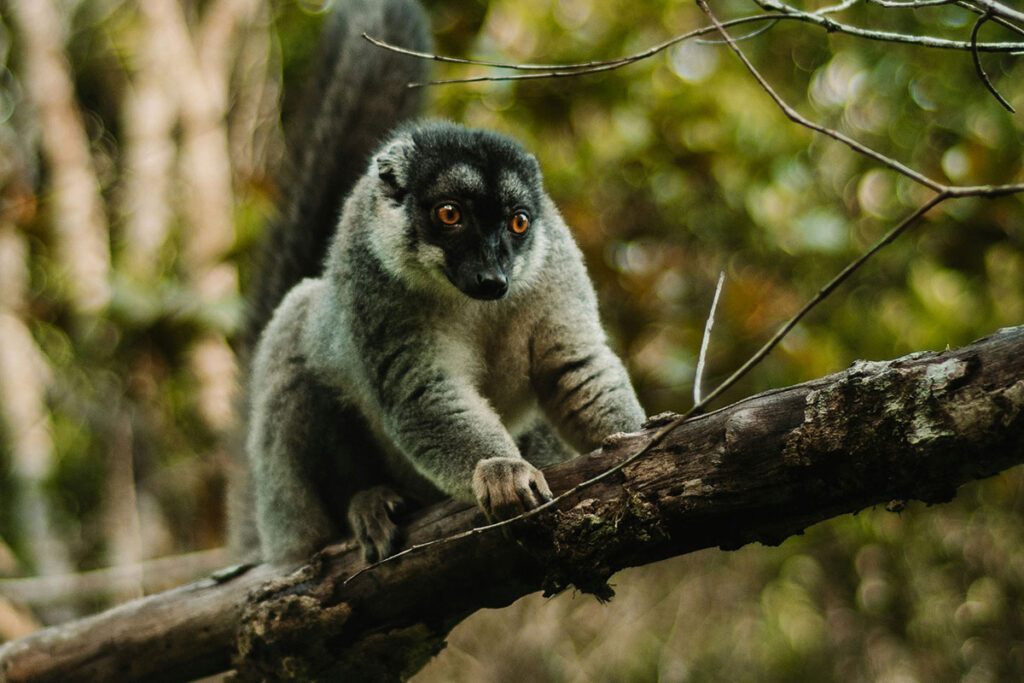
The park also hosts 13 other lemur species, including the graceful Diademed sifaka (nicknamed the “dancing lemur” for its elegant leaps), the Common brown lemur, and several nocturnal species like the Goodman’s mouse lemur and Eastern woolly sportive lemur. During guided night walks, visitors often spot their bright, reflective eyes glimmering in the dark.
Birdlife
For bird enthusiasts, Andasibe is a paradise. Over 110 bird species have been recorded, many of them endemic to Madagascar. Look out for the Madagascar blue pigeon, nuthatch vanga, velvet asity, Madagascar wagtail, and the striking crested ibis. Because the park spans both lowland and montane rainforest zones, it attracts a diverse range of birdlife, making it one of Madagascar’s premier birdwatching destinations.
Reptiles, Amphibians, and Invertebrates
Andasibe is equally renowned for its reptile and amphibian diversity. More than 50 reptile species inhabit the park, including the enormous Parson’s chameleon, leaf-tailed geckos that mimic tree bark, and the Madagascar tree boa. Over 80 amphibians thrive here, from tiny neon-green frogs to the iconic Golden Mantella — a brilliantly colored frog found only in this region.
Invertebrates add yet another dimension of wonder: shimmering comet moths (one of the largest moths in the world), vivid butterflies, and bizarre insects like the giraffe-necked weevil. The park’s micro-ecosystems are a dream for macro photographers and nature lovers alike.
Flora and Plant Life
Andasibe’s plant diversity is extraordinary, with over 1,200 plant species recorded. Towering rainforest trees, tree ferns, pandanus palms, and giant bamboos dominate the landscape. The park is also a haven for orchid enthusiasts — more than 100 orchid species bloom throughout the year, including the elegant Angraecum sesquipedale, known as Darwin’s orchid for its unique pollination story. Every walk here reveals new colors, textures, and plant forms thriving in the misty air.
Top Activities and Things to Do in Andasibe-Mantadia National Park
1. Guided Day Hikes and Lemur Tracking
Day hikes through Analamazaotra and Mantadia offer the best opportunities to see lemurs in their natural habitat. Experienced local guides follow the indri’s morning calls, leading visitors to family groups feeding high in the trees. The Indri 2 circuit and Sacred Waterfall trail are among the most popular routes, winding through lush forest filled with bird song, frogs, and colorful chameleons.
2. Night Walks for Nocturnal Wildlife
When darkness falls, the forest transforms. Guided night walks outside the park boundaries reveal a world of mouse lemurs, sleeping chameleons, and glowing insects. It’s one of the most fascinating experiences in Andasibe, offering a glimpse into the rainforest’s secret nightlife.
3. Explore Mantadia National Park (Primary Forest)
Located about 20 km north of Andasibe village, Mantadia National Park preserves untouched primary rainforest. It’s wilder and more remote, ideal for adventurous hikers. Trails like the Belakato and Tanikely circuits offer sightings of rare lemurs such as the Black-and-white ruffed lemur and Red-bellied lemur. Expect more challenging terrain but rewarding solitude and pristine scenery.
4. Birdwatching Excursions
Birdwatching in Andasibe-Mantadia National Park is best at sunrise. Early-morning tours reveal endemic vangas, ground rollers, couas, and nectar-loving sunbirds. With the guidance of local birding experts, enthusiasts can explore both Analamazaotra’s lowland forest and Mantadia’s higher elevations, maximizing their chances of rare sightings.
5. Photography Safaris
Soft rainforest light, misty mornings, and vibrant wildlife make Andasibe a paradise for photographers. Capture the soulful gaze of an indri, a chameleon’s curling tongue, or orchids glistening after rain. Macro and telephoto lenses are highly recommended to capture the fine details of Madagascar’s biodiversity.
6. Visit the Analamazaotra Reserve
This section, closest to Andasibe village, is perfect for families and first-time visitors. It features well-marked trails, easier terrain, and lemurs that are accustomed to human presence, allowing excellent photographic opportunities. Bamboo lemurs, indris, and chameleons can all be spotted within minutes of entering the forest.
7. Discover Mantadia Waterfalls and Natural Pools
For those venturing deeper into Mantadia, a series of forest waterfalls and crystal-clear pools provide tranquil resting points during hikes. These serene natural spots are surrounded by giant trees, ferns, and orchids — a perfect escape for nature lovers and photographers alike.
8. Experience Malagasy Culture and Local Communities
Beyond its wildlife, Andasibe offers meaningful cultural encounters. Visit nearby villages such as Andasibe and Andranomay to experience Betsimisaraka and Bezanozano traditions. Community-run cooperatives sell handmade crafts, woven baskets, and local produce. Participating in these experiences supports sustainable livelihoods and conservation-friendly tourism.
9. Visit Vakona Private Reserve
Just a short drive from the park, Vakona Reserve offers close-up encounters with habituated lemurs on small forest islands. You can observe brown lemurs and bamboo lemurs that often jump onto visitors’ shoulders. The reserve also includes a crocodile park and canoe excursions, making it a fun and educational side trip.
10. Conservation and Reforestation Projects
Visitors can join conservation tours with local NGOs such as Association Mitsinjo. These programs include tree-planting, nursery visits, and educational sessions on reforestation and amphibian protection. Participating in these initiatives allows travelers to contribute directly to the park’s sustainability.
Accommodation and Facilities
Accommodation near Andasibe ranges from eco-luxury lodges to cozy bungalows and community guesthouses. Lodges such as Vakona Forest Lodge and Mantadia Lodge offer comfortable rooms, local cuisine, and guided tours. Budget travelers will find friendly guesthouses in Andasibe village. Camping is permitted in designated areas for those who prefer a rustic rainforest experience.
Best Time to Visit Andasibe-Mantadia National Park
The dry season (April–November) is the best time for hiking and lemur watching, with clear skies and easier trails. The wet season (December–March) brings heavy rains but transforms the forest into a lush, vibrant paradise, ideal for orchid lovers and amphibian enthusiasts. Temperatures are mild year-round, ranging between 15°C and 25°C.
Getting There and Accessibility
Andasibe-Mantadia National Park is accessible via National Road RN2 from Antananarivo — a scenic 3 to 4-hour drive through villages, rice paddies, and forested hills. Shared taxis (taxi-brousse) operate daily to Moramanga, with onward connections to Andasibe village. Private 4×4 transfers can also be arranged. The park entrance is located near Andasibe village, where guides and permits are organized through the visitor center.
Conservation and Community Efforts
Andasibe faces threats from deforestation and illegal logging, but local conservation programs have achieved inspiring success. Association Mitsinjo, a community-based NGO, manages reforestation and amphibian research, while eco-tourism provides jobs and education for locals. By visiting responsibly, travelers actively support habitat protection and sustainable livelihoods for nearby communities.
Key Species to Look Out For
- Indri indri – the park’s iconic lemur, known for its haunting call.
- Diademed sifaka – a stunning golden lemur found in Mantadia.
- Parson’s chameleon – one of the world’s largest chameleons.
- Golden Mantella – a brilliantly colored frog endemic to Madagascar.
- Madagascar blue pigeon and velvet asity – endemic forest birds.
- Giraffe-necked weevil – a rare insect unique to Andasibe’s rainforest.
Travel Tips for Visiting Andasibe-Mantadia National Park
- Wear lightweight, waterproof clothing and sturdy shoes for damp trails.
- Bring binoculars, insect repellent, and a rain poncho for comfort.
- Hire a certified local guide — it’s mandatory and enhances your experience.
- Night walks take place outside the main park and can be arranged easily.
- Respect wildlife and avoid touching or feeding lemurs.
Why Visit Andasibe-Mantadia National Park
Few places on Earth offer such intimacy with nature as Andasibe-Mantadia. The park is a sanctuary where ancient rainforests echo with lemur songs, orchids bloom in the mist, and chameleons blend seamlessly with moss-covered trunks. Visitors leave not only with breathtaking photos but also with a deeper appreciation for Madagascar’s unique biodiversity and the dedicated communities protecting it.
Conclusion
Andasibe-Mantadia National Park is the beating heart of Madagascar’s natural world — a place where life thrives in countless forms, and every sound tells a story. From the haunting calls of the indri at dawn to the chorus of frogs at night, this rainforest radiates magic. For wildlife enthusiasts, photographers, and eco-travelers, Andasibe-Mantadia isn’t just a destination — it’s an awakening to the beauty, mystery, and resilience of nature itself.