
Bale Mountains National Park
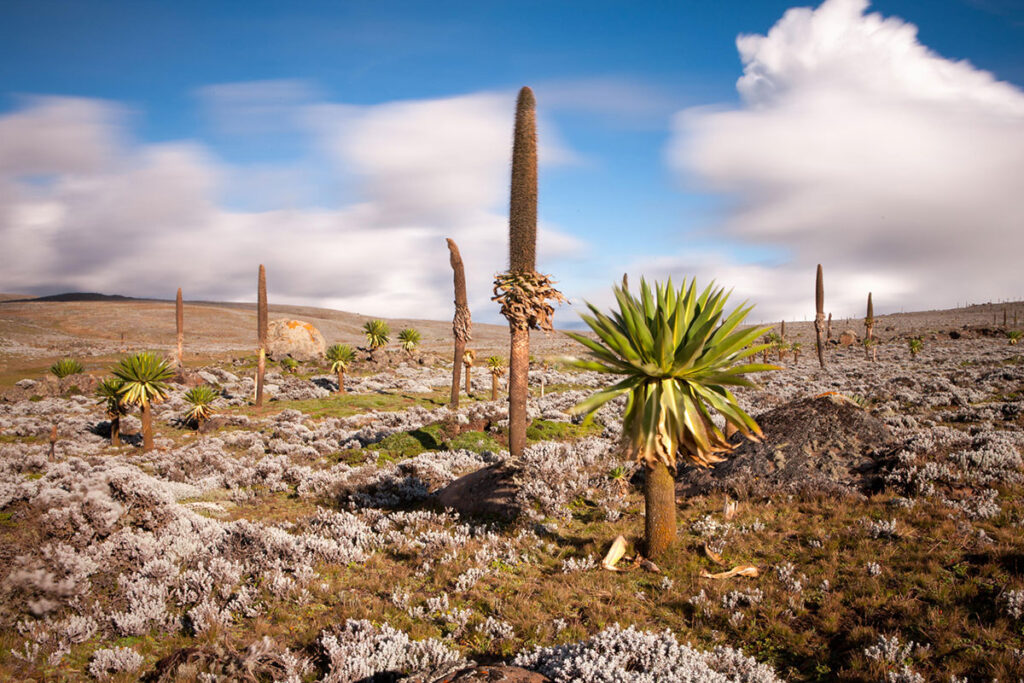
Bale Mountains National Park – Ethiopia’s High-Altitude Wonderland of Wolves, Forests, and Endless Horizons
Nestled in Ethiopia’s southeastern highlands, Bale Mountains National Park is a breathtaking landscape of glacial peaks, rolling moorlands, misty forests, and sparkling alpine lakes. Covering more than 2,150 square kilometers, it is Ethiopia’s ultimate wilderness — a sanctuary for rare species, striking scenery, and high-altitude adventure. Home to the endangered Ethiopian wolf, the elusive mountain nyala, and the enchanting Harenna Forest, Bale is a living testament to Africa’s ecological diversity and beauty.
Key Facts and Figures
- Location: Oromia Region, southeastern Ethiopia, about 400 km southeast of Addis Ababa.
- Established: 1970; officially recognized as a UNESCO World Heritage Site in 2023.
- Area: Approximately 2,150 km².
- Altitude: Ranges from 1,500 meters to 4,377 meters at Mount Tulu Dimtu (Ethiopia’s second-highest peak).
- Main Habitats: Afro-alpine moorlands, Sanetti Plateau, Harenna Forest, montane grasslands, bamboo thickets, and river valleys.
- Main Species: Ethiopian wolf, mountain nyala, Bale monkey, Menelik’s bushbuck, giant molerat, blue-winged goose, Abyssinian catbird.
- Climate: Cool alpine conditions; temperatures drop below freezing at night on the plateau.
- Best Time to Visit: October to March (dry season) for trekking and wildlife viewing.
Geography, Hydrology, and Ecosystem
Bale Mountains National Park lies within the southeastern Ethiopian highlands and is divided into distinct ecological zones that vary dramatically with altitude. The park’s heart is the Sanetti Plateau — a vast afro-alpine expanse sitting above 3,800 meters, dotted with glacial lakes and giant lobelias. The plateau is Ethiopia’s most extensive high-altitude ecosystem and one of the few places in Africa where frost and ice form regularly.
The park serves as a major water catchment area for eastern Africa. Five important rivers — the Wabi Shebelle, Web, Welmel, Dumal, and Ganale — originate from the Bale highlands, supplying water to millions of people downstream and sustaining agriculture in both Ethiopia and Somalia. These wetlands and headwaters make Bale Mountains one of Africa’s most vital “water towers.”
Wildlife and Biodiversity
Ethiopian Wolf – Africa’s Rarest Carnivore
Bale Mountains is the last stronghold of the Ethiopian wolf, the world’s rarest canid and Africa’s most endangered carnivore. Only about 450 remain, with over half found on the Sanetti Plateau. These elegant, red-coated predators rely on the park’s giant molerat population, making Bale essential for their survival. Early morning drives across the plateau offer the best chance to observe them hunting among the heather and lobelias.
Mountain Nyala and Other Mammals
The park shelters the endemic mountain nyala, a graceful antelope found only in Ethiopia. Other mammals include the Bale monkey, Menelik’s bushbuck, bohor reedbuck, leopard, warthog, and hyena. In the Harenna Forest, visitors may even glimpse rare black-maned lions and forest-dwelling leopards — species adapted to Ethiopia’s last great tropical forest.
Birdlife
With more than 280 recorded bird species, Bale is one of Africa’s top birding destinations. It hosts 16 species found only in Ethiopia, including the blue-winged goose, wattled ibis, Abyssinian catbird, and spot-breasted lapwing. Migratory birds visit seasonally from Europe and Asia, enriching the park’s avian diversity. Birdwatchers find paradise around the Harenna Forest, Sanetti moorlands, and alpine lakes.
Flora and Vegetation
More than 1,300 plant species have been recorded, including over 160 endemics. The afro-alpine zone features giant lobelias and heather moors, while the montane forest zone supports juniper, hagenia, and bamboo. The southern Harenna Forest is the largest cloud forest in Ethiopia and harbors wild Arabica coffee, aromatic herbs, ferns, and orchids. It is also a hotspot for newly discovered species, from frogs to butterflies.
Main Attractions and Things to Do
1. Trekking Across the Sanetti Plateau
Trekking on the Sanetti Plateau is a once-in-a-lifetime experience. Stretching above the clouds, the trail offers views of glacial valleys, alpine lakes, and volcanic peaks. Hikers may spot Ethiopian wolves, mountain nyalas, and giant molerats. The climb to Mount Tulu Dimtu (4,377 m) rewards visitors with panoramic views stretching to the Harenna Forest below.
2. Exploring Harenna Forest
The Harenna Forest feels like another world — humid, green, and full of mystery. Visitors can hike among moss-draped trees, bamboo groves, and coffee plants growing wild. It’s home to forest hogs, colobus monkeys, bushbuck, and even lions adapted to the forest’s dim light. The air here is rich with birdsong and the scent of wild coffee blossoms.
3. Wildlife Viewing and Birdwatching
Guided drives and walks in the Dinsho area reveal mountain nyalas, reedbuck, and warthogs grazing peacefully on the open plains. Birders will find treasures such as the wattled crane, Abyssinian longclaw, and endemic blue-winged goose. The variety of habitats allows for exceptional photography opportunities throughout the day.
4. Harenna Forest Coffee and Honey Experiences
Local Oromo communities harvest wild forest coffee and honey sustainably in the Harenna region. Visitors can learn about traditional coffee cultivation, taste freshly roasted beans brewed over a wood fire, and observe how honey is collected from forest hives using age-old methods. These community tours directly support local livelihoods and conservation efforts.
5. Multi-Day Trekking Routes
Bale offers Ethiopia’s best trekking circuits:
- Dinsho–Sodota–Weyb Valley–Rira Circuit (5–6 days): The classic trail combining alpine moorlands, forest, and valley scenery.
- Harenna Forest Trail (2–3 days): A descent from the plateau into lush tropical forest zones.
- Day Hikes: Habera Waterfall and Geysay Valley from Dinsho for shorter adventures.
6. Photography and Scenic Drives
From sunrise over Sanetti’s frosty plains to misty forest silhouettes, Bale Mountains offers scenes that photographers dream of. The road from Dinsho to Rira via Goba passes some of the park’s most photogenic spots. Dawn and dusk light transform the moorlands into shades of gold and blue.
7. Cultural Encounters with the Oromo People
The Bale highlands are home to the Oromo people, whose traditions of pastoralism and respect for nature have shaped the park’s character. Visitors can join local guides for cultural walks, traditional music performances, or village visits to learn about daily life and the harmony between people and the land.
Accommodation and Facilities
Options range from luxury eco-lodges to simple community-run campsites:
- Bale Mountain Lodge: A luxury eco-lodge deep in the Harenna Forest, perfect for relaxation and birdwatching.
- Dinsho Guesthouse: Convenient for park entry, offering basic comfort and close wildlife encounters.
- Community Camps: Sodota and Rira offer camping facilities managed by local cooperatives.
All accommodations emphasize sustainability and support local employment.
Getting There
Bale Mountains National Park is accessible by road from Addis Ababa via Shashamane and Robe — about 7–8 hours by car. Domestic flights from Addis to Robe or Goba airports reduce travel time to just over an hour. From Robe, the park headquarters at Dinsho is a short drive away. Roads within the park can be rough, especially in the rainy season, so 4×4 vehicles are recommended.
Climate and Best Time to Visit
The park experiences two main seasons: the dry season (October–March), ideal for trekking, and the wet season (June–September), when the landscape turns lush and birdlife peaks. Temperatures range between 5°C and 20°C, but nights on the Sanetti Plateau can drop below freezing. Visitors should dress in layers and be prepared for altitude changes.
Conservation and Community Involvement
Bale Mountains National Park is co-managed by the Frankfurt Zoological Society (FZS) and the Ethiopian Wildlife Conservation Authority (EWCA). Together, they protect critical habitats, monitor wildlife populations, and empower local communities through eco-tourism, education, and ranger employment. Reforestation projects and anti-poaching units have improved the park’s resilience and biodiversity health. In 2023, UNESCO recognized Bale for its global ecological significance and commitment to community-led conservation.
Park Fees and Visitor Information
Entrance fees are approximately USD 10 per day for international visitors, payable at the Dinsho headquarters. Local guides are required for treks and can be arranged on-site. Camping permits, porters, and mule services are available for multi-day hikes.
Travel Tips for Visitors
- Pack warm clothing, rain gear, and hiking boots — temperatures drop sharply at night.
- Hire local guides — they enhance safety, interpretation, and support the community.
- Carry sufficient cash; ATMs are limited outside major towns.
- Bring binoculars and a zoom lens for birding and wildlife photography.
- Stay hydrated and pace yourself to adjust to altitude changes.
Why Visit Bale Mountains National Park
Bale Mountains is a world apart — where Ethiopia’s highest skies meet its deepest forests. Whether you’re tracking wolves on the Sanetti Plateau, sipping coffee in the Harenna Forest, or trekking among waterfalls and wildflowers, every moment feels timeless. For eco-travelers, nature lovers, and photographers, Bale offers one of the last truly wild and pristine landscapes left in Africa.
Conclusion
Bale Mountains National Park embodies Ethiopia’s wild heart — a sanctuary of life, beauty, and ecological wonder. Its unique blend of alpine wilderness, cultural heritage, and wildlife endemism makes it one of Africa’s most extraordinary destinations. To explore Bale is to step into a world untouched by time, where every sunrise reveals the pure spirit of the Ethiopian highlands.