
Ankarafantsika National Park
Ankarafantsika National Park – Madagascar’s Hidden Treasure of Lakes, Lemurs, and Baobabs
Set in northwestern Madagascar, Ankarafantsika National Park is a landscape of stunning diversity — a place where shimmering lakes, red sandstone canyons, and ancient dry forests create one of the most captivating ecosystems in Africa. Known as “the land of birds and lakes,” this 135,000-hectare park is a paradise for birdwatchers, photographers, and nature lovers. It’s home to some of Madagascar’s most iconic wildlife, including the Coquerel’s sifaka, Madagascar fish eagle, and the elusive Van Dam’s vanga.
Located about three hours from Mahajanga and eight hours from Antananarivo, Ankarafantsika National Park is one of Madagascar’s most accessible wildlife destinations — ideal for travelers who want an authentic, off-the-beaten-path adventure filled with wildlife, nature, and culture.
Overview and Key Facts
- Location: Boeny Region, northwestern Madagascar (115 km from Mahajanga, 450 km from Antananarivo)
- Size: 135,000 hectares (1,350 km²)
- Established: First protected in 1927; declared a National Park in 2002
- Main Habitats: Dry deciduous forest, lakes, savanna woodland, and sandstone canyons
- Best Known For: Lemurs, endemic birds, Lake Ravelobe, Lavaka Canyon, and sacred Sakalava heritage
- Best Time to Visit: April to November (dry season)
The Landscape and Ecosystem
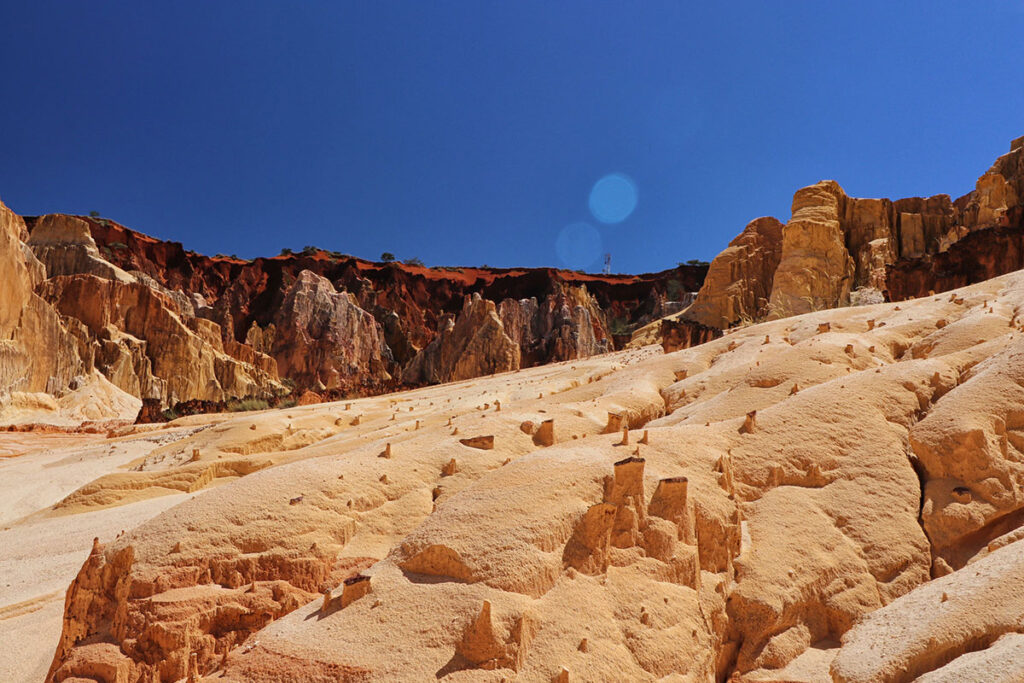
Ankarafantsika’s landscape is one of contrast and beauty. The park sits on a vast sandstone plateau sculpted by erosion into deep red canyons called lavaka. These natural formations glow gold and crimson under the evening sun — a dream for photographers. Between the cliffs lie rolling savannas, pockets of lush forest, and freshwater lakes that act as vital oases for wildlife.
The most famous of these, Lake Ravelobe, is both an ecological and cultural centerpiece. Its calm blue waters support crocodiles, fish, and dozens of bird species. For the local Sakalava people, it is a sacred site protected by tradition and taboos — legends say ancestral spirits guard its depths. These beliefs, combined with park conservation efforts, have helped preserve this delicate ecosystem for generations.
Wildlife and Biodiversity
Ankarafantsika National Park is a biodiversity hotspot that shelters hundreds of species found nowhere else on Earth. With its mix of dry forest and wetland habitats, it offers an extraordinary chance to see Madagascar’s unique flora and fauna in one place.
Lemurs and Other Mammals
The park’s star attraction is the Coquerel’s sifaka, a striking white-and-golden lemur famous for its graceful sideways “dance.” These charismatic primates are easy to spot near the park entrance or in forest clearings. Other lemurs include the mongoose lemur, Milne-Edwards’ sportive lemur, and the golden-brown mouse lemur, one of the smallest primates in the world. Night walks reveal fat-tailed dwarf lemurs and the elusive fossa, Madagascar’s top predator.
Birds of Ankarafantsika
With over 130 species, Ankarafantsika is one of Madagascar’s best birding destinations. Birdwatchers flock here to see the Madagascar fish eagle, one of the rarest birds of prey on the planet, and the Van Dam’s vanga, an endangered songbird found only in this region. Other favorites include couas, herons, bee-eaters, and kingfishers that thrive around the lakes and forest edges. Early morning is the best time for birdwatching when the forest fills with calls and light filters through the trees.
Reptiles, Amphibians, and Insects
Ankarafantsika is also rich in reptiles and amphibians. You might spot rhinoceros chameleons, Oustalet’s chameleons, leaf-tailed geckos, and Madagascar ground boas. Nile crocodiles inhabit Lake Ravelobe but are best viewed from guided boats. During the rainy season, frogs and toads emerge in abundance, and butterflies, beetles, and dragonflies bring splashes of color to the trails.
Top Things to Do in Ankarafantsika National Park
1. Explore Lake Ravelobe
Take a guided walk or canoe ride on Lake Ravelobe — a peaceful spot for birdwatching, photography, and learning about local legends. The lake reflects the surrounding forest like glass, making it perfect for sunrise and sunset photos. You may also spot crocodiles basking on the banks and herons wading along the edges.
2. Hike the Lavaka Canyon (Gorges of Ankarokaroka)
Adventure seekers should not miss the Lavaka Canyon, a natural wonder of eroded red cliffs and ravines. Guided hikes lead to scenic viewpoints overlooking the forest canopy and deep gullies. Visit in the afternoon to capture the canyon’s warm colors glowing in the golden light.
3. Go Birdwatching
Ankarafantsika is a must-visit for birding tours in Madagascar. Trails such as the Ravelobe Circuit and Retendrika Trail provide sightings of vangas, couas, eagles, and waterfowl. Bring binoculars and a long-lens camera to catch the intricate beauty of Madagascar’s endemic birds.
4. Guided Forest Walks
Join a ranger-led walk through the dry deciduous forest to learn about endemic plants, lemur behavior, and medicinal uses of native species. Night walks offer the chance to spot mouse lemurs, owls, and chameleons glowing under torchlight — a highlight for nature enthusiasts.
5. Visit Local Sakalava Villages
The park is surrounded by Sakalava villages whose residents play a key role in conservation. Visiting these communities offers a glimpse into rural life — from traditional weaving and beekeeping to cooking local dishes. Purchasing handmade crafts or honey directly supports eco-tourism and sustainable livelihoods.
6. Boat Safari on the Lakes
A boat trip across Lake Ravelobe or Lake Ankomakoma provides a tranquil way to see crocodiles, ducks, and kingfishers. The still waters reflect the forest canopy, and the gentle silence is only broken by the songs of birds — a serene experience for couples and photographers.
7. Stop by the Interpretation Center
The Interpretation Center at Ampijoroa offers fascinating exhibits on the park’s wildlife, conservation projects, and community initiatives. It’s an excellent first stop to understand Ankarafantsika’s ecology before heading out on the trails.
Getting There and Where to Stay
Ankarafantsika is easily accessible by road. From Mahajanga, it’s a three-hour drive along Route Nationale 4, while from Antananarivo the journey takes around eight to nine hours. Shared taxis (taxi-brousse) stop at Ampijoroa village, right near the park entrance, or you can hire a private 4×4 for added comfort.
Inside the park, the Gîte d’Ampijoroa and Blue Vanga Lodge offer comfortable bungalows with lake views, local cuisine, and guided excursions. For budget travelers, basic campsites and eco-bungalows are available near the visitor center, offering a peaceful night under the stars.
Best Time to Visit Ankarafantsika National Park
The park is open year-round, but the dry season from April to November is best for hiking and wildlife viewing. Animals gather around lakes, trails are easier to walk, and temperatures are mild. During the wet season (December to March), the park turns lush and green, offering vibrant scenery and excellent bird activity — perfect for photographers.
Conservation and Community Involvement
Ankarafantsika National Park is a leading example of community-based conservation in Madagascar. Local communities work hand-in-hand with Madagascar National Parks to manage forests, prevent fires, and restore degraded areas. Eco-tourism plays a vital role — park fees support schools, healthcare, and sustainable farming projects in nearby villages.
Thanks to these efforts, wildlife numbers have stabilized, and reforestation programs are slowly reviving the dry forest. When you visit Ankarafantsika, you directly contribute to this cycle of protection and renewal.
Travel and Photography Tips
- Best lighting for photos: sunrise and sunset at Lake Ravelobe or Lavaka Canyon.
- Bring a long-lens camera (200 mm +) for bird and lemur photography.
- Wear light, neutral clothing and comfortable shoes for forest hikes.
- Carry drinking water, sunscreen, and insect repellent — shade can be limited.
- Book guided night walks for a chance to see mouse lemurs and glowing chameleons.
Frequently Asked Questions
Is Ankarafantsika worth visiting?
Yes — it’s one of Madagascar’s most rewarding national parks, combining wildlife, lakes, culture, and stunning scenery in one destination.
Can I see lemurs easily?
Absolutely. Coquerel’s sifakas are common near the trails, and mongoose lemurs and mouse lemurs can be seen on guided walks.
How many days should I spend?
Plan at least two to three days to enjoy forest walks, lake tours, and village visits without rushing.
Is it safe to visit?
Yes. The park is well-managed, family-friendly, and guided by professional rangers. All activities follow eco-tourism standards.
Why Visit Ankarafantsika National Park
Ankarafantsika is a destination that captures the true spirit of Madagascar — wild, warm, and full of wonder. From the dancing sifakas in the trees to the mirrored calm of Lake Ravelobe, every experience connects you to nature in its purest form. Whether you’re a birder, photographer, or explorer at heart, this park promises unforgettable encounters and genuine cultural connection.
Conclusion
Ankarafantsika National Park stands as a symbol of Madagascar’s natural and cultural heritage — a rare combination of wildlife sanctuary and community-driven conservation success. With its breathtaking canyons, sacred lakes, and thriving lemur populations, it remains one of the best places to experience the magic of Madagascar’s dry forest ecosystem. For travelers seeking both adventure and tranquility, Ankarafantsika is truly a hidden gem worth exploring.