
Benoue National Park
Benoue National Park – Cameroon’s Untamed Savannah Wilderness Along the Benue River
Benoue National Park is one of northern Cameroon’s most important wildlife areas and a flagship destination for a truly wild savannah safari in Cameroon. Stretching along the banks of the Benue River and forming part of the UNESCO-designated Benoue Biosphere Reserve, this park protects classic woodland savanna, riverine forests, rocky outcrops, and wide plains teeming with wildlife. With its lions, hippos, elephants, rare antelopes, and rich birdlife, Benoue National Park offers an authentic, off-the-beaten-path safari experience far from the crowds of more famous African parks.
Overview and Location of Benoue National Park
Benoue National Park is located in northern Cameroon, between the towns of Garoua and Ngaoundéré in the country’s North Region. Covering around 1,800 km² of protected land, it follows a long stretch of the Benue River, which forms much of the park’s eastern boundary and acts as its lifeline during the dry season. The park was originally established as a faunal reserve in 1932 and was upgraded to national park status in 1968. It later became part of the Benoue Biosphere Reserve under UNESCO, recognizing its global ecological value and the importance of conserving both wildlife and traditional livelihoods in the wider landscape.
Key Facts and Figures About Benoue National Park
- Country: Cameroon
- Region: North Region, between Garoua and Ngaoundéré
- Size: Approximately 1,800 km² of core protected area
- Conservation Status: National Park and UNESCO Biosphere Reserve
- Year Established: 1968 (faunal reserve since 1932)
- Main Habitats: Woodland savanna, riverine forest, grass plains, rocky hills and outcrops
- Main River: Benue River and its associated wetlands
- Key Wildlife: Lions, hippos, elephants, buffalo, Kordofan giraffe, roan and kob antelopes, rich birdlife
- Best Time to Visit: December to March (dry season for game viewing)
Landscape, Ecosystem and Climate
Benoue National Park lies within the Bénoué savanna belt, a humid woodland savanna zone that stretches across northern Cameroon. Its landscape is dominated by gently undulating plains dotted with acacia and combretum trees, interspersed with patches of riverine forest along the Benue and its tributaries. The park’s altitude ranges roughly from 250 to 700 meters above sea level, with higher ground forming rocky hills and granite inselbergs that break up the flat plains and provide scenic viewpoints.
The Benue River is the park’s defining natural feature. During the long dry season, wildlife from all corners of the park and surrounding hunting zones move towards the river and its pools to drink, bathe, and graze along the green banks. In the rainy season, the river swells, side channels fill, and the savanna transforms into a lush green landscape that supports breeding migratory birds and a burst of plant growth.
Benoue has a marked seasonal climate:
- Dry season (November–April): Hot and dusty, with thinning vegetation. Wildlife concentrates around the river, making this the best time for a Benoue National Park safari.
- Wet season (May–October): Green and cooler, with heavier rain showers. Birdlife peaks and the park feels more remote and wild, but some tracks become challenging to drive.
Wildlife in Benoue National Park
Benoue National Park is known for its large mammals, predators and an impressive variety of antelope species. While wildlife densities are not as high as in some East or Southern African parks, sightings here feel more “old Africa” — wild, remote, and often without another vehicle in sight. The Benue River is especially rich in wildlife during the dry months and is the focal point of most game-viewing activities.
Mammals and Signature Species
Benoue is particularly renowned for its lions and hippos, but many other species thrive in its mosaic of savanna and riverine habitats. Among the key mammals you can find in Benoue National Park are:
- Lions: The park is one of Cameroon’s strongholds for savanna lions. These lions are relatively accustomed to vehicles, offering excellent photographic opportunities when found resting near the river or following antelope herds.
- Hippos: Large pods of hippos inhabit the Benue River, especially near major pools and bends. Their grunts and snorts are part of the soundtrack of any night spent near the river.
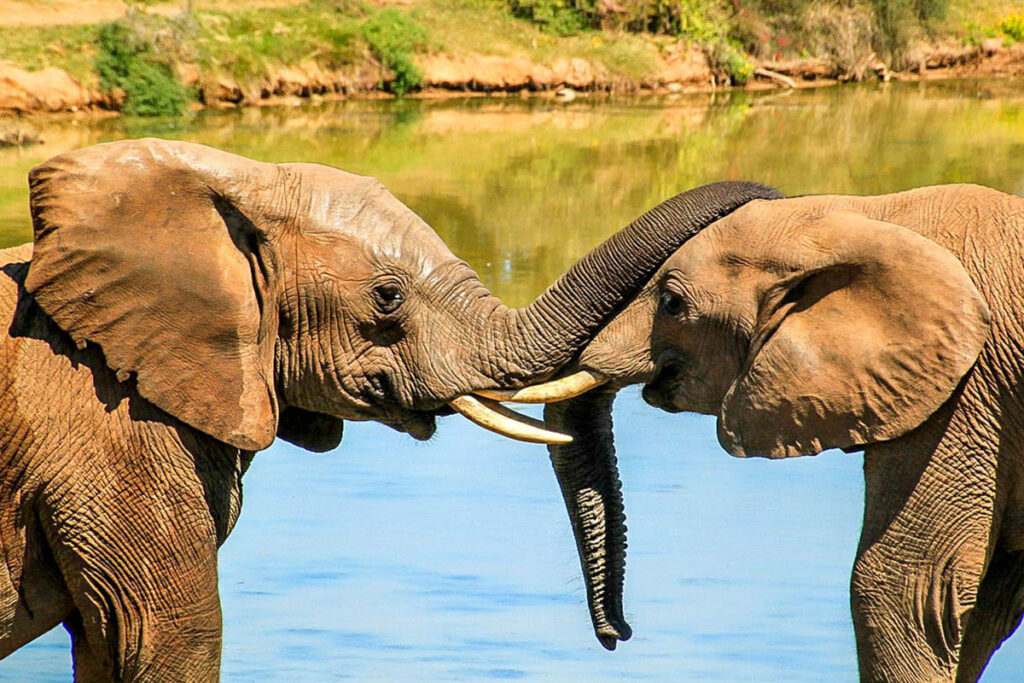
- Elephants: Small to medium-sized herds move between wooded areas and riverine forests. They are more commonly seen in the dry season as they descend to the river to drink.
- Buffalo: Both savanna and forest buffalo occur here, often forming large herds that graze on the plains and seek refuge in dense thickets during the heat of the day.
- Kordofan Giraffe: The park lies within the range of the rare Kordofan giraffe, a highly threatened subspecies with only a few strongholds left in Central Africa.
- Antelopes: Benoue is rich in antelope, including kob, hartebeest, waterbuck, bushbuck, roan antelope, oribi and sometimes Lord Derby’s eland in the wider landscape.
- Primates: Olive baboons, patas monkeys, and vervet monkeys are frequently seen around woodland edges and riverine trees.
Smaller carnivores such as spotted hyenas, civets, mongooses, and jackals also roam the park. Leopards are present but elusive, most active at night in rocky areas and dense bush.
Birdlife in Benoue
Benoue National Park is an Important Bird Area (IBA) with more than 300 recorded bird species. The mix of river, open woodland, grassland and gallery forest creates prime birding habitats. Birdwatchers can look out for:
- Waterbirds such as Egyptian geese, spur-winged geese, herons and storks along the riverbanks
- Kingfishers including pied and giant kingfisher hunting in pools and rapids
- Raptors such as bateleurs, vultures, tawny eagles and secretary birds gliding over the plains
- Colourful species like bee-eaters, rollers, hornbills and various weavers during the green season
During the dry months, exposed sandbanks on the Benue provide perches and nesting spots for waders, plovers and other waterbirds, making the river a hotspot for bird photography.
Main Attractions and Things to Do in Benoue National Park
1. Classic Game Drives
Game drives are the heart of any safari in Benoue National Park. Rough tracks lead through open savanna, patches of woodland and down to the river. Early morning drives are ideal for spotting predators returning from the night’s hunt, while late afternoon excursions capture warm golden light across the plains. Compared to more developed safari destinations, Benoue feels wild and uncrowded — a major attraction for serious wildlife enthusiasts and photographers.
2. Riverfront Wildlife Viewing and Hippo Watching
The Benue River is the park’s main wildlife magnet. Many camps and viewpoints overlook the water, allowing you to watch hippo pods, crocodiles, drinking antelopes and birdlife from a safe distance. Spending a few hours simply observing the river at dawn or dusk often reveals more stories than a long drive — from elephants quietly emerging from the trees to fish-eagles calling from high branches.
3. Birdwatching Safaris
Benoue is an excellent destination for birdwatching in Cameroon, especially during and just after the rainy season when migratory birds arrive and many species breed. Birding can be done from vehicles, on foot near the river and around camp areas. With patience and a good guide, it’s possible to see a wide range of raptors, waterbirds and savanna specialists in a single visit.
4. Nature Walks and Ranger-Guided Activities
In designated safe zones near main camps and ranger posts, guided nature walks offer a closer look at the park’s smaller wonders. You can learn to identify animal tracks, examine termite mounds, discover medicinal plants used by local communities, and observe reptiles, insects and smaller mammals that are easily overlooked on drives. These walks are usually accompanied by rangers for safety and interpretation.
5. Cultural Experiences Around Benoue
The wider Benoue landscape is home to Fulani (Peul), Mboum and other communities whose lives are closely tied to cattle herding, seasonal farming and river resources. Depending on conditions and local arrangements, visitors may be able to visit nearby villages to learn about traditional architecture, music, crafts and pastoral culture. These encounters help explain how people have adapted to life in the Sudano–Sahelian zone and how community involvement is key to conserving Benoue National Park.
6. Landscape and Photography
Benoue’s scenery is particularly photogenic in the early morning and late afternoon. Mist can rise from the river at dawn, creating a soft, atmospheric light, while evenings often provide dramatic silhouettes of hippos, giraffes and acacia trees against glowing skies. The granite outcrops and rocky ridges add depth to landscape shots and highlight the park’s rugged character.
Accommodation and Facilities in Benoue National Park
Tourism infrastructure in Benoue National Park is modest compared to more famous safari destinations, which is part of its appeal
for adventurous travelers. Depending on the season and current operations, options may include:
- Simple lodges and safari camps: Basic to mid-range accommodation near the river, often with thatched rooms or chalets, dining areas and views over the water.
- Designated campsites: For self-sufficient visitors with their own gear, offering a more immersive bush experience.
- Guesthouses in nearby towns: In Garoua or Ngaoundéré, useful as stopovers before or after entering the park.
Facilities are generally functional rather than luxurious: expect simple rooms, limited electricity in some places, and basic services. Visitors should bring essentials such as insect repellent, sun protection, a first-aid kit and light, breathable clothing. Always check the latest information on which camps or lodges are currently operating before you travel.
Best Time to Visit Benoue National Park
The best time for a Benoue National Park safari is the dry season from December to March. During this period:
- Wildlife concentrates around the Benue River and remaining water sources
- Roads inside the park are more accessible and less muddy
- Visibility is higher for spotting big game in open savanna and woodland
- Birdlife is still abundant, especially along the riverbanks
The wet season (May–October) brings spectacular green landscapes, fewer tourists and intense bird activity, but wildlife disperses deeper into the bush and some tracks become difficult or impossible to use. If your priority is predator sightings and large herds, the dry months offer the most rewarding experience.
How to Get to Benoue National Park
Most trips to Benoue National Park begin in one of two regional towns:
- Garoua: A major town in northern Cameroon with an airport and good road links. It is often used as the main gateway for visitors coming from Yaoundé or Douala.
- Ngaoundéré: A transport hub to the south of the park, also connected by roads and rail to other parts of Cameroon.
From Garoua or Ngaoundéré, access to the park is usually by 4×4 vehicle, especially during or after the rainy season when road conditions can be challenging. A public road crosses part of the park, but game-viewing tracks and river access points are reached via side routes that are best navigated with an experienced driver or local guide.
Conservation, Challenges and Community Involvement
Benoue National Park is part of a larger conservation landscape that includes Bouba Ndjida and Faro National Parks as well as surrounding hunting zones and community lands. Together they form a crucial corridor for wide-ranging species such as elephants, lions and Kordofan giraffes. At the same time, the park faces pressures from poaching, illegal grazing, bush fires and agricultural encroachment in some fringe areas.
Conservation efforts focus on:
- Strengthening ranger patrols and wildlife monitoring
- Maintaining wildlife corridors between Benoue and neighboring protected areas
- Working with local communities to reduce human–wildlife conflict
- Promoting eco-tourism and sustainable use of natural resources
Because Benoue is a biosphere reserve, its management aims to balance core protection zones with sustainable use in surrounding areas. Responsible tourism — traveling with reputable operators, respecting park rules and supporting local services — contributes directly to keeping this ecosystem intact.
Practical Travel Tips for Visiting Benoue National Park
- Travel with a knowledgeable local guide or operator familiar with current park conditions.
- Carry enough drinking water, snacks and basic medical supplies, as shops and facilities inside the park are limited.
- Wear light, long-sleeved clothing and use insect repellent, especially near the river at dawn and dusk.
- Use binoculars and a zoom lens for wildlife and bird photography.
- Follow ranger and guide instructions at all times and never approach wildlife on foot unless in designated walking areas with a guide.
- Check the latest security and access advice before traveling to northern Cameroon.
Why Benoue National Park Deserves a Place on Your Safari List
Benoue National Park offers a very different experience from the busier safari circuits of East and Southern Africa. This is a place for travelers who value wilderness, raw landscapes and genuine adventure. With its lion prides, hippo-filled river, rare antelopes, Kordofan giraffes and superb birdlife, the park is one of Cameroon’s most rewarding wildlife destinations. Benoue is not just a national park — it is a living, breathing savanna ecosystem where conservation, culture and river life meet.