
Bijilo Forest Park
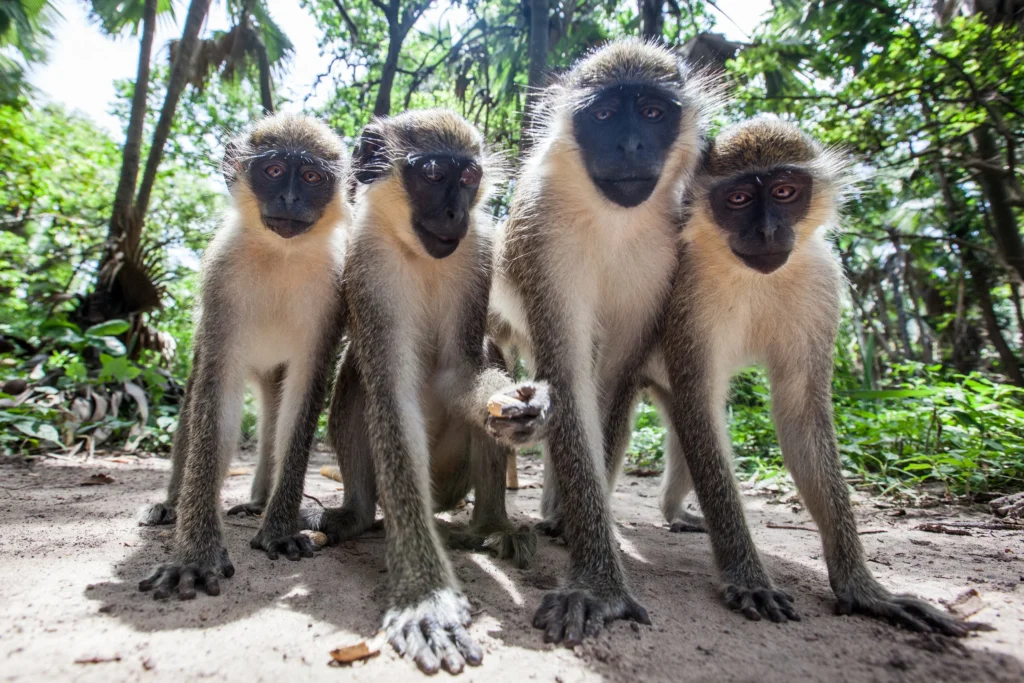
Bijilo Forest Park – A Peaceful Wildlife Sanctuary on The Gambia’s Atlantic Coast
Overview and Location
Bijilo Forest Park, often called “Monkey Park”, is one of The Gambia’s most treasured natural spaces and an essential refuge for coastal wildlife. Located along the Atlantic coastline near Kololi and just a short walk from the lively Senegambia tourism strip, this forest sanctuary offers a calm, shaded escape filled with wildlife, birdsong, fresh ocean breezes, and easy walking trails. More than 70% of first-time tourists who visit The Gambia stop at Bijilo because it is one of the easiest and safest places to see West African wildlife up close — especially vervet and red colobus monkeys.
Though modest in size, Bijilo Forest Park plays a critical role in conserving what remains of The Gambia’s coastal woodland ecosystem. Over the last three decades, more than 60% of natural coastal forest along the Senegambia strip has been lost to real estate development, making Bijilo one of the last intact woodland patches between Banjul and Brikama. Conservationists and local authorities have expressed growing concern about habitat pressure, increased visitor numbers, and land encroachment — threats that make Bijilo Forest Park more important today than ever before.
Key Facts and Figures
- Location: Western Region, The Gambia, near Kololi and the Senegambia strip
- Size: Approximately 50–126 hectares*
- Entrance Fee: Around 300 Gambian Dalasi per person
- Wildlife Recorded: Over 130 bird species, 3 primate species, numerous reptiles and small mammals
- Vegetation: Home to over 50 documented plant species including rhun palm, acacia, and African mahogany
- Best Time to Visit: November to June (dry season)
- Visitor Numbers: Estimated 40,000–60,000 annual visitors
- Main Threats: Urban expansion, habitat disturbance, feeding of wildlife, illegal logging, litter
*Note on size: Sources differ, reporting between 50 and 126 hectares depending on whether the buffer zone and former boundaries are included. Conservation groups estimate the core forest at 50–60 hectares based on satellite mapping (2023–2024).
Landscape, Ecosystems, and Climate
Bijilo Forest Park protects one of the last continuous strands of coastal woodland remaining in the Greater Banjul Area — an ecosystem type now considered endangered in West Africa due to rapid coastal development. Walking inside the park feels like stepping into a cooler microclimate: temperatures can drop by 3–5°C beneath the canopy, offering shade and shelter from the coastal sun. Monkeys leap between branches, squirrels dart along tree trunks, and the distant rhythm of Atlantic waves blends with the rustling leaves.
The Landscape
Bijilo’s landscape transitions gently as you move through the park. The diversity of microhabitats supports a wide range of wildlife despite the park’s small size. Biologists have identified three main habitat types within Bijilo, each contributing to the park’s ecological richness:
- Coastal woodland: Dominated by rhun palm, acacia, and evergreen hardwoods — crucial for shade-loving species.
- Gallery forest: Moist, shaded areas that support amphibians, insects, and the shyer red colobus monkeys.
- Dune ecosystems: Sandy, open spaces shaped by coastal winds, home to lizards and drought-tolerant plants.
- Shrub zones: Semi-open areas where vervet monkeys forage for fruits, seeds, and insects.
The Climate
Bijilo Forest Park experiences the classic West African coastal climate. Annual rainfall ranges between 900–1,200 mm, most of it falling from July to September. Humidity increases during the rainy season, creating ideal breeding conditions for insects and amphibians. The dry season offers cooler mornings and breezy afternoons, providing the best walking and wildlife-viewing conditions.
Wildlife in Bijilo Forest Park
Despite its small size, Bijilo Forest Park is one of the most biodiverse pockets of wilderness along The Gambia’s coastline. More than 130 bird species, three primate species, and a mix of reptiles, insects, and small mammals live here. According to park surveys, vervet monkeys are the most frequently sighted species, followed by Gambian sun squirrels and red colobus monkeys — the latter being one of West Africa’s most endangered primates.
Primates
Primates are the biggest attraction at Bijilo Forest Park. The park is one of the few protected areas in The Gambia where visitors can reliably see:
- Green vervet monkeys: Intelligent, adaptable primates found throughout the park. Groups can contain 15–30 individuals.
- Red colobus monkeys (Temminck’s): Classified as endangered. Bijilo protects one of the region’s stable sub-populations.
- Patas monkeys: Fast-running, ground-dwelling primates occasionally spotted in open areas.
Important wildlife fact: Red colobus monkeys are leaf-eaters and rely heavily on native tree species for survival. Loss of woodland around Bijilo has directly contributed to population declines in other parts of The Gambia, making the park critical for their conservation.
Important update: Feeding monkeys has become a significant problem. Studies show that vervet monkeys fed by humans develop aggression and lose their natural foraging behaviors. For this reason, Bijilo’s rangers strongly warn visitors not to feed any wildlife.
Birdlife
Bijilo Forest Park is a well-known birdwatching destination, with more than 130 documented species — an impressive number for such a compact area. The mix of forest, scrub, and dune vegetation attracts both resident and migratory species.
- Senegal parrots
- Little bee-eaters
- Long-tailed glossy starlings
- Black-crowned tchagras
- Red-billed hornbills
- Oriole warblers
- Western plantain-eaters
- Black-headed herons
Bird activity peaks between 6:30 am and 9:00 am. During migration periods (September–November), the forest becomes a temporary refuge for traveling species.
Reptiles and Other Wildlife
- Monitor lizards: Some individuals in the park reach lengths of over 1.2 meters.
- Geckos and agamas: Common along tree trunks and sandy areas.
- Snakes: Mostly shy species such as pythons, which avoid humans.
- Gambian sun squirrels: A keystone species that helps disperse seeds.
- Fruit bats: Important nighttime pollinators.
Main Attractions and Things to Do
Bijilo Forest Park offers simple but meaningful activities for nature lovers, families, wildlife enthusiasts, and birdwatchers. More than 70% of visitors walk the main loop trail, while others join guided nature walks run by knowledgeable local guides.
Entrance Fee
The entrance fee is 300 Gambian Dalasi per person. These funds support ranger salaries, trail maintenance, waste management, educational programs, and conservation initiatives.
Walking and Hiking Trails
The park’s red-sand trails are well-marked and maintained. The longest loop can be completed in about 60–90 minutes, passing through forest, shrubland, and dune habitats. Interpretive signs provide information about plants, animals, and conservation history.
Monkey and Wildlife Viewing
Wildlife viewing is one of the highlights of Bijilo Forest Park. Vervet monkeys are often seen in family groups, while red colobus monkeys prefer the quiet canopy. According to park data, visitors have a 90% chance of spotting vervets and a 50–60% chance of seeing red colobus monkeys during a normal walk.
Birdwatching
Birdwatchers consider Bijilo one of the most accessible birding areas in The Gambia. Early morning walks reveal colourful bee-eaters, warblers, and hornbills, while afternoons bring soaring kites and herons drifting over the dunes.
Photography
The combination of soft forest light, monkeys, textured bark, birds, and sandy dune sections makes Bijilo Forest Park a favourite destination for photographers. Many visitors capture some of their best Gambia wildlife shots right here.
Educational Eco-Tours
Guides offer eco-tours focused on plant use, traditional medicine, bird identification, and primate behaviour. Many guides grew up around the forest and offer valuable insights into how communities interact with Bijilo.
Conservation, Challenges, and Management
Bijilo Forest Park faces growing conservation challenges due to rapid tourism development around Kololi and Senegambia. Over the past 15 years, hotels and residential buildings have expanded to the park’s borders, shrinking natural buffer zones. Rangers report increased soil erosion along the dunes and higher levels of visitor-generated waste.
- Urban development: New structures have reduced wildlife movement corridors by more than 40% since 2010.
- Habitat fragmentation: Smaller forest patches make primates more vulnerable.
- Illegal logging: Occasional cutting of valuable hardwood species still occurs.
- Feeding of monkeys: A major behavioural threat to the vervet population.
- Litter: Plastic waste from nearby beaches sometimes enters the forest.
Rangers and conservation NGOs have responded by increasing surveillance, restoring trails, removing invasive plants, and running awareness programs for schools and local communities.
Community Involvement
Local communities play a vital role in safeguarding Bijilo Forest Park. Many guides, rangers, and eco-tourism workers come from nearby neighbourhoods, turning the park into a source of sustainable income. Community clean-up days, youth conservation clubs, and school trips help build long-term environmental awareness.
Best Time to Visit
The best time to visit Bijilo Forest Park is from November to June, when trails are dry and wildlife is most active. During these months, visitor numbers increase, but the forest still feels peaceful due to its wide, shaded trails.
The rainy season brings lush foliage and high bird activity, though paths can be wet or slippery.
How to Get There
- On Foot: Many visitors walk from hotels in Kololi and the Senegambia strip.
- Taxi: Local taxis can drop you at the main entrance for a small fee.
- From Banjul Airport: About 20–40 minutes by car.
Accommodation and Facilities
There are no lodges inside Bijilo Forest Park, but the surrounding area offers The Gambia’s widest selection of hotels, including beach resorts, boutique lodges, guesthouses, and eco-friendly stays.
Inside the park, facilities include:
- Well-marked walking trails
- Rest areas and benches
- Educational signage
- Guided nature and bird tours
Practical Travel Tips
- Wear comfortable shoes suitable for forest walking.
- Bring water, sunscreen, and insect repellent.
- Do not feed monkeys — this is harmful and prohibited.
- Hire local guides for better wildlife sightings and local knowledge.
- Visit early morning or late afternoon for the most wildlife activity.
Why Visit Bijilo Forest Park?
Bijilo Forest Park is a peaceful, wildlife-rich retreat just steps away from Senegambia’s bustling hotels and restaurants. It offers one of the easiest and safest opportunities to encounter West African monkeys, birds, and coastal forest species in their natural habitat. For many travellers, a visit to Bijilo becomes one of the highlights of their Gambian holiday.
Your visit also supports conservation. Entrance fees and guided tours directly fund forest protection, ranger patrols, trail maintenance, and community programs that help preserve The Gambia’s disappearing coastal forests.
Conclusion
Bijilo Forest Park stands as one of The Gambia’s most important pockets of protected woodland — a sanctuary where primates leap through the treetops, birds flutter across the canopy, and shady forest paths offer a welcome escape from coastal heat. Despite the pressures of urbanization, the park continues to protect wildlife and provide enriching nature experiences for visitors.
With responsible tourism, engaged local communities, and continued conservation work, Bijilo Forest Park can remain a thriving natural jewel on The Gambia’s Atlantic coast for generations to come.