
Boma National Park
Boma National Park – South Sudan’s Untouched Wilderness and the World’s Largest Antelope Migration Corridor
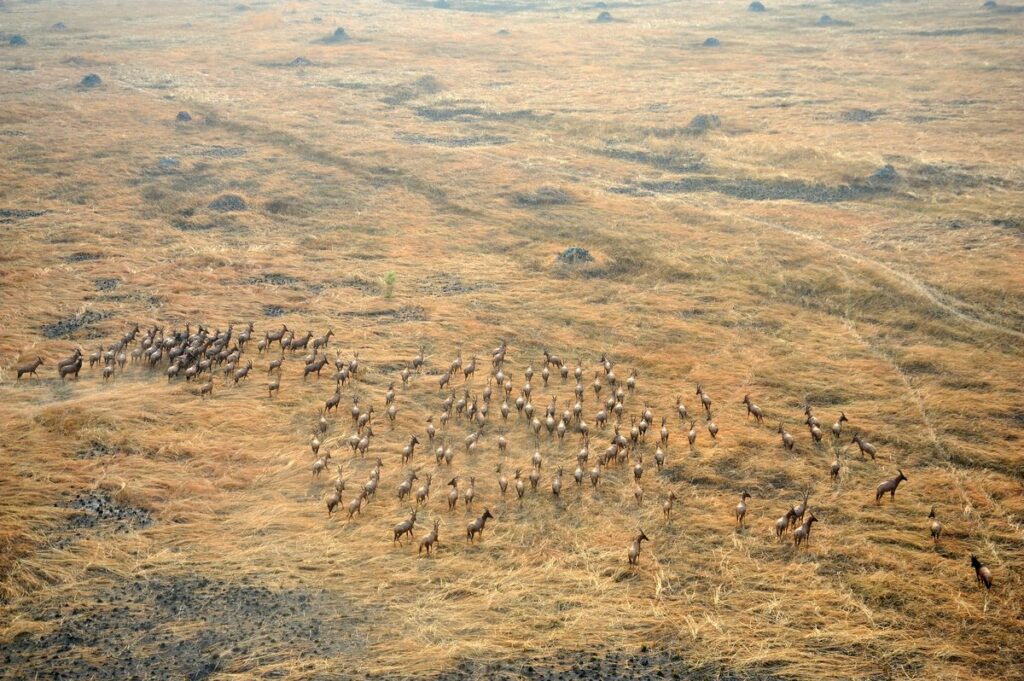
In the extreme eastern frontier of South Sudan lies Boma National Park, a vast, seldom-explored wilderness that protects one of the most extraordinary natural events on the planet — the world’s largest antelope migration. Gazetted in 1977 and spanning an immense 22,800 km², this remote park sits at the heart of the Boma–Bandingilo–Gambella migratory landscape, a transboundary ecosystem shared with South Sudan’s Bandingilo National Park and Ethiopia’s Gambella National Park. Every year, more than six million antelopes — including white-eared kob, tiang, and Mongalla gazelle — move across these plains in a wildlife movement that surpasses the scale of the famed Serengeti migration.
Despite South Sudan’s history of conflict, Boma remains ecologically intact, largely because of its remoteness and limited human settlement. Today, under a landmark 10-year co-management agreement (2022–2032) between the Government of South Sudan and African Parks, the park is being revitalised through advanced conservation planning, ranger training, wildlife monitoring, and community engagement. Its unique ecological value has also led to its nomination on the UNESCO World Heritage Tentative List, acknowledging Boma as one of Africa’s most irreplaceable conservation landscapes.
Overview and Location
Boma National Park occupies a strategic conservation zone in Jonglei State, stretching from the low-lying floodplains near the Sobat and Akobo Rivers to the rugged Boma Plateau, which rises to over 1,100 meters above sea level. Its western and southern boundaries blend into open grasslands that act as essential migration routes, while the eastern edge touches the Ethiopian border, forming a seamless ecological corridor with Gambella National Park.
The park sits approximately 850 km by road from Juba, making it one of the least accessible protected areas in Africa. But this isolation is also what preserved its wilderness character — vast spaces where wildlife roams undisturbed, traditional pastoralist communities maintain ancestral practices, and the natural environment remains largely shaped by seasonal rainfall and ancient ecological cycles.
Landscape, Ecosystems, and Climate
The landscape of Boma National Park is defined by dramatic contrasts. The expansive lowland floodplains transform into lush wetlands during the rainy season, producing the fresh grasses and nutrient-rich soils that attract millions of grazing antelopes. These floodplains, stretching for hundreds of kilometres, act as the ecological engine of the entire migration system.
In stark contrast, the Boma Plateau rises abruptly to create a cooler, more temperate microclimate. Its montane grasslands and wet woodlands offer refuge to wildlife when the lowlands become waterlogged. The plateau also supports unique birdlife, medicinal plants, and rocky escarpments that provide exceptional vantage points over the surrounding plains.
The park experiences two major seasons:
- Rainy Season (May–October): The floodplains fill with water, vegetation becomes lush, and wildlife disperses widely across the landscape. This is when the great antelope migration begins to build.
- Dry Season (November–April): Water sources shrink, wildlife concentrates along rivers, and herds travel long distances following fresh grazing. This period provides the best visibility for the migration.
These seasonal shifts are not just climatic events — they shape the rhythm of wildlife movements, predator–prey interactions, and community livelihood patterns throughout the region.
Wildlife in Boma National Park
Boma National Park hosts one of the most intact large-mammal assemblages in East Africa. While political instability limited scientific surveys for decades, recent aerial counts and modern monitoring tools have revealed thriving wildlife populations and one of the most impressive ecological recoveries in Africa.
The Great Boma Antelope Migration
The defining feature of Boma is the great antelope migration, a natural wonder still unknown to most of the world. New research (2024) confirms that over six million animals move through the Boma–Bandingilo–Gambella corridor — making this not only the largest migration in Africa but potentially the largest migration of land mammals ever documented globally.
The main migratory species include:
- White-eared kob – The dominant species, forming herds of thousands sweeping across the plains.
- Mongalla gazelle – Known for dramatic leaps and rapid movement between grazing zones.
- Tiang – A powerful topi subspecies that follows seasonal feeding cycles.
- Reedbuck – Prefers wetter zones and shifts with changing water availability.
This migration is essential for nutrient cycling, grassland regeneration, and maintaining predator populations. It is also one of the least disturbed wildlife behaviours remaining anywhere in the world, thanks to the isolation of the region.
Other Mammals
Beyond the migration, Boma National Park supports an impressive diversity of wildlife, including:
- Elephants (recovering populations)
- Giraffes (regional subspecies)
- Buffalo
- Roan antelope
- Lelwel hartebeest
- Warthogs and oribi
Large carnivores also roam the park, including lions, leopards, hyenas, servals, and African wild dogs — the latter being a key conservation priority due to their rarity across Africa.
Birdlife
Boma’s wetlands, plains, and woodlands attract millions of migratory birds each year. This includes species descending from the Sahel, Horn of Africa, Europe, and Asia. Key species include:
- Saddle-billed stork
- Abyssinian ground hornbill
- Crowned and wattled cranes
- Secretary bird
- Vultures and steppe eagles (seasonal)
Birdlife is especially abundant during the rains when insects, frogs, and young vegetation provide abundant food.
Main Attractions and Things to Do
Tourism in Boma is still developing, but its raw, untouched nature offers adventurous travelers some of the most authentic wilderness experiences left in Africa.
1. Witness the Largest Antelope Migration on Earth
The antelope migration is Boma’s greatest draw. Unlike the Serengeti, where roads, lodges, and crowds are common, Boma offers a migration experience free from mass tourism. Viewing millions of animals moving across endless plains is a humbling reminder of how Africa once looked before modern development.
2. Explore the Remote Boma Plateau
The Boma Plateau offers cool mountain air, unique highland vegetation, cultural encounters, and stunning panoramas. Hiking routes are informal and often guided by local communities or conservation rangers.
3. Cultural Encounters with the Murle People
The Murle people, one of the region’s predominant ethnic groups, have inhabited the Boma landscape for centuries. Their traditional pastoralism, spiritual practices, and ecological knowledge make cultural visits deeply enriching. These encounters provide insight into how communities coexist with such a large wildlife system.
4. Conservation Field Experiences
Through African Parks’ programs, visitors (by arrangement) may witness ranger training, wildlife monitoring, aerial surveying, or community-based conservation projects — offering rare behind-the-scenes insight into one of Africa’s most ambitious restoration efforts.
Accommodation and Facilities
Given its remote nature, Boma currently offers very limited tourist facilities. This contributes to its wild charm but requires careful planning. Options include:
- Dedicated ranger camps (restricted access)
- Designated wilderness camping zones
- Research bases operated by conservation partners
Visitors must bring all supplies, including food, fuel, water, medical equipment, and camping gear.
Best Time to Visit Boma National Park
The most rewarding time to visit Boma is during the dry season (November to April), when roads are passable and wildlife is concentrated along major river systems. For viewing the migration, December to May sees large herds moving across the plains and plateau edges.
How to Get There
- Charter flights: The safest and most reliable way to access Boma, using light aircraft landing at Boma Airstrip.
- 4×4 expeditions: Very long and physically demanding routes from Juba or Ethiopia, only recommended with expert logistical support.
- Guided specialist safaris: Operators working with African Parks offer controlled access to conservation sites and migration viewpoints.
Travel during the wet season is extremely challenging, with many roads becoming impassable for months.
Conservation, Challenges, and Community Involvement
Boma National Park is emerging from decades of instability. The new African Parks partnership aims to transform the park into a world-class conservation area. Key challenges include poaching, historical insecurity, unsustainable hunting, and managing the balance between traditional pastoralism and wildlife protection.
However, progress is accelerating. Ranger forces are expanding, aerial monitoring is improving migration data, and community-led programs are creating alternatives to unsustainable practices. Boma’s recovery is becoming a global example of how large-scale conservation can rebuild ecological systems even after periods of conflict.
Practical Travel Tips
- Travel only with specialist operators familiar with the region.
- Bring full camping supplies — no services are available in the park.
- Use 4×4 high-clearance vehicles equipped with spare parts and recovery gear.
- Carry satellite communication devices.
- Plan travel according to weather — the wet season can make access impossible.
Why Visit Boma National Park?
Boma National Park offers an unmatched wilderness experience — a rare window into Africa’s ancient natural rhythms. Watching millions of antelopes move across endless plains, hearing lions roar in untouched savanna, or hiking the cool heights of the Boma Plateau reveals a side of Africa that has almost vanished elsewhere. For wildlife photographers, conservationists, and true explorers, Boma is not just a destination — it is a frontier.
Conclusion
Vast, raw, and breathtakingly wild, Boma National Park is one of the planet’s most important ecological strongholds. With renewed protection, the world’s greatest antelope migration, and a future shaped by conservation partnerships, Boma stands poised to become one of Africa’s leading wilderness destinations. It remains a place where nature dictates the rhythm of life, where landscapes stretch beyond imagination, and where the story of African wildlife continues to unfold in its most ancient form.