
Boumba Bek National Park
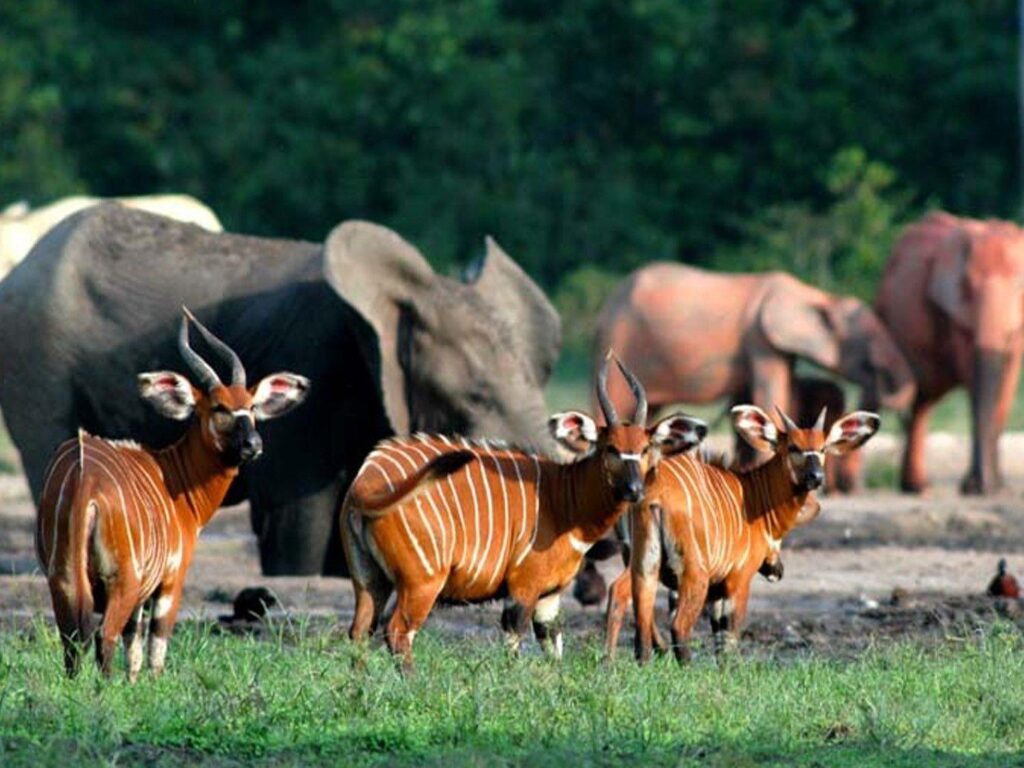
Boumba Bek National Park – Cameroon’s Untouched Congo Basin Wilderness and a Critical Refuge for Endangered Rainforest Wildlife
Boumba Bek National Park, deep in southeastern Cameroon, is one of the last truly wild and undisturbed rainforest ecosystems remaining in Central Africa. Established in 2001, the park lies between the Boumba and Bek rivers and forms an integral part of the Tri-National Conservation Complex (TNS), a transboundary UNESCO World Heritage Site that links three of Africa’s most important protected areas: Boumba Bek and Nki (Cameroon), Dzanga-Ndoki (Central African Republic), and Odzala-Kokoua (Republic of Congo).
Remote, pristine, and almost entirely uninhabited, Boumba Bek is a stronghold for western lowland gorillas, forest elephants, bongos, chimpanzees, and a remarkable diversity of species that have declined elsewhere in the Congo Basin. Its isolation, extremely low human population, and continuous forest connection make it one of Cameroon’s most important ecological treasures and one of the last remaining places on Earth where large mammals still roam relatively undisturbed.
Overview and Location
Boumba Bek National Park is located in the East Region of Cameroon, near the borders with the Republic of Congo and the Central African Republic. Covering roughly 2,382 km², it forms part of the larger TRIDOM landscape (Tri-National Dja–Odzala–Minkébé), which together protects more than 178,000 km² of contiguous rainforest—the largest continuous tropical forest block left in Africa.
Its remote location and limited road network have allowed Boumba Bek to remain one of Cameroon’s least disturbed ecosystems. The park’s rugged terrain, deep river valleys, and dense vegetation act as natural barriers that minimize access and reduce anthropogenic pressure.
Landscape, Ecosystems, and Climate
Boumba Bek is dominated by lowland equatorial rainforest, characterized by towering hardwood trees, dense undergrowth, tangled lianas, swamp forests, and meandering rivers. The park’s mosaic of habitats includes:
- Dense evergreen rainforest
- Permanent and seasonal swamp forests
- Riverine forests along the Boumba and Bek rivers
- Mineral-rich open clearings known as bais
- Rolling hills and undulating valleys that support diverse microhabitats
Boumba Bek has a humid tropical climate with two rainy seasons (March–June and September–November). Annual rainfall ranges from 1,500 to 2,000 mm, creating ideal conditions for dense vegetation, abundant rivers, and permanent freshwater ecosystems that support wildlife year-round.
Flora and Botanical Importance
Boumba Bek’s rainforest is among the most biologically rich in the Congo Basin. The forest is dominated by economically and ecologically important hardwoods, including:
- Moabi (Baillonella toxisperma) – prized for its oil and timber
- Sapelli (Entandrophragma cylindricum)
- Ayous/Obeche (Triplochiton scleroxylon)
- Ebony trees (Diospyros spp.)
- Ironwood species (Erythrophleum spp.)
- Wild mango trees (Irvingia gabonensis)
- Medicinal vines, roots, and shrubs used by Indigenous communities
These tree species form canopies up to 60 meters high and play a crucial role in global climate regulation. Boumba Bek’s protected status helps conserve these hardwoods, many of which are endangered due to logging pressures in unprotected areas of the Congo Basin. The park stores vast amounts of carbon, making it vital for combating climate change.
Biodiversity and Conservation Importance
Boumba Bek is internationally recognized as a biodiversity stronghold. Its location within the Congo Basin rainforest corridor allows wildlife to migrate freely across borders, maintaining genetic diversity and ecosystem resilience. The park’s wildlife density is notably high for such an untouched area.
Flagship Species
- Western Lowland Gorilla – robust but shy populations
- Central Chimpanzee – common in swamp and riverine forests
- Forest Elephant – regular visitors to bais
- Bongo Antelope – one of the best populations in Central Africa
- Forest Buffalo
- Sitatunga
- Giant Forest Hog
- Leopard
Approximate wildlife indicators (based on scientific monitoring):
- Gorillas: density 1.5–3.2 individuals per km²
- Chimpanzees: density 1.2–2.5 individuals per km²
- Forest elephants: 300–600 individuals seasonally
- Bongos: strong population, especially in swamp bais
Gorilla Behavior and Ecology (Expanded)
Western lowland gorillas in Boumba Bek are unhabituated, making them more elusive but offering invaluable insights into natural gorilla behavior. Gorillas here travel widely, constructing fresh nests daily and feeding on seasonal fruiting trees, stems, bark, and forest herbs. Their movements vary with fruit availability, and they often forage in areas rich in marantaceae plants. Gorillas avoid areas heavily used by elephants or humans, making intact forests like Boumba Bek essential for their long-term survival.
Forest Elephants and Mineral Bais (Expanded)
Forest elephants heavily rely on Boumba Bek’s bais—open saline clearings formed by natural mineral seepage—to acquire essential salts and nutrients. These bais serve as meeting points where elephants socialize, communicate over long distances using infrasonic calls, and drink mineral-rich water. Elephants often visit the same bais for decades, passing knowledge down through generations. Protecting these clearings is critical, as they are vulnerable to poaching if left unmonitored.
Bongo Antelopes (Expanded)
The bongo, one of the world’s most striking antelopes, thrives in Boumba Bek due to the availability of quiet swamp bais where they feed and hydrate. Known for their reddish coats and white stripes, bongos are extremely sensitive to disturbance and typically vanish from degraded forests. Their stable presence in Boumba Bek signifies the park’s exceptional ecological integrity.
Additional Rare Predators
Boumba Bek is home to the African golden cat, a rarely seen forest predator whose sleek coat ranges from gold to charcoal grey. The park also shelters forest servals, civets, genets, and leopards. These predators rely on healthy populations of monkeys, rodents, and duikers—further evidence of Boumba Bek’s intact food chain.
Birdlife and Butterflies
Over 300 bird species inhabit the park, including African grey parrots, hornbills, turacos, crowned eagles, and forest kingfishers. Boumba Bek is also a paradise for butterfly enthusiasts, with hundreds of species displaying spectacular colors in sunlit forest gaps.
Cultural and Indigenous Heritage
Boumba Bek is closely associated with the Baka people, one of Central Africa’s Indigenous forest communities. For centuries, the Baka have relied on the forest for food, medicine, shelter, and spiritual identity. Their knowledge of animal behavior, medicinal plants, edible roots, and seasonal cycles is unmatched.
Baka trackers play a crucial role in wildlife monitoring, anti-poaching operations, and research. Their traditional songs, dances, and rituals reflect deep connections to the forest and reinforce cultural values that promote sustainable coexistence. Community-based conservation programs actively involve the Baka in park protection while supporting their cultural and economic needs.
Park Management, Zoning, and Partnerships
Boumba Bek is jointly managed by:
- MINFOF – Ministry of Forestry & Wildlife
- WWF Cameroon – providing technical and logistical support
- Baka and Bantu communities in surrounding villages
The park is divided into specialized zones:
- Core conservation zones where no human activity is allowed
- Buffer zones for regulated community resource use
- Anti-poaching zones monitored by eco-guards
- Scientific research areas with long-term monitoring plots
Ranger bases around Ngoyla, Moloundou, and Yokadouma support patrols, research teams, and community outreach.
Key Wildlife Hotspots: The Bai Systems
Boumba Bek’s forest clearings—or bais—are among the park’s most ecologically significant features. These open, marshy clearings occur naturally and contain mineral-rich soils that attract wildlife for salt intake. Notable bais include:
- Boumba Bai – high elephant traffic, excellent for photographic observation
- Bek Bai – frequently visited by gorillas, bongos, and buffalo
- Ngoyla Bai – known for exceptional bird diversity
Scientists monitor these bais using observation platforms and camera traps, as they provide rare windows into the park’s hidden wildlife.
Scientific Research and Monitoring Programs
Boumba Bek is a major research hub. Teams study:
- Gorilla and chimpanzee behavior (feeding, nesting, social interactions)
- Elephant migration using GPS collars and acoustic monitoring
- Camera-trap biodiversity inventories assessing medium and large mammals
- Bird and butterfly population changes
- Forest carbon measurement under REDD+ climate programs
These long-term data are essential for adaptive conservation, helping authorities track threats, habitat changes, and wildlife population trends.
Threats and Conservation Challenges
Despite its remoteness, Boumba Bek faces numerous threats:
- Poaching – targeting elephants for ivory and wildlife for bushmeat
- Illegal logging – especially of moabi, sapelli, and ebony
- Mining pressures on the TRIDOM corridor
- Wildlife trafficking networks operating across borders
- Climate change altering fruiting patterns and water availability
Conservation partners counter these threats through anti-poaching patrols, community-led forest monitoring, environmental education, and improved forest governance. Collaborations across TNS ensure that wildlife is protected even as it crosses national borders.
Top Activities and Things to Do
1. Gorilla Nesting and Forest Tracking
Ranger-guided tracking offers the chance to follow gorilla signs such as nests, dung piles, feeding remains, and footprints. While habituated gorilla tourism does not exist here, this form of wild tracking is deeply immersive and ideal for experienced explorers.
2. Elephant and Bongo Viewing at Bais
The mineral bais are among the most rewarding wildlife-viewing points, especially at dawn and dusk. Elephants, bongos, buffaloes, and sitatungas frequently visit these clearings.
3. Birdwatching
Boumba Bek offers exceptional rainforest birding, with hornbills, turacos, kingfishers, African grey parrots, and crowned eagles frequently sighted.
4. River Expeditions
Canoe and boat trips along the Boumba and Bek rivers reveal monkeys, otters, crocodiles, and colorful birdlife along the riverbanks.
5. Cultural Immersion with Baka Communities
Visitors can join Baka guides for forest walks, medicinal plant demonstrations, traditional singing, and storytelling sessions—offering unique cultural insights.
Visitor Requirements, Permits, and Safety
Boumba Bek is remote and requires thorough preparation. Visitors must obtain official entry permits from MINFOF and must be accompanied by eco-guards for navigation and safety. A 4×4 vehicle with high clearance is mandatory.
Health and Safety Precautions
The rainforest environment presents challenges including insects, humidity, dense vegetation, and river crossings. Recommended precautions include:
- Yellow fever vaccination (required for entry into Cameroon)
- Malaria prophylaxis
- Long-sleeved clothing for insect protection
- Waterproof boots and rain gear
- A satellite phone (no mobile network in the park)
Guided travel with trained eco-guards is essential for both safety and ecological sensitivity.
Accommodation and Accessibility
There are no lodges inside Boumba Bek. Visitors typically stay in:
- Yokadouma – closest access town
- Ngoyla – community eco-lodges
- Bertoua – for staging and supplies
Road access from Yaoundé or Bertoua can take 12–15 hours. During the rainy season, roads can become muddy and nearly impassable, requiring recovery equipment and skilled drivers.
Best Time to Visit
The ideal time to visit Boumba Bek is during the dry seasons:
- December–March
- June–August
Wildlife is more visible at bais, roads are more accessible, and river expeditions are easier during dry months.
Why Visit Boumba Bek National Park?
Boumba Bek offers a rare opportunity to experience the Congo Basin as it existed centuries ago—untouched, immense, and full of life. Its pristine rainforest, endangered species, Indigenous cultures, and scientific significance make it a destination for serious nature lovers, conservationists, and explorers.
From forest elephants gathering at bais to the haunting calls of chimpanzees echoing through the canopy, Boumba Bek delivers one of Africa’s most powerful wilderness experiences.
Conclusion
Boumba Bek National Park remains one of Cameroon’s greatest natural treasures and an irreplaceable part of the Congo Basin. Its pristine forests, rare wildlife, Indigenous heritage, and global conservation importance make it a world-class destination worthy of protection and admiration. For travelers seeking authentic rainforest exploration and deep ecological meaning, Boumba Bek is a destination like no other.