
Curieuse Marine National Park
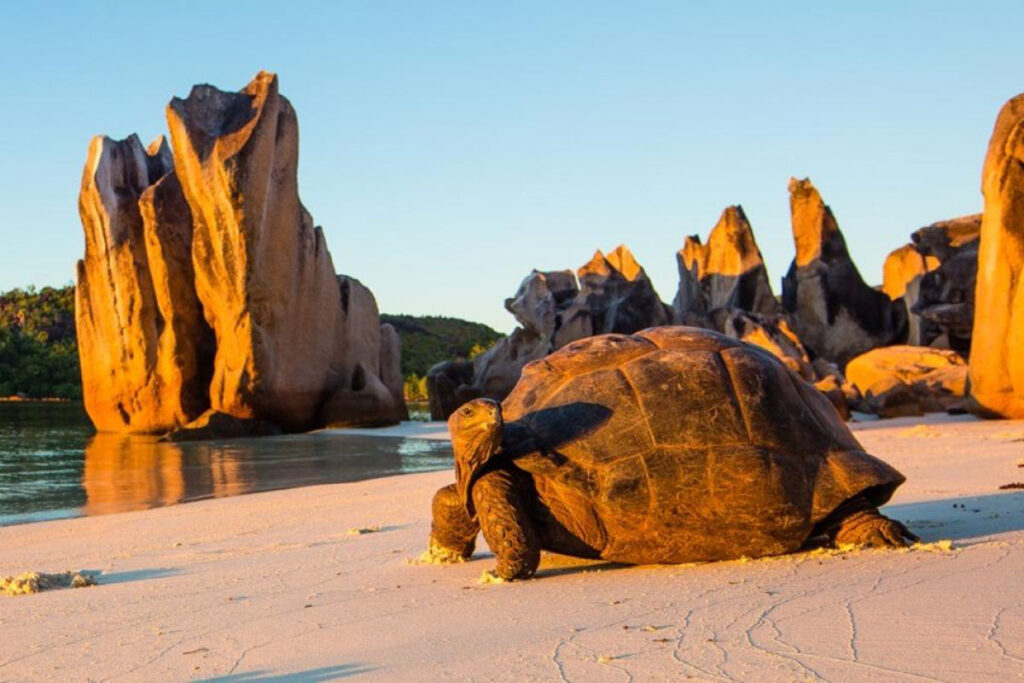
Curieuse Marine National Park – Seychelles’ Pristine Island Sanctuary of Giant Tortoises, Coco de Mer Palms, Coral Gardens, and Rare Coastal Ecosystems
Curieuse Marine National Park, located just off the northern coast of Praslin Island in the Seychelles, is one of the most important protected areas in the entire Indian Ocean. Covering approximately 1,580 hectares of land and surrounding marine habitats, the park is globally recognized for its thriving Aldabra giant tortoise population, spectacular Coco de Mer forests, rich coral reefs, untouched beaches, and ecologically critical mangrove wetlands. With its iconic red-soil landscapes, towering granite boulders, turquoise waters, and endemic wildlife, Curieuse offers visitors a rare glimpse into Seychelles’ ancient natural heritage—one that remains virtually unchanged for centuries.
Unlike many islands in the Seychelles that have undergone varying levels of tourism development, Curieuse has remained strikingly wild. Its historical use as a leprosy colony ensured that habitation was minimal and temporary, preserving its biodiversity long before formal conservation laws were enacted. Today, the island is strictly protected by the Seychelles National Parks Authority (SNPA), making it a living open-air laboratory for marine biology, ecology, climate research, and sustainable island conservation.
Location and Accessibility
Curieuse Island lies only 1 kilometer northeast of Praslin, the second-largest island in the Seychelles archipelago. Despite its close proximity, the island is accessible exclusively by boat—usually from Anse Volbert, Cote d’Or, or Anse La Blague. The short boat ride offers stunning panoramic views of Curieuse’s red lateritic hillsides, white-sand coves, and crystal-clear lagoons. Because there are no roads or vehicles on the island, all exploration is conducted on foot, ensuring a low-impact, eco-friendly visitor experience that protects the park’s fragile habitats.
Historical Background: The Leper Colony Legacy
Curieuse has one of the most fascinating human histories in the Seychelles. From the 1820s to the early 1900s, it served as a leper colony, isolating patients from the general population. This period of isolation inadvertently protected the island from agricultural exploitation, deforestation, and large-scale settlement. The Doctor’s House (1873), now beautifully restored as a heritage museum, stands as a testament to this era, featuring displays on colonial medicine, Creole architecture, and early life on the island. The ruins of the leprosarium, scattered along forest trails, add an intriguing historical dimension to today’s conservation landscape.
Geology and Landscape
Curieuse is part of the inner granite Seychelles—some of the oldest oceanic islands on Earth. Formed from ancient granite left behind after the fragmentation of the supercontinent Gondwana, the island’s dramatic landscapes include:
- Granite outcrops carved by millions of years of weathering
- Iron-rich red lateritic soils forming one of Seychelles’ most iconic visual identities
- Uplifted ridges supporting rare tropical hardwood species
- Protected coves and lagoons shaped by coral growth and tidal processes
These geological features not only make Curieuse visually stunning but also shape its ecological diversity, providing microhabitats for birds, reptiles, and coastal flora.
Ecosystems and Vegetation
Curieuse Marine National Park is home to a variety of interconnected ecosystems that contribute to its outstanding biodiversity value. These include:
- Coco de Mer palm forests unique to Curieuse and Praslin
- Mangrove wetlands with seven distinct mangrove species
- Granite ridge forests featuring endemic hardwoods like takamaka and badamier
- Coastal dune vegetation protecting beaches from erosion
- Coral reefs and reef flats supporting hundreds of marine species
- Seagrass meadows essential for turtle foraging and juvenile fish nurseries
The Coco de Mer – Living Fossil of the Seychelles
Curieuse is one of only two islands on Earth where the legendary Coco de Mer palm (Lodoicea maldivica) grows naturally. These prehistoric palms are famous for producing the world’s largest seed—sometimes weighing over 25 kilograms. Male trees bear long, snake-like catkins, while female trees produce the massive double-lobed fruits. The palms thrive on Curieuse’s iron-rich soils and granite foothills, forming one of the most unique botanical landscapes in the tropics.
Because the Coco de Mer is strictly protected under Seychelles law, each fruit is monitored by park rangers to prevent illegal harvesting, ensuring the long-term survival of this globally significant species.
Wildlife of Curieuse Marine National Park
Aldabra Giant Tortoises – An Island-wide Sanctuary
Curieuse hosts one of the Seychelles’ most successful tortoise recovery programs. In the 1970s and 1980s, conservationists translocated Aldabra giant tortoises from the UNESCO World Heritage Site of Aldabra Atoll to establish a secure breeding population here. Today, over 300 tortoises roam freely across the island’s forests, valleys, and beaches.
Rangers manage:
- Breeding and nesting sites
- Hatchling protection areas
- Feeding and habitat restoration programs
- Genetic research initiatives
Curieuse remains one of the best locations in the Seychelles for ethical, non-intrusive tortoise encounters.
Sea Turtles – Nesting Beaches and Coastal Nurseries
Curieuse’s beaches are essential nesting grounds for two endangered species:
- Hawksbill turtles (Eretmochelys imbricata) – peak nesting Sept to Feb
- Green turtles (Chelonia mydas) – nest year-round, peak Jan to Apr
The surrounding shallow bays act as nursery zones for juvenile turtles, which feed on seagrass beds and coral polyps. Conservation teams regularly monitor nesting activity, tag turtles, and protect vulnerable nests from predation and tidal erosion.
Marine Biodiversity and Coral Reefs
Curieuse’s coral reefs are among the healthiest in the inner Seychelles thanks to strict protection and reduced human pressure. The marine park supports:
- Hard corals including staghorn, table, finger, and brain corals
- Soft corals such as sea fans and leather corals
- Giant clams embedded in shallow reef flats
- Nurse sharks and blacktip reef sharks
- Colorful reef fish like butterflyfish, angelfish, parrotfish, wrasse, and triggerfish
- Moray eels, octopus, and crustaceans
Because the reefs are shallow and sheltered, snorkeling visibility is excellent, making Curieuse one of Seychelles’ top locations for beginner and experienced snorkelers alike.
Mangrove Wetlands – A Keystone Coastal Habitat
Curieuse contains one of the Seychelles’ largest protected mangrove ecosystems. The raised boardwalk allows visitors to explore this incredibly productive habitat, which includes seven mangrove species that support:
- Juvenile reef fish seeking protection from predators
- Crabs and mudskippers that aerate the soil and recycle nutrients
- Wading birds including herons and plovers
- Important carbon storage helping mitigate climate change
Top Activities and Attractions
1. Snorkeling
Snorkeling is one of the most popular activities in Curieuse Marine National Park. Key snorkel sites include:
- Coral Gardens – excellent coral cover and fish diversity
- Anse St. José – ideal for turtle encounters
- Pointe Rouge – a hotspot for octopus and macro species
- Laraie Bay Shark Nursery – home to juvenile blacktip sharks
2. Tortoise Observation and Conservation Center
The tortoise sanctuary at Laraie Bay offers close encounters with Aldabra tortoises, informative ranger presentations, and educational exhibits about tortoise biology and conservation.
3. Mangrove Boardwalk
This scenic wooden walkway passes through one of the Seychelles’ most important mangrove wetlands, offering opportunities to observe crabs, marine juveniles, and birdlife.
4. Doctor’s House Museum
A beautifully restored colonial-era building, the Doctor’s House features historical artifacts, traditional furnishings, and interpretive displays detailing Curieuse’s leper colony history and cultural heritage.
5. Island Hiking Trails
Curieuse offers several scenic hiking routes:
- Laraie Bay to Anse St. José – 1.5 km (45–60 minutes)
- Coco de Mer Trail – through ancient palm forests
- Granite Ridge Track – offering panoramic ocean views
Trails pass through forest, mangroves, beaches, and granite ridges, making each hike varied and visually rewarding.
Climate and Best Time to Visit
Curieuse enjoys a warm tropical climate year-round. Conditions include:
- Air temperature: 25–31°C
- Sea temperature: 26–29°C
- Driest months: May–September (Southeast Trade Winds)
- Calmest seas: April–May and October–November
For the best snorkeling, wildlife viewing, and calm-water boat transfers, April, May, October, and November are ideal.
Marine Regulations and Visitor Guidelines
To protect its fragile ecosystems, Curieuse Marine National Park enforces strict conservation rules:
- Anchoring on coral is prohibited—boats must use eco-moorings
- Fishing, spearfishing, and collecting shells are banned
- Visitors must not touch corals or feed wildlife
- All Coco de Mer fruits are strictly protected by law
- Rangers monitor all visitor activity for environmental compliance
Threats and Conservation Challenges
Despite its protected status, Curieuse faces several environmental threats:
- Coral bleaching caused by climate change
- Plastic pollution drifting from nearby islands
- Anchor damage from boats in sensitive areas
- Illegal fishing around park boundaries
- Coastal erosion exacerbated by rising sea levels
Ongoing conservation efforts focus on reef restoration, mangrove protection, turtle monitoring, and public education.
Scientific Research and Monitoring
Curieuse Marine National Park serves as a vital research hub supporting:
- Coral reef restoration projects and coral gardening
- Sea turtle tagging programs tracking migratory routes
- Mangrove carbon sequestration studies
- Tortoise telemetry research tracking movement patterns
- Seagrass monitoring to support turtle conservation
The island plays a key role in understanding how small tropical islands can adapt to climate change.
Why Visit Curieuse Marine National Park?
Curieuse offers a truly unique combination of pristine nature, unique wildlife, and rare ecosystems found nowhere else in the world. Visitors can hike through ancient forests, snorkel vibrant coral reefs, observe giant tortoises in the wild, and learn about Seychelles’ history—all in one unforgettable eco-tourism experience. Its untouched landscapes and rich biodiversity make it one of the Seychelles’ most essential destinations for nature lovers, snorkelers, photographers, and conservation enthusiasts.
Conclusion
Curieuse Marine National Park stands as a shining example of how coastal ecosystems, island biodiversity, and cultural heritage can be preserved for future generations. With its thriving wildlife, world-class snorkeling reefs, ancient Coco de Mer forests, and extraordinary conservation success stories, Curieuse remains one of the most breathtaking and ecologically important natural areas in the entire Indian Ocean. For travelers seeking a genuine connection with nature in its purest form, Curieuse is a destination without equal.