
Gonarezhou National Park
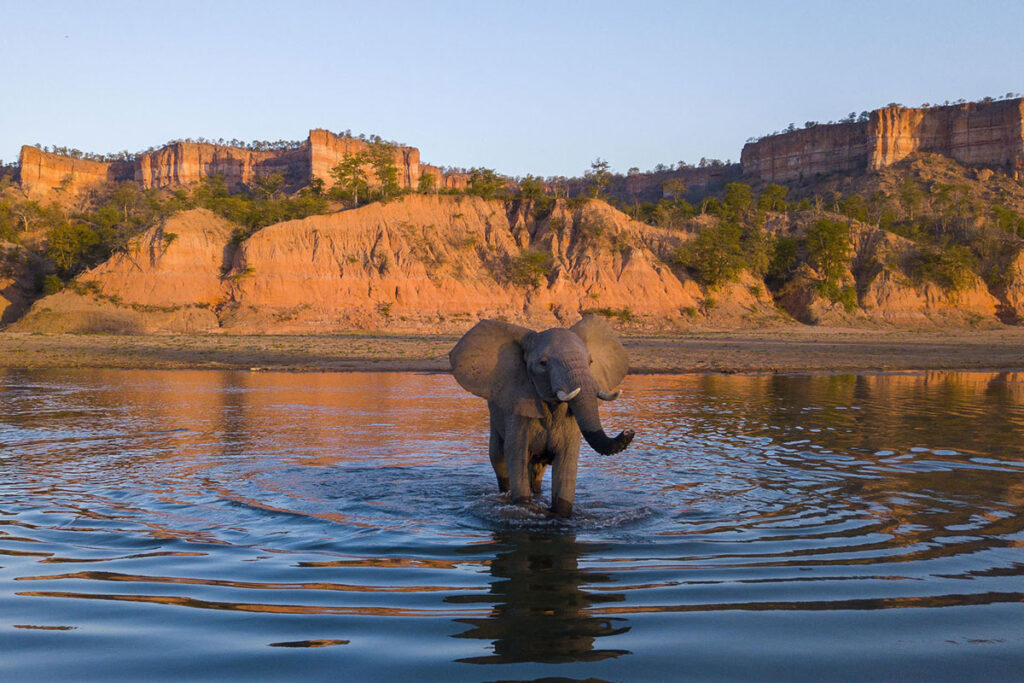
Gonarezhou National Park – Zimbabwe’s Ultimate Wilderness Destination of Elephants, Chilojo Cliffs, Baobab Forests, and Untouched African Safari Landscapes
Gonarezhou National Park is one of Africa’s last truly wild safari destinations — a vast, remote, and biodiverse wilderness where wildlife still roams freely across open plains, rugged hillscapes, and ancient river valleys. Located in southeastern Zimbabwe, this 5,053 km² protected area is famous for its magnificent red sandstone formations, large elephant herds, iconic baobab forests, and pristine lowveld ecosystems. The park’s Shona name, “Gonarezhou,” meaning “Place of Elephants,” reflects its deep historical connection to Zimbabwe’s most impressive tuskers. As part of the Great Limpopo Transfrontier Park — together with Kruger National Park (South Africa) and Limpopo National Park (Mozambique) — Gonarezhou forms one of Africa’s largest cross-border conservation landscapes.
What sets Gonarezhou National Park apart from other safari destinations is its raw, untouched character. Unlike crowded parks, Gonarezhou offers vast, silent landscapes of towering cliffs glowing red at sunset, sweeping grasslands, and ancient baobab groves. Its network of rivers supports exceptional wildlife densities, making the park a dream destination for wildlife photographers, birdwatchers, adventurers, conservationists, and travelers seeking an authentic, no-crowds African safari experience.
Overview of Gonarezhou National Park
Established in 1975, Gonarezhou National Park is now one of Zimbabwe’s leading conservation success stories. The park has undergone significant ecological recovery thanks to the Gonarezhou Conservation Trust — a pioneering co-management system between the Zimbabwe Parks and Wildlife Management Authority and the Frankfurt Zoological Society. This partnership has restored wildlife populations, improved anti-poaching efforts, and revitalized degraded habitats.
Today, Gonarezhou is considered one of southern Africa’s most intact wilderness areas. Elephant numbers have rebounded, predator populations have strengthened, and endangered species such as African wild dogs have made remarkable recoveries. Because the park has minimal development and restricted infrastructure, it offers a truly immersive safari experience that feels wild, remote, and authentically African.
Location and Size
Gonarezhou National Park is located in southeastern Zimbabwe’s Masvingo Province, near the borders with Mozambique and South Africa. Set within the expansive lowveld savanna, this region is characterized by rolling plains, thorny scrub, and dramatic geological formations created over millions of years.
With over 5,000 km² of protected wilderness, Gonarezhou is Zimbabwe’s second-largest national park. As part of the Great Limpopo Transfrontier Conservation Area, it plays a vital role in enabling wildlife migration between Zimbabwe, Mozambique, and South Africa. This cross-border ecological network strengthens genetic diversity and restores ancient migratory routes for elephants, predators, and large herbivores.
Geography and Geology
Gonarezhou’s landscapes are among the most dramatic in Africa. The park’s signature geological attraction is the Chilojo Cliffs — a massive sandstone escarpment rising more than 200 meters above the Runde River. These cliffs reveal beautifully layered bands of red, orange, pink, and cream sandstone that glow intensely at sunrise and sunset.
The park also features basalt plains, ancient rocky ridges, extensive floodplains, and deep river gorges carved by the Save and Runde Rivers. Rugged hardveld formations and sandveld patches provide habitats that support a high diversity of wildlife and continentally important plant communities.
Climate
Gonarezhou National Park experiences a semi-arid to tropical climate, shaped by the lowveld ecosystem. Summers (November–March) bring high temperatures, dramatic thunderstorms, and a burst of greenery that transforms the landscape. This season is excellent for birdwatching and seeing newborn wildlife.
The dry season (April–October) is the best time for game viewing in Gonarezhou. Vegetation becomes less dense, temperatures cool, and animals concentrate around water sources. By late dry season, wildlife sightings are exceptional as elephants, predators, and herbivores gather along the Runde, Save, and Mwenezi Rivers.
Hydrology and Rivers
Three major rivers — the Save, Runde, and Mwenezi — shape the ecology of Gonarezhou National Park. Riverine forests, floodplains, and seasonal wetlands provide essential water, shade, and grazing areas for elephants, buffalo, hippos, antelope, and numerous bird species.
During the rainy season, the rivers flood, creating oxbow lakes and replenishing groundwater systems. In the dry season, shrinking pools become crucial wildlife hotspots and prime viewing areas for safari travelers. Smaller seasonal streams also form pans and springs that support wildlife during drought periods.
Ecosystems and Habitats
Gonarezhou protects an extraordinary mosaic of habitats that support high levels of biodiversity. From riverine forests to mopane woodland savannas, its diverse landscapes provide food, shelter, and breeding sites for numerous species.
- Mopane woodlands: The dominant vegetation type and key habitat for elephants, kudu, and impala.
- Riverine forests: Evergreen corridors of fig, ebony, and mahogany trees that support primates and birds.
- Baobab forests: Ancient, iconic trees that provide nutrition and nesting sites for many species.
- Alluvial floodplains: Fertile grazing areas for buffalo, zebra, and other herbivores.
- Grasslands and open savannas: Hunting grounds for lions, cheetahs, and hyenas.
- Sandstone cliffs and rocky escarpments: Home to raptors and specialized flora and fauna.
Vegetation
Gonarezhou’s vegetation is a blend of mopane scrub, acacia woodlands, combretum thickets, and iconic baobab trees. Mopane woodlands dominate much of the park and provide important forage for elephants and browsers.
The river valleys are lush with fruit-bearing trees such as figs, sausage trees, tamarinds, and wild berries — attracting baboons, birds, elephants, and numerous insects. Ancient baobabs, some over a thousand years old, create dramatic silhouettes and serve as ecological hubs for birds, small mammals, and bees.
Wildlife of Gonarezhou National Park
Mammals
Gonarezhou is one of the best safari destinations in Africa for seeing large elephant herds. It is home to some of the continent’s last remaining “super tuskers” — massive elephants with exceptionally long ivory.
Other mammals found in the park include:
- Buffalo, giraffe, zebra, wildebeest, and waterbuck
- Kudu, nyala, impala, steenbok, and bushbuck
- Rare antelope such as roan and sable
- Predators: lions, leopards, cheetahs, and spotted hyenas
- Endangered African wild dogs — one of Zimbabwe’s strongest populations
Birds
With over 400 bird species, Gonarezhou is a paradise for birdwatchers. The mixture of cliffs, rivers, forests, and savannas provides ideal habitats for both resident and migratory birds.
Highlights include:
- Martial eagle
- Verreaux’s black eagle
- Peregrine falcon
- Trumpeter hornbill
- African fish eagle
- Southern ground hornbill
- Bateleur eagle
- Pel’s fishing owl — a top target for birdwatchers
Reptiles, Amphibians, and Insects
Gonarezhou hosts numerous reptiles including Nile crocodiles, monitor lizards, pythons, cobras, skinks, and tortoises. Amphibians thrive in the wet season, when temporary pools provide breeding grounds for frogs and toads.
Insects such as butterflies, beetles, ants, dragonflies, and pollinators become abundant after rains, feeding birds and supporting ecosystem health.
Unique Features of Gonarezhou National Park
The Chilojo Cliffs are the park’s most iconic natural attraction — a geological masterpiece rising high above the Runde River with multicolored sandstone layers. Their panoramic views make them one of the most dramatic landscapes in Zimbabwe.
Gonarezhou is also unique for its intense wilderness atmosphere. It is one of the few national parks in Africa where travelers can experience a truly uncommercialized, off-the-grid safari far from mass tourism and artificial development.
Cultural and Indigenous Communities
The Shangaan (Tsonga) communities surrounding Gonarezhou have lived in the region for centuries, maintaining cultural traditions deeply connected to the land. These include storytelling, fishing techniques, traditional healing, beadwork, and ceremonial dance.
Today, community-based tourism and conservation programs empower local households, support sustainable livelihoods, and strengthen cooperation between people and wildlife.
Conservation Importance
Gonarezhou National Park is a key biodiversity hotspot in southern Africa. The park protects significant populations of elephants, large carnivores, vultures, raptors, and rare antelope species. As part of the Great Limpopo Transfrontier Park, Gonarezhou strengthens transboundary wildlife corridors and helps maintain ecological resilience across the region.
Ongoing conservation priorities include anti-poaching patrols, habitat restoration, elephant monitoring, predator conservation, and community partnerships that ensure long-term ecological sustainability.
Threats and Challenges
The park faces challenges such as poaching, drought, invasive plant species, climate change impacts, illegal livestock grazing, and human–wildlife conflict in surrounding communities. Elephants may also damage sensitive riverine vegetation, while predators occasionally prey on nearby livestock.
Conservation responses include ranger patrols, buffalo-and-lion monitoring, community education programs, sustainable agriculture projects, and habitat restoration initiatives.
Research and Monitoring
Gonarezhou is a major center for ecological research. Studies focus on elephant migration, predator dynamics, vegetation trends, water systems, climate resilience, and transboundary wildlife movement. Tools such as drones, camera traps, GPS collars, and aerial surveys provide essential data for adaptive park management.
The park collaborates with international researchers, universities, conservation NGOs, and regional wildlife authorities — making Gonarezhou a leading scientific hub for savanna and lowveld ecosystem research.
Tourism Activities
Gonarezhou offers low-impact, immersive safari activities ideal for adventurous travelers, nature lovers, and photographers seeking a wild, uncrowded safari experience.
- Game drives: Explore elephant herds, predators, river valleys, and scenic landscapes.
- Walking safaris: Discover tracks, plants, birds, and wildlife behavior on foot with expert guides.
- Birdwatching: Superb opportunities for raptors, waterbirds, and woodland species.
- Scenic tours: Visit the iconic Chilojo Cliffs, baobab groves, and Runde River viewpoints.
- Cultural visits: Engage with Shangaan communities and learn traditional skills and stories.
- Photography: Capture dramatic sunsets, wildlife interactions, and sweeping wilderness scenes.
Access and Getting There
Gonarezhou is accessible through Chipinda Pools Gate (north) and Mabalauta Gate (south). The nearby towns of Chiredzi and Chipinge offer fuel, supplies, and accommodation. Buffalo Range Airport provides regional flights for faster access.
A 4×4 vehicle is essential for navigating internal park roads, especially during the rainy season. The remote setting enhances Gonarezhou’s wilderness appeal and ensures a safari experience free from heavy development.
Permits, Fees, and Park Rules
Visitors must pay park entry fees, vehicle fees, and overnight camping or lodging fees. These funds directly support conservation, monitoring, community programs, and park operations.
- Respect wildlife and maintain safe viewing distances.
- No off-road driving or vegetation damage.
- Fires allowed only in designated areas.
- Do not remove plants, rocks, or artifacts.
- Follow ranger instructions at all times.
Accommodation
Accommodation options in and around Gonarezhou include:
- Chipinda Pools Camp – Self-catering lodges near the northern region.
- Mabalauta Camp – A scenic southern base with river views.
- Swimuwini Camp – Restored lodges overlooking the Mwenezi River.
- Chilo Gorge Safari Lodge – A luxury lodge outside the northern boundary with exclusive safari experiences.
- Wilderness campsites – Remote camping for self-sufficient travelers.
Each option offers easy access to wildlife-rich areas, dramatic viewpoints, and the tranquil natural beauty that defines the park.
Best Time to Visit
The dry season (May–October) is the best time to visit Gonarezhou National Park, offering superb wildlife viewing, excellent visibility, and ideal conditions for photography, walking safaris, and game drives.
The wet season (November–April) transforms the park into a lush, green paradise. This is the best time for birdwatching, landscape photography, and witnessing vibrant vegetation and breeding cycles.
Why Gonarezhou National Park Is Unique
Gonarezhou National Park is unique for its stunning Chilojo Cliffs, massive elephant populations, abundant predators, and rare sense of unspoiled wilderness. It remains one of the few safari destinations in Africa where travelers can experience complete solitude, zero crowds, and pure, uncommercialized nature.
For travelers seeking a powerful, immersive, and deeply authentic African safari experience, Gonarezhou National Park stands as one of the continent’s most remarkable protected areas — a timeless landscape defined by beauty, biodiversity, and wild freedom.