
Gorongosa National Park
Gorongosa National Park – Mozambique’s Greatest Wildlife Revival, Biodiversity Haven, and a Global Model for Modern Conservation
Gorongosa National Park is one of Africa’s most inspiring conservation success stories — a vibrant wilderness where dramatic landscapes, rewilded ecosystems, and thriving wildlife populations blend into one of the continent’s richest natural sanctuaries. Situated at the southern end of the Great Rift Valley in central Mozambique, the park spans approximately 4,067 km² of extraordinary diversity, including floodplains, wetlands, miombo woodlands, savannas, rivers, and the rainforest-crowned Mount Gorongosa. Once severely affected by civil conflict, Gorongosa has undergone one of the most remarkable ecological recoveries in history through innovative conservation programs, scientific research, and community partnership initiatives.
Today, Gorongosa National Park stands as a shining example of what is possible when conservation is rooted in science, driven by local communities, and supported by global collaboration. Its rebounding lion population, massive herds of waterbuck, vibrant birdlife, healthy predator dynamics, and restored rainforest all showcase the effectiveness of long-term ecological restoration. For travelers seeking a safari destination that combines wildlife, science, culture, and powerful conservation impact, Gorongosa is unmatched in both beauty and significance.
Overview of Gorongosa National Park
Established in 1960, Gorongosa was once considered the “Serengeti of the South,” boasting vast herds of antelope, large predators, and some of the highest biodiversity levels in Mozambique. However, the Mozambican Civil War (1977–1992) led to a collapse of wildlife populations, with many species reduced by over 95%. Recognizing the park’s ecological and cultural importance, the Mozambican government partnered with philanthropist Greg Carr in 2004 to create the Gorongosa Restoration Project — a landmark public–private conservation initiative.
Over the past two decades, the project has focused on restoring wildlife populations, rebuilding park infrastructure, strengthening law enforcement, regrowing rainforest on Mount Gorongosa, and developing community-based education and health programs. Today, Gorongosa is widely regarded as one of the world’s greatest conservation recoveries, attracting scientists, ecologists, filmmakers, students, and wildlife enthusiasts from across the globe.
Location and Size
Gorongosa National Park is located in Sofala Province in central Mozambique, positioned between the Pungwe and Zambezi River systems. Its unique geographical location at the southern tip of the Great East African Rift Valley creates a blend of ecosystems found nowhere else in southern Africa.
The park covers over 4,067 km², including the lowland park area and the towering Mount Gorongosa massif. This combination of lowland floodplains and mountainous rainforest makes Gorongosa one of the most topographically varied and ecologically productive national parks on the continent.
Geography and Geology
Gorongosa’s geography is profoundly shaped by tectonic movements and river dynamics over millions of years. The Urema Depression, a massive geological basin formed by rift valley processes, dominates the park’s lowlands. Each year, rains fill this basin with water, creating Lake Urema and surrounding wetlands that support thousands of animals during the dry months.
Mount Gorongosa, rising 1,863 meters above sea level, contrasts sharply with the park’s lowlands. Its granite core and volcanic soils support tropical rainforest, cloud forest, and montane grasslands that harbor rare and endemic species. The mountain also acts as a giant “water catchment,” producing rivers and streams that sustain life across the entire park.
Climate
Gorongosa National Park experiences a tropical climate influenced by both coastal moisture from the Indian Ocean and inland continental patterns. The wet season (November–April) brings heavy rainfall, thunderstorms, and flooding that replenish lakes, wetlands, and river systems. During this period, grasses shoot up, trees bloom, and migratory birds arrive in large numbers.
The dry season (May–October) offers cooler temperatures, clear skies, and some of the best wildlife viewing opportunities in Mozambique. As water sources shrink, elephants, antelope, lions, hyenas, and other animals gather around permanent lakes and rivers. This six-month dry period also makes roads more accessible for safari vehicles.
Hydrology and Rivers
Water defines the ecological heartbeat of Gorongosa. The park’s hydrological system is sustained almost entirely by Mount Gorongosa, whose rainforest absorbs moisture and channels it into rivers that flow into the Urema Depression. Without the mountain, the park’s lowlands would be dramatically drier and less capable of supporting its massive wildlife populations.
Major rivers include the Vunduzi, Nhandugue, Muaredzi, and Pungwe. These rivers, along with seasonal wetlands and floodplains, support fish populations, provide essential habitats for birds, and offer drinking water for elephants, buffalo, sable, and hippos throughout the year. Lake Urema, at the center of the floodplain, is one of the most important water bodies in Mozambique for both wildlife and migratory birds.
Ecosystems and Habitats
Gorongosa National Park is one of the most ecologically diverse parks in southern Africa, with habitats ranging from dense rainforest to open savanna. The park lies at the meeting point of several ecological zones, creating exceptionally high biodiversity.
- Montane Rainforest: Found on Mount Gorongosa, this humid forest is home to waterfalls, rare birds, orchids, and endemic species adapted to cool, misty environments.
- Floodplain Grasslands: Seasonal grazing areas for enormous herds of waterbuck, wildebeest, and other antelope during the dry months.
- Miombo and Acacia Woodlands: Rich, tree-dominated habitats that shelter elephants, lions, baboons, leopards, and a variety of herbivores.
- Wetlands and Marshes: Breeding areas for fish, amphibians, and aquatic birds. Also home to hippos and crocodiles.
- Riverine Forests: Shaded corridors that host monkeys, bushbuck, and nesting birds.
Vegetation
Gorongosa’s vegetation includes over 600 documented plant species, from rainforest ferns and wild orchids to palm-dotted savannas and floodplain grasses. Mount Gorongosa’s rainforest is particularly important for moisture capture, supporting a green belt of mosses, cycads, lianas, and flowering plants that thrive in misty, high-altitude conditions.
The lowlands feature extensive savannas with acacia, palm, and fever tree species, as well as tall grasses that support grazing herbivores. During the wet season, wildflowers bloom spectacularly, attracting butterflies and pollinating insects that sustain the food chain.
Wildlife of Gorongosa National Park
Mammals
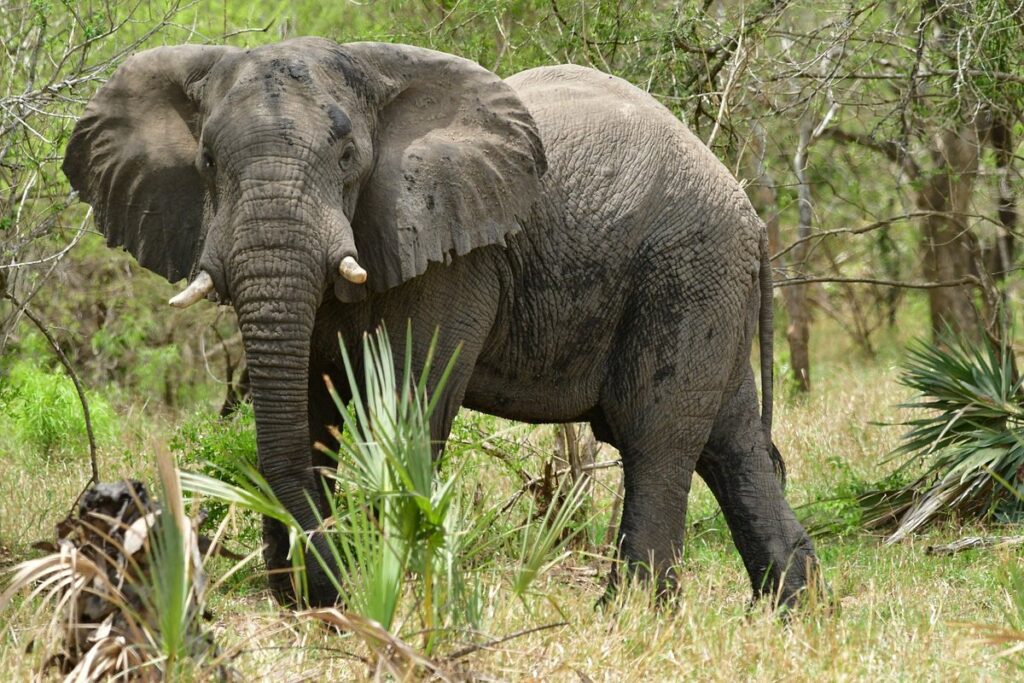
Gorongosa’s wildlife recovery is one of the most remarkable in modern conservation history. After near-collapse, herbivore populations have exploded due to intense protection and habitat restoration. Waterbuck, for example, now number in the tens of thousands — one of the densest populations in Africa.
- Elephants
- Lions
- Leopards
- Spotted hyenas
- Reintroduced wild dogs
- Hippos and crocodiles
- Nyala, bushbuck, reedbuck, and kudu
- Sable antelope and hartebeest
- Warthogs, baboons, and vervet monkeys
Predators have also made significant comebacks due to increasing prey availability. Lions, once nearly absent, now roam the park in growing numbers, while leopards and hyenas thrive in the varied habitats.
Birds
With more than 500 species recorded, Gorongosa is one of Africa’s premier birdwatching destinations. The floodplains, forests, lakes, and mountains each support distinct bird communities.
- African fish eagle
- Saddle-billed and marabou storks
- Palm-nut vulture
- Crowned cranes
- Pel’s fishing owl
- Kingfishers and bee-eaters
- Sunbirds, orioles, and weavers
- Martial and bateleur eagles
Mount Gorongosa is especially important for endemic species such as the green-headed oriole, making it a must-visit for ornithologists.
Reptiles, Amphibians, and Insects
Gorongosa’s reptiles include monitor lizards, tortoises, cobras, pythons, geckos, and a healthy crocodile population. Amphibians thrive during the wet season, with frogs and toads filling the air with calls and supporting a wide array of predators.
Insects — particularly butterflies, pollinators, beetles, and dragonflies — flourish in Gorongosa’s diverse environments, playing a crucial role in sustaining the food web.
Unique Features of Gorongosa National Park
Gorongosa’s most unique features include its dramatic ecological diversity, its rapid wildlife recovery, and the integration of community development with conservation. Mount Gorongosa’s rainforest is unlike any other in Mozambique and acts as a vital water tower for the entire region.
- Lake Urema: A large, seasonal lake that attracts huge concentrations of wildlife.
- Urema Valley: A fertile, ever-changing floodplain that supports massive herbivore numbers.
- Mount Gorongosa: A rainforest-covered massif with waterfalls, endemic species, and hiking trails.
- The Gorongosa Restoration Project: One of the world’s most important conservation initiatives.
Cultural and Indigenous Communities
More than 200,000 people live around Gorongosa. Their livelihoods depend on farming, fishing, and natural resource use, making community involvement essential for long-term conservation. The Gorongosa Restoration Project invests heavily in:
- Education (primary, secondary, and girls’ education programs)
- Healthcare services and mobile clinics
- Women’s empowerment initiatives
- Sustainable farming and agroforestry
- Youth training programs
These programs help reduce pressure on natural resources while improving the quality of life for local residents.
Conservation Importance
Gorongosa National Park is internationally recognized as a conservation leader. Its restoration model demonstrates how wildlife populations can recover even after severe decline, given proper protection, science-based management, and community participation.
Key conservation achievements include:
- Reintroduction of wild dogs
- Recovery of lions and leopards
- Expansion of herbivore populations
- Rainforest restoration on Mount Gorongosa
- Long-term ecological monitoring
Threats and Challenges
Despite its success, Gorongosa faces ongoing challenges such as agricultural expansion, illegal logging, habitat encroachment, human–wildlife conflict, and climate variability. The growing human population around the park increases demand for farmland and natural resources.
Conservation efforts focus on mitigating conflict, promoting sustainable agriculture, restoring degraded landscapes, and offering alternative livelihoods that support both people and wildlife.
Research and Monitoring
Gorongosa is a world-class scientific hub. The Gorongosa Biodiversity Science Center hosts researchers studying ecology, animal behavior, plant biology, entomology, hydrology, climate resilience, and conservation management. Long-term research programs include camera trap surveys, vegetation monitoring, primate studies, predator–prey dynamics, and water system analysis.
The park’s open-access scientific approach has made it a global leader in conservation research and ecological restoration science.
Tourism Activities
Gorongosa offers a wide range of activities for travelers seeking adventure, nature, science, and cultural immersion. Because the park emphasizes sustainable tourism, experiences remain intimate and low-impact, allowing visitors to enjoy wilderness without crowds.
- Game drives: Explore floodplains, savannas, rivers, and woodlands.
- Walking safaris: Learn about plants, tracks, insects, and animal behavior.
- Birdwatching: A paradise for bird lovers with over 500 species.
- Hiking Mount Gorongosa: Visit waterfalls, rainforest trails, and endemic species zones.
- Canoeing (seasonal): Explore lakes, wetlands, and water channels.
- Cultural visits: Engage with local communities and learn traditional crafts and stories.
Access and Getting There
Gorongosa National Park is accessible via the EN1 highway between Beira and Chimoio. The nearest major airport is Beira International Airport, which connects to Mozambique’s capital Maputo and other cities in the region.
During the rainy season, some roads may become difficult to navigate, while the dry season offers easier access to most areas of the park.
Permits, Fees, and Park Rules
Visitors pay park entry fees, conservation fees, and activity-based charges such as guided tours or hiking permits. These funds support scientific research, community programs, and ongoing restoration work.
- Stay on marked roads and designated trails.
- Do not disturb or feed wildlife.
- No removal of plants, rocks, or natural objects.
- Fires only in designated areas.
- Follow ranger and guide instructions at all times.
Accommodation
Visitors can choose from several accommodation options that balance comfort, sustainability, and proximity to wildlife:
- Montebelo Gorongosa Lodge & Safari: The main lodge with ensuite rooms, safari tents, and restaurant facilities.
- Wild camping sites: For adventurous travelers who want to experience nature up close.
- Eco-camps and community lodges: Supporting local employment and conservation programs.
These accommodations offer stunning views of floodplains, forests, and the towering slopes of Mount Gorongosa.
Best Time to Visit
The dry season (May–October) is ideal for wildlife viewing as animals gather along Lake Urema and river systems. Temperatures are comfortable, visibility is high, and road conditions are optimal for game drives.
The wet season (November–April) transforms the park into a lush, green paradise with incredible birdwatching opportunities, vibrant landscapes, and dramatic stormy skies perfect for wildlife photography.
Why Gorongosa National Park Is Unique
Gorongosa National Park is unique because it is more than just a safari destination — it is a living example of how nature can rebound when science, communities, and visionary conservation work together. Its rainforest-covered mountains, vast floodplains, restored wildlife populations, and community-focused model make it one of the most forward-thinking national parks in the world.
For visitors seeking powerful wildlife encounters, breathtaking scenery, cultural connection, and the chance to witness one of Earth’s greatest conservation success stories firsthand, Gorongosa National Park stands as one of the most remarkable and transformative destinations in Africa.