
Gulf of Khnifiss National Park
Gulf of Khnifiss National Park – Morocco’s Greatest Coastal Wetland, Bird Migration Haven, and Western Sahara’s Most Pristine Marine–Desert Ecosystem
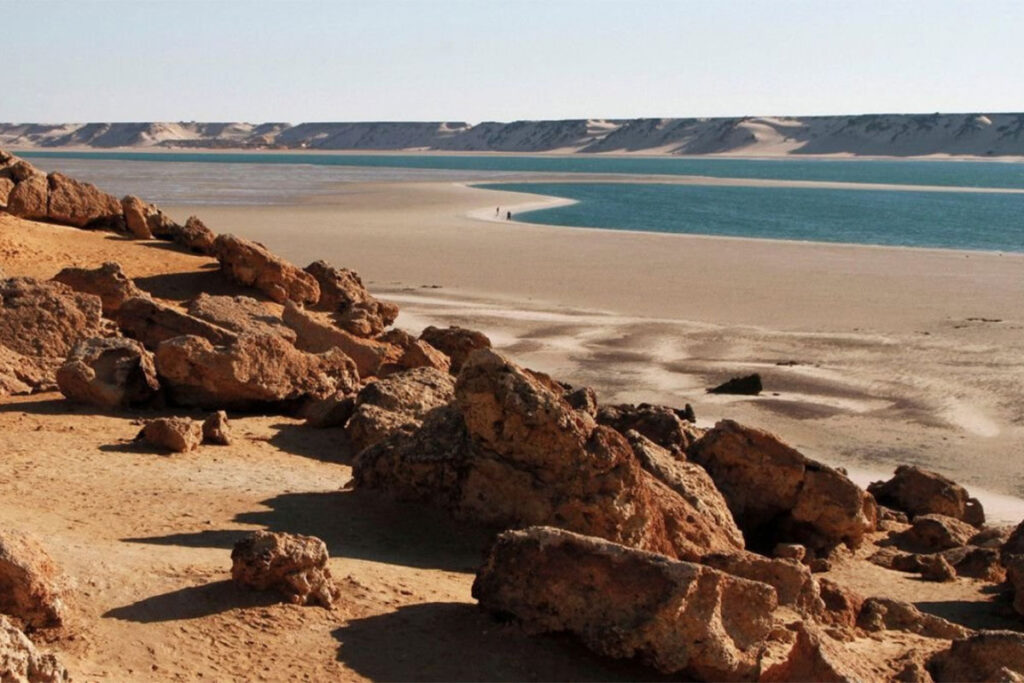
Gulf of Khnifiss National Park is one of Morocco’s most extraordinary natural treasures — a sweeping marine–desert landscape where turquoise lagoons, shifting dunes, salt marshes, and vast Saharan plains meet the wild Atlantic Ocean. Located in the southern region of Western Sahara, this 1,850 km² protected area is Morocco’s largest coastal wetland and one of the most critical stopover points for migratory birds traveling between Europe, Africa, and the Arctic. With its tranquil lagoon, rare wildlife, and breathtaking desert scenery, the Gulf of Khnifiss offers a peaceful yet strikingly powerful wilderness experience unlike anywhere else in North Africa.
Renowned for its exceptional biodiversity and ecological importance, the park is listed as a UNESCO Biosphere Reserve and a Ramsar Wetland of International Importance. Visitors can explore untouched dunes, observe flamingos wading in turquoise waters, discover desert wildlife adapted to extreme conditions, and experience the unique harmony between marine, lagoon, and desert ecosystems. Gulf of Khnifiss National Park is a sanctuary of solitude, beauty, and natural wonder — a hidden jewel of Morocco that rewards those seeking authentic and unspoiled landscapes.
Overview of Gulf of Khnifiss National Park
Established in 2006, Gulf of Khnifiss National Park was created to protect Morocco’s most significant coastal lagoon and its surrounding desert habitats. The park safeguards a rare combination of marine ecosystems, dune fields, salt flats, and inland desert plains that support an impressive number of resident and migratory species. It lies at the heart of the Sahara’s Atlantic fringe, offering a unique blend of North African desert landscapes and vibrant coastal wetlands.
The park is globally celebrated for its importance to avian species, particularly waders and flamingos that rely on the nutrient-rich lagoon as a feeding and wintering ground. Conservation efforts focus on maintaining habitat health, preserving lagoon water quality, monitoring bird populations, and promoting low-impact ecotourism. Gulf of Khnifiss remains one of the least disturbed wetlands on the African coastline, making it essential for regional biodiversity.
Location and Size
Gulf of Khnifiss National Park is located in southwestern Morocco along the Atlantic coast, between Tarfaya and the remote desert town of Tan-Tan. The park lies within the province of Laâyoune-Sakia El Hamra, in the region commonly referred to as Western Sahara.
Covering approximately 1,850 km², the park includes:
- The Khnifiss Lagoon (Sebkha de Khnifiss)
- Coastal wetlands
- Salt marshes and intertidal flats
- Sand dunes and Saharan plains
- Small rocky islands and marine zones
Its strategic position along the East Atlantic Flyway makes it a vital waypoint for birds migrating between Europe and sub-Saharan Africa.
Geography and Geology
The geography of Gulf of Khnifiss National Park is shaped by the interaction of desert winds, ocean currents, and the slow evolution of coastal landscapes. The park’s centerpiece, the Khnifiss Lagoon, is a long, narrow, and shallow body of water stretching nearly 20 km along the coast. This lagoon is bordered by dramatic sand dunes to the east and the rugged Atlantic coastline to the west.
The surrounding landscape features:
- Sandstone plateaus and cliffs formed by ancient marine sedimentation.
- Salt flats (sebkhas) created by evaporation in low-lying desert basins.
- Mobile sand dunes shaped by powerful Saharan winds.
- Intertidal mudflats enriched by nutrient upwelling from the Atlantic.
These desert–marine interfaces create a mosaic of habitats that support both coastal and desert-adapted organisms.
Climate
The park experiences a harsh yet fascinating desert climate, heavily influenced by the cold Canary Current of the Atlantic Ocean. Temperatures remain mild along the coast but rise significantly inland, creating stark thermal contrasts across short distances.
The climate is characterized by:
- Hot, dry summers with temperatures often exceeding 40°C inland.
- Mild winters influenced by cool ocean breezes.
- Very low annual rainfall, often less than 100 mm.
- Strong trade winds shaping dunes and coastal patterns.
Despite these extreme conditions, the lagoon remains a stable, life-supporting environment due to its connection with ocean tides and protected geomorphology.
Hydrology and Lagoon System
The hydrological heart of the park is the Khnifiss Lagoon, one of the most important brackish ecosystems in North Africa. Its waters are primarily influenced by Atlantic tides, with minimal freshwater input due to low regional rainfall.
The lagoon supports thriving communities of fish, crustaceans, mollusks, algae, and aquatic plants. During low tide, expansive mudflats become exposed, providing essential feeding grounds for wading birds such as flamingos, herons, plovers, and sandpipers.
Ecosystems and Habitats
Gulf of Khnifiss National Park contains a unique mix of desert and marine ecosystems. This diversity supports a surprising variety of species despite the region’s arid climate.
- Coastal Lagoon Ecosystem: Highly productive waters rich in fish, plankton, and invertebrates.
- Salt Marshes and Mudflats: Crucial feeding and resting areas for migratory birds.
- Dune Fields: Home to desert reptiles, rodents, and hardy shrubs.
- Desert Steppe: Supports gazelles, foxes, and small mammals.
- Rocky Coastlines: Habitat for seabirds and marine life.
Vegetation
Plant life in the Gulf of Khnifiss region is adapted to extreme dryness, salt concentration, and sandy soils. Vegetation is dominated by halophytic (salt-tolerant) plants in wetlands and drought-resistant shrubs in desert zones.
Common species include:
- Tamarix trees
- Halophyte shrubs
- Saltwort (Arthrocnemum spp.)
- Desert grasses
- Succulents adapted to arid climates
These plants stabilize dunes, provide nesting sites for birds, and support insects and small mammals.
Wildlife of Gulf of Khnifiss National Park
Birds
Birdlife is the highlight of Gulf of Khnifiss National Park. The lagoon is one of the most important wintering sites for birds along the East Atlantic Flyway. Tens of thousands of migratory birds arrive each year, making the park a paradise for ornithologists and birdwatchers.
- Greater flamingo
- Spoonbill
- Grey heron
- Little egret
- Dunlin and curlew sandpiper
- Oystercatcher and avocet
- Gulls and terns
- Brown booby and gannet (coastal areas)
Rare species such as the marbled teal and the Audouin’s gull have also been recorded.
Mammals
Although the park is primarily known for its birdlife, several desert-adapted mammals inhabit the surrounding plains and dunes.
- Dorcas gazelle
- Red fox and fennec fox
- African wildcat
- Desert hedgehog
- Gerbils, jerboas, and other small rodents
Reptiles, Amphibians, and Insects
Reptiles thrive in the hot, sandy habitats of the park. Common species include sand vipers, geckos, skinks, and desert tortoises. Amphibians are rare due to low water availability, but insects — especially beetles, dragonflies, and butterflies — are abundant around the lagoon and vegetation patches.
Unique Features of the Park
Gulf of Khnifiss National Park is unique for its seamless blend of marine and desert environments. The Khnifiss Lagoon, a turquoise jewel set against golden dunes and rocky cliffs, is one of the most beautiful natural features in Morocco.
- Khnifiss Lagoon: Morocco’s largest lagoon and a globally significant bird habitat.
- Sand Dune Systems: Majestic dunes sculpted by Atlantic–Saharan winds.
- Salt Marshes: Essential wetlands supporting migratory bird populations.
- Remote Desert Landscapes: Vast, silent, and spectacularly untouched.
Cultural and Indigenous Communities
Nomadic and semi-nomadic Saharan communities have historically lived in the region surrounding the park. These communities rely on small-scale fishing, pastoralism, and traditional handicrafts. Their deep knowledge of the desert environment contributes to sustainable natural resource use.
Local culture reflects Saharan identity through music, camel traditions, storytelling, and hospitality. Careful integration of community development with conservation helps ensure that local people benefit from eco-tourism and protection efforts.
Conservation Importance
Gulf of Khnifiss National Park holds immense ecological value:
- It protects Morocco’s largest and most biologically productive lagoon.
- It supports up to 20,000 wintering birds annually.
- It preserves key desert habitats threatened by climate change and development.
- It contributes to the conservation of globally threatened species.
The park plays a critical role in the Mediterranean–Atlantic migratory bird network and is essential for maintaining regional biodiversity.
Threats and Challenges
While the park remains relatively undisturbed, several threats persist:
- Climate change leading to rising temperatures and altered hydrology.
- Illegal fishing and unsustainable extraction of marine resources.
- Disturbance to nesting birds from unregulated tourism.
- Coastal development pressures outside park boundaries.
Effective management, community involvement, and strict protection measures help mitigate these issues.
Research and Monitoring
Scientific research focuses on bird population dynamics, lagoon hydrology, climate impacts, and the ecological health of wetlands. Annual bird counts and satellite tracking offer insights into migratory behavior. Studies also monitor dune movement, plant adaptations, and marine productivity.
Collaboration with universities and conservation organizations strengthens long-term park management.
Tourism Activities
Although still developing as a tourist destination, Gulf of Khnifiss offers serene and nature-focused activities for visitors seeking authentic desert and coastal experiences.
- Birdwatching: Flamingos, herons, waders, and migratory species.
- Boat trips: Explore the lagoon’s tranquil waters.
- Photography: Spectacular dunes, coastal light, and wildlife.
- Desert excursions: Camel trekking and guided 4×4 tours.
- Stargazing: Exceptionally clear desert skies with minimal light pollution.
Access and Getting There
The park is accessible via the coastal road connecting Tarfaya, Tan-Tan, and Laâyoune. The nearest airports are in Laâyoune and Tan-Tan, offering domestic and limited international flights.
Visitors typically reach the lagoon through guided tours or private vehicles, as infrastructure remains minimal to preserve the park’s untouched character.
Permits, Fees, and Park Rules
Visitors should follow conservation guidelines to protect sensitive habitats and wildlife:
- Stay on designated tracks and pathways.
- Do not disturb birds, especially during nesting or feeding.
- No littering or removal of natural materials.
- Fishing allowed only in regulated zones.
- Respect quiet zones and fragile dune ecosystems.
Accommodation
Accommodation options are limited but expanding. Visitors can stay in:
- Eco-friendly camps near the lagoon
- Desert guesthouses in nearby towns
- Small lodges in Tarfaya or Tan-Tan
- Mobile desert camps for overnight excursions
These offer proximity to the park’s landscapes while supporting sustainable tourism.
Best Time to Visit
The best time to visit Gulf of Khnifiss National Park is between October and March, when temperatures are mild and birdlife is at its peak. Winter months attract thousands of migratory birds that transform the lagoon into a vibrant wildlife sanctuary.
Spring and early summer offer excellent dune scenery and calm weather, though temperatures rise considerably inland.
Why Gulf of Khnifiss National Park Is Unique
Gulf of Khnifiss National Park is unique for its remarkable blend of Sahara desert wilderness and pristine Atlantic coastal ecosystems. Its turquoise lagoon, shifting dunes, and globally important bird populations create a landscape that feels both peaceful and otherworldly. With minimal development, thriving wildlife, and striking natural beauty, it remains one of Morocco’s most untouched and awe-inspiring protected areas.
For travelers seeking solitude, birdwatching excellence, dramatic desert–coastal scenery, and authentic eco-tourism experiences, the Gulf of Khnifiss stands out as one of North Africa’s most extraordinary natural destinations.