
Hwange National Park
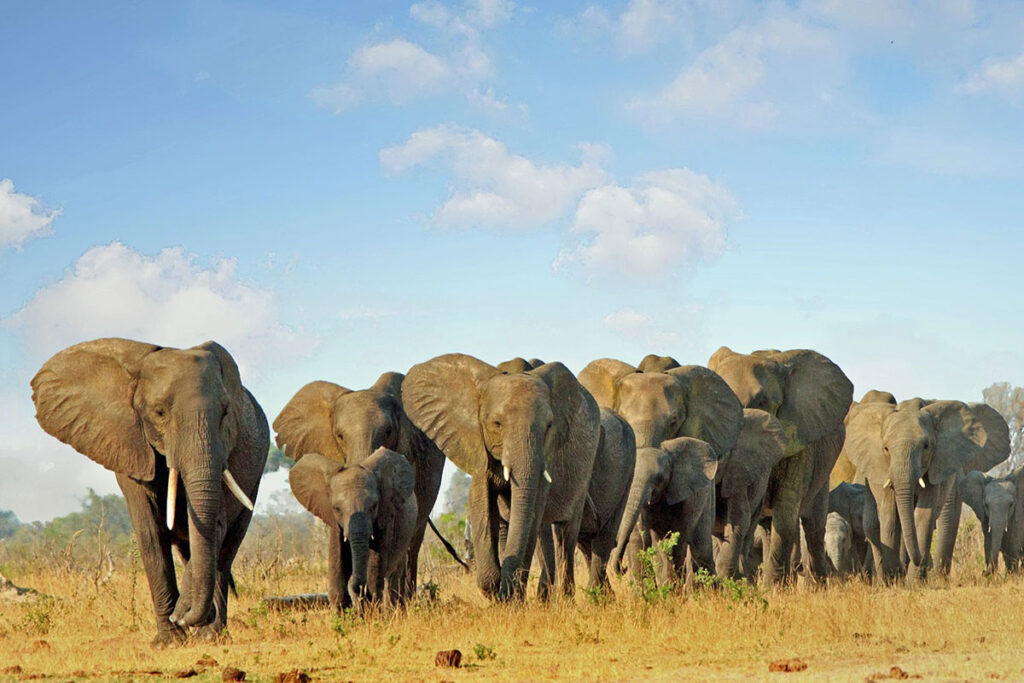
Hwange National Park – Zimbabwe’s Largest Wildlife Reserve and Premier Big Five Safari Destination of Elephants, Open Savannas, Pumped Waterholes, and Untamed Wilderness
Hwange National Park is Zimbabwe’s biggest and most iconic wildlife sanctuary — a 14,650 km² expanse of sweeping savannas, ancient teak forests, saltpans, and seasonal wetlands teeming with life. Renowned for hosting one of the largest elephant populations on Earth, Hwange is a premier African safari destination celebrated for its raw wilderness atmosphere, prolific big game sightings, and pioneering conservation history. Situated in western Zimbabwe near the borders of Botswana and Zambia, the park forms part of the Kavango–Zambezi Transfrontier Conservation Area (KAZA TFCA), one of the world’s largest protected wildlife landscapes.
Hwange National Park offers a truly wild safari experience. Its diversity of habitats attracts huge numbers of animals year-round, especially during the dry season when artificially pumped waterholes draw elephants, buffalo, predators, and plains game in astonishing concentrations. Unlike many commercialized parks in Africa, Hwange retains a natural sense of solitude — vast horizons, silent woodlands, and remote pans where wildlife behaves as it has for centuries. For travelers, photographers, and conservation enthusiasts, Hwange is one of Africa’s most inspiring and unforgettable game reserves.
Overview of Hwange National Park
Established in 1928 as a game reserve and declared a national park in 1961, Hwange has grown into Zimbabwe’s most important wildlife conservation area. Once known as Wankie Game Reserve, the park was historically a royal hunting ground of the Ndebele Kingdom. Today, Patrolling ranger units, community conservation programs, and long-standing partnerships with NGOs ensure Hwange remains a thriving refuge for wildlife.
The park’s reputation centers on its extraordinary elephant herds — often exceeding 40,000 individuals — along with strong populations of lions, buffalo, cheetahs, leopards, African wild dogs, and more than 100 species of mammals. Hwange’s mixture of woodland, Kalahari desert sands, grasslands, and wetlands creates biodiversity unmatched elsewhere in Zimbabwe. In peak season, its pumped waterholes become world-famous wildlife hotspots, regularly producing dramatic interactions among predators and prey.
Location and Size
Hwange National Park is located in western Zimbabwe, between Bulawayo and Victoria Falls, making it easily accessible for safari itineraries that combine wildlife with one of the world’s great natural wonders. The park lies along the northeastern edge of the Kalahari Basin, where semi-arid sands give way to savanna woodlands and mopane bushveld.
Covering about 14,650 km², Hwange is larger than many European countries and rivals some of Africa’s greatest wilderness areas in scale. Its strategic location bordering Botswana enhances regional wildlife connectivity and supports large-scale migrations of elephants, predators, and ungulates across the KAZA conservation landscape.
Geography and Geology
Hwange’s landscapes are shaped by ancient geological processes and the influence of Kalahari sands blown eastward over millennia. Much of the park rests on deep, nutrient-poor sandy soils that support the widespread growth of teak and acacia woodlands. These sandy substrates create gentle dune-like formations, flat plains, and isolated rocky outcrops.
Key geographical features include:
- Kalahari sandveld: Dominant throughout the park, forming open savannas and shrublands ideal for grazers.
- Ancient fossil pans: Shallow depressions that fill with water in the rainy season and become vital dry-season hotspots.
- Isolated ridges and hills: Offering spectacular views over vast plains.
- Seasonal wetlands: Flooded grasslands that attract birds, elephants, and large herbivores.
This blend of terrain makes Hwange one of southern Africa’s most visually diverse national parks.
Climate
Hwange experiences a semi-arid climate strongly influenced by the Kalahari ecosystem. Summers (November–March) are hot and rainy, transforming the park into lush green landscapes with abundant water and thick vegetation. This is the calving season, when many species give birth and migrant birds arrive in spectacular numbers.
Winters (May–August) are dry, cool, and ideal for classic game viewing. During this period, animals cluster around pumped waterholes, creating dramatic scenes of survival as predators stalk prey amid shrinking water sources. Temperatures can drop sharply at night, especially in June and July.
The transitional months of September and October are the hottest and driest of the year, often producing the highest wildlife concentrations as water becomes increasingly scarce.
Hydrology and Waterholes
Hwange differs from many other African parks because its ecosystems rely heavily on artificially pumped waterholes. In the dry months, natural water sources become almost nonexistent, making human-managed boreholes essential to sustaining large wildlife populations, particularly elephants.
Key hydrological features include:
- Pumped pans: Boreholes powered by diesel or solar systems that keep water flowing year-round.
- Seasonal pans: Naturally filled by summer rain, crucial for breeding amphibians and birds.
- Wetland depressions: Grasslands that flood temporarily and attract large herbivores.
- Ephemeral streams: Active only in high rainfall years.
Hwange’s waterhole network is vital to maintaining its iconic wildlife spectacles and supports biodiversity through unpredictable climate patterns.
Ecosystems and Habitats
Hwange National Park protects a mosaic of ecosystems reflective of both Kalahari and savanna biomes. The varied habitats support a wide range of species adapted to distinct ecological niches.
- Teak and mopane woodlands: Provide shade, cover, and forage for elephants, kudu, and browsers.
- Open grasslands: Ideal hunting terrain for cheetahs, lions, and hyenas.
- Mixed acacia savanna: Supports zebra, buffalo, and numerous antelope species.
- Saltpans and fossil pans: Crucial seasonal habitats for waterbirds and grazers.
- Riparian forests: Found along wetland areas, sheltering leopards, baboons, and rare birds.
Because of this habitat diversity, Hwange supports more large mammal species than any other national park in Zimbabwe.
Vegetation
Hwange’s vegetation ranges from dense woodlands to open savannas, with distinct plant communities shaped by soil type, fire regimes, and elephant browsing pressure. Common species include mopane trees, Zambezi teak, camelthorn, silver cluster-leaf, acacias, and several grass varieties that support both grazers and browsers.
During the rainy season, tall grasses and flowering plants blanket the landscape, providing rich forage and contributing to nutrient cycling. In the dry season, vegetation becomes sparse, making wildlife easier to observe around waterholes.
Wildlife of Hwange National Park
Mammals
Hwange is famous for its extraordinary mammal diversity — more than 100 species — making it one of the best safari destinations in Africa. The park’s iconic wildlife includes massive elephant herds, large predator populations, and a wide array of antelope and smaller mammals.
- Elephants: One of the largest free-roaming populations in the world.
- Lions: Including Hwange’s renowned large-maned males.
- Leopards: Frequently spotted in woodlands and rocky areas.
- Cheetahs: Thrive in the park’s open plains.
- African wild dogs: Hwange is a major stronghold for this endangered species.
- Buffalo: Large herds congregate at waterholes.
- Antelope species: Sable, roan, eland, kudu, impala, springbok, and more.
Hwange is also home to hyenas, giraffes, baboons, civets, jackals, warthogs, and smaller predators, creating a complete African savanna ecosystem.
Birds
Hwange is a premier birdwatching destination with more than 420 recorded species. The mixture of woodland, grassland, and wetland habitats creates ideal conditions for raptors, waterbirds, and migratory species.
- Raptors such as bateleur, martial eagle, and secretarybird
- Vultures including white-backed, lappet-faced, and hooded vultures
- Large ground birds like kori bustard and southern ground hornbill
- Wetland species including herons, storks, and African jacana
- Colorful species such as lilac-breasted rollers, bee-eaters, and kingfishers
Birdlife peaks in the rainy season, when migrants arrive and breeding activity intensifies across wetlands and pans.
Reptiles, Amphibians, and Insects
Reptiles are common throughout the park and include Nile crocodiles in pans, monitor lizards along riverbeds, several snake species (both venomous and harmless), tortoises, skinks, and geckos. Amphibians such as frogs and toads thrive in seasonal wetlands during the rains.
Insects — especially butterflies, beetles, termites, and dragonflies — flourish in the rainy season and play essential roles in pollination, decomposition, and the overall health of the ecosystem.
Unique Features of Hwange National Park
Hwange’s most famous feature is its immense elephant population and the extraordinary wildlife spectacles that unfold at its waterholes, especially during the dry season. Watching hundreds of elephants, buffalo, zebras, and predators converge on pumped pans at sunset is one of the most iconic safari experiences in Africa.
Additional unique features include:
- Pumped waterhole network: One of Africa’s most extensive artificial water systems supporting wildlife year-round.
- Spectacular predator viewing: Especially lions, cheetahs, hyenas, and wild dogs.
- Varied landscapes: From teak forests to Kalahari sandveld.
- Rich historical significance: Once royal hunting grounds of the Ndebele Kingdom.
Cultural and Indigenous Communities
Hwange is surrounded by Zimbabwean communities, many of which are involved in sustainable tourism and conservation programs. These communities have cultural traditions rooted in Ndebele and Tonga heritage, including music, dancing, woodcarving, basketry, and agriculture.
Community-run conservancies and cultural experiences:
- Promote sustainable livelihoods
- Reduce human–wildlife conflict
- Encourage wildlife corridors connecting Hwange to Botswana
Conservation Importance
Hwange is vital for wildlife conservation in Zimbabwe and across southern Africa. The park is a stronghold for elephants, wild dogs, lions, and rare antelope such as sable and roan. As part of the KAZA transfrontier network, Hwange plays a critical role in maintaining large-scale wildlife movements and genetic diversity.
Major conservation priorities include:
- Anti-poaching patrols and security operations
- Waterhole maintenance and solar pump upgrades
- Wild dog monitoring and protection
- Habitat restoration and fire management
- Community engagement and conflict mitigation
Threats and Challenges
Hwange faces several challenges that require continuous management, including:
- Poaching, particularly of elephants for ivory
- Pressure on pumped waterhole systems
- Human–wildlife conflict in adjacent communities
- Climate change affecting rainfall and water availability
- Habitat degradation due to elephant overpopulation
Research and Monitoring
Hwange hosts numerous long-term research programs investigating predator ecology, elephant demographics, wild dog behavior, climate resilience, and vegetation dynamics. Partnerships with universities and NGOs such as Painted Dog Conservation and The Scorpion Anti-Poaching Unit provide critical scientific data and conservation support.
Tourism Activities
Hwange offers a wide variety of safari activities for visitors seeking an immersive African wildlife experience.
- Game drives: Day and night drives through varied habitats.
- Walking safaris: Guided bush walks with professional rangers.
- Birdwatching: Especially rewarding during the Green Season.
- Photography: Famous for dramatic wildlife encounters at waterholes.
- Private hides and photographic blinds: Close-up viewing opportunities.
Access and Getting There
Hwange is easily accessible via:
- Hwange Main Camp: Nearest to Bulawayo.
- Sinamatella Camp: Northern access route.
- Robins Camp: Western section near Botswana.
Hwange Airport and Victoria Falls International Airport offer flights for travelers combining safaris with regional destinations.
Permits, Fees, and Park Rules
Visitors must pay park entry fees and follow standard conservation guidelines:
- Remain in vehicles except in designated areas.
- Respect wildlife and maintain safe distances.
- No feeding animals.
- Follow guide and ranger instructions.
- Use designated roads only.
Accommodation
Hwange offers an excellent selection of safari camps, lodges, and campgrounds:
- Main Camp: Affordable and accessible.
- Sinamatella: Elevated views and rustic charm.
- Robins Camp: Historic and recently upgraded.
- Private luxury lodges: Including Somalisa, The Hide, Linkwasha, and Davison’s Camp.
- Exclusive photographic hides and bush camps: Immersive wilderness experiences.
Best Time to Visit
The dry season (June–October) is the best time for wildlife viewing as animals gather at waterholes in large numbers. The rainy season (November–April) brings dramatic greenery, bird migrations, newborn animals, and breathtaking stormy skies — ideal for photographers.
Why Hwange National Park Is Unique
Hwange National Park stands out as a vast, authentic wilderness rich with wildlife spectacle. Its unrivaled elephant concentrations, historic pumped waterholes, strong predator populations, diverse habitats, and strategic location within the KAZA landscape make it one of Africa’s most important and exhilarating safari destinations.
For travelers seeking unforgettable elephant encounters, dramatic predator action, remote wilderness, and deep conservation significance, Hwange National Park represents the very best of Zimbabwean safari adventure — wild, powerful, and timeless.