
Iriqui National Park
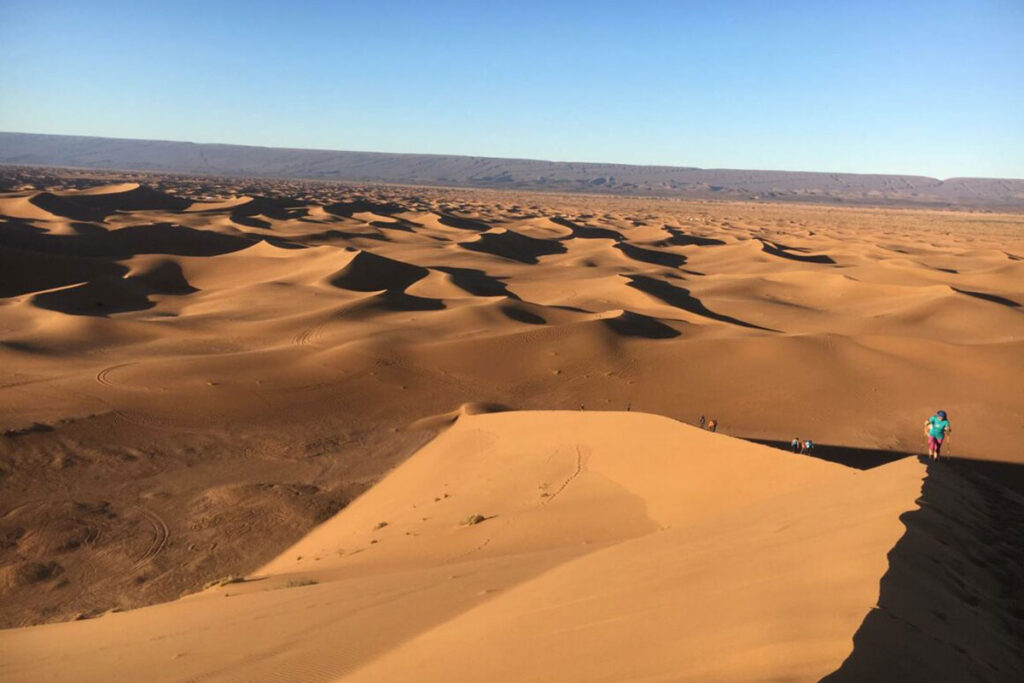
Iriqui National Park – Morocco’s Vast Sahara Wilderness of Salt Flats, Erg Dunes, Acacia Savannahs, Migratory Bird Wetlands, and Untouched Desert Biodiversity
Iriqui National Park is one of Morocco’s most remote, expansive, and ecologically significant desert protected areas — a pristine Saharan wilderness covering nearly 123,000 hectares of shimmering salt pans, rolling sand dunes, volcanic plateaus, acacia savannas, and ancient dry riverbeds. Situated between Foum Zguid, the Draa Valley, and the Algerian border, the park marks a dramatic transition between Morocco’s semi-arid southern foothills and the true Sahara Desert. This vast, quiet landscape — where winds sculpt dunes, mirages stretch across dry lakebeds, and wildlife survives against all odds — is a haven for migratory birds, endangered desert mammals, and unique plant species perfectly adapted to extreme aridity.
Iriqui is a park of silence and scale, where the horizon appears infinite and nature reveals its resilience in a pure, undisturbed environment. Seasonal wetlands form after rare rains, transforming the enormous dry lake of Dayet Iriqui into a temporary oasis that attracts flamingos, spoonbills, ducks, and countless waders. Nomadic Amazigh communities have crossed these lands for centuries, following ancestral caravan trails and grazing routes that once linked North Africa with deep Saharan trade networks. Today, the park remains one of Morocco’s last true wildernesses and one of the most compelling destinations for desert exploration, scientific research, and sustainable eco-tourism.
Overview of Iriqui National Park
Established in 1994, Iriqui National Park was created to preserve the delicate ecological balance of the Saharan landscapes surrounding Lake Iriqui — an expansive dry basin that becomes one of Morocco’s most important seasonal wetlands after rare rainfall events. The park also protects critical habitats for desert wildlife such as dorcas gazelles, Rüppell’s foxes, desert hedgehogs, and numerous reptile species that have evolved remarkable adaptations to survive prolonged drought, minimal vegetation, and extreme temperature fluctuations.
Iriqui serves as a transition zone between Morocco’s southern Anti-Atlas region and the central Sahara. Its ecosystems fluctuate dramatically depending on rainfall, wind cycles, and water availability, creating an ever-changing landscape that is essential for migratory birds traveling from Europe and sub-Saharan Africa. The park’s conservation mission extends beyond wildlife: it also protects important cultural heritage sites, ancient caravan routes, and traditional nomadic grazing areas that reflect centuries of Saharan history.
Location and Size
Iriqui National Park is located in southern Morocco at the edge of the Draa Valley, stretching eastward toward the Algerian border. The gateway town of Foum Zguid lies to the west, while Zagora and M’Hamid — the famous starting points for Sahara expeditions — sit to the north and south.
Covering more than 123,000 hectares (1,230 km²), the park encompasses:
- Lake Iriqui: A massive sebkha (salt flat) that becomes a shallow lake during exceptionally wet years.
- Erg Iriqui dunes: Sweeping sand dunes marking the beginning of the central Sahara’s dune systems.
- Hamada and reg plains: Stony and gravel surfaces typical of the western Sahara.
- Wadis (dry riverbeds): Seasonal waterways important for plants and wildlife.
- Acacia savannas: Pockets of hardy vegetation supporting desert herbivores.
Its remote location and rugged terrain give Iriqui an untouched, almost otherworldly atmosphere rarely found in modern Morocco.
Geography and Geology
Iriqui’s geography is shaped by millions of years of shifting dunes, evaporating lakes, volcanic activity, and relentless Saharan winds. The park sits within one of the oldest geological zones of North Africa, where fossils, sedimentary structures, and ancient rock formations tell the story of prehistoric lakes and long-extinct ecosystems.
- Dayet Iriqui (dry lakebed): Once part of a vast wetland system, now a shimmering salt crust that occasionally floods.
- Erg dune systems: Expansive sand formations shaped by strong desert winds.
- Hamada plateaus: Rocky plains with desert pavement created by erosion over millennia.
- Volcanic outcrops: Isolated hills that break the horizon and shelter wildlife.
- Gravel and stone deserts: Harsh habitats where only the most specialized species survive.
These geological contrasts create a visually striking mosaic of landscapes — from wide open horizons to sharp escarpments and fossil-rich plateaus.
Climate
Iriqui National Park experiences a hyper-arid Saharan climate characterized by scorching summers, cold winters, and extremely low annual rainfall. Rain is rare and unpredictable, but when it arrives in bursts, it triggers dramatic ecological changes — wildflowers bloom briefly across desert plains, migratory birds descend in vast numbers, and the dry lakebed transforms into a water-filled oasis.
Daytime temperatures in summer frequently exceed 45°C, while nighttime temperatures can drop significantly, especially during winter. The region sees high winds that shape dunes, transport sand, and create spectacular desert atmospheres. Despite harsh conditions, fog from nearby Atlantic influences occasionally reaches the dunes, sustaining life through humidity alone.
Hydrology and Water Systems
Water is the most critical ecological driver in Iriqui National Park, shaping the park’s biological cycles and influencing vegetation, wildlife movements, and bird migration patterns.
- Lake Iriqui: A vast salt pan that becomes a shallow freshwater lake after rainfall, attracting flamingos, ducks, spoonbills, and waders.
- Seasonal wadis: Channels such as Oued Naam and Oued Laatach that flow only during infrequent storms.
- Groundwater reserves: Supporting acacia and tamarisk trees essential for grazing wildlife.
- Ephemeral wetlands: Temporary pools that serve as breeding zones for insects and amphibians.
Even the short-lived presence of water dramatically transforms the desert into a thriving ecological hotspot, showing the fragile but powerful connection between hydrology and Sahara biodiversity.
Ecosystems and Habitats
Iriqui National Park contains several distinct Saharan ecosystems, each supporting wildlife uniquely adapted to the rigors of desert life:
- Dry lake ecosystems: Seasonal feeding grounds for migratory birds.
- Sand dunes: Habitat for reptiles, insects, rodents, and hardy grasses.
- Acacia savannas: Sheltering gazelles, hares, and foxes.
- Hamada plains: Home to ground-nesting birds and desert carnivores.
- Rocky plateaus: Offering nesting sites for raptors and refuges for desert plants.
These habitats create a landscape where survival depends on extreme adaptation, ecological timing, and the unpredictable presence of rainfall.
Vegetation
Vegetation in Iriqui National Park is sparse but ecologically essential. Plants survive through deep root systems, microscopic leaves, slow growth rates, and the ability to withstand long periods without water.
- Acacia tortilis and Acacia raddiana: Providing shade and food for herbivores.
- Tamarisk species: Thriving along wadis and moist depressions.
- Halophytic plants: Salt-tolerant flora growing near the dry lake’s margins.
- Drought-resistant grasses: Enabling gazelles and small mammals to feed.
- Xerophytic shrubs: Carrying water-conserving adaptations essential for survival.
Following rain, the desert briefly erupts in color as seasonal plants germinate, flower, and seed in a matter of days — a short but dramatic ecological event.
Wildlife of Iriqui National Park
Mammals
Despite its extreme environment, Iriqui National Park is home to a fascinating variety of desert mammals adapted to scarce water and intense heat. These species have keen senses, nocturnal habits, and behavioral adaptations that help them survive the Sahara’s challenges.
- Dorcas gazelle: A graceful antelope and the park’s flagship species.
- Fennec fox: Famous for its oversized ears and nocturnal hunting.
- Rüppell’s fox: Agile and well-adapted to open desert habitats.
- Barbary sheep: Found in rocky and mountainous zones.
- African wildcat: A stealthy nocturnal predator.
- Rodents: Jerboas, gerbils, and desert mice that support larger predators.
Birds
Iriqui is a vital stopover for migratory birds traveling through North Africa. The seasonal appearance of Lake Iriqui transforms the park into a major wetland, attracting birds from Europe, West Africa, and the Mediterranean.
- Greater flamingos
- Eurasian spoonbills
- Shelducks and wading birds
- Sandgrouse species adapted to dry plains
- Larks, wheatears, and desert sparrows
- Raptors such as eagles, kestrels, and falcons
When water is present, thousands of birds may gather here, turning the desert into a thriving wetland ecosystem.
Reptiles, Amphibians, and Insects
Reptiles and insects are some of the most successful desert survivors in Iriqui. Their ability to regulate heat, burrow underground, and remain dormant for long periods supports their survival.
- Horned vipers and desert snakes
- Agamas and geckos
- Scorpions adapted to arid climates
- Beetles specialized for sandy environments
Amphibians are rare but may appear in ephemeral pools after rainfall.
Unique Features of Iriqui National Park
Iriqui stands out among Morocco’s national parks for its dramatic Saharan character and extreme ecological contrasts:
- Seasonal transformation: A dry lakebed turning into a vibrant wetland.
- Pure desert wilderness: Vast, untouched landscapes stretching to the horizon.
- Nomadic heritage: Living traditions of Amazigh desert communities.
- Dramatic geodiversity: Salt pans, dunes, volcanic hills, and hamada plains.
- Critical bird habitat: One of Morocco’s key wetlands during wet years.
Cultural and Indigenous Communities
For centuries, Iriqui has been home to Amazigh nomads who maintain traditional lifestyles centered on camel herding, desert navigation, and water knowledge. Their intimate understanding of the land, weather patterns, and seasonal vegetation has shaped sustainable living practices in the Sahara.
Visitors can experience:
- Nomadic camps and tented settlements
- Amazigh traditions of storytelling, music, and craftsmanship
- Carpets, jewelry, and leatherwork reflecting desert culture
- Ancient caravan routes once used for trans-Saharan trade
Conservation Importance
Iriqui National Park plays a vital role in conserving Morocco’s Saharan biodiversity, preserving key desert habitats, and sustaining migratory bird populations. The park’s ecological value includes:
- Protecting crucial wetland habitats for migratory birds
- Supporting desert-adapted herbivores and predators
- Preserving drought-resistant vegetation essential for soil stability
- Maintaining ecological corridors linking the Draa Valley to the Sahara
Threats and Challenges
Although remote, Iriqui faces several conservation challenges that require careful management:
- Poaching of gazelles and small mammals
- Uncontrolled grazing by domestic livestock
- Damage from off-road vehicles
- Climate change reducing rainfall frequency
- Loss of migratory bird nesting sites due to drought
Research and Monitoring
Iriqui National Park is an important research site for scientists studying desert ecology, climate resilience, and migratory bird patterns. Current studies involve:
- Monitoring bird populations and migration trends
- Mapping acacia and tamarisk regeneration
- Assessing gazelle population recovery
- Studying hydrological cycles of Lake Iriqui
Tourism Activities
Tourism in Iriqui is centered on wilderness exploration, desert landscapes, and cultural encounters:
- 4×4 expeditions across dunes, hamadas, and dry lakebeds
- Birdwatching during rare wet periods
- Desert photography capturing vast horizons and geological formations
- Camel trekking with Amazigh guides
- Stargazing under some of Morocco’s darkest skies
- Cultural tours to nomadic communities
Access and Getting There
Iriqui is remote and requires preparation, but access is possible through several routes:
- Foum Zguid: Main access point for 4×4 expeditions.
- Zagora and M’Hamid: Popular desert gateway towns.
- Tracks toward Erg Chigaga: Connecting dune fields to the park boundary.
Travelers should use 4×4 vehicles and consider guided tours due to challenging terrains and navigation.
Permits, Fees, and Park Rules
While entrance to the park is typically unrestricted, guided activities or special research projects may require permits. To protect this fragile ecosystem, visitors must follow certain rules:
- No collecting rocks, fossils, or plants
- Stay on marked tracks to avoid damaging dunes
- Respect wildlife and nomadic settlements
- Carry adequate water, food, and supplies
- Avoid disturbing nesting birds or desert rodents
Accommodation
Accommodation options are limited but atmospheric:
- Guesthouses in Foum Zguid
- Sahara eco-lodges near Erg Chigaga
- Nomadic-style bivouac camps
- Designated desert campsites
Most visitors combine Iriqui with nearby desert regions such as the Draa Valley or Erg Chigaga for multi-day expeditions.
Best Time to Visit
The best time to explore Iriqui National Park is from October to April, when temperatures are comfortable and the desert is most accessible. Winter and early spring offer the chance to witness migratory birds if Lake Iriqui holds water. Summer months are intensely hot but provide exceptional stargazing and photography.
Why Iriqui National Park Is Unique
Iriqui National Park is one of the most remarkable natural treasures in Morocco — a vast expanse of untouched Saharan beauty where ancient salt flats, high dunes, acacia savannas, and volcanic plateaus combine to create a uniquely powerful landscape. Its ecological importance, cultural heritage, migratory bird wetlands, and incredible desert biodiversity make it a truly irreplaceable conservation area.
For travelers seeking complete immersion in the Sahara’s silence, mystery, and beauty, Iriqui offers a rare and unforgettable experience — a pure desert wilderness shaped by wind, time, and the enduring resilience of life in one of the harshest environments on Earth.