
Isalo National Park
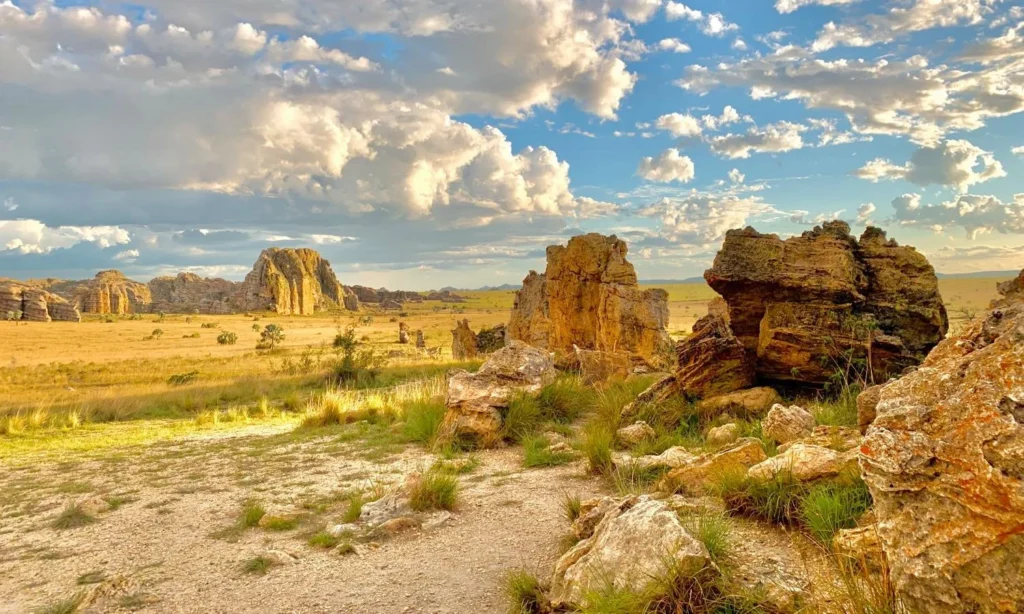
Isalo National Park – Madagascar’s Dramatic Sandstone Massif of Canyons, Oases, Ring-Tailed Lemurs, Endemic Plants, and Sacred Bara Heritage
Isalo National Park is one of Madagascar’s most breathtaking natural wonders — a vast sanctuary of sandstone cliffs, deep canyons, dramatic rock formations, palm-fringed oases, and rare endemic flora and fauna. Covering more than 815 km² in the island’s southwest, Isalo showcases a uniquely sculpted Jurassic sandstone landscape formed over 150 million years of erosion. Its mixture of desert terrain, rocky plateaus, lush canyon forests, and flowing water sources creates an exceptionally diverse ecosystem that draws biologists, hikers, photographers, and cultural travelers from around the world.
Beyond its natural beauty, Isalo is a living cultural landscape deeply connected to the Bara people, who have inhabited the region for centuries. The Bara’s sacred tombs carved into cliffs, ancestral burial traditions, and spiritual ties to the mountains offer visitors a compelling glimpse into Madagascar’s rich cultural history. The park’s combination of stunning scenery, biodiversity, and indigenous heritage makes it one of the island’s most iconic and irreplaceable destinations.
Overview of Isalo National Park
Established in 1962, Isalo National Park is one of Madagascar’s oldest protected areas and remains one of the most popular attractions along the country’s famed RN7 route. The park straddles a transitional ecological zone between the western dry deciduous forests and the southern spiny forests, resulting in a remarkable blend of habitats supporting species found nowhere else on Earth. This unique positioning, combined with dramatic geological formations, makes Isalo a hotspot for scientific research, conservation, and eco-tourism.
The park is co-managed by Madagascar National Parks and local communities, ensuring that conservation efforts directly support surrounding villages. Through sustainable tourism programs, Isalo helps protect threatened wildlife such as the ring-tailed lemur and Verreaux’s sifaka while generating employment and preserving Bara cultural practices.
Location and Size
Isalo National Park is located near the town of Ranohira in southwestern Madagascar. The park lies approximately 700 km south of Antananarivo and 280 km north of Toliara, making it a convenient and essential stop for travelers exploring southern Madagascar. Its placement along the RN7 highway means Isalo is easily accessible compared to many remote parks on the island.
Its vast area of 815 km² includes:
- towering sandstone plateaus rising dramatically above grasslands,
- deep canyon systems sheltering forests and streams,
- savanna ecosystems supporting grazing herbivores,
- lush oases with crystal-clear natural pools,
- rock pinnacles and weathered formations shaped by erosion.
The sheer size and diversity of landscapes allow visitors to explore different ecosystems within a single day.
Geography and Geology
Isalo’s geology is one of its most striking features. The park is dominated by a massive Jurassic sandstone formation dating back over 150–200 million years. Wind, rain, and temperature fluctuations carved the rocks into an astonishing variety of formations resembling fortresses, towers, arches, and natural monuments.
- Rocky ridges and pinnacles: Created through millions of years of uplift and erosion.
- Deep gorges and slot canyons: Formed by seasonal rivers that sculpt narrow passages through the stone.
- Natural windows and arches: Including the famous “Window of Isalo,” a popular sunset viewpoint.
- Savanna plateaus: Dry grasslands spreading across the massif with scattered endemic shrubs.
The park’s geology provides opportunities for studying sedimentary layers, prehistoric environments, and erosion processes. Sunlight reflecting off the sandstone creates spectacular colors that shift dramatically throughout the day, making Isalo one of Madagascar’s most photogenic landscapes.
Climate
Isalo National Park has a semi-arid climate with notable temperature variations. The dry season, from April to October, offers the best weather for hiking, with cool mornings, warm afternoons, and clear skies. During this period, the plateau’s grasses turn golden, contrasting beautifully with the dark canyons and vivid blue sky.
The rainy season, from November to March, brings short but intense storms that replenish rivers and fill waterfalls. Vegetation becomes lush, wildlife becomes more active, and canyon pools swell. However, some trails can become slippery or temporarily inaccessible. The park’s transitional location means visitors should expect sudden weather shifts, strong winds, and temperature differences of up to 20°C between day and night.
Hydrology and Water Sources
Water is a defining force in Isalo, carving its canyons, sustaining its wildlife, and creating lush microhabitats amidst semi-desert surroundings. Although the region receives limited rainfall, deep fractures in the sandstone store water that feeds springs year-round.
- Permanent rivers: Including the Menamaty and Asifotsy, flowing through the major canyons.
- Natural pools: Such as the world-famous Piscine Naturelle, a turquoise oasis surrounded by pandanus palms.
- Seasonal waterfalls: Emerging after rains, filling canyon basins.
- Hidden springs: Supporting dense vegetation inside deep gorges.
These water sources create biodiversity hotspots, offering essential life-supporting habitats for lemurs, reptiles, birds, and rare plants.
Ecosystems and Habitats
Isalo is one of Madagascar’s most diverse dryland parks, hosting a fascinating mix of ecosystems shaped by altitude, water availability, geology, and sunlight exposure.
- Arid sandstone plateaus: Dominated by grasslands and xerophytic shrubs adapted to drought.
- Canyon forests: Moist, shaded environments supporting palms, ferns, mosses, and endemic flora.
- Gallery forests: Lining riverbanks with dense vegetation that provides habitat for lemurs.
- Tapia woodlands: Fire-resistant trees supporting silkworm species unique to Madagascar.
- Savanna shrublands: Important for grazing animals and endemic succulents.
These habitats coexist within close proximity, making Isalo a unique convergence point of Madagascar’s ecological zones.
Vegetation
Although often described as desert-like, Isalo’s vegetation is surprisingly rich. The park’s sandstone massifs create microclimates that allow a wide range of plants to grow, many of which are endemic to Madagascar or found only within the park.
- Aloe isaloensis: A striking aloe species endemic to Isalo’s cliffs.
- Pachypodium rosulatum: A succulent known for its thick “elephant foot” trunk.
- Bismarck palms: Towering palms creating lush pockets in canyon floors.
- Pandanus and ravinala: Growing around spring-fed pools.
- Tapia trees and endemic hardwoods: Resistant to fire and grazing.
After the rainy season, wildflowers bloom across the savannas, turning the park into a colorful landscape that attracts pollinators and photographers alike.
Wildlife of Isalo National Park
Mammals
Isalo is home to several iconic Madagascar mammals, especially lemurs. The park’s canyon forests provide essential refuges for these primates, offering food, shade, and protection from predators.
- Ring-tailed lemur (Lemur catta): The most commonly seen species, living in social groups.
- Verreaux’s sifaka: Known for its elegant, dancing movement across the ground.
- Red-fronted brown lemur: Found near water sources in Namaza Canyon.
- Sportive lemur: A nocturnal species hiding in tree hollows and crevices.
Other mammals include the elusive fossa, insectivorous tenrecs, African hedgehogs, and bats roosting in caves.
Birds
Birdwatchers consider Isalo one of Madagascar’s top destinations for endemic species adapted to rocky environments and canyon forests.
- Benson’s rock thrush: Found only in Isalo’s sandstone cliffs.
- Madagascar partridge: Foraging in grassy plateaus.
- Madagascar buzzard and kestrel: Soaring above canyon walls.
- Couas, vangas, and bulbuls: Frequent in gallery forests.
- Knob-billed ducks and herons: Seen in wet-season river areas.
The park’s contrasting habitats make it ideal for photographing rare species in striking natural settings.
Reptiles, Amphibians, and Insects
Reptiles are abundant in Isalo due to its warm, rocky terrain and microhabitats. Many species are endemic to Madagascar or to the southwest region.
- Chameleons: Including Oustalet’s and several dwarf species.
- Madagascar ground boa: Occasionally encountered near water sources.
- Geckos and skinks: Occupying canyon rocks and tree bark.
- Amphibians: Limited to canyon springs and pools.
- Butterflies, dragonflies, beetles: Concentrated near rivers and oases.
Unique Features of Isalo National Park
The park is celebrated for its dramatic scenery, natural pools, and sacred cultural sites. Its most iconic attractions include:
- Piscine Naturelle: A crystal-clear natural pool ideal for swimming.
- Namaza Canyon: Featuring waterfalls, lush vegetation, and lemur sightings.
- Canyon des Singes: A spectacular gorge frequented by lemurs.
- The Window of Isalo: A natural rock arch framing unforgettable sunsets.
- Bara tombs: Carved into cliff faces as part of ancestral burial traditions.
Cultural and Indigenous Communities
Isalo’s landscape is deeply tied to the Bara people, semi-nomadic cattle herders who have lived in the region for generations. The Bara have a rich cultural relationship with the park, using its caves and cliffs as burial grounds for ancestors. These tombs, marked with zebu horns and symbolic decorations, are considered sacred and must be respected by all visitors.
The Bara also maintain traditional music, woodworking, pastoral rituals, and unique attire that reflect their connection to the land. Community-based tourism projects around Ranohira help preserve these traditions and allow visitors to learn about Bara culture in an authentic and respectful way.
Conservation Importance
Isalo plays a crucial role in preserving Madagascar’s dryland biodiversity, including:
- Several lemur species dependent on canyon forest microhabitats
- Rare endemic plants growing only in the park’s sandstone formations
- Permanent water sources essential in a semi-arid region
- Cultural sites tied to the Bara people’s ancestral heritage
Conservation programs focus on protecting ecosystems from fire, poaching, deforestation, and unregulated tourism while promoting sustainable development for local communities.
Threats and Challenges
Although Isalo is formally protected, it faces several ecological and social pressures:
- Illegal hunting of lemurs and small mammals
- Fire damage to grasslands and tapia forests
- Expansion of grazing areas into park boundaries
- Climate change reducing water availability
- Tourism pressure near popular trails and pools
Ongoing monitoring and community engagement are essential to safeguard Isalo’s fragile ecosystems.
Research and Monitoring
Isalo attracts scientists studying geology, botany, hydrology, and lemur ecology. Current research includes:
- Vegetation mapping of canyon forests
- Studies on Aloe and Pachypodium endemism
- Lemur population tracking and behavioral studies
- Geological surveys of Jurassic sandstone
- Hydrological monitoring of spring-fed pools
These research activities contribute to broader conservation strategies for Madagascar’s endangered ecosystems.
Tourism Activities
Isalo is one of Madagascar’s premier adventure destinations, offering numerous outdoor activities for all fitness levels:
- Hiking and trekking: From short scenic walks to multi-day trails.
- Swimming: In natural pools like Piscine Naturelle and Namaza Canyon’s cascades.
- Wildlife watching: Especially lemurs, chameleons, and rare birds.
- Landscape photography: Featuring rock formations, canyons, and sunsets.
- Cultural tourism: Visiting Bara villages and sacred sites.
Access and Getting There
The park is easy to reach via Madagascar’s southern highway:
- From Antananarivo: 10–12 hours by road along RN7.
- From Toliara: 4–5 hours by road.
- Nearest town: Ranohira, offering lodging, guides, and food.
All visitors must enter through the official park office in Ranohira and hire a certified guide.
Permits, Fees, and Park Rules
Entry fees help fund conservation, community projects, and trail maintenance. Rules include:
- No entering sacred Bara tomb areas
- No disturbing wildlife or removing plants
- Guides required for all hikes
- No littering or pollution of water sources
- Camping only in designated sites
Accommodation
Isalo offers a range of accommodation options suitable for all budgets:
- Luxury eco-lodges with panoramic canyon views
- Mid-range hotels with bungalows and pools
- Budget guesthouses in Ranohira
- Park campsites for multi-day trekking
Many lodges offer local cuisine, guided tours, and cultural performances, enriching the visitor experience.
Best Time to Visit
The best time to explore Isalo is during the dry season between April and October, when the weather is cool and trails are accessible. Wildlife sightings are frequent, and the scenery is particularly beautiful under clear skies.
The rainy season (November–March) enhances waterfalls and canyon vegetation, making this a great period for photographers and botanists, though some trails may be muddy or closed.
Why Isalo National Park Is Unique
Isalo National Park is unique for its extraordinary blend of dramatic sandstone landscapes, rare endemic flora, thriving lemur populations, refreshing natural pools, and ancient Bara cultural traditions. It is a place where geological history, ecological diversity, and human heritage merge to create one of Madagascar’s most captivating destinations.
Whether exploring deep canyons, swimming in natural oases, watching lemurs leap through gallery forests, or admiring rock formations glowing at sunset, visitors experience the essence of Madagascar’s natural and cultural richness. Isalo is truly a masterpiece of nature — wild, sacred, and unforgettable.