
Ivindo National Park
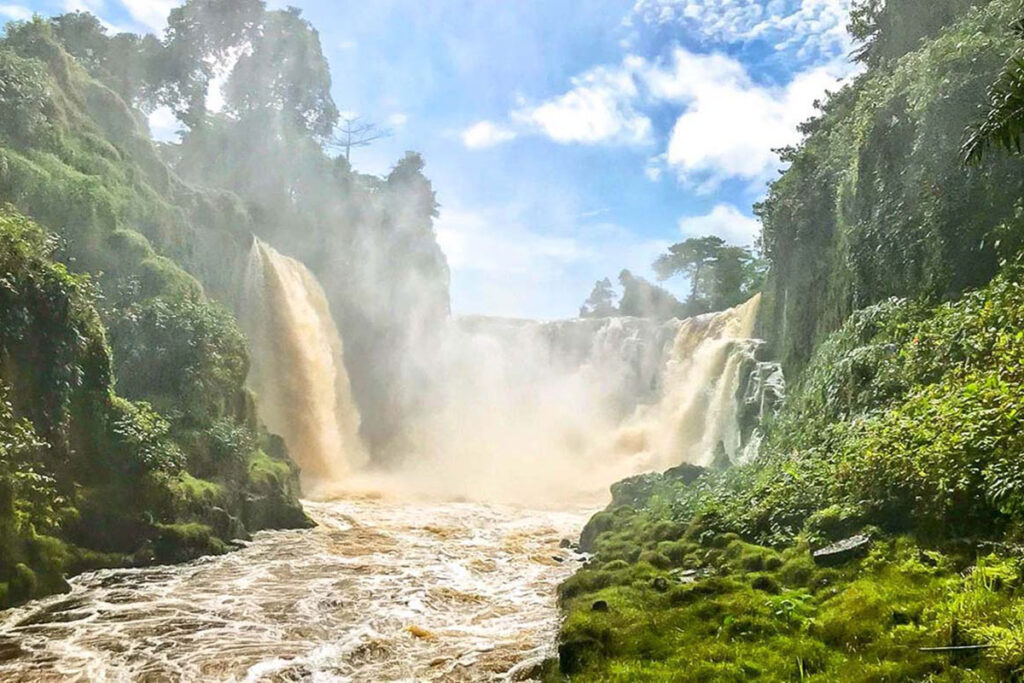
Ivindo National Park – Gabon’s UNESCO Rainforest Sanctuary of Mighty Waterfalls, Pristine Congo Basin Biodiversity, Blackwater Rivers, Forest Elephants, and Africa’s Last Great Wilderness
Ivindo National Park is one of Africa’s most extraordinary rainforest sanctuaries — a vast, unspoiled wilderness of dense equatorial forests, thunderous waterfalls, winding blackwater rivers, ancient inselbergs, and some of the richest biodiversity in the entire Congo Basin. Spanning over 3,000 km² in northeastern Gabon, Ivindo is internationally renowned for the breathtaking Kongou and Mingouli Waterfalls, its pristine river systems, and its thriving populations of forest elephants, western lowland gorillas, chimpanzees, and globally threatened bird species. In 2021, Ivindo became a UNESCO World Heritage Site, officially recognizing its unparalleled ecological significance and its status as one of the planet’s last intact tropical forest frontiers.
Often described as “the beating heart of Gabon’s rainforest,” Ivindo offers an experience of nature at its most wild, ancient, and untouched. Towering canopy trees form a green cathedral stretching uninterrupted across the horizon, while mist from powerful waterfalls rises through valleys that have remained ecologically stable for millions of years. The park’s remote interior has seen minimal human disturbance, allowing wildlife to behave naturally and ecosystems to function in their purest form. For conservationists, primatologists, ornithologists, hydrologists, photographers, and adventure travelers, Ivindo National Park represents one of Earth’s most spectacular and scientifically important rainforest destinations.
Overview of Ivindo National Park
Established in 2002, Ivindo National Park stands as a central pillar of Gabon’s visionary conservation strategy, which protects more than 10% of the nation’s land area. The park lies within the northern reaches of the Congo Basin rainforest — the second-largest tropical rainforest system in the world — and plays an irreplaceable role in sustaining endangered wildlife, regulating regional climate patterns, and protecting globally significant freshwater ecosystems.
Ivindo includes vast stretches of primary forest, extensive wetlands, blackwater river systems, and major waterfall complexes. It is co-managed by the Agence Nationale des Parcs Nationaux and the Wildlife Conservation Society, partnering with local communities and international researchers to ensure long-term ecological sustainability. The park is especially important for species such as the critically endangered forest elephant, whose numbers have declined drastically across Central Africa due to poaching. In Ivindo, however, elephants still roam in high densities, frequenting forest clearings known as “Bais” that serve as mineral-rich social hubs. These Bais have made Ivindo a globally renowned site for wildlife observation and behavioral research.
Location and Size
Ivindo National Park is located in Gabon’s northeastern Ogooué-Ivindo Province, stretching from the town of Makokou in the west to the remote frontiers of Minkébé Forest in the east. Its vast 3,000 km² area forms a key ecological corridor linking multiple protected areas and supporting migratory wildlife movements across Gabon and neighboring countries such as Cameroon and the Republic of the Congo.
The park’s strategic position at the confluence of several major ecosystems — lowland rainforest, swamp forest, river floodplains, and granite inselbergs — makes Ivindo one of the richest ecological mosaics in Central Africa. Its isolation, combined with limited access roads, has helped preserve the park’s extraordinary wilderness character.
Geography and Geology
The landscapes of Ivindo are defined by ancient geological formations sculpted over hundreds of millions of years. The park’s foundation consists of extremely old Precambrian bedrock, granite outcrops, and rugged inselbergs — island-like mountains rising abruptly from the rainforest canopy. These inselbergs create unique microclimates that harbor rare plant and animal species found nowhere else on Earth.
- The Ivindo River: One of Gabon’s largest and most powerful river systems, slicing through the park in a dramatic southward flow.
- Granite inselbergs: Heat-reflecting rock domes that tower above the forest, often hosting endemic plant life.
- Primary rainforest basins: Deep, humid valleys supporting towering hardwoods and dense understory vegetation.
- River gorges and cataracts: Including the colossal Kongou and Mingouli Falls, some of Africa’s strongest waterfalls.
- Blackwater tributaries: Nutrient-poor, tea-colored rivers that support highly specialized aquatic species.
These geological and ecological features create one of the most visually and scientifically impressive landscapes in all of Central Africa.
Climate
Ivindo National Park experiences a classic equatorial rainforest climate marked by consistently high humidity, abundant rainfall, and stable temperatures. Rainfall typically exceeds 1,800 to 2,000 millimeters per year, fueling the park’s lush vegetation and powerful river systems.
- Rainy Seasons: February–May and September–December bring heavy rains that swell rivers and activate seasonal streams.
- Dry Seasons: June–August and January allow easier forest access and more predictable wildlife viewing.
Humidity levels remain above 80% for much of the year, supporting epiphytes, mosses, orchids, and amphibians. The equatorial climate also stabilizes the hydrology of the Ivindo River, ensuring year-round flow — a critical factor contributing to the continuous power of Kongou Falls.
Hydrology and Water Systems
Ivindo’s hydrological system is among the most important in the Congo Basin. It includes iconic waterfalls, extensive blackwater ecosystems, and river networks that sustain the park’s mammal, fish, amphibian, and bird communities.
- The Ivindo River: The park’s main artery and one of Gabon’s most significant blackwater rivers.
- Kongou Falls: A multi-tiered, three-kilometer-wide waterfall often described as “the most beautiful waterfall in Africa.”
- Mingouli Falls: A dramatic cascade system surrounded by deep rainforest walls.
- Djidji and Djoua Rivers: Highly acidic blackwater tributaries supporting unique fish species.
- Swamp forests and flooded basins: Vital for amphibians, aquatic mammals, and waterbirds.
These water systems play a crucial ecological role, providing habitats for countless species and contributing to Gabon’s hydroelectric potential.
Ecosystems and Habitats
Ivindo National Park contains some of the most diverse tropical habitats in Africa, each supporting unique wildlife communities. The park’s mosaic of ecosystems includes:
- Primary lowland rainforest: Dominating much of the park with 40–60 meter tall trees and dense canopy layers.
- Riparian forests: Rich vegetation along riverbanks, crucial for primates and forest elephants.
- Inselberg ecosystems: Supporting drought-resistant plants, endemic reptiles, and rare microhabitats.
- Swamp forests and marsh zones: Home to sitatunga, amphibians, and specialized insect life.
- Blackwater habitats: Unique aquatic ecosystems shaped by tannin-rich, acidic water conditions.
The exceptional habitat diversity makes Ivindo one of the most important biodiversity hotspots in the Congo Basin.
Vegetation
Ivindo National Park hosts an extraordinary array of plant species, many of which thrive in its stable equatorial climate and varied microhabitats.
- Giant hardwood trees: Including moabi, okoumé, sapele, and azobé.
- Epiphytes and orchids: Abundant in humid river corridors and inselberg slopes.
- Palms and understory shrubs: Providing fruit and shelter for primates and birds.
- Swamp vegetation: Dense sedges, grasses, and flood-tolerant species in marsh zones.
- Medicinal and culturally significant plants: Used for generations by local communities.
Ivindo’s floral diversity contributes essential ecosystem services such as carbon storage, water regulation, and wildlife habitat formation.
Wildlife of Ivindo National Park
Mammals
Ivindo is a sanctuary for many of Africa’s most endangered and ecologically important mammals. Its remote primary forests offer ideal conditions for long-term population stability and natural behavior.
- Forest elephants: Gathering at mineral-rich Bais for social interaction and feeding.
- Western lowland gorillas: Living in family groups and thriving in dense forest zones.
- Chimpanzees: Using river corridors for nesting, feeding, and travel.
- Mandrills: Occupying some of the densest primate populations in Africa.
- Sitatunga and forest buffalo: Found in swampy and riparian areas.
- Pangolins, sun-tailed monkeys, and potto species hidden in the canopy.
The park’s isolation makes it one of the few places where forest megafauna continue to thrive.
Birds
Ivindo is one of Central Africa’s premier birdwatching destinations, with more than 430 recorded species, including globally rare and endemic birds.
- Gray-necked rockfowl (Picathartes): Nesting in caves and inselberg overhangs.
- African grey parrots: Roosting in large flocks.
- White-crested hornbills: Common in upland forests.
- Green turacos, barbets, and bee-eaters: Adding vibrant color to the canopy.
- Kingfishers and waders: Concentrated along blackwater rivers.
The combination of river, swamp, and primary forest habitats creates exceptional opportunities for ornithological research and photography.
Reptiles, Amphibians, and Insects
The humid climate and aquatic ecosystems of Ivindo support a wide variety of reptiles, amphibians, and insects, many of which are endemic or still unknown to science.
- Forest cobras, vipers, and pythons camouflaged in undergrowth.
- Chameleons and geckos specialized for rainforest microhabitats.
- Amphibians concentrated around swamp forests, including rare frogs.
- Butterflies, dragonflies, and beetles abundant along riparian zones.
- Aquatic insects adapted to acidic blackwater conditions.
Unique Features of Ivindo National Park
Ivindo National Park is widely considered one of Africa’s most spectacular natural landscapes due to features such as:
- Kongou Falls: A multi-tiered, thunderous waterfall system stretching nearly 3 km wide.
- Mingouli Falls: Surrounded by dense rainforest and dramatic rock formations.
- Langoué Bai: A globally significant wildlife clearing where elephants, gorillas, and other animals gather daily.
- Ancient inselbergs: Offering panoramic views over one of the world’s most untouched rainforests.
- Blackwater ecosystems: Rare aquatic environments supporting unique species.
Cultural and Indigenous Communities
Ivindo is home to the Fang, Kota, and Bakota communities, each with deep ancestral relationships to the rainforest. Their livelihoods depend on fishing, hunting, traditional agriculture, and the use of medicinal plants. Spiritual beliefs emphasize respect for sacred trees, waterfalls, and forest animals, particularly elephants and gorillas.
Community-based conservation programs connect local cultural knowledge with modern ecological management, ensuring that indigenous heritage remains an integral part of Ivindo’s identity.
Conservation Importance
Ivindo National Park is one of the most important conservation areas in Central Africa due to:
- its protection of forest elephants and great apes,
- its preservation of uninterrupted primary rainforest,
- its safeguarding of major freshwater systems,
- its biodiversity richness unmatched in many regions of the Congo Basin,
- and its vital role in climate stability through massive carbon storage.
The park’s UNESCO status reflects its global ecological and scientific significance.
Threats and Challenges
Although protected, Ivindo faces several ongoing threats:
- Elephant poaching driven by international ivory demand
- Pollution of rivers from mining activities outside the park
- Habitat fragmentation in neighboring buffer zones
- Climate change affecting rainfall and river flow
- Increasing pressure from infrastructure projects
Research and Monitoring
Ivindo is one of the Congo Basin’s most productive research sites, attracting scientists studying everything from primate behavior to plant ecology. Key research areas include:
- elephant movement and social dynamics at Langoué Bai,
- chimpanzee communication and tool use,
- gorilla diet and population health,
- botanical surveys of inselberg vegetation,
- freshwater ecosystem monitoring in blackwater streams,
- biodiversity mapping using camera traps and drone surveys.
Research findings contribute to global understanding of rainforest conservation and climate resilience.
Tourism Activities
Tourism in Ivindo is low-impact, immersive, and ideal for nature enthusiasts seeking authentic wilderness experiences:
- Hiking and trekking through dense rainforest and river valleys
- Waterfall expeditions to Kongou and Mingouli Falls
- Wildlife viewing at Langoué Bai and forest trails
- Canoeing along blackwater sections of the Ivindo River
- Birdwatching for rare species including the gray-necked rockfowl
- Photography of dramatic waterfalls, rainforest canopies, and wildlife
Access and Getting There
Ivindo National Park is remote and requires careful planning. Access points include:
- Makokou: The main gateway town, accessible by road or domestic flights.
- River access: Motorboats and dugout canoes for reaching waterfalls.
- Guided expeditions: Necessary for accessing deep interior zones and research stations.
Most visitors explore Ivindo through organized expeditions that combine hiking, boating, and wildlife observation.
Permits, Fees, and Park Rules
Park entry permits are required and can be arranged through official operators or the National Parks Agency. Essential rules include:
- No poaching, baiting, or harassing wildlife
- No removing plants, minerals, or artifacts
- No polluting rivers or streams
- Guides required for waterfall and Bai visits
- Respect sacred waterfalls and cultural sites
Accommodation
Given its remoteness, accommodation options near Ivindo are simple but atmospheric:
- Research camps near Langoué Bai
- Eco-lodges and guesthouses in Makokou
- Riverside camps for multi-day excursions
- Community homestays supporting local livelihoods
These facilities offer a true wilderness immersion surrounded by the sights and sounds of the rainforest.
Best Time to Visit
The best time to visit Ivindo is during the dry seasons from June to August and January to February, when trails are easier to navigate and wildlife congregates near water sources. The rainy season offers lush landscapes, high river flow, and vibrant plant growth but can make navigation more challenging.
Why Ivindo National Park Is Unique
Ivindo National Park is unique because it represents one of the few remaining tropical rainforests where nature still functions in its most ancient and undisturbed form. Its colossal waterfalls, vast primary forests, biodiversity unmatched in the Congo Basin, sacred landscapes, and thriving wildlife populations make it a global treasure. For scientists, adventurers, conservationists, and photographers, Ivindo offers an experience that is both spiritually powerful and scientifically irreplaceable.
From the thundering roar of Kongou Falls to the quiet gatherings of elephants at Langoué Bai, Ivindo embodies the raw, awe-inspiring essence of the African rainforest — a place where Earth’s natural history continues to unfold with every passing day.