
Kafue National Park
Kafue National Park – Zambia’s Largest, Wildest, and Most Biodiverse Safari Wilderness of Big Cats, Miombo Forests, Floodplains, and Iconic Busanga Landscapes
Kafue National Park is one of Africa’s greatest and most underrated safari destinations—a massive, untouched wilderness spanning more than 22,400 km² in western Zambia. As Zambia’s oldest and largest national park, Kafue protects a colossal sweep of ecosystems ranging from miombo woodlands and sandy savannas to marshes, lagoons, and the world-famous Busanga Plains. This enormous diversity makes Kafue a sanctuary for lions, cheetahs, leopards, wild dogs, elephants, antelope herds, and more than 500 bird species. It is a park for travelers seeking an authentic, raw safari experience far from crowds, set in landscapes that feel timeless, remote, and profoundly wild.
Unlike more commercialized parks in southern Africa, Kafue remains refreshingly uncrowded. Visitors often explore vast areas without encountering another vehicle, creating intimate wildlife sightings and a feeling of exclusivity rarely found elsewhere. With African Parks partnering in management and conservation, Kafue is undergoing a renaissance—stronger protection, improved infrastructure, thriving wildlife populations, and rising global recognition. As a result, Kafue National Park is rapidly becoming a must-visit destination for photographers, birders, adventurers, and conservation-minded travelers seeking one of Africa’s last, truly massive wildernesses.
Overview of Kafue National Park
Established in 1950, Kafue National Park was one of the earliest large protected areas on the continent. Its creation marked a major milestone in African conservation, preserving a vast region of pristine savanna and woodland that would otherwise have been vulnerable to settlement and agricultural expansion. Today, Kafue remains a cornerstone of Zambia’s tourism industry and a globally significant conservation landscape. The park is named after the Kafue River, which flows through its heart and supports a rich array of wildlife and vegetation.
Kafue is jointly managed by the Department of National Parks and Wildlife (DNPW) and African Parks, whose involvement has strengthened law enforcement, community engagement, habitat protection, and ecological monitoring. Thanks to these programs, wildlife populations—including lions, cheetahs, elephants, and wild dogs—are steadily recovering. Kafue continues to evolve into one of Africa’s premier wildlife destinations while maintaining an authentic, low-impact safari approach.
Location and Size
Kafue National Park stretches across Zambia’s Central, Western, and Southern Provinces, making it a vast ecological kingdom that intersects multiple habitats and cultural regions. At 22,400 km², it is the second-largest national park in Africa, larger than Switzerland and nearly the size of Wales. Its sheer scale allows wildlife to thrive in natural densities and wide-ranging patterns reminiscent of a bygone Africa before extensive human development.
Its central location within Zambia makes it accessible from Lusaka, Livingstone, Mongu, and Copperbelt towns, while still maintaining a level of remoteness that enhances the wilderness experience. The park’s massive size also allows for region-specific safari experiences—each area offering unique landscapes, wildlife, and seasonal highlights.
Geography and Geology
Kafue boasts one of Africa’s most varied geographies, shaped by millions of years of geological processes. Granite inselbergs jut out of the woodlands, while wide floodplains and shallow basins dominate other regions. Sandy soils support sprawling miombo woodland, while clay soils enable lush meadows and seasonal wetlands. The northern Busanga Plains, formed through seasonal flooding, are among Africa’s most iconic wetland ecosystems—vast, open grasslands dotted with sausage trees, palms, and termite mounds.
The dramatic contrast between the wooded south and the wet, open north creates ecological niches that sustain high levels of biodiversity. Seasonal flooding from the Lufupa and Lunga Rivers enriches the Busanga Plains, while the Kafue River feeds a mosaic of channels, lagoons, riverine forests, and wetlands. These landscapes form the backdrop for some of the most spectacular wildlife encounters in Zambia.
Climate
Kafue experiences a tropical savanna climate with three well-defined seasons that shape animal movements and vegetation patterns:
- Dry winter (May–August): Cool temperatures (10–25°C), low humidity, and ideal game viewing conditions as wildlife congregates near water sources.
- Hot dry season (September–November): Temperatures can exceed 35°C, and animals concentrate around rivers and remaining wetlands—excellent for predator sightings.
- Rainy season (December–April): Lush green landscapes, bird migrations, newborn wildlife, and vibrant plant growth, though some areas become inaccessible.
These seasonal rhythms create dynamic safari opportunities throughout the year. The Busanga Plains, for example, are only accessible in the dry season but offer some of Africa’s most rewarding wildlife viewing.
Hydrology and Water Systems
Hydrologically, Kafue is a masterpiece of interconnected aquatic ecosystems. The Kafue River, one of Zambia’s most important watercourses, forms the central artery of the park. Its tributaries—the Lunga, Lufupa, and Lunga-Lufupa systems—feed vast marshes, lagoons, and wetlands that attract huge concentrations of wildlife.
The Busanga Plains owe their life to seasonal flooding, which transforms them into a rich mosaic of grasses, aquatic vegetation, ponds, and mudflats. These wetlands act as nutrient fountains, supporting red lechwe, oribi, buffalo, and predators such as lions and cheetahs. The abundance of waterbirds—cranes, herons, storks, and geese—makes the region one of Africa’s most important wetland bird habitats.
Ecosystems and Habitats
Kafue features an extraordinary combination of ecosystems, making it one of Africa’s most biodiverse protected areas. From dry woodlands to wetlands and savannas, each habitat supports unique wildlife communities.
- Miombo woodlands: Dominant across the park; home to elephants, wild dogs, roan, sable, and numerous bird species.
- Busanga Plains: Seasonal floodplains famous for big cats, antelope herds, waterbirds, and dramatic sunsets.
- Termitaria ecosystems: Grasslands enriched by termite mounds that attract grazers and support small predators.
- Riverine forests and lagoons: Refuges for leopards, hippos, sitatunga, and primates.
- Dambo wetlands: Moist grasslands crucial for amphibians and wetland birds.
Because Kafue spans such a wide ecological range, it boasts one of the largest wildlife lists of any African national park.
Vegetation
Miombo woodland dominates much of Kafue, composed primarily of Brachystegia, Isoberlinia, and Julbernardia species. These trees are adapted to fire cycles and seasonal droughts, creating dappled light under which grasses, shrubs, and woodland flowers flourish. During the rainy season, miombo forests come alive with butterflies, new foliage, and blooming wildflowers.
Floodplain vegetation includes papyrus, reeds, sedges, and seasonal grasses that sustain herbivores year-round. The Busanga Plains, in particular, are known for their tall, nutritious grasses that support large herbivore populations and attract predators from across the region.
Wildlife of Kafue National Park
Mammals
Kafue is one of Africa’s finest mammal-viewing destinations, with more than 55 large mammal species. Its vast size and healthy predator-prey dynamics allow wildlife to flourish in natural densities not commonly seen in modern Africa.
- Lions: Especially abundant on the Busanga Plains, where they are known for hunting in broad daylight.
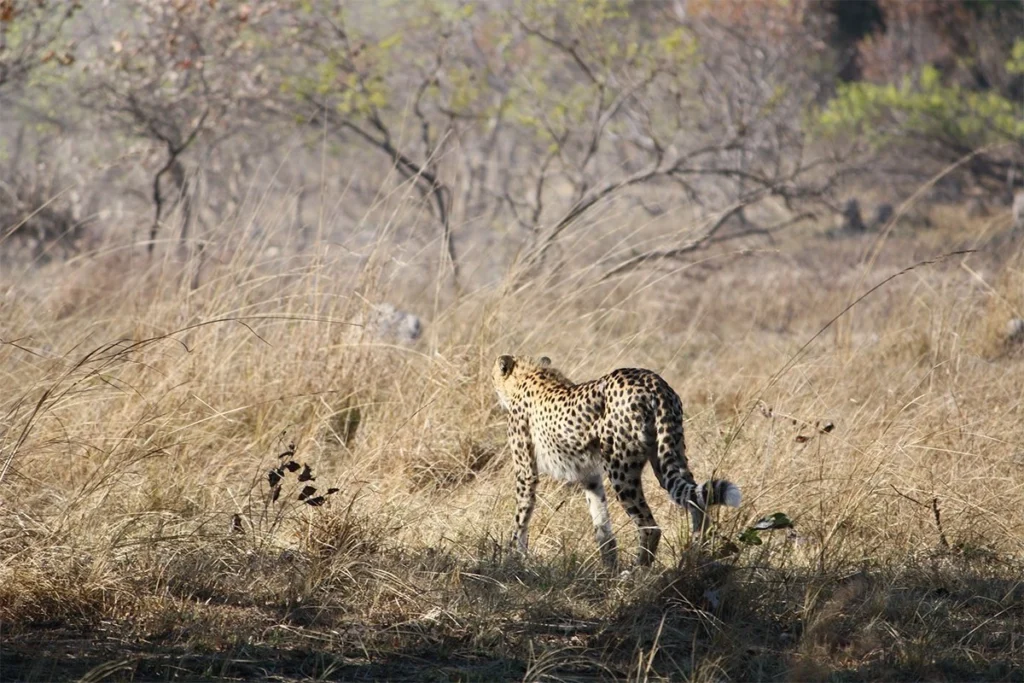
- Cheetahs: Kafue is one of the best places in Zambia to see cheetahs, often found in open grasslands.
- Leopards: Thrive in the riverine forests, though more elusive.
- African wild dogs: Kafue has one of the largest populations in southern Africa.
- Elephants: Frequently seen along rivers and woodlands.
- Buffalo: Both woodland and floodplain herds are common.
- Antelope: Includes roan, sable, hartebeest, puku, kudu, lechwe, waterbuck, wildebeest, and eland.
Smaller mammals include servals, caracals, mongoose species, pangolins, honey badgers, genets, and various nocturnal primates and rodents.
Birds
Kafue is a birdwatching paradise with over 500 recorded species—one of the highest totals in Zambia. Its wetlands, woodlands, and floodplains attract both resident and migratory birds.
- Wattled cranes: A globally vulnerable species with strong populations in Kafue.
- Finfoots, African skimmers, and kingfishers thrive along the rivers.
- Raptors such as martial eagles, fish eagles, bateleurs, and secretarybirds.
- Busanga Plains specials include rosy-throated longclaw and crowned cranes.
- Woodland species such as broadbills, cuckoos, hornbills, and bee-eaters.
The variety of habitats ensures excellent birdwatching opportunities all year, with peak diversity during and immediately after the rainy season.
Reptiles, Amphibians, and Invertebrates
Reptiles include Nile crocodiles, monitor lizards, agama lizards, tortoises, skinks, and numerous snake species such as pythons, cobras, and vipers. Amphibians flourish in dambo wetlands, particularly during the wet season when frogs, toads, and tree frogs breed explosively.
Kafue’s invertebrates include butterflies, beetles, dragonflies, spiders, termites, and ants, all of which play crucial ecological roles—pollination, decomposition, and soil aeration.
Unique Features of Kafue National Park
- The Busanga Plains: One of Africa’s most breathtaking wetland ecosystems, known for predators, large herds, and spectacular sunrises.
- High predator diversity: Lions, cheetahs, leopards, hyenas, and wild dogs.
- Massive wilderness: A rare opportunity to explore a truly colossal, uncrowded African landscape.
- Birdlife richness: A top destination for wetland and woodland species.
- Low-impact tourism: Ensures a pristine environment and exclusive safari experience.
Cultural and Indigenous Communities
Traditional communities such as the Ila, Lenje, and Kaonde peoples live in areas surrounding the park. Historically, they practiced cattle herding, fishing, and subsistence agriculture while maintaining deep cultural ties to the land. Their knowledge of local wildlife, medicinal plants, and seasonal cycles forms part of the region’s intangible heritage.
Community tourism programs offer cultural visits, dances, village tours, and craft demonstrations. These initiatives help preserve cultural identity while promoting conservation awareness and generating income for rural communities.
Conservation Importance
Kafue plays an essential role in conserving Zambia’s biodiversity, protecting large mammal populations and vast stretches of natural habitat. Its wetlands contribute to regional hydrological stability, while its woodlands serve as carbon sinks vital to climate regulation. Predator conservation is particularly strong, with healthy populations of lions, leopards, wild dogs, and cheetahs.
Current conservation priorities include anti-poaching operations, improved law enforcement, community engagement programs, habitat restoration, and sustainable tourism planning. African Parks’ involvement has significantly strengthened protection and long-term ecological resilience.
Threats and Challenges
Key threats include poaching, illegal bushfires, encroachment, charcoal production, and unregulated fishing. In some regions, human-wildlife conflict arises when elephants or predators approach farmlands, creating tension between communities and wildlife conservation efforts.
Ongoing conservation actions—such as ranger patrols, snare removal, community education, and alternative livelihood development—are essential to maintaining the park’s ecological health.
Research and Monitoring
Kafue is a hub for scientific research in southern Africa. Studies conducted here examine predator-prey dynamics, elephant movement, fire ecology, vegetation patterns, hydrological cycles, and climate impacts. Long-term monitoring projects involving camera traps, aerial surveys, and GPS tracking provide valuable data for managing wildlife populations and assessing ecosystem health.
This research contributes to global scientific knowledge and supports evidence-based conservation strategies.
Tourism Activities
- Game drives: Explore diverse habitats and encounter large mammals and predators.
- Walking safaris: Experience the African bush on foot with experienced guides.
- Boating safaris: A unique way to explore the Kafue River’s waterways.
- Birdwatching: Enjoy viewing rare and migratory species.
- Hot air balloon rides: Available over the Busanga Plains for scenic aerial views.
- Night drives: Spot nocturnal creatures such as leopards, civets, and hyenas.
Access and Getting There
Kafue is accessible by road from Lusaka (the capital), Livingstone (near Victoria Falls), and Mongu (in the west). Major entry points include Musa Gate, Hook Bridge Gate, and Lunga Gate. Several airstrips within the park allow charter flights directly to lodges for travelers seeking convenience and comfort.
While some roads are well-maintained, others require 4×4 vehicles, especially during or after the rainy season. The remoteness of the park contributes to its wilderness appeal.
Permits, Fees, and Park Rules
Visitors must pay entry fees that support wildlife conservation, ranger salaries, infrastructure development, and community initiatives. Additional fees may apply for boating, walking safaris, and camping.
- Stay on designated tracks to protect vegetation and prevent soil erosion.
- Maintain safe distances from wildlife.
- Avoid loud noises and respect the wilderness.
- No collecting of plants, bones, or natural objects.
- Dispose of waste properly to maintain environmental purity.
Accommodation
Kafue offers a wide range of accommodation suitable for all types of travelers—from luxury safari lodges overlooking wetlands to rustic bush camps and self-catering campsites. Many lodges offer guided activities, river cruises, gourmet meals, and panoramic views of wildlife-rich habitats.
- Luxury lodges: Located near Busanga Plains, Lufupa, and the central Kafue region.
- Tented camps: Blend comfort with immersive bush experiences.
- Self-catering and campsites: Ideal for adventurous self-drive safaris.
- Community-run sites: Promote sustainable tourism and rural development.
Many camps are located along riverbanks, offering spectacular sunrises, sunsets, and wildlife viewing from your doorstep.
Best Time to Visit
The best time to visit Kafue is the dry season (June–October), when wildlife congregates near rivers, grass is short, and predator sightings are excellent. The Busanga Plains, accessible only during this period, are at their most vibrant and teeming with wildlife, making this season ideal for photographers and big-game enthusiasts.
The rainy season (November–April) brings lush landscapes, dramatic skies, abundant birdlife, and newborn animals. It is a beautiful time for photography, though some areas may be difficult to reach due to flooding.
Why Kafue National Park Is Unique
Kafue National Park is unique because it combines vast size, exceptional biodiversity, spectacular wetland systems, and one of Africa’s most iconic floodplain landscapes—the Busanga Plains. Its healthy predator populations, rare antelope species, abundant birdlife, and low visitor numbers create a safari experience that is both exclusive and profoundly intimate.
Whether tracking lions at sunrise on the floodplains, drifting along the Kafue River among hippos and waterbirds, or exploring secluded woodland tracks, visitors to Kafue experience the essence of wild Africa—untamed, diverse, and unforgettable.