
Kainji National Park
Kainji National Park – Nigeria’s Largest Savannah Wilderness, Borgu & Zugurma Game Reserves, Wildlife, History and Travel Guide
Kainji National Park (also known as Kainji Lake National Park) is one of Nigeria’s largest and most ecologically important protected areas, covering over 5,340 km² of savanna woodlands, river valleys, rocky outcrops and freshwater lake habitats across Niger and Kwara States. Established in 1978 by merging the Borgu Game Reserve, Zugurma Game Reserve and part of Kainji Lake, the park was created to protect wildlife, preserve natural landscapes, and promote sustainable tourism around Kainji Dam and the Niger River basin.
As Nigeria’s first officially designated national park and a globally recognized Lion Conservation Unit and Key Biodiversity Area (KBA), Kainji holds immense ecological, scientific and historical significance. Although insecurity and poaching have affected its operations in recent years, ongoing restoration and co-management efforts are reviving hopes for one of West Africa’s most promising savanna wildernesses. This in-depth guide covers everything about Kainji National Park—from its ecosystems and iconic wildlife to its cultural heritage, tourism potential, conservation value, research importance, access and the best time to visit.
Overview of Kainji National Park
Kainji National Park was created to safeguard Nigeria’s northern savanna ecosystems and protect wildlife populations that historically ranged widely across the region. Unlike many Nigerian parks that later evolved from forest reserves or community lands, Kainji was designed from inception as a conservation-focused, multi-purpose park integrating wildlife management, fisheries regulation and tourism around Kainji Dam and the newly formed reservoir.
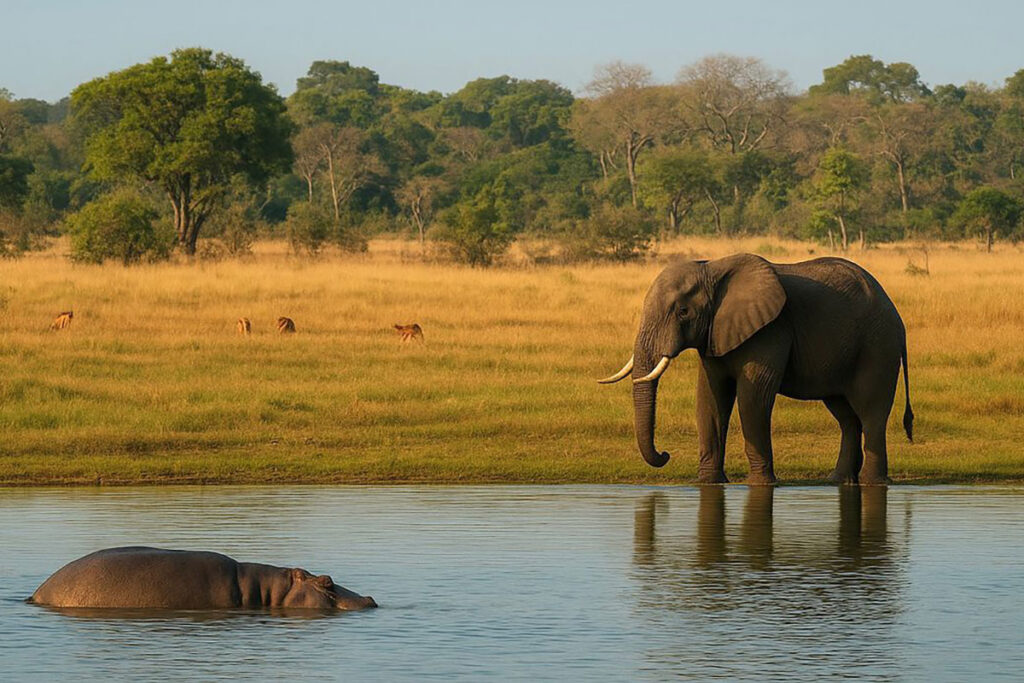
The park has traditionally been Nigeria’s flagship safari destination, especially the Borgu sector, where wildlife densities were historically high and game drives offered sightings of elephants, roan antelope, kob, buffalo, hartebeest, and occasionally lions and leopards. Today, due to security challenges, tourism has paused in most sectors, but long-term co-management agreements with conservation partners aim to restore the park’s infrastructure, rebuild wildlife populations and return Kainji to its status as Nigeria’s premier savanna wilderness.
Location and Size
Kainji National Park lies in northwestern Nigeria, straddling Niger and Kwara States. It is strategically located near the Niger River and the Kainji Dam hydroelectric complex, which created the massive Kainji Lake that borders the park.
Covering approximately 5,340.82 km², Kainji is larger than many African countries’ entire protected area networks. The park is divided into three distinct management sectors:
- Borgu Sector (≈ 3,900 km²): The most wildlife-rich area, traditionally the center of tourism and research, with rivers, woodlands, rocky hills and dense savannas.
- Zugurma Sector (≈ 1,370 km²): A remote, less-developed plateau with seasonal streams and open woodlands, historically impacted by overgrazing but still ecologically important.
- Kainji Lake Sector: The aquatic portion of the park encompassing part of Kainji Lake, known for fisheries, hippos, crocodiles and waterbirds.
The combination of terrestrial and aquatic ecosystems makes Kainji one of West Africa’s most diversified national parks and crucial for wildlife dispersal across the Guinea–Sudan savanna transition zone.
Geography and Landscape
The park’s terrain reflects classic West African savanna landscapes—rolling grasslands, wooded plains, rocky outcrops, dry valleys and river corridors. The Borgu sector features rugged quartzite ridges, scattered inselbergs and hills that provide lookout points for predators and raptors. Valleys feed into the Oli River, the park’s lifeline, which forms pools and wetlands that sustain animals during the harsh dry season.
The Zugurma plateau is flatter, characterized by sandy and lateritic soils, seasonal streams, drier grasslands and patches of woodland. Although less visually dramatic than Borgu, Zugurma plays a vital ecological role as a grazing and migration zone for several herbivore species.
Kainji Lake—136 km long—adds a scenic water element to the landscape. Its islands, bays and shoreline wetlands support a rich mix of aquatic life and bird species, creating one of the rare savanna–freshwater transition environments in West Africa.
Climate
Kainji National Park experiences a tropical savanna climate with a well-defined wet and dry season. The region receives approximately 1,000–1,200 mm of rainfall annually, mostly between May and November. During the wet season, grasses grow tall and nutritious, trees produce new leaves, and wildlife spreads out across the park to graze and breed.
The dry season (December–April) brings high temperatures, dust-laden Harmattan winds and shrinking water sources. Temperatures can exceed 40°C in peak months, making rivers, pools and the lake critical for wildlife survival. This season was historically the best time for game viewing, as animals congregated around the Oli River and permanent waterholes.
Hydrology and Water Systems
Hydrology plays a defining role in Kainji’s ecosystems. The Niger River, Kainji Dam and Kainji Lake create a vast freshwater system that influences fish populations, bird migration patterns and the surrounding savanna vegetation. Aquatic species such as hippos, crocodiles and waterbirds thrive in this environment.
The Oli River is the most important internal water source in the Borgu sector. It flows year-round, forming deep pools, riparian forests and wetlands that support elephants, waterbuck, buffalo, monkeys and predators. Many wildlife sightings historically occurred along its banks, making it the center of safari routes.
In Zugurma, streams are seasonal. They fill rapidly during the rains but dry completely in peak dry months, creating a challenging but ecologically essential seasonal cycle that shapes animal movement patterns.
Ecosystems and Habitats
Kainji National Park protects a broad spectrum of West African savanna and woodland ecosystems, each supporting unique plant and animal communities. The mosaic of habitats is shaped by fire, soil composition, hydrology and grazing patterns.
- Sudan–Guinea savanna woodland: Scattered trees and tall grasses supporting large herbivores, carnivores and raptors.
- Riverine and gallery forests: Moist, shaded corridors along the Niger and Oli Rivers that shelter primates, birds and amphibians.
- Mixed shrub–grasslands: Important grazing zones for roan antelope, hartebeest, kob and buffalo.
- Rocky hills and inselbergs: Microclimates with specialized vegetation and vantage points for predators.
- Aquatic habitats: Kainji Lake, its islands and wetlands supporting fish, crocodiles, hippos and waterbirds.
This habitat diversity makes Kainji one of West Africa’s most scientifically valuable protected areas and a natural laboratory for ecological research.
Vegetation and Flora
The vegetation of Kainji reflects the Guinea–Sudan transition zone, supporting a mixture of woodland, shrubland and grassland species. In Borgu, dominant trees include Burkea africana, Terminalia avicennioides, Isoberlinia doka, Diospyros mespiliformis and Detarium microcarpum. These hardy species provide shade, browse and nesting sites for many animals.
Riparian forests along the Oli River host moisture-loving species such as Pterocarpus erinaceus, Khaya senegalensis, Vitex doniana and Parkia biglobosa. Many of these trees have medicinal, cultural or economic importance to surrounding communities.
Grasses like Andropogon, Pennisetum and Hyparrhenia dominate the understory, supporting large grazers such as roan antelope and kob. Shrubs and forbs provide seasonal food for elephant and buffalo, while fruiting trees sustain monkeys, baboons and birds during the dry season.
Wildlife of Kainji National Park
Kainji National Park historically hosted one of Nigeria’s richest wildlife populations, including iconic megafauna, important predator species, diverse antelope communities and hundreds of bird species. Although poaching and insecurity have reduced some populations, the park still supports critical biodiversity with significant recovery potential.
Mammals
The park is home to at least 65 species of mammals, including several of West Africa’s most important savanna species. Notable mammals historically and currently recorded include:
- West African lions: Historically widespread in Borgu; Kainji remains an official Lion Conservation Unit.
- Leopards: Stealthy predators found in rocky and wooded areas.
- African bush elephants: Seasonal movements between riparian zones and woodland feeding grounds.
- Buffalo: Herds occupying grasslands and riverine forests.
- Roan antelope, kob, waterbuck, hartebeest: Important grazers and browsers that define Kainji’s savanna ecology.
- Hippos: Concentrated in the Oli River and Kainji Lake.
- Primates: Including baboons, patas monkeys and vervet monkeys.
- Small carnivores: Civets, genets, jackals and honey badgers.
- Possible remnant manatee populations in associated river systems.
Birds
With around 350 recorded species, Kainji is a top ornithological destination in Nigeria. Its mix of savanna, wetlands and woodlands supports a vast array of birdlife, including ground-dwellers, raptors, waterbirds and migratory species.
- Eagles, hawks, vultures and bateleurs.
- Secretarybirds and bustards of open savannas.
- Kingfishers, herons and storks along rivers and lakes.
- Weavers, sunbirds, rollers and hornbills in woodlands.
- Swallows and migratory species moving seasonally through the region.
Reptiles, Amphibians and Invertebrates
Kainji’s warm climate supports a rich reptile and amphibian community, including Nile crocodiles, monitor lizards, pythons, vipers, tortoises and numerous frogs and toads that breed during the rainy season. Invertebrates—from butterflies and dragonflies to beetles, termites and ants—play essential ecological roles and support higher trophic levels.
Unique Features of Kainji National Park
- Three-sector protected area: Combining savanna, plateau and lake systems into one park.
- Oli River ecosystem: A critical wildlife hotspot and historic center of safari tourism.
- Kainji Lake: A scenic reservoir supporting hippos, crocodiles and fisheries.
- Lion Conservation Unit status: Recognition of the park’s importance for West African lions.
- Extensive biodiversity: One of Nigeria’s richest ecosystems for megafauna, birds and aquatic species.
Cultural and Indigenous Communities
Kainji is surrounded by culturally diverse communities, including Borgu and Nupe peoples, who have long relied on the region for farming, fishing, herding and forest resources. The construction of Kainji Dam reshaped traditional livelihoods, creating new fishing communities and resettlement areas.
Local knowledge of wildlife, seasonal patterns, medicinal plants and traditional ecological practices is invaluable for co-management programs. Sustainable livelihood initiatives, controlled grazing zones and regulated fishing agreements help align community needs with conservation goals.
Conservation Importance
Kainji National Park is a cornerstone of Nigeria’s biodiversity strategy. Its large, contiguous habitat protects species that require extensive ranges, such as elephants, lions and large antelopes. As a Key Biodiversity Area, the park contributes to global conservation goals, carbon storage, watershed protection and climate resilience.
The park also acts as a buffer against land degradation, erosion and habitat fragmentation—major threats in Nigeria’s savanna belt. Its aquatic ecosystems support fisheries vital for regional food security.
Major Threats and Challenges
Despite its importance, Kainji National Park faces significant threats:
- Insecurity and banditry: The greatest current threat, limiting patrolling, research and tourism.
- Poaching: Targeting elephants, antelopes, carnivores and small mammals.
- Illegal grazing: Especially severe in the Zugurma sector.
- Deforestation and charcoal production: Around park boundaries.
- Human–wildlife conflict: Crop raiding by herbivores and elephant movement patterns near settlements.
These issues require joint action from conservation agencies, security forces, local communities and long-term partners to ensure the park’s future.
Restoration and Co-Management Efforts
In recent years, Nigeria’s National Park Service has entered long-term co-management partnerships with international conservation organizations such as the West African Conservation Network (WACN) to restore Kainji. These plans include:
- Hiring and training more rangers.
- Deploying modern monitoring technologies (drones, tracking systems, SMART patrols).
- Strengthening security through joint law enforcement.
- Rehabilitating infrastructure, trails and research stations.
- Supporting community livelihoods to reduce pressure on park resources.
- Preparing for the eventual return of sustainable tourism.
Research, Monitoring and Scientific Value
Kainji’s large size and ecological variety make it an important research site for topics such as savanna dynamics, wildlife migration, predator ecology, plant regeneration, fisheries management and climate impacts. Universities, conservation NGOs and international teams have conducted surveys on birds, mammals, vegetation patterns, fish populations and socio-economic issues.
Long-term research is critical for monitoring recovery efforts, designing wildlife corridors and informing conservation strategies that balance human and ecological needs.
Tourism Activities and Future Potential
When fully operational and secure, Kainji offers classic safari experiences comparable to some East African savanna parks, but with far fewer crowds. Historically, tourism activities included:
- Game drives in Borgu to see elephants, antelopes, buffalo and predators.
- Boat safaris on Kainji Lake to view hippos, crocodiles and waterbirds.
- Birdwatching expeditions across diverse habitats.
- Nature walks led by trained rangers.
- Photography safaris and landscape viewing at vantage points.
When security improves, Kainji has enormous potential for eco-tourism, community-based tourism and scientific tourism, offering travelers a rare opportunity to explore an authentic West African wilderness.
Access and Getting There
Access to Kainji is typically via New Bussa, Wawa or Kainji Dam, depending on the sector. Roads from major cities such as Abuja, Ilorin, Minna and Ibadan connect to the region. However, due to current security conditions, all travel must be coordinated with official authorities or postponed until safe.
Future plans include improved road networks, controlled visitor entry points, and new ranger and tourism facilities.
Permits, Fees and Regulations
Under normal operations, park entry requires permits purchased from the Nigeria National Park Service. Research, filming and professional photography require additional authorizations. Visitors must follow strict rules that prohibit hunting, wood extraction, off-road driving and any actions that harm wildlife or habitats.
Accommodation
In the past, simple lodges, chalets and campsites existed in Borgu, while visitors could also stay in New Bussa or towns near Kainji Dam. Due to current security challenges, some facilities are non-operational. Long-term revival plans include eco-lodges, tented camps and community-run accommodations designed to minimize environmental impact while maximizing visitor experience.
Best Time to Visit Kainji National Park
The ideal time to visit—when tourism resumes—is the dry season (December–April). During this period, vegetation is thinner, making wildlife easier to spot, and animals gather around rivers and waterholes. The wet season offers lush landscapes and excellent birdlife but can make travel difficult.
Why Kainji National Park Is Unique
Kainji National Park is unlike any other protected area in Nigeria or West Africa. Its scale, diversity and ecological significance make it a cornerstone of West African conservation. With its mix of vast savannas, rocky hills, shaded river corridors, and expansive lake vistas, Kainji holds unmatched potential for wildlife recovery, research, eco-tourism and community development.
As restoration and security efforts progress, Kainji stands poised to reclaim its place as one of Africa’s great wilderness destinations—an authentic, untamed landscape where lions once roared, elephants roamed freely, and the Niger River shaped both wildlife and human history.