
Kahuzi–Biega National Park
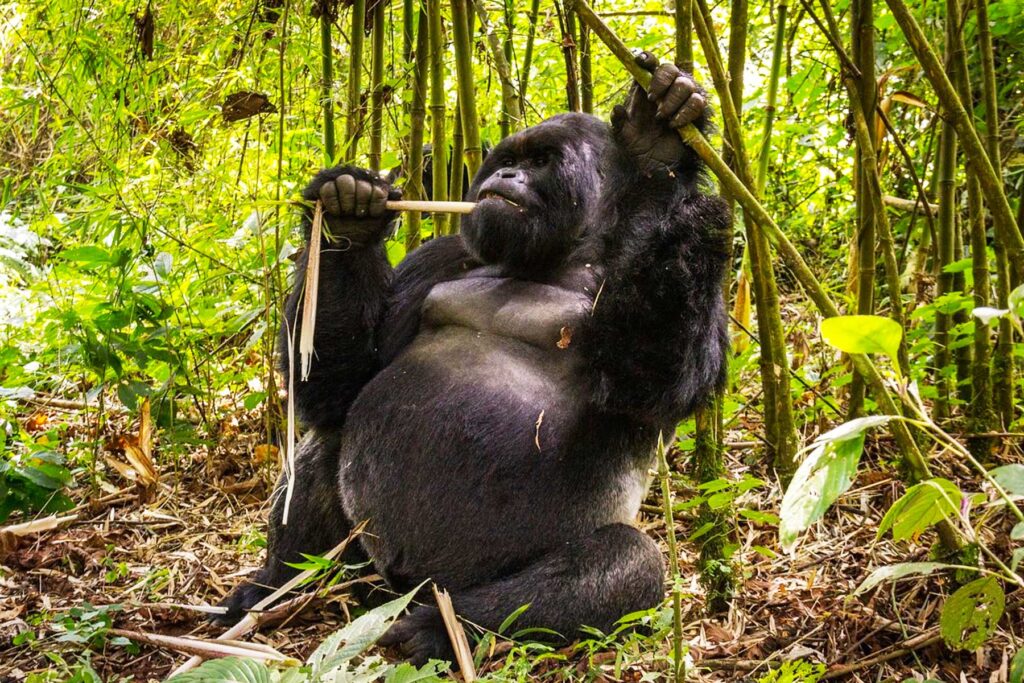
Kahuzi–Biega National Park – The Heart of Congo’s Lowland Gorilla Kingdom and One of Africa’s Most Important Rainforest Biodiversity Sanctuaries
Kahuzi–Biega National Park is one of Africa’s most exceptional protected areas—an immense UNESCO World Heritage Site in eastern Democratic Republic of Congo that preserves some of the last and largest populations of the critically endangered Eastern Lowland (Grauer’s) Gorilla. Spanning over 6,000 km² of pristine rainforest, soaring volcanic mountains, river valleys, swamp forests, and lowland jungles, the park is an irreplaceable treasure of the Congo Basin, home to an extraordinary concentration of wildlife, endemic flora, and globally significant ecosystems.
This park is one of the only places in the world where travellers can experience lowland gorilla trekking—a rare, intimate, and life-changing encounter with the planet’s largest primate species. With dramatic landscapes shaped by extinct volcanoes, lush montane forests, and enormous stretches of equatorial jungle, Kahuzi–Biega National Park is not only a biodiversity hotspot but a sanctuary for scientific research, conservation leadership, and cultural heritage. It remains one of the purest rainforest wilderness areas in Central Africa and a must-visit destination for serious nature enthusiasts, gorilla trekkers, conservationists, and eco-adventurers.
Overview of Kahuzi–Biega National Park
Kahuzi–Biega was established in 1970 specifically to protect Grauer’s Gorillas and the unique ecological corridor between the eastern Albertine Rift montane forests and the vast lowland Congo Basin rainforest. In 1980, UNESCO recognized the park’s unmatched ecological value by designating it a World Heritage Site. This recognition reflects the park’s extraordinary biodiversity, exceptional primate population, and the conservation importance of its intact rainforest ecosystems.
Even amid historical instability in eastern DR Congo, Kahuzi–Biega has demonstrated remarkable conservation resilience. Dedicated rangers, strong partnerships with the ICCN (Institut Congolais pour la Conservation de la Nature), and increased community engagement have allowed the park’s gorilla population to steadily recover. Today, several gorilla families are habituated for tourism, enabling safe and regulated gorilla trekking that supports both conservation initiatives and local community development.
Location and Size
Kahuzi–Biega National Park lies in South Kivu Province in eastern DR Congo, near the picturesque western shores of Lake Kivu and close to the vibrant lakeside city of Bukavu. This strategic location makes the park accessible yet still incredibly wild. It forms part of the Albertine Rift—a globally significant biodiversity corridor that stretches from Uganda to Burundi and is one of the richest ecological regions in Africa.
Covering approximately 6,000 km², the park is divided into two distinct ecological zones:
- The Montane Sector: Centered around Mount Kahuzi (3,308 m) and Mount Biega (2,790 m), featuring bamboo forests and high-altitude habitats.
- The Lowland Sector: A massive expanse of dense equatorial rainforest that supports an extraordinary range of wildlife.
The elevation gradient—from 600 m in the lowlands to over 3,300 m at the volcanic peaks—creates a dramatic ecological continuum that supports some of the highest species diversity recorded in Central Africa.
Geography and Geology
Geologically, Kahuzi–Biega is dominated by volcanic formations, including the impressive extinct volcanoes Mount Kahuzi and Mount Biega. These volcanoes shape the landscape, create fertile soils, and influence the distribution of vegetation and wildlife. Their slopes are blanketed with bamboo, Hagenia-hypericum forests, and montane plant communities that provide essential feeding grounds for the park’s gorillas.
The park’s lowland region transitions into sprawling equatorial rainforest with thick undergrowth, river basins, and swamp forests. Its varied topography—ranging from steep mountain ridges to flat forest basins—supports a mosaic of habitats. This complexity makes Kahuzi–Biega one of the most ecologically diverse national parks in the Congo Basin and a global priority for conservation.
Climate
Kahuzi–Biega experiences a tropical rainforest climate with high rainfall, constant humidity, and moderate-to-warm temperatures. However, because of the park’s extreme elevation range, the climate varies significantly between zones.
The montane forests experience cool temperatures between 10°C and 20°C, with mist-shrouded mornings and frequent rainfall. The lowland forests, by contrast, are warm, humid, and lush—ideal for supporting abundant fruiting cycles that feed over 13 primate species. Heavy rains from September to May sustain the forest’s dense vegetation, while drier months create optimal conditions for trekking and wildlife viewing.
Hydrology and Water Systems
The park lies within the headwaters of several major river systems that feed into the greater Congo Basin, the second largest rainforest watershed on Earth. Rivers including the Lwiro, Luka, and Ulindi support water-dependent wildlife and nourish the rainforest’s rich plant life.
Seasonal streams, marshes, and swamp forests form important wetland habitats that host amphibians, insects, and semi-aquatic mammals. These hydrological networks play a vital role in nutrient distribution, forest growth, and the survival of large mammals such as forest elephants, sitatunga, and buffalos.
Ecosystems and Habitats
The ecological diversity of Kahuzi–Biega is among the richest on the continent. Its ecosystems span an entire altitudinal range, from high-altitude volcanic forests to tropical lowland rainforest. This uninterrupted habitat corridor supports extraordinary biodiversity.
- Bamboo and subalpine forests: Preferred gorilla feeding zones at higher elevations.
- Montane forests: Home to unique bird species, primates, and endemic plants.
- Lowland rainforest: One of the largest intact Congo Basin forest blocks, teeming with wildlife.
- Swamp forests: Moist ecosystems rich in amphibians, fish, and semi-aquatic mammals.
- Riverine forests: Wildlife corridors with high densities of monkeys, birds, and elephants.
These habitats form an ecological continuum found nowhere else in the Congo Basin, making the park critically important for global biodiversity conservation.
Vegetation
Vegetation in Kahuzi–Biega is exceptionally diverse and reflects the sharp contrasts between its montane and lowland regions. The montane sector features bamboo thickets, Hagenia woodlands, and hypericum shrubs. Bamboo is especially important as a primary diet source for Eastern Lowland Gorillas.
The lowland forests contain towering hardwood trees, such as Gilbertiodendron dewevrei, Entandrophragma, and African mahogany, forming a multi-layered canopy up to 50 meters tall. Lianas, vines, epiphytes, orchids, ferns, and medicinal plants flourish in the humid understory, creating ideal habitats for primates, birds, and invertebrates.
Wildlife of Kahuzi–Biega National Park
Eastern Lowland Gorillas
The crown jewel of Kahuzi–Biega National Park is its critically endangered Eastern Lowland Gorilla population. These gentle giants can weigh up to 250 kg and are known for their immense size, broad chests, massive hands, and calm demeanor. Grauer’s Gorillas are unique among gorilla species for their longer limbs and larger body size.
Several gorilla families in the montane sector are habituated for tourism, allowing visitors an exceptionally rare opportunity to observe gorilla behavior—feeding, grooming, playing, and interacting—just meters away. Gorilla trekking in Kahuzi–Biega is often described as more peaceful and immersive than mountain gorilla trekking due to the less steep terrain and the gorillas’ more relaxed temperament.
Mammals
Beyond gorillas, the park supports an extraordinary assemblage of mammals. Its dense forests shelter species that are rarely seen elsewhere due to habitat degradation in other parts of Central Africa.
- Forest elephants – elusive and vital seed dispersers.
- Chimpanzees – widespread, forming multi-male communities.
- Colobus monkeys – including red colobus, Angolan black-and-white colobus, and owl-faced monkeys.
- Bongo antelope – large, striped forest antelope.
- Sitatunga – semi-aquatic antelope inhabiting swamp forests.
- Forest buffalo – smaller and more reddish than savanna buffalo.
- Okapi – rare in the park but known to occur in lowland regions.
Other mammals include giant pangolins, African golden cats, servals, civets, duikers, porcupines, and nocturnal primates such as bushbabies.
Birds
Kahuzi–Biega is a haven for birdlife and a dream destination for ornithologists. Over 350 species have been recorded, including many Albertine Rift endemics and rare forest specialists.
- Ruwenzori turaco – a colorful, endemic montane species.
- Grauer’s broadbill – one of the world’s most range-restricted birds.
- Yellow-crested helmetshrike – vulnerable and localized.
- Black-billed turaco
- African green broadbill
- Cassin’s hawk-eagle and other raptors.
- Sunbirds, greenbuls, and bee-eaters thrive in forest edges and canopy layers.
The park’s mix of lowland and montane zones creates ideal conditions for exceptionally diverse avifauna.
Reptiles, Amphibians, and Invertebrates
Reptile species include chameleons, forest cobras, vipers, geckos, and monitor lizards. Amphibians are abundant near streams and swamp forests, including a variety of colorful tree frogs and toads.
Invertebrates—particularly butterflies, moths, beetles, spiders, and dragonflies—are extremely diverse. Many species remain undescribed, making the park a hotspot for entomological research.
Unique Features of Kahuzi–Biega National Park
- Eastern Lowland Gorilla trekking – one of the rarest wildlife experiences globally.
- Volcanic landscapes – the extinct Mount Kahuzi and Mount Biega dominate the skyline.
- Exceptional biodiversity – a UNESCO Natural World Heritage Site.
- Lowland Congo rainforest – among the largest intact forest blocks in Africa.
- Cultural encounters – meet Indigenous Batwa communities.
Cultural and Indigenous Communities
The Indigenous Batwa (Pygmy) communities have historically inhabited the forests of Kahuzi–Biega, relying on hunting, gathering, and deep ecological knowledge for survival. Their cultural heritage is intimately linked to the forest, with traditions centered around herbal medicine, storytelling, and spiritual connection to wildlife.
Community tourism initiatives allow visitors to experience Batwa music, dance, forest crafts, and traditional knowledge. These programs support livelihoods while preserving cultural identity.
Conservation Importance
Kahuzi–Biega is one of the most important conservation landscapes in Africa. As the principal refuge of Eastern Lowland Gorillas, it plays a critical role in preventing the extinction of this species. The park also protects large mammals, rare birds, and vast tracts of Congo Basin rainforest, helping regulate regional climate, water systems, and carbon storage.
Conservation efforts include ranger patrols, wildlife monitoring, anti-poaching operations, community involvement, and environmental education programs aimed at fostering long-term sustainability.
Threats and Challenges
Despite its importance, the park faces several challenges including illegal mining, habitat encroachment, poaching, insecurity, and bushmeat hunting. Mining in remote regions disrupts ecosystems and brings human settlement deeper into wildlife habitats.
Conservation agencies work tirelessly to address these threats through improved enforcement, international support, community partnerships, and investment in sustainable development initiatives around the park.
Research and Monitoring
Kahuzi–Biega is a leading site for research on primate ecology, tropical biodiversity, botany, and climate change resilience. Long-term gorilla research programs provide crucial insights into behavior, genetics, and population health.
Modern tools such as drones, camera traps, GPS collaring, acoustic monitors, and satellite mapping help scientists track wildlife populations, study forest health, and monitor illegal activities. Findings from Kahuzi–Biega inform global conservation strategies for the Congo Basin.
Tourism Activities
- Gorilla trekking: Spend one hour observing Eastern Lowland Gorillas in the wild.
- Volcano hikes: Climb Mount Kahuzi for panoramic views of the Albertine Rift.
- Nature walks: Explore waterfalls, rivers, and rich rainforest flora.
- Birdwatching: Search for Albertine Rift endemics and rare forest birds.
- Primate tracking: Look for colobus, mangabeys, and other species.
- Cultural visits: Engage with Batwa communities.
Access and Getting There
Kahuzi–Biega is most easily accessed from Bukavu, a major city on the shores of Lake Kivu. Bukavu is reachable from Rwanda’s Rusizi border by road or via domestic flights within DR Congo to Kavumu Airport.
From Bukavu, a 40 km road leads to the Tshivanga Visitor Center, the starting point for permits, ranger briefings, and gorilla treks.
Permits, Fees, and Park Rules
Gorilla trekking permits must be obtained through ICCN. Fees directly fund conservation, ranger salaries, community programs, and park operations.
- No flash photography near gorillas.
- Maintain a safe distance of at least 7 meters.
- Visitors with flu or cold symptoms may not trek.
- Follow all ranger instructions.
- No littering or noise pollution.
Accommodation
Accommodation options are available mainly in Bukavu and include eco-lodges, hotels, lakeside resorts, and guesthouses. Several lodges cater specifically to gorilla trekkers, offering transport, meals, and guided experiences.
Best Time to Visit
The best time to visit is during the dry seasons—June to September and December to February—when trekking trails are more accessible and wildlife sightings improve. However, gorilla trekking is available year-round and can be enjoyed in any season.
Why Kahuzi–Biega National Park Is Unique
Kahuzi–Biega National Park is unique because it protects one of the rarest primates on Earth—the Eastern Lowland Gorilla—while preserving a massive and ecologically intact segment of the Congo Basin rainforest. Its combination of volcanic peaks, rich biodiversity, cultural heritage, and lowland gorilla trekking makes it unlike any other protected area in Africa.
For travellers seeking an authentic, powerful, and deeply moving wildlife experience, few destinations can match the untamed beauty and scientific significance of Kahuzi–Biega National Park. It stands as a symbol of resilience, biodiversity, and the urgent need to protect the natural treasures of the Congo Basin.