
Kgalagadi Transfrontier Park
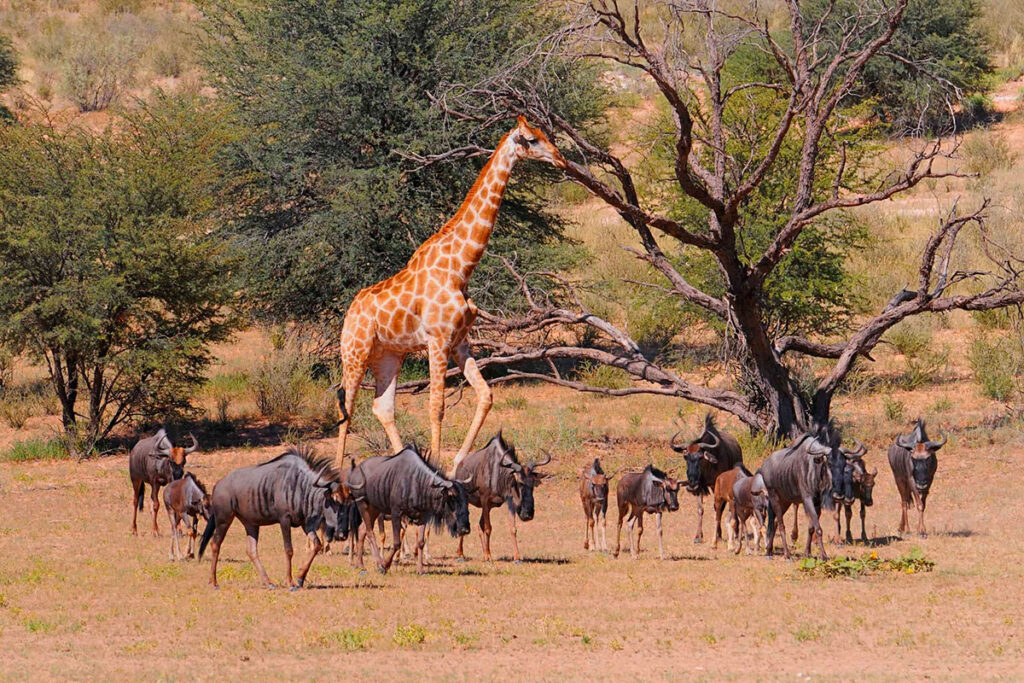
Kgalagadi Transfrontier Park – The Kalahari Desert’s Immense Red-Dune Wilderness of Black-Maned Lions, Migrating Antelope Herds, Ancient Fossil River Valleys, and Africa’s First Historic Peace Park
Kgalagadi Transfrontier Park is one of Africa’s last truly wild, breathtakingly open, and ecologically intact desert ecosystems — a vast cross-border wilderness shared by Botswana and South Africa. Covering more than 37,000 km² of unspoiled Kalahari Desert, the park is famous for its towering red dunes, fossil riverbeds lined with camelthorn trees, dramatic thunderstorms, and some of the continent’s most iconic wildlife species, including the legendary black-maned Kalahari lions. With its unfenced borders, sweeping horizons, and solitude that stretches for hundreds of kilometers, Kgalagadi offers a safari experience unlike any other — raw, powerful, and intensely immersive.
The park’s landscapes are sculpted by ancient geological processes and shaped by seasonal rainfall patterns that sustain the wildlife-rich Auob and Nossob river valleys. These dry riverbeds act as natural migration corridors, attracting large herbivores such as springbok, gemsbok, and red hartebeest, which in turn support thriving populations of predators. Kgalagadi’s transfrontier design enables wildlife to move freely between Botswana and South Africa, restoring ancient migratory patterns disrupted during the colonial era and strengthening ecosystem resilience across the greater Kalahari Basin.
Overview of Kgalagadi Transfrontier Park
Established in 2000 as Africa’s first formally recognized Transfrontier Conservation Area, Kgalagadi remains a pioneering model of cross-border environmental protection and political cooperation. The park unites South Africa’s Kalahari Gemsbok National Park and Botswana’s massive Gemsbok National Park into a single ecological unit — one of the largest protected desert ecosystems in the world. Its management is shared between SANParks (South Africa) and Botswana’s Department of Wildlife and National Parks, ensuring coordinated conservation strategies, unified wildlife monitoring, and long-term ecological stability.
The park is especially famous for predator sightings. Kgalagadi’s lions, with their striking dark manes, are among the most recognizable lions in the world. Cheetahs often use the dune slopes for high-speed chases, and leopards thrive among the rocky outcrops and dense camelthorn groves. The region’s extreme climate — intense heat, unpredictable rainfall, and vast temperature fluctuations — creates an environment where only the most highly adapted species survive, making the park a hotspot for studying desert ecology, predator behavior, and climate resilience.
Location and Size
Kgalagadi Transfrontier Park spans the boundary between Botswana and South Africa in the southwestern Kalahari Basin. Its immense size — more than 37,000 km² — makes it larger than many countries. More than 75% of the park lies within Botswana, offering some of Africa’s most remote wilderness areas, while the South African side provides accessible tourism infrastructure and well-maintained routes.
Visitors can access the park through several key gates depending on their route and desired experience. The South African side is reached through the modern town of Upington, while Botswana’s side is accessed through remote 4×4-only routes via Mabuasehube, Kaa, and Tsabong. The sheer scale of the park ensures minimal tourism congestion, preserving Kgalagadi’s quiet, pristine atmosphere.
Geography and Geology
Kgalagadi’s landscapes are shaped by the geological evolution of the Kalahari Basin, a vast depression filled with wind-blown sands over millions of years. The deep red dunes, some more than 30 meters high, are among the oldest dune systems in the world. Their vivid color results from high iron content reacting with oxygen in the atmosphere over long periods.
Two major fossil riverbeds define the park’s geography:
- The Auob River — a sinuous valley that rarely flows but supports dense camelthorn forests and attracts predators.
- The Nossob River — broader and deeper, bordered by impressive dune walls ideal for spotting lions and brown hyenas.
The park also contains calcareous pans, rocky outcrops, and gently undulating grass plains. These geomorphological features create a diverse mosaic of habitats that support incredible biodiversity despite the desert’s harshness.
Climate
Kgalagadi has a highly variable, semi-arid desert climate that plays a central role in shaping ecological patterns. Scorching daytime temperatures, freezing winter nights, and unpredictable rainfall create an environment of extremes where wildlife must adapt constantly to survive.
- Summer (October–March): Temperatures above 40°C are common. Short, powerful thunderstorms recharge waterholes and trigger bursts of vegetation growth.
- Winter (June–August): Crisp mornings and cool days dominate, with nighttime temperatures dropping below freezing. Wildlife concentrates around scarce water sources.
- Rainfall: Usually between 150–300 mm annually, scattered and inconsistent.
These dramatic seasonal cycles drive migrations of antelope herds, influence predator behavior, and create superb photographic conditions as clouds, dust, and low-angle sunlight transform the dunes into dramatic landscapes.
Hydrology and River Systems
While classified as a desert, Kgalagadi’s ecology depends heavily on its fossil riverbeds and ephemeral pans. These waterways rarely flow on the surface, but their underground moisture supports tree growth, shade, nutrient cycling, and wildlife movement.
- The Nossob River: A major predator hotspot where lions and hyenas patrol dry watercourses.
- The Auob River: Known for its scenic camelthorn trees and high densities of cheetahs.
- Seasonal pans: Mabuasehube, Samedupe, Kaa, and others temporarily fill with water during rainy months.
- Artificial waterholes: Strategic water points help wildlife survive prolonged drought years.
Because rainfall is scarce, these hydrological systems play a vital role in sustaining the park’s predator–prey balance.
Ecosystems and Habitats
Kgalagadi protects some of the most pristine and diverse desert ecosystems in Africa. Despite its aridity, the park supports a surprising richness of habitats, each adapted to harsh conditions.
- Kalahari duneveld: Home to sand-loving species such as oryx, cheetahs, and cape foxes.
- Riverine woodland: Provides critical shade and shelter for leopards, raptors, and nesting birds.
- Open savanna grasslands: Seasonal grazing grounds for springbok, wildebeest, and red hartebeest.
- Salt pans: Important for bird migrations and dramatic seasonal wildlife gatherings.
This habitat diversity allows the park to support rich wildlife populations despite its extreme environment.
Vegetation
The vegetation of Kgalagadi is defined by hardy, drought-resistant species capable of surviving long periods without rainfall. Plant communities grow deep roots, store water within stems, and produce nutrient-rich forage for desert herbivores.
- Camelthorn trees: The park’s most iconic plant, essential for nest-building raptors and shade-loving animals.
- Shepherd’s trees: Known locally as “the tree of life,” providing nutrient-rich berries and foliage.
- Salt-tolerant grasses: Including lovegrasses and three-awn grasses essential for grazing antelope.
- Tsamma melons: A crucial moisture source for wildlife, especially during droughts.
Wildlife of Kgalagadi Transfrontier Park
Mammals
The park is globally renowned for its exceptional predator populations and desert-adapted herbivores. The open landscapes, deep red dunes, and sparse vegetation create ideal conditions for wildlife viewing.
- Black-maned Kalahari lions: Among Africa’s most majestic lions, known for their size, endurance, and striking appearance.
- Cheetahs: Often seen hunting on dune slopes where visibility is high.
- Leopards: Territorial and frequently spotted in riverine woodlands.
- Brown and spotted hyenas: Important scavengers and opportunistic hunters.
- Gemsbok (oryx): The quintessential Kalahari antelope, capable of surviving extreme heat.
- Springbok, red hartebeest, wildebeest: Migratory herds that follow seasonal grasses.
- Bateared foxes, cape foxes, honey badgers, and meerkats: Common small carnivores and insectivores.
Birds
Kgalagadi is one of the greatest bird-of-prey sanctuaries in Africa. More than 300 bird species have been recorded, with especially high densities of raptors, vultures, and desert specialists.
- Martial eagles, tawny eagles, and Bateleurs
- Secretary birds hunting snakes and lizards in open grasslands
- Kori bustards — among the world’s heaviest flying birds
- Sandgrouse arriving at waterholes in spectacular morning flights
- Migratory species such as rollers, cuckoos, and swallows after the rains
Reptiles, Amphibians, and Insects
The Kalahari is home to a variety of reptiles and insects adapted to intense heat, dry conditions, and sandy soils:
- Snakes including puff adders, cape cobras, and horned adders
- Monitor lizards and geckos
- Scorpions active during warm nights
- Colorful beetles, butterflies, grasshoppers, and desert ants
Unique Features of Kgalagadi Transfrontier Park
Kgalagadi stands out for its enormous size, untouched wilderness, and fascinating wildlife dynamics. Its unique features include:
- Black-maned lions: Nowhere else in Africa are lions so strikingly maned.
- Cross-border migration corridors: A rare conservation achievement.
- Unfenced international borders: Allow wildlife to move naturally.
- Exceptional predator viewing: One of Africa’s best places to see big cats.
- Minimal tourism pressure: Providing unmatched solitude.
The park’s emptiness is its greatest luxury — a true wilderness where nature remains in complete control.
Cultural and Indigenous Communities
For thousands of years, the Kalahari has been home to the San (Bushmen), whose deep knowledge of desert survival, animal tracking, and medicinal plants reflects an extraordinary relationship with the land. Their rock art, storytelling traditions, dances, and tracking skills provide insight into one of the world’s oldest continuously living cultures.
Community-based tourism programs allow visitors to learn about traditional bow-and-arrow hunting techniques, fire-making skills, gathering edible plants, and identifying animal tracks. These initiatives support cultural preservation and sustainable livelihoods.
Conservation Importance
Kgalagadi plays a central role in regional conservation:
- Protecting critical habitats for desert-adapted lions, leopards, and cheetahs
- Preserving ancient migration routes for springbok and wildebeest
- Maintaining intact dune ecosystems and fossil river corridors
- Ensuring ecological connectivity between Botswana and South Africa
- Safeguarding large raptor populations
The park is a success story for collaborative conservation, ecological restoration, and wildlife protection across international boundaries.
Threats and Challenges
Despite its protected status, Kgalagadi faces several challenges:
- Climate change: Intensifying drought cycles and extreme temperatures
- Human-wildlife conflict: Particularly around livestock areas outside the park
- Poaching: Targeting predators and antelope on the periphery
- Habitat pressure at borders: From fencing and settlement expansion
Research and Monitoring
Kgalagadi is one of Africa’s most valuable research landscapes for studying:
- Predator–prey dynamics in arid environments
- Large carnivore movement and genetics
- Desert plant ecology and fire resilience
- Bird-of-prey population health
- Impact of climate extremes on ecosystems
Tourism Activities
Kgalagadi is a paradise for wilderness lovers seeking remote and raw experiences. Activities include:
- Game drives along predator-rich valleys
- Wildlife photography with exceptional lighting conditions
- Birdwatching — especially raptors and desert specialists
- 4×4 adventures into remote Botswana wilderness camps
- Cultural interactions with local San communities
Access and Getting There
Visitors can enter the park from either country:
- Twee Rivieren Gate (South Africa): Main access point with fuel, accommodation, and administrative services.
- Mata-Mata Gate: Linking Namibia with South Africa’s portion of the park.
- Nossob Gate: Provides access to rugged northern territories.
- Mabuasehube and Kaa Gates (Botswana): Remote 4×4-only routes requiring complete self-sufficiency.
Permits, Fees, and Park Rules
Visitors must follow strict conservation guidelines:
- No off-road driving
- No feeding animals
- No loud noises or disruptive behavior
- Respect wilderness campsites and wildlife corridors
- Adhere to cross-border movement rules
Accommodation
Kgalagadi offers a wide range of accommodation options, from basic wilderness camps to comfortable chalets:
- Twee Rivieren, Nossob, Mata-Mata Camps: Chalets, camping, fuel, and shops.
- Wilderness camps: Rooiputs, Polentswa, Urikaruus, Gharagab, Kieliekrankie — unfenced, remote, and exceptional.
- Mabuasehube and Kaa campsites: Highly remote, self-sufficient, and ideal for seasoned adventurers.
Best Time to Visit
The park offers outstanding wildlife viewing year-round, but each season brings unique advantages:
- Dry season (May–October): Best for predator activity, cool temperatures, and concentrated wildlife at waterholes.
- Green season (November–April): Lush scenery, excellent birdwatching, newborn animals, and dramatic cloudscapes.
Why Kgalagadi Transfrontier Park Is Unique
Kgalagadi stands apart as one of the most authentic and untouched wilderness experiences left on Earth. Its vast open spaces, freedom of wildlife movement across international borders, low visitor density, and extraordinary predator sightings make it a destination that embodies the true essence of the African desert. The red dunes, fossil riverbeds, and soaring raptors contribute to an atmosphere of isolation and majesty that few places can match.
For photographers, adventurers, and conservation-minded travelers, Kgalagadi Transfrontier Park is not just another safari destination — it is a transformative encounter with nature in its purest form, a rare chance to witness the Kalahari as it has existed for thousands of years.