
Khenifra National Park
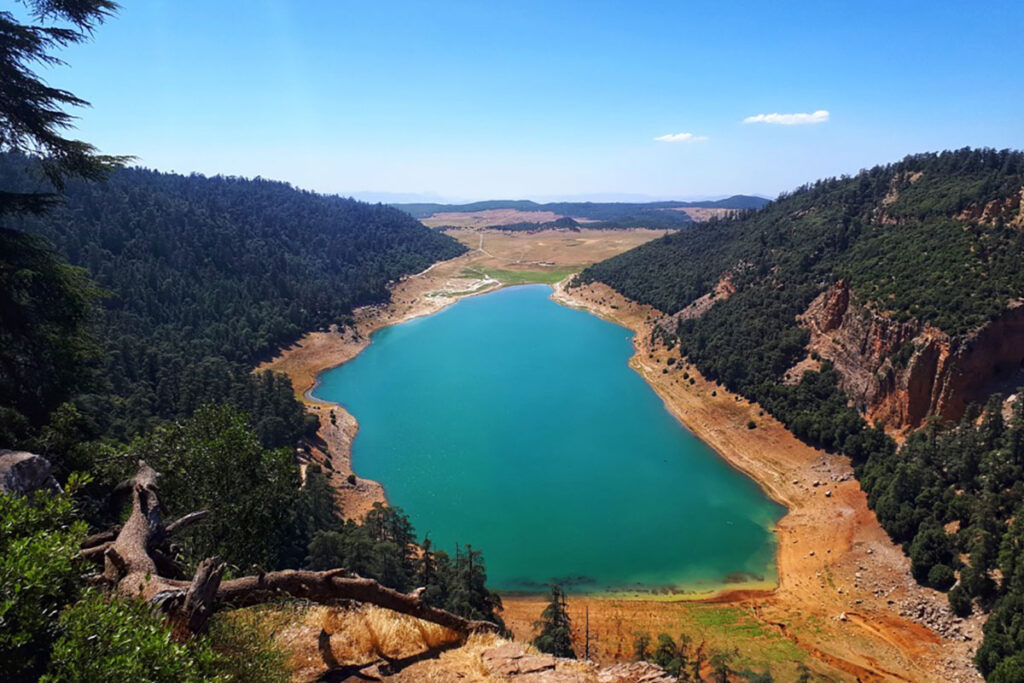
Khenifra National Park – Morocco’s Middle Atlas Sanctuary of Ancient Cedar Forests, Alpine Lakes, Barbary Macaques, Amazigh Heritage, and Exceptional Mountain Biodiversity
Khenifra National Park is one of the most ecologically significant and visually stunning protected areas in Morocco — a vast mountain sanctuary where ancient cedar forests meet high-altitude lakes, dramatic limestone ridges, wildflower-filled meadows, and deep Middle Atlas valleys. Located near the historic town of Khenifra, the park spans more than 935 km² and protects some of North Africa’s rarest habitats, including the last great stands of endangered Atlas cedar (Cedrus atlantica), pristine alpine wetlands, and forest ecosystems that support endangered wildlife such as the iconic Barbary macaque.
This exceptional Middle Atlas landscape forms part of Morocco’s “green heart,” an essential freshwater-generating region often described as the country’s natural water tower. With its cool climate, clean air, and diverse ecosystems ranging from oak woodlands to high mountain plateaus, Khenifra National Park is a haven for hikers, wildlife enthusiasts, birdwatchers, conservation scientists, and travelers seeking a quieter, greener, and more immersive alternative to Morocco’s desert and coastal destinations. Rich Amazigh traditions, centuries-old pastoral practices, and mountain village culture further enhance the park’s identity as one of Morocco’s most authentic and culturally rooted natural areas.
Overview of Khenifra National Park
Created in 2008, Khenifra National Park was established to protect vulnerable Middle Atlas ecosystems that had come under increasing pressure from deforestation, grazing, and climate-induced forest decline. The park safeguards some of the region’s most important ecological features, including large cedar–oak forests, high mountain lakes, limestone massifs, and riparian corridors that support sensitive wildlife populations. It is managed by Morocco’s Haut Commissariat aux Eaux et Forêts, which focuses on sustainable forest management, habitat restoration, community engagement, and research-based conservation.
Today, Khenifra National Park is recognized as one of the Middle Atlas’s key biodiversity hotspots. Its cedar forests are part of the world’s last remaining natural range for Cedrus atlantica, making it critical for global conservation efforts. The park also attracts researchers studying primate ecology, forest compositional changes, mountain hydrology, and climate adaptation strategies. As eco-tourism grows in the region, the park also plays an increasingly important role in promoting sustainable development for local Amazigh communities.
Location and Size
Located in central Morocco within the Béni Mellal–Khénifra administrative region, Khenifra National Park lies entirely within the Middle Atlas Mountain chain. Its altitude ranges from approximately 1,500 to over 2,400 meters above sea level, creating a dramatic natural setting of green mountain ridges, panoramic viewpoints, cliff walls, cold mountain springs, and ancient cedar plateaus. The park is easily accessible from the town of Khenifra and lies approximately midway between the major cities of Meknes, Fez, and Beni Mellal.
The park spans more than 935 km², making it one of the largest protected high-mountain ecosystems in Morocco. Its strategic location between northern and southern Atlas habitats also allows it to function as an essential migration corridor, enabling wildlife movement, gene flow, and seasonal dispersal of birds and mammals across the Middle Atlas.
Geography and Geology
Khenifra National Park lies at the intersection of tectonically uplifted mountain blocks and ancient limestone formations characteristic of the Middle Atlas. Over millions of years, erosion carved deep valleys, gorges, and dolomitic cliffs, while volcanic activity contributed to the formation of unique crater lakes. The park’s varied geological history supports highly diverse soils, vegetation types, and hydrological systems.
- Limestone mountains and escarpments: Serving as nesting sites for eagles and habitat for mountain flora.
- Karst landscapes: Featuring sinkholes, natural springs, and underground water networks.
- Volcanic crater lakes: Such as the Tiglmamine Lakes.
- Eroded cedar plateaus: Covered by carpets of moss, lichens, and centuries-old cedar trees.
These varied geomorphological features create a complex mosaic of habitats that support high levels of endemic flora and fauna, contributing to the park’s conservation significance.
Climate
Khenifra National Park has a cool Mediterranean mountain climate, heavily influenced by altitude and topography. The park experiences significant temperature variation between seasons, allowing for lush spring blooms, vibrant autumn colors, snowy winters, and pleasantly mild summers — making it a year-round attraction for outdoor enthusiasts.
- Winter (December–March): Snow blankets cedar forests and high elevations, creating breathtaking alpine landscapes.
- Spring (March–May): Meadows erupt with wildflowers, rivers flow strongly, and animals are most active.
- Summer (June–September): Cooler mountain temperatures offer relief from the heat of Morocco’s lowlands.
- Autumn (September–November): Forests turn golden-yellow and auburn, ideal for photography.
This climatic diversity supports numerous ecological niches and ensures a constant water supply to surrounding regions.
Hydrology and Water Systems
Khenifra National Park is one of Morocco’s most critical freshwater reservoirs. Its rivers, lakes, and mountain springs feed major watersheds that supply water to millions of people downstream. Hydrology is central to the park’s ecological importance.
- Aguelmam Azegza Lake: A striking turquoise lake known for picnicking, hiking, and wildlife viewing.
- The Tiglmamine Lakes: UNESCO-recognized twin crater lakes of volcanic origin.
- Oum Errabia River: One of Morocco’s longest rivers, with springs originating in the park’s highlands.
- Mountain streams and springs: Feeding forests, supporting amphibians, and nourishing wetlands.
These hydrological systems not only support biodiversity but also prevent desertification by maintaining soil moisture and stabilizing local climates.
Ecosystems and Habitats
The park contains some of the Middle Atlas’s richest and most intact ecosystems. These habitats vary significantly with altitude, climate, slope, and soil type, creating a remarkable ecological gradient across the park.
- Atlas cedar forests: The park’s signature ecosystem, home to ancient and endangered trees.
- Holm oak and kermes oak woodlands: Supporting diverse birdlife and small mammals.
- High-altitude meadows: Carpeted with wildflowers in spring and early summer.
- Riparian zones: Rich wetlands along lakes, rivers, and seasonal streams.
- Mountain cliffs and escarpments: Favored by eagles, vultures, and mountain goats.
These ecosystems act as refuges for many North African endemic species and serve as ecological stepping-stones across the Atlas range.
Vegetation
Khenifra National Park is distinguished by its rich and varied plant life, including some of Morocco’s most important forest species. The park’s vegetation forms the backbone of its biodiversity and provides critical habitat for wildlife.
- Atlas cedar (Cedrus atlantica): A globally endangered species forming spectacular high mountain forests.
- Holm oak (Quercus ilex): Dominant in mid-altitude forests.
- Kermes oak (Quercus coccifera): Adapted to dry, rocky slopes.
- Juniper species: Covering high, windy altitudes and rocky outcrops.
- Aromatic shrubs: Thyme, rosemary, lavender, and sage.
- Wildflowers: Blooming in brilliant colors in spring.
The park’s forests are vital for erosion control, carbon sequestration, and climate regulation. Many plant species are used in traditional Amazigh medicine.
Wildlife of Khenifra National Park
Mammals
Khenifra National Park supports a rich assemblage of mammals, especially forest and mountain species adapted to the Middle Atlas. It is a crucial stronghold for the endangered Barbary macaque, one of the only primates native to North Africa.
- Barbary macaque: The park provides some of the best habitats for this endangered primate.
- Atlas deer: Recently reintroduced and thriving in protected forest zones.
- Wild boar: Abundant in forested valleys.
- Barbary sheep (Aoudad): Seen on cliffs and rocky slopes.
- Red fox, serval, African wildcat: Elusive mountain predators.
- Hedgehogs, hares, and small rodents: Common in meadows and woodlands.
Healthy mammal populations reflect the park’s well-preserved forest ecosystems and relatively low human disturbance.
Birds
Khenifra National Park is a major birdwatching site with species ranging from raptors to forest specialists and migratory waterbirds.
- Golden eagle, Bonelli’s eagle, booted eagle: Frequently seen soaring above cliffs.
- Bearded vulture (Lammergeier): Occasionally spotted in high rocky areas.
- Owls and woodpeckers: Common in cedar and oak forests.
- Water birds: Ducks, coots, kingfishers around lakes and rivers.
- Songbirds: Warblers, nuthatches, chaffinches, and migratory species.
The park is an important stopover for migrating birds traveling between Europe and sub-Saharan Africa.
Reptiles, Amphibians, and Insects
The park’s habitats support a healthy population of reptiles, amphibians, and insects, many of which are indicators of environmental quality.
- Lizards: Agamas, wall lizards, and skinks.
- Snakes: Montpellier snake, ladder snake, and grass snakes.
- Amphibians: Frogs and toads in streams and wetlands.
- Insects: Butterflies, dragonflies, beetles, bees, and pollinators.
Unique Features of Khenifra National Park
Several exceptional natural and cultural features distinguish the park from other Moroccan protected areas:
- Ancient cedar forests: Among the largest and oldest in the world.
- High-mountain lakes: Stunning turquoise lakes of volcanic origin.
- Barbary macaque habitat: One of the last major populations in Morocco.
- Amazigh cultural landscapes: Villages, terraces, traditions, and local crafts.
- Mountain biodiversity corridor: Connecting the broader Middle Atlas.
Its combination of natural beauty, cultural heritage, and ecological value makes it one of Morocco’s most extraordinary national parks.
Cultural and Indigenous Communities
The Middle Atlas region surrounding the park is dominated by Amazigh communities with centuries-old traditions tied to pastoralism, forest stewardship, and mountain agriculture. Their traditional homes, food, music, and seasonal festivals enrich the visitor experience.
Tourists can explore Amazigh culture through local handicrafts, cedarwood carvings, carpet weaving, beekeeping, herbal medicine, and village hospitality. Many eco-tourism initiatives now directly support these communities while promoting forest conservation and sustainable land use.
Conservation Importance
Khenifra National Park is one of Morocco’s most ecologically vital protected areas for several reasons:
- It protects globally threatened Atlas cedar forests.
- It supports endangered wildlife such as the Barbary macaque.
- Its high-altitude lakes supply water to major Moroccan watersheds.
- It supports diverse plant communities resistant to climate stress.
- It prevents soil erosion and desertification in surrounding regions.
The park’s conservation efforts help safeguard Morocco’s environmental future and maintain regional ecological stability.
Threats and Challenges
Despite its protected status, Khenifra National Park faces several challenges:
- Illegal logging: Threatening cedar regeneration.
- Overgrazing: Impacting grasslands and forest regeneration.
- Climate change: Causing drought and cedar dieback.
- Wildfires: Increasing in frequency during hot summers.
- Human–wildlife conflict: Especially involving macaques.
Long-term sustainability depends on intensified reforestation, hydrological protection, scientific monitoring, and community-supported conservation programs.
Research and Monitoring
Khenifra National Park is an important scientific research center with projects focusing on:
- Cedar forest ecology and regeneration.
- Climate resilience in high-altitude ecosystems.
- Barbary macaque population behavior and genetics.
- Hydrology and lake conservation.
- Botanical surveys of endemic species.
Tourism Activities
Visitors to Khenifra National Park can enjoy a wide array of adventure, nature, and cultural activities:
- Hiking and trekking: Trails through forests, meadows, cliffs, and lakes.
- Wildlife viewing: Spot macaques, deer, boars, and forest predators.
- Birdwatching: Outstanding around lakes and forested valleys.
- Cedar forest exploration: Ideal for eco-tourists and photographers.
- Cultural visits: Experience Amazigh traditions and rural life.
- Camping and picnicking: In designated scenic areas.
Access and Getting There
The park is easily accessed from several major cities:
- Khenifra town: Main gateway to the park.
- Fez and Meknes: 2–3 hours by road.
- Beni Mellal: Scenic routes through the mountains.
Standard vehicles can reach main sites, though remote trails may require a 4×4.
Permits, Fees, and Park Rules
Park regulations help preserve the ecological integrity of Khenifra National Park:
- No cutting or damaging cedar or oak trees.
- No wildlife disturbance or feeding.
- No littering or removal of plants.
- Stay on designated trails.
- Respect local Amazigh customs and sacred sites.
Accommodation
Accommodation options around the park include:
- Eco-lodges: Offering sustainable tourism experiences.
- Rural guesthouses: Run by Amazigh families.
- Mountain campsites: Near lakes and forest edges.
- Hotels in Khenifra town: For visitors seeking convenience.
Best Time to Visit
The best time to visit Khenifra National Park is between April and November, when temperatures are mild, the forests are green, and wildlife viewing is exceptional. Spring is ideal for wildflowers, while autumn offers spectacular fall colors.
Why Khenifra National Park Is Unique
Khenifra National Park is truly unique for its combination of ancient cedar forests, spectacular high-altitude lakes, rich wildlife, cultural authenticity, and mountain tranquility. It is one of Morocco’s most important biodiversity refuges and a breathtaking destination for eco-tourism, photography, trekking, and cultural exploration.
For travelers seeking nature, serenity, and a deep connection to Morocco’s Middle Atlas heritage, Khenifra stands as one of the country’s most unforgettable natural treasures.