
Mahale Mountains National Park
Mahale Mountains National Park Tanzania – Chimpanzees, Tropical Forests, Lake Tanganyika and Complete Wilderness Travel Guide
Mahale Mountains National Park is one of Africa’s most captivating wilderness landscapes, renowned for its wild chimpanzee populations, pristine tropical forests, dramatic mountain ranges and the crystal-blue waters of Lake Tanganyika. Spanning about 1,613 km² on the remote western side of Tanzania, the park was created in 1985 to protect the region’s rare wildlife and unique ecosystems. Because Mahale is accessible only by boat or small plane and has no roads within its boundaries, the park has remained exceptionally untouched. Visitors experience a level of quiet, purity and immersion that is seldom found in modern protected areas, making Mahale a dream destination for travellers seeking nature in its rawest form.
The park’s scenery is nothing short of breathtaking. Dense emerald forests cloak steep mountain slopes, sandy white beaches curve along the lakeshore, and the towering Mahale Mountains rise sharply above the turquoise water. At the heart of this landscape lies Mount Nkungwe, the highest peak at 2,462 metres. These diverse habitats combine to create an oasis where rainforest, mountains and lake ecosystems come together to support extraordinary biodiversity. Every corner of Mahale feels alive—with birds singing from the canopies, waves lapping softly against the shore, and the calls of chimpanzees echoing through the valleys.
Location and Geography
Mahale Mountains National Park is located in the Kigoma Region of western Tanzania, directly on the eastern shores of Lake Tanganyika. The park’s geography is dramatic and visually rich, defined by forested ridges, mist-covered valleys and secluded beaches. The Mahale Mountain Range cuts through the park, offering a scenic backbone of steep peaks and deep ravines, many of which support unique forest ecosystems. These mountains are part of a wild and ancient landscape shaped by millions of years of tectonic activity and erosion.
Its remote location greatly contributes to the park’s charm. With no roads cutting through the wilderness, Mahale remains a place where natural processes unfold with minimal human disturbance. This isolation ensures that wildlife thrives, forests remain intact and travellers can explore an environment that feels timeless and untouched.
Size, Coordinates and Elevation
- Area: Approximately 1,613 km² of protected land and lakeshore
- Coordinates: Around 6°06′–6°48′ S and 29°45′–30°00′ E
- Elevation: From 773 metres at lake level to 2,462 metres at Mount Nkungwe
This wide elevation range creates distinct ecological layers—from warm, humid lowland forests to cool montane habitats—allowing an extraordinary diversity of plants and animals to thrive within one protected area.
Geology and Formation
Mahale lies within the western branch of the East African Rift, one of the most geologically active regions on Earth. The rift’s tectonic forces uplifted the Mahale Mountains and created the deep basin that now contains Lake Tanganyika. Over millions of years, erosion carved valleys, exposed granite outcrops and shaped the rugged terrain that defines the park today.
Lake Tanganyika itself is believed to be between 9 and 12 million years old, making it one of the oldest freshwater lakes on the planet. Its ancient origins explain its extraordinary assemblage of endemic fish species, many of which are found nowhere else on Earth. The interaction between the towering mountains and this ancient lake forms one of Africa’s most dramatic and ecologically important natural landmarks.
Climate
Mahale Mountains National Park has a warm, humid climate influenced heavily by its proximity to Lake Tanganyika. The seasonal patterns are distinct and play a major role in shaping wildlife behaviour, vegetation cycles and trekking conditions. Cooler breezes from the lake moderate the temperatures along the shoreline, while the forested mountains trap moisture and create refreshing microclimates in the higher zones.
- Dry Season (May–October): Clear, sunny days and cool nights. The best time for chimpanzee tracking as the apes tend to stay closer to the lakeshore forests.
- Short Rains (November–December): Light showers refresh the vegetation and attract migratory birds.
- Long Rains (January–April): Heavy rainfall transforms the park into a lush, green paradise, though trails become slippery and more challenging.
Annual temperatures generally range from 20°C to 30°C, though humidity is higher in dense forest zones. These seasonal dynamics ensure that Mahale remains vibrant year-round, each period offering a different and equally stunning experience.
Hydrology – Lake Tanganyika and Mountain Streams
Lake Tanganyika is the defining hydrological feature of Mahale. As the second deepest and one of the oldest freshwater lakes in the world, it holds immense ecological significance. Its waters are incredibly clear, allowing snorkelers to see colourful fish darting through rocky underwater landscapes. More than 350 fish species have been recorded here—most of them cichlids found only in Tanganyika’s ancient waters.
The Mahale Mountains feed countless freshwater streams that cascade through forested valleys before emptying into the lake. These streams create lush riparian corridors that attract wildlife, especially during the dry season. The constant supply of fresh water supports thriving plant communities, amphibians, insects and forest mammals, making water systems central to the park’s ecological vitality.
Ecosystems and Vegetation
Mahale Mountains National Park contains some of the most diverse vegetation zones in East Africa. The park’s position between the Congo Basin and the East African interior creates a remarkable overlap of forest and woodland species. These ecosystems blend seamlessly across altitudinal gradients, supporting everything from tropical rainforest plants to hardy miombo woodland species.
Major Vegetation Zones
- Tropical Rainforest: Evergreen forests dominate the lower and mid slopes. These areas are rich in figs, lianas, wild ginger and tall canopy trees.
- Montane Forest: Cooler high-altitude forests filled with podocarpus, mahogany and moss-covered branches.
- Bamboo Forest: Dense stands of bamboo found at mid-elevations, offering habitat for smaller primates and unique bird species.
- Miombo Woodland: Stretching across drier slopes, dominated by Brachystegia and Julbernardia trees and supporting forest elephants and bushbuck.
- Lakeshore Vegetation: Coconut palms, beach forest groves and clusters of fig trees lining the white-sand shoreline.
This remarkable vegetation diversity forms the ecological foundation of Mahale and supports a wide variety of wildlife, particularly forest-dependent species.
Wildlife of Mahale Mountains National Park
The wildlife of Mahale is defined by its dense forests and pristine lakeshore habitats. While visitors may not find large numbers of savanna mammals here, the park’s fauna is extraordinary in its specialization and diversity. Primates take centre stage, especially the chimpanzees for which the park is globally renowned.
Chimpanzees – The Icon of Mahale
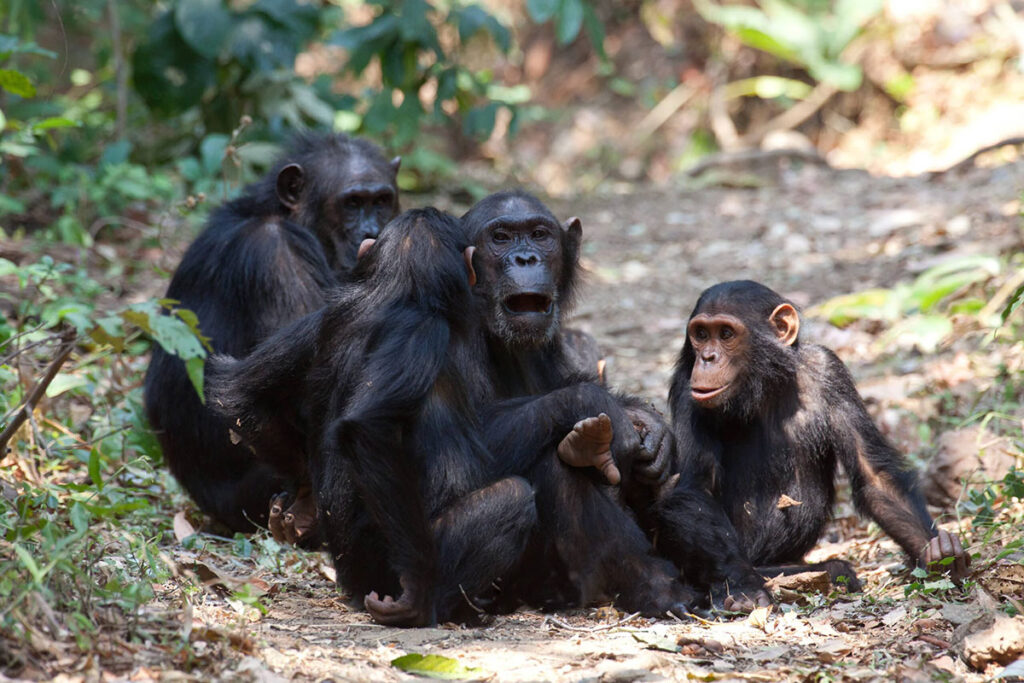
Mahale hosts one of Africa’s largest protected chimpanzee populations, estimated at 700–900 individuals. Decades of research have made the M_group one of the best-studied chimpanzee communities in the world. These chimpanzees exhibit complex social structures, tool use, cooperative hunting and highly communicative behaviour. Observing them in their natural habitat is one of the most intimate wildlife experiences available on the continent.
Chimpanzee Tracking Guidelines
- Group sizes remain limited to minimise disturbance.
- A minimum viewing distance must be maintained at all times.
- If visitors have coughs or flu symptoms, trekking is prohibited.
- Soft voices and slow, calm movements are essential near the chimps.
- Tracking can range from easy walks to demanding hikes depending on the chimps’ location.
Trekking the chimps of Mahale is a spiritual experience for many people, blending adventure, patience and deep respect for wildlife.
Other Primates
- Red colobus monkeys
- Yellow baboons
- Red-tailed monkeys
- Blue monkeys
The density and diversity of primates make Mahale a paradise for primate enthusiasts and wildlife photographers.
Mammals
- Forest elephants (rare and elusive)
- Bushpigs
- Bushbuck
- Defassa waterbuck
- Porcupines and numerous small forest species
- Leopards (rarely seen due to dense vegetation)
Most mammals prefer the cover of the forest, emerging along streams and clearings at dawn and dusk.
Birds
Mahale is a haven for birdlife, with over 350 species recorded across its forests, lakeshore zones and mountain peaks.
- African fish eagle
- Crowned eagle
- Ross’s turaco
- Trumpeter hornbill
- Palm-nut vulture
- Kingfishers, sunbirds and forest barbets
Birdwatching is rewarding year-round, though the wet season brings heightened breeding activity and a chorus of forest calls.
Reptiles, Amphibians and Aquatic Life
The park hosts numerous reptiles including chameleons, skinks and monitor lizards. Amphibians thrive along streams in the wet season. Lake Tanganyika’s aquatic life is a major attraction, boasting a dazzling array of cichlids and other endemic fish species that offer exceptional snorkelling opportunities.
Cultural Heritage – The Holoholo People
Before the park was created, the Mahale Mountains were home to the Holoholo people, known for their deep spiritual connection to the mountains and lake. Their culture emphasised harmony with nature, sustainable fishing techniques and rituals tied to Mount Nkungwe. Although relocated to establish the national park, the Holoholo maintain cultural ties to the landscape through protected sacred sites and traditional practices passed down through generations.
Conservation Importance
Mahale Mountains National Park plays a critical role in the survival of wild chimpanzees and in the preservation of East Africa’s montane rainforest ecosystems. The park protects vital watersheds that feed Lake Tanganyika and forms an ecological corridor with nearby Katavi National Park. This broader landscape is essential for wildlife movement, long-term forest health and water regulation.
The Tanzania National Parks Authority (TANAPA) manages Mahale through ranger patrols, research partnerships and strict infectious-disease protocols to protect chimpanzees from human illness.
Threats and Environmental Pressures
- Disease transmission between humans and chimpanzees
- Fishing pressure along the lakeshore
- Habitat encroachment in areas surrounding the park
- Climate change affecting montane forests
- Illegal timber harvesting near buffer zones
While Mahale itself remains well protected, broader regional pressures require ongoing conservation collaboration to ensure long-term ecological integrity.
Research and Monitoring
Mahale is a global centre for primate research. The long-term studies of the M_group have contributed invaluable knowledge to global understanding of chimpanzee communication, tool use, feeding strategies and social dynamics. Additional research includes monitoring forest conditions, bird populations and fish biodiversity in Lake Tanganyika.
Tourism Activities
- Chimpanzee tracking with expert guides
- Guided forest walks to waterfalls and streams
- Swimming, kayaking and snorkelling in Lake Tanganyika
- Traditional dhow cruises at sunset
- Birdwatching in forest and riverside habitats
- Mountain trekking for adventurous hikers
Photography Highlights
- Wild chimpanzee behaviour up close
- Sunsets reflecting off Lake Tanganyika
- White-sand beaches framed by lush green forests
- Colourful endemic fish while snorkelling
- Misty forest views from elevated mountain trails
Access – How to Get There
- By Air: Charter flights from major Tanzanian cities to nearby airstrips.
- By Boat: Motorboats from Kigoma provide scenic access across the lake.
- No Roads: The park is roadless, ensuring complete tranquility and wilderness immersion.
Most travellers arrive via lodge-organised flights and boat transfers, which streamline logistics and ensure safe, comfortable travel.
Practical Tips and What to Pack
- Breathable long-sleeved clothing for warm days and insect protection
- Waterproof hiking boots for forest trails
- Insect repellent and malaria precautions
- Dry bags and silica gel packs for protecting electronics
- Lightweight rain jacket for sudden showers
- Reusable water bottle for hydration on treks
Because Mahale is remote, visitors should bring essential medication and ensure all camera equipment is well protected from humidity and potential rain.
Accommodation Options
The park offers a handful of exclusive, low-impact lodges and camps situated along the lakeshore. These accommodations provide stunning views, pristine beaches, comfortable rooms and expert-guided activities. Many are eco-friendly and blend harmoniously into the surrounding forest.
- Luxury tented camps
- Eco-lodges with lakefront access
- Rustic fly camps for adventurous travellers
Staying inside the park enhances the experience, allowing early morning treks and peaceful evenings by the water.
Best Time to Visit
- July–October: Peak chimpanzee viewing and best trekking conditions.
- May–June: Beautiful green landscapes with fewer visitors.
- November–April: Lush vegetation, ideal for birdwatching and photography.
While wildlife can be seen year-round, the dry season offers the highest chance of reliable chimpanzee sightings near the lower forest slopes.
Why Mahale Mountains National Park Is Unique
Mahale Mountains National Park stands out as one of Africa’s most magical natural treasures—an exquisite blend of rainforest, mountain wilderness and freshwater beauty. It is one of the few places in the world where visitors can follow wild chimpanzees on foot, relax on white-sand beaches beside a crystal-clear lake and explore deep forests untouched by time. Its remoteness, biodiversity, cultural heritage and dramatic landscapes make it a destination unlike any other in Tanzania or the world.
For travellers seeking awe, solitude and unforgettable wildlife encounters, Mahale offers a life-changing journey into one of the planet’s last true wilderness sanctuaries.