
Mupa National Park
Mupa National Park, Angola – Miombo Woodlands, Endemic Birds, Dry Savannas and One of Angola’s Most Important Restoration Landscapes
Mupa National Park is one of Angola’s least explored but ecologically significant national parks—a vast wilderness dominated by sweeping miombo woodlands, sunlit dry savannas, seasonal wetlands and traditional pastoral landscapes. Established in 1964 and covering approximately 6,600 km², it lies in Cunene Province in southern Angola near the Namibian border. Although the park suffered extensive wildlife declines during decades of conflict, Mupa remains a landscape of exceptional ecological value, harboring endemic birds, resilient small mammals, unique vegetation and cultural communities who have maintained a deep connection to the land for centuries.
Historical Background and Establishment of the Park
Mupa National Park was declared a protected area in 1964 under Portuguese administration. Its original aim was to protect potential habitat for the giant sable antelope (Hippotragus niger variani), a critically endangered Angolan endemic. Later studies revealed that giant sables did not inhabit Mupa, their core range being in Cangandala and Luando, but the park was retained due to its biological importance and extensive miombo woodlands.
During Angola’s civil war (1975–2002), the park experienced major disruptions. Wildlife numbers collapsed due to subsistence hunting, habitat degradation and near-complete absence of conservation enforcement. Infrastructure deteriorated and scientific monitoring stopped entirely. After the war, Angola began rebuilding its protected area network, recognizing Mupa as a large, intact but recovering woodland ecosystem with high potential for ecological restoration and research.
Today, Mupa stands as a symbolic landscape: a reminder of Angola’s tumultuous past, but also a beacon of opportunity for rebuilding wildlife populations, restoring woodlands and involving local communities in long-term conservation planning.
Geography and Landscape Features
Mupa National Park lies in the southern Angolan interior between the Cunene River basin to the south and the more arid plateau to the north. The terrain consists of softly rolling plains, sandy plateaus, scattered hills, seasonal pans and tracts of dense woodland. Elevations range from 1,000 to 1,300 meters, giving the park a gentle topographic profile ideal for woodland vegetation and pastoral grazing.
The park’s soils are primarily sandy, nutrient-poor and prone to erosion if vegetation is removed, making tree cover essential for ecological health. Numerous shallow ombugas—seasonal floodplains formed by ephemeral rivers—support wetland vegetation during the rainy months and provide water for wildlife, birds and livestock well into the dry season.
- Country: Angola
- Province: Cunene
- Area: ~6,600 km²
- Established: 1964
- Elevation: 1,000–1,300 m
- Landscape: Miombo woodland, dry savanna, seasonal wetlands
Ecosystems and Habitat Types
Mupa National Park supports multiple interconnected ecosystems shaped by climate, fire, soil conditions, seasonal flooding and grazing patterns. These ecosystems form a mosaic that sustains a surprising diversity of plant and animal species despite prolonged human pressure.
- Miombo Woodlands: Dominant habitat with tall deciduous trees; supports woodland birds, small mammals and insects.
- Dry Savanna Grassland: Grasses such as red oat grass and thatching grass; home to antelope and ground birds.
- Ombuga Wetlands: Seasonal floodplains that fill with rainwater and attract waterbirds, amphibians and grazing animals.
- Riparian Corridors: Vegetation along seasonal rivers with figs, acacia and moisture-loving shrubs.
- Mopane Pockets: Occur in hotter, drier areas; support specialized herbivores and insects.
This diversity makes Mupa valuable for long-term conservation because it preserves large, continuous examples of southern Angola’s woodland–savanna ecosystems, many of which have been severely altered outside protected zones.
Climate and Seasonal Cycles
Mupa experiences a semi-arid tropical climate with distinct wet and dry seasons. Rainfall patterns directly influence vegetation growth, water availability, wildlife movement and human land-use. Annual rainfall averages 500–800 mm, falling mainly between November and April.
- Rainy Season (Nov–Apr): Woodlands flush with leaves, grasses sprout rapidly, wetlands fill, insects emerge and birds become highly active. Amphibians breed explosively in temporary pools.
- Dry Season (May–Oct): Vegetation dries, waterholes shrink, and wildlife congregates near remaining water. Fire frequency increases as grasses cure.
The hottest months are September and October before the rains, with temperatures often exceeding 35°C. Nights in the dry season can be cool, providing relief from daytime heat.
Hydrology and Wetland Systems
Mupa National Park lacks major permanent rivers within its boundaries but relies heavily on seasonal watercourses that swell during rains and create shallow pools, pans and temporary marshes. These ombugas play a vital hydrological role, supporting aquatic vegetation, amphibians, waterbirds and large numbers of insects during the rainy season.
The Cunene River south of the park influences groundwater and provides vital water flow to communities living near the southern boundary. During dry years, its proximity helps stabilize ecological processes by maintaining some access to water, even when internal waterholes dry out. Hydrological restoration, including potential waterhole rehabilitation, is a key opportunity for the park’s future.
Vegetation and Plant Diversity
Mupa lies within one of the largest stretches of miombo woodland in southern Angola. Miombo trees are adapted to drought and fire, growing deep roots and shedding leaves during the dry season to conserve water. These woodlands are highly biodiverse, supporting hundreds of plant species and providing food, shade and nesting sites for wildlife.
Main Vegetation Types
- Miombo Woodlands: Dominated by Brachystegia, Julbernardia and Isoberlinia; produce flowers and fruits that sustain birds, insects and mammals.
- Savanna Grasslands: Home to red oat grass, thatching grass and hardy shrubs.
- Mopane Stands: Featuring mopane trees used by insects and historically elephant populations.
- Riparian Zones: Figs, acacia and evergreen shrubs along riverbeds and pans.
- Wetland Vegetation: Reeds, bulrushes and aquatic grasses in seasonal pools.
Miombo woodlands flower during early rains, attracting pollinators and feeding birds such as sunbirds and barbets. Fire—when naturally timed—helps maintain grassland patches and stimulates new growth. However, repeated burning early in the dry season can hinder tree regeneration and degrade the ecosystem, making fire management a conservation priority.
Wildlife of Mupa National Park
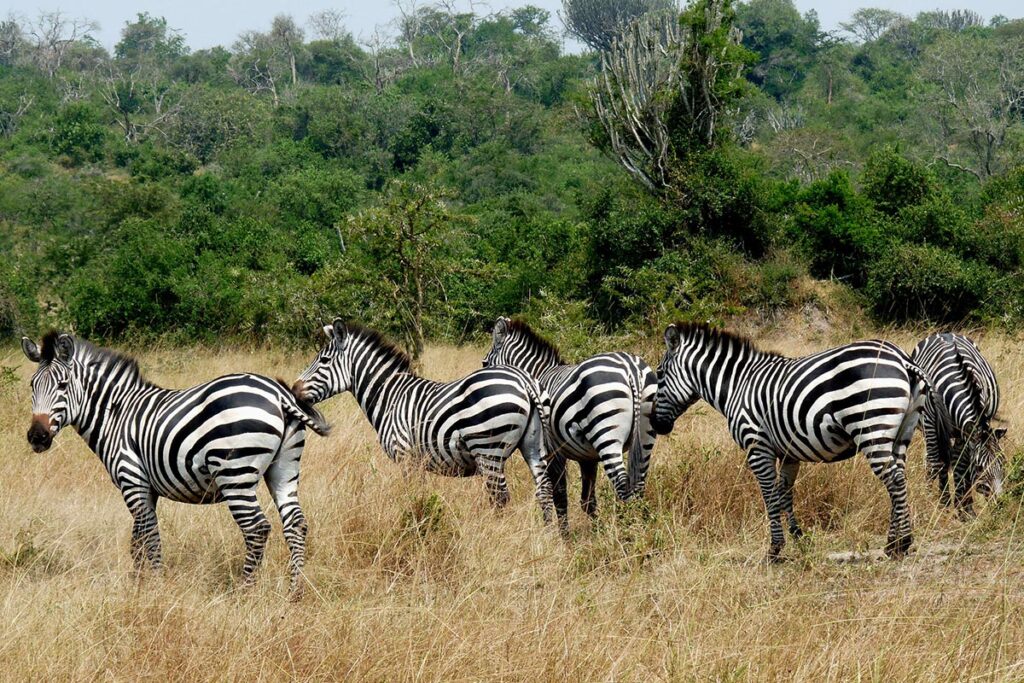
Mupa once supported populations of large mammals such as elephants, eland, zebra and buffalo, but many of these species declined dramatically during the war. Though still recovering, the park remains ecologically important and holds promising potential for future rewilding efforts and species recovery programs.
Mammals
- Common duiker
- Steenbok
- Oribi
- Warthog
- Porcupine
- Banded mongoose
- Caracal (rare)
- Serval (rare)
- Bushbabies and other nocturnal mammals
- Honey badger
- Bat-eared fox
Small and medium-sized mammals remain widespread, particularly in undisturbed woodland pockets. Tracks, burrows and nocturnal calls indicate a rich but understudied mammal community. With habitat recovery and strengthened protection, larger mammals could gradually return through natural recolonization or carefully planned reintroductions.
Birdlife – A Key Stronghold for Angolan Woodland Species
Mupa is exceptionally important for bird conservation. The park lies within an Angolan endemic bird region and supports species with restricted ranges tied to miombo woodlands.
- Rufous-bellied tit
- Carp’s tit
- Miombo pied barbet
- White-tailed shrike
- Black-faced babbler
- Meyer’s parrot
- Swallow-tailed bee-eater
- Hornbills and starlings
- Martial eagles and other raptors
- Herons and storks on seasonal wetlands
Bird activity peaks during the rainy season when insects emerge and woodlands burst into leaf. Migratory species also visit during this period, enhancing species richness. For experienced birders, Mupa holds exceptional value as a region where rarely seen Angolan endemics can be observed in natural habitats.
Reptiles, Amphibians and Insects
- Monitor lizards
- Tortoises
- Pythons and harmless snakes
- Tree frogs during rains
- Butterflies and moths linked to miombo flowering cycles
- Termites that build prominent mounds across the savanna
After heavy rains, amphibians appear in large numbers to breed in temporary pools, while insect abundance supports birds and small mammals. Termite mounds also enrich soil fertility, promoting plant growth around their bases.
Cultural and Indigenous Communities
Mupa is surrounded by Ovahimba, Ovakuvale and other pastoral communities who maintain traditional lifestyles linked to cattle herding, agro-pastoralism and dryland farming. Their cultural practices—including ceremonial dances, hairstyles, body art and beadwork—reflect deep social identity rooted in the landscape.
These communities depend on natural pastures and seasonal water sources. Sustainable coexistence requires working closely with them on grazing management, fire control, anti-poaching monitoring, and community-based tourism. Successful conservation in Mupa depends entirely on strong community partnerships and recognition of local knowledge and cultural rights.
Conservation Importance
Mupa National Park is crucial for Angola’s biodiversity for several reasons:
- It protects one of southern Angola’s largest intact miombo woodland systems.
- It provides habitat for Angolan endemic and near-endemic bird species.
- It serves as a potential recovery landscape for larger mammals.
- It helps maintain ecological connectivity across southern Angola and northern Namibia.
- It offers a rare opportunity for ecological restoration in a post-conflict landscape.
- It preserves cultural landscapes and sustainable pastoral traditions.
Because large areas of Angola’s woodlands have been degraded, Mupa’s remaining ecosystems serve as a vital natural reservoir for future biodiversity recovery.
Threats and Pressures
- Overgrazing by livestock, which suppresses vegetation recovery.
- Uncontrolled bushfires affecting woodland regeneration.
- Poaching of remaining wildlife for subsistence needs.
- Habitat conversion due to shifting cultivation in surrounding areas.
- Lack of park infrastructure, staffing and on-ground monitoring.
- Climate variability increasing drought frequency.
Addressing these threats requires long-term investment in ranger presence, fire management, community incentives and ecological monitoring programs.
Research, Monitoring and Scientific Potential
Mupa National Park remains one of Angola’s least-studied protected areas, giving it extraordinary scientific value. Baseline biodiversity surveys are urgently needed to document species presence and ecological change since the war. Priority areas include:
- Miombo woodland regeneration studies.
- Endemic bird population mapping and habitat modeling.
- Large mammal sign surveys and corridor mapping.
- Waterhole ecology and hydrological dynamics.
- Fire-climate-vegetation interactions.
- Pastoral practices and sustainable grazing studies.
For researchers, Mupa represents a rare opportunity to study a recovering ecosystem almost untouched by modern scientific monitoring for decades.
Tourism Activities and Visitor Experience
Mupa National Park currently receives very few visitors due to its remote nature and limited infrastructure, but for adventurous travelers, researchers and bird watchers, the park offers a rare chance to explore one of Angola’s most authentic and untouched natural landscapes.
- Birdwatching: Exceptional for miombo specialists and Angolan endemics.
- Nature Walks: Ideal for exploring woodlands, plants and insects.
- Cultural Visits: Meeting Ovahimba and Ovakuvale communities.
- Photography: Open landscapes, dramatic skies and unique woodland scenery.
- Camping: True wilderness camping for experienced travelers.
Visitors should expect solitude, quiet woodlands, expansive horizons and a sense of immersion rarely found in more developed safari destinations.
Night Sky and Wilderness Atmosphere
Mupa’s remote location and absence of artificial lighting create some of the darkest skies in Angola. The Milky Way is clearly visible, stretching across the night sky in a luminous arc. Night sounds—crickets, frogs, distant livestock bells and the rustling of nocturnal mammals—create an atmospheric and deeply natural sense of place.
Golden-hour light transforms the woodlands into glowing shades of amber and crimson, while storm clouds in the rainy season produce dramatic sunsets that fill the horizon with color.
Access – How to Reach Mupa National Park
- By Road: Access via Cahama; 4×4 required due to sandy tracks and remote conditions.
- By Air: Charter flights to nearby towns for logistical support.
- Road Conditions: Very rough during wet season; planning essential.
Travelers should be fully self-sufficient or accompanied by guides familiar with the region.
Permits and Park Rules
Because Mupa is still being rehabilitated, visitors typically coordinate access with regional authorities or the national park administration. Standard rules include:
- No hunting or disturbing wildlife.
- No uncontrolled fires.
- Respect local communities and livestock routes.
- Camp only in designated or approved sites.
- Carry all waste out of the park.
- Stay on established tracks to avoid damaging vegetation.
Safety and Practical Travel Tips
- Carry sufficient fuel, water, food and spare tyres.
- Use a reliable 4×4 vehicle.
- Travel with local guides or experienced drivers.
- Take malaria precautions.
- Be prepared for heat during the day and cool nights.
- Avoid driving after dark due to wildlife and livestock on roads.
Planning and preparation are essential due to the park’s remoteness and minimal infrastructure.
Accommodation Options
There are currently no permanent lodges inside Mupa National Park, but visitors can stay in:
- Basic community campsites.
- Mobile safari camps arranged by private operators.
- Guesthouses in Cahama or Ondjiva.
Future plans may include eco-lodges or community-run tourism facilities as part of Angola’s broader conservation and tourism development strategy.
Best Time to Visit
- June–September: Dry, cooler weather suitable for travel.
- November–April: Rainy season with rich birdlife but challenging roads.
Both seasons offer distinct ecological highlights, with the rainy months especially rewarding for birdwatchers and photographers.
Why Mupa National Park Is Unique
Mupa National Park is one of southern Angola’s last great wilderness areas—a place where expansive miombo woodlands stretch to the horizon, where endemic birds thrive, where pastoral traditions remain deeply rooted and where ecological restoration can shape the future of an entire region. Its combination of biodiversity, cultural continuity, landscape beauty and scientific potential makes it a uniquely important conservation jewel.
Though still recovering, Mupa is a landscape filled with opportunity. It represents the future of wildlife restoration in Angola, the resilience of dry woodland ecosystems and the enduring relationship between people and nature in this rugged, beautiful part of Africa.