
Nairobi National Park
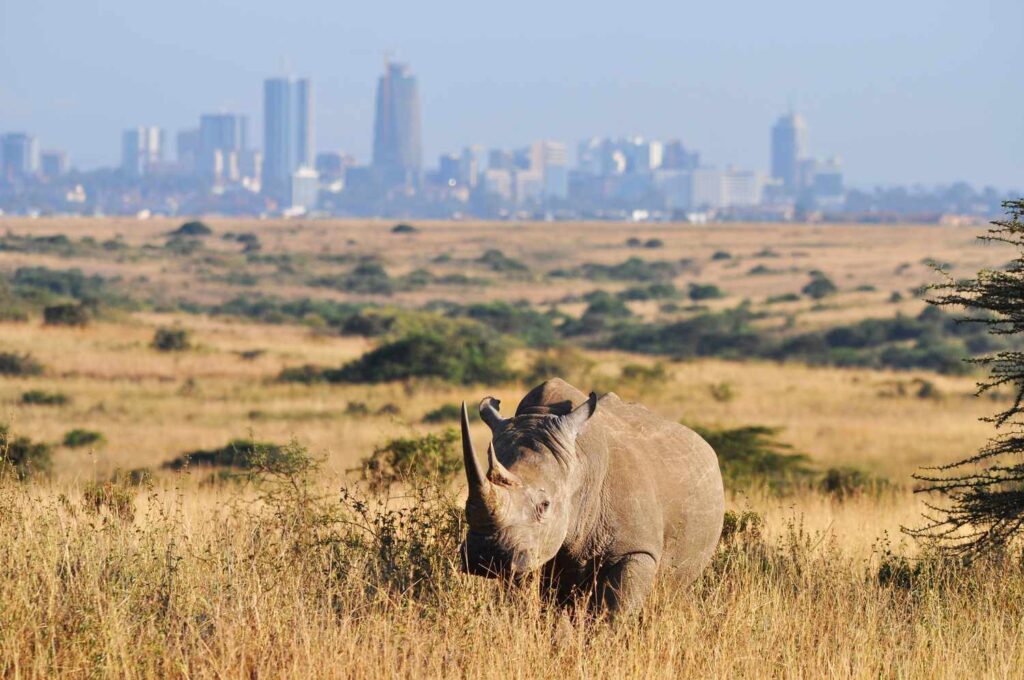
Nairobi National Park – Kenya’s Urban Wildlife Sanctuary, Black Rhinos, Savannah Plains, Big Cats and the World’s Only City-Side National Park
Nairobi National Park is one of the most unique protected areas on Earth—a fully functioning wildlife reserve located just a few kilometers from the bustling center of Kenya’s capital city. Covering 117 km² on the southern edge of Nairobi, the park combines open savannah plains, acacia-dotted woodlands, riverine forests and rocky valleys with a dramatic skyline backdrop. Despite its proximity to urban development, Nairobi National Park supports an impressive diversity of large mammals, including lions, leopards, endangered black rhinos, giraffes, buffaloes, hippos, cheetahs and more than 400 species of birds. Its accessibility and remarkable wildlife densities make it a flagship destination for travelers, researchers and conservationists.
Established in 1946 as Kenya’s first national park, Nairobi National Park remains a pioneering example of urban conservation, illustrating how wildlife can survive alongside a rapidly growing city when habitat, corridors and protected areas are maintained. The park plays an essential role in rhino conservation, particularly for the critically endangered eastern black rhinoceros, which thrives in the park’s safe, well-monitored environment. With its mix of wildlife experiences, scenic landscapes and easy access from Nairobi city, the park is one of Kenya’s most valuable natural assets.
Location, Size and Geographic Setting
Nairobi National Park lies on the southern outskirts of Nairobi, bordered by suburbs to the north and pastoralist lands to the south. The park forms part of the greater Athi-Kapiti ecosystem, a historically important wildlife corridor that connects Nairobi with the larger savannahs stretching toward Amboseli.
- Country: Kenya
- County: Nairobi
- Total area: 117 km²
- Altitude range: 1,530–1,760 meters
- Proximity to city center: ~7 km
Despite its modest size, Nairobi National Park contains an impressive variety of landscapes, from vast golden-grass plains to river valleys shaded by dense fig trees. Its location along the Embakasi River provides water to sustain herbivores, while acidic volcanic soils support the growth of acacia woodlands and savannah grasses characteristic of the Athi plains.
Geology and Landscape Formation
The park is part of the southern Nairobi volcanic plains, shaped by ancient lava flows, tectonic uplift and erosion from seasonal rivers. This geological history created a mosaic of habitats ranging from open plains to rocky ridges, offering refuge for predators and vantage points for herbivores.
- Volcanic basalt rock: Formed by prehistoric eruptions of the Rift Valley.
- Sandy clay soils: Support acacia savannah and perennial grasses.
- Riverine deposits: Found around the Mbagathi River.
- Scarp formations: Provide lookout points for lions and raptors.
This geological diversity shapes vegetation patterns and water distribution within the park, directly influencing wildlife density and species distribution.
Climate and Seasonal Patterns
Nairobi National Park has a subtropical highland climate, with mild temperatures year-round due to its elevation. Rainfall patterns drive vegetation growth, herbivore movement and predator behavior.
- Long rains: March–May
- Short rains: October–December
- Dry seasons: January–February and June–September
- Annual rainfall: 800–1,000 mm
- Average temperatures: 10°C–27°C
During the rainy seasons, grasses flourish and wildlife disperses across the plains, while dry seasons concentrate animals around permanent water sources such as the Mbagathi River and artificial waterholes maintained by Kenya Wildlife Service.
Hydrology – Rivers, Springs and Seasonal Wetlands
The Mbagathi River forms the park’s southern boundary and serves as its main permanent water source. Rainy seasons create temporary wetlands, pools and marshes that attract wading birds, amphibians and grazing herbivores. Several springs and dams constructed within the park provide year-round access to water for wildlife, particularly during drought.
- Mbagathi River: Essential for both wildlife and riparian vegetation.
- Man-made dams: Athi, Hyena, and Impala picnic site dams.
- Seasonal wetlands: Form important feeding grounds for birds.
- Groundwater seepages: Support riverine forests along valleys.
These hydrological features help stabilize wildlife populations and create ideal conditions for hippos, crocodiles, fish, amphibians and waterbirds.
Ecosystems and Habitat Diversity
Nairobi National Park contains a rich variety of ecosystems within a relatively small space, contributing to high biodiversity and offering numerous ecological niches for different wildlife species.
- Open grassland: The park’s dominant habitat, ideal for grazers and predators.
- Acacia woodland: Supports browsing species such as giraffes and kudu.
- Riverine forest: Dense vegetation along the Mbagathi River.
- Rocky ridges: Habitats for klipspringers and vantage points for lions.
- Wetlands and dams: Attract hippos, crocodiles and aquatic birds.
This mosaic of habitats ensures the survival of both open-plains wildlife and woodland specialists, making Nairobi National Park one of Kenya’s most ecologically diverse reserves relative to its size.
Flora – Trees, Grasses and Riverine Vegetation
The park’s flora is typical of East African highland savannah, with species adapted to volcanic soils, seasonal rainfall and grazing pressure. The combination of acacia woodland and open grassland creates excellent grazing conditions and provides essential shade in hotter months.
- Trees: Acacia seyal, Acacia mellifera, Croton, Euphorbia candelabrum.
- Shrubs: Tarconanthus, Commiphora and Salvadora persica.
- Grasses: Themeda triandra, Sporobolus, Digitaria and Pennisetum.
- Riverine species: Fig trees, wild date palms and dense reeds.
The vegetation offers food for grazers and browsers, nesting sites for birds and shelter for predators waiting to ambush prey along woodland edges.
Wildlife of Nairobi National Park
Despite its location near a major city, Nairobi National Park supports remarkable densities of wildlife. Its predator-prey interactions, rhino populations and bird diversity rival those found in larger national parks.
Black Rhinos – A Conservation Stronghold
Nairobi National Park is one of the most important sanctuaries for black rhinos in East Africa. Intensive protection, monitoring and habitat management have enabled the species to grow steadily within the park. Visitors often encounter rhinos in wooded areas, grasslands or near water sources, making the park one of the best rhino-viewing destinations in Kenya.
Lions and Other Predators
The park hosts several lion prides, which are often sighted on the plains or hunting along woodland edges. The open habitats make lion sightings frequent and active, especially in early morning and late afternoon.
- Lions
- Leopards
- Cheetahs
- Spotted hyenas
- Black-backed jackals
- Servals
Predators rely on abundant herbivores, and Nairobi’s open plains create ideal conditions for hunting and observation.
Herbivores and Grazing Species
Nairobi National Park supports a wide array of grazing and browsing mammals. The grasslands provide food for herbivores throughout the year, while woodland edges offer additional browse during dry periods.
- Buffalo
- Masai giraffe
- Common eland
- Hartebeest
- Zebras
- Impala
- Waterbuck
- Warthogs
The periodic wildebeest migration into the Athi-Kapiti plains historically contributed to seasonal wildlife movements within the park.
Birdlife – One of Kenya’s Best Urban Birding Destinations
With more than 400 recorded species, Nairobi National Park is a paradise for birdwatchers. Its wetlands, grasslands and forests host migratory species, raptors, waterbirds and colorful woodland birds.
- Secretary birds
- Kori bustards
- Ostriches
- African fish eagles
- Hadada ibis
- Crowned cranes
- Kingfishers
- Bee-eaters
Seasonal pans and dams attract large flocks of waders, while the park’s woodland supports diverse songbird populations.
Reptiles, Amphibians and Smaller Mammals
- Nile crocodiles (in the Mbagathi River)
- Monitor lizards
- Pythons and cobras
- Hyraxes
- Porcupines
- Banded mongooses
Kimani swamp and other wetland areas host amphibians such as frogs and toads, which become especially vocal during the rainy seasons.
Unique Features – City-Side Wilderness and Iconic Skyline Views
Nairobi National Park is the only national park in the world with a major metropolitan skyline rising above its plains. This juxtaposition of wildlife and skyscrapers creates an unforgettable visual contrast and makes the park globally unique.
- City skyline backdrop: Iconic views of wildlife against Nairobi’s towers.
- Ivory Burning Site: Symbol of Kenya’s anti-poaching legacy.
- Historic game corridors: Linking the park to the Athi-Kapiti plains.
- Nairobi Safari Walk: Educational boardwalk near the park’s entrance.
The park’s blend of wilderness and modernity makes it a living symbol of Kenya’s conservation leadership.
Cultural and Community Significance
The land surrounding Nairobi National Park has long been used by Maasai pastoralists, whose traditional grazing patterns once aligned with wildlife migration routes. Today, the park remains important to local communities through tourism, education and conservation employment. Many guides, rangers and wildlife stewards originate from families with deep cultural connections to the area.
Conservation Importance
Nairobi National Park is crucial for wildlife protection in Kenya’s most urbanized region. Its significance extends beyond recreational tourism—serving as a vital refuge for endangered species, an ecological buffer for the city and a living classroom for conservation education.
- Key population of black rhinos.
- Critical habitat for lions near Nairobi.
- Important migratory corridor to the Athi-Kapiti plains.
- Conservation model for urban-protected area coexistence.
The park also plays a major role in genetic connectivity for species migrating from Amboseli and the southern plains.
Threats and Environmental Challenges
- Urban encroachment and infrastructure development.
- Pressure on migratory corridors to the south.
- Human-wildlife conflict near the park boundary.
- Pollution and river contamination risks.
- Fence construction affecting wildlife movement.
Kenya Wildlife Service works with communities, conservation groups and government bodies to mitigate these threats through habitat management and corridor protection.
Research and Monitoring Programs
- Rhino population monitoring and protection.
- Lion movement and behavior studies.
- Birdlife surveys for resident and migratory species.
- Vegetation change analysis due to climatic variation.
- Human-wildlife conflict tracking.
Nairobi National Park’s accessibility makes it a key research hub for wildlife biology, ecology, conservation science and sustainable land-use planning.
Tourism Activities in Nairobi National Park
- Game drives: See lions, rhinos, giraffes, buffalo and diverse herbivores.
- Birdwatching: Explore grasslands, riverbanks and dams.
- Photography: Capture iconic skyline and wildlife scenes.
- Nairobi Safari Walk: Educational walkway near park entrance.
- Picnic sites: Hippo pools, Impala viewpoint and more.
The park’s close proximity to Nairobi makes it perfect for half-day or full-day wildlife experiences.
Access – How to Reach the Park
- By road: 20–30 minutes from Nairobi city center.
- By air: Close to Wilson Airport for domestic flights.
- Entrances: Main Gate, East Gate, Lang’ata Gate and Cheetah Gate.
Excellent road access makes Nairobi National Park one of the easiest wildlife destinations in Kenya.
Permits and Regulations
- Entry fees required for all visitors.
- Guides recommended for optimal wildlife viewing.
- No off-road driving allowed.
- Picnicking permitted only at designated sites.
Accommodation Options
- Nairobi city hotels: Wide range of luxury to budget options.
- Nearby lodges: Properties near Karen, Lang’ata and Nairobi West.
- Tented camps: Limited options near park boundaries.
Guests can enjoy city luxury while staying only minutes away from a full wildlife experience.
Best Time to Visit Nairobi National Park
- July–October: Excellent wildlife viewing during the dry season.
- January–February: Clear skies and high herbivore densities.
- March–May: Green landscapes and active birdlife during rainy season.
Why Nairobi National Park Is Unique
Nairobi National Park is the only place in the world where a pride of lions can be photographed against the backdrop of skyscrapers, where black rhinos graze just minutes from international hotels, and where an urban population can access a wild savannah ecosystem in under half an hour. Its mix of conservation success, dramatic scenery, thriving rhino population and stunning wildlife diversity makes it one of Kenya’s most important and inspiring national parks.
For travelers, photographers, researchers and families, Nairobi National Park offers a truly unforgettable safari experience—one where the wild heart of Africa meets the vibrant pulse of a modern city.